By Jeff Thielman, President & CEO of the International Institute of New England
As a host of the 2026 FIFA World Cup, the U.S. has welcomed elite athletes and passionate fans from around the world. Here in New England, we’ve been in on the fun—seven matches played at “Boston Stadium” in Foxborough drew hundreds of thousands of international visitors to our region.
After 18 months of xenophobic laws and propaganda from our federal government, the World Cup feels like a breath of fresh air, giving us the opportunity to celebrate diverse cultures and make new friends.
Our clients and colleagues who are lifelong fans have shown us that, for many, soccer is a common language that can go a long way to build unity, confidence, and belonging. With its epic scale, this World Cup moment has taught us something more about all that the U.S. represents at our best. Read on to discover my five takeaways from this summer of welcome.
1) We pride ourselves on our welcoming and diverse culture.
By now, you’ve likely encountered this sentiment from international visitors, whether in person, on the news, or via your social media feeds: We were told Americans don’t like foreigners, but in reality, they could not be more welcoming!
The Boston Herald’s editorial page noted that “World Cup visitors have injected hosting cities with infectious enthusiasm, soaring spirits and camaraderie,” gushing over comments from visitors about the kindness and generosity of Americans.
In the Boston Globe, Adrian Walker remarked on the incongruity of this experience with our national politics: “I recognize that people here for the World Cup are tourists, not immigrants. Even so, they are demonstrating on an hourly basis how much better letting people in is than shutting them out. Turns out building a big tent is a lot more fun than building a wall.”
At IINE, we agree. Our community volunteers often form lasting bonds with the families they support, and deep appreciation for their cultures. Our employer partners are grateful to welcome refugees and immigrants onto their teams.

In fact, a recent study shows that 89% of Americans who personally know a refugee support the U.S. refugee resettlement program. That’s easy to believe when you learn about World Cup stories like the city of Lawrence, Kansas embracing its role as host to the Algerian team who competed here this year, while human rights challenges plague their country back home.
From the Associated Press: “The more we learned of the challenges Algerians faced to get here, the stronger our commitment became to show how welcoming our city could be,” said Ruth DeWitt, the director of community relations for the city’s convention and visitors bureau. “They quickly became our home team.”
2) Where there’s a will (to welcome the stranger), the U.S. finds a way.
Welcoming millions of people from countries around the world is a tremendous logistical challenge. We just proved we can do it. The U.S. decided that the benefits of hosting the World Cup were worth the effort of coordinating with an international body, partnering closely with Mexico and Canada, and empowering states and cities to be effective hosts. The results have been remarkable.
Across North America, FIFA Fan Festivals drew nearly 2 million attendees in the tournament’s opening week alone. Host cities coordinated transportation, volunteers, multilingual information, security, public viewing spaces, accessibility services, and cultural programming.
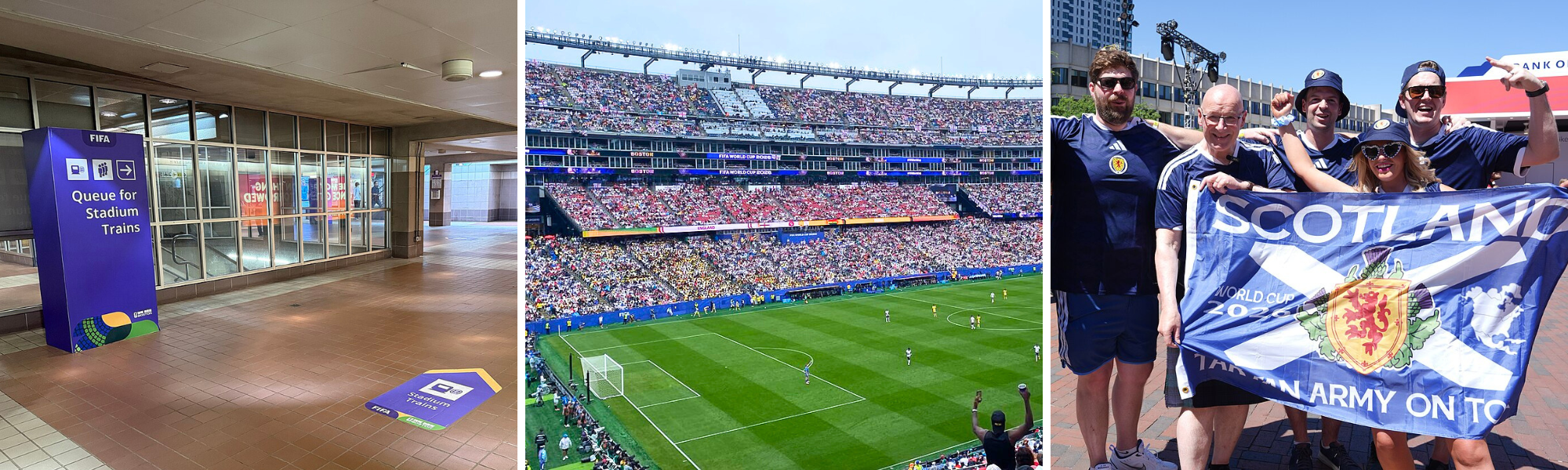
Locally, the city of Boston arranged special MBTA commuter rail service to Foxborough, planned multiple public outdoor viewing parties, and expanded nightlife policies and public gathering spaces.
When the “Tartan Army”—tens of thousands of fans of Scotland’s national soccer team—descended on New England at once, a deep friendship blossomed, concluding with an official declaration that Glasgow is now our sister city.
At IINE, we see heartwarming connections like this all the time. For more than a century, we’ve been helping newcomers find housing, connect to services, find their way around, and learn about our culture. We’d love to see the same spirit of coordination and support for these efforts as we’re seeing during the Cup. In some ways, the benefits are similar. Newcomers end up bringing billions of dollars into the economy, improving our image throughout the world, and making our communities more vibrant.
3) We rally behind our immigrant communities.
While it was thrilling to watch the U.S. team, the tournament also gave our immigrant communities the opportunity to cheer on their home country teams—often with the enthusiastic support of their American neighbors.
Massachusetts has the largest Cape Verdean immigrant population in the U.S., news to many other residents until they found themselves cheering alongside Cape Verdean fans as the tiny country—at its first World Cup—faced off against the top-rated teams of Spain and Argentina. Meanwhile, the large population of Moroccan immigrants in suburbs like Revere generated a sea of starred red flags, hats, and capes on Boston Common.
And then, of course, there is Haiti. IINE has served more than 13,000 Haitian immigrants over the past few years. Every day they are barraged with terrible news from Haiti and ongoing hostility from the U.S. government. Haiti’s first World Cup appearance has offered much-needed joy—both for Haitians and for those of us cheering them on.
The fact is, when divisive politics are taken out of the equation, we love being a nation of immigrants, and when given the chance, we root for each other.

4) It feels good to be part of the international community.
Our nation’s foreign policy has become increasingly isolationist as our leaders abandon treaties and alliances, initiate armed conflicts, threaten to conquer sovereign nations, and encourage other countries to close their borders and embrace nationalism. At home, our federal government has closed the doors to refugees, asylum seekers, and many immigrants seeking to reunite with their families, study, work, and rebuild their lives here. They are teaching the world to fear and mistrust us.
This summer, we’re getting a glimpse of something different.
5) We value the immigrants who represent us on the world stage.
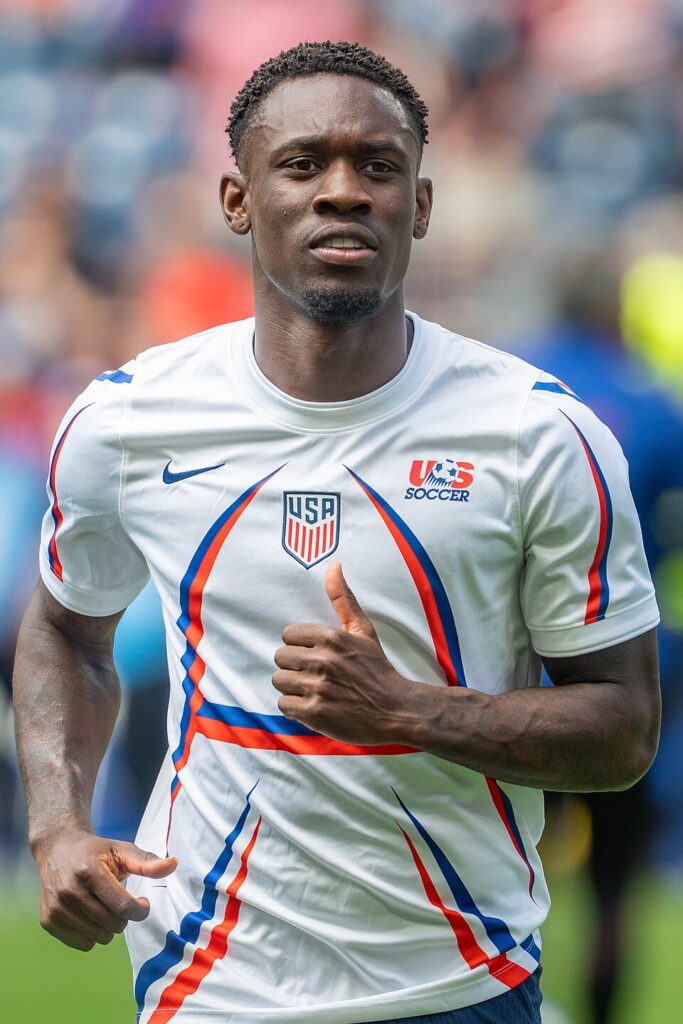
From Newsweek: “Six players on the U.S. men’s national soccer team at the 2026 World Cup were born outside the country. More than half the 26 men on the roster hold dual citizenship. And the striker who scored twice in the Americans’ opening 4-1 victory over Paraguay is eligible to play only because of a legal provision the Trump administration has sought to eliminate.”
The U.S. President personally advocated for that striker, Folarin Balogun, in a controversial phone call to FIFA, yet Balogun qualified for the U.S. team through birthright citizenship.
What happened to President Trump’s ideology in this moment? He wanted to win and recognized that an immigrant was the key to our success. Hopefully, this lesson will resonate with Americans long after the Cup is awarded.
مقالات ذات صلة

Maryam and Mauret: A Volunteer Helps a Young Afghan Refugee Pursue Her Dreams in New Hampshire

Restrictive and Unjust: IINE Statement on Presidential Determination on 2027 Refugee Admissions

Spotlight Report Excerpt: On Connecting Immigrant Talent to Healthcare Careers