IINE offers adult English for Speakers of Other Languages (ESOL) classes for immigrants with a broad range of experience, ranging from those who never had the opportunity to learn to read and write in their first languages to advanced speakers who are looking to further hone their English skills.
All classes are designed to help students progress towards self-sufficiency in the U.S. as quickly as possible—to empower them to navigate their new communities, pursue their academic and career goals, and reach their goals.
When Instructor Caroline Sutphin, who has a master of fine arts, had the opportunity to teach an advanced ESOL class for the first time, she decided that after completing weeks of the standard, more practical curriculum, she was going to end the course with something new—a unit on poetry.
“I thought it would be an interesting challenge for this group of students. It was a little out of their comfort zone, but they embraced the exercise and did a really great job with it.“
Caroline’s students came from several different countries, including Haiti, Sudan, Cuba, and the Dominican Republic. Their experience with poetry was varied, and most had never written their own poems.
To familiarize them with the form, Caroline had her students read and discuss several poems written about immigration.
“I also just happened to have a book of Haitian poetry, called Blue Flare. It’s bilingual, so I had one of the Haitian students read in their language, and then we read it in English. It was a fun exercise, even for the students who don’t speak Creole or French. They enjoyed hearing the music of it.”
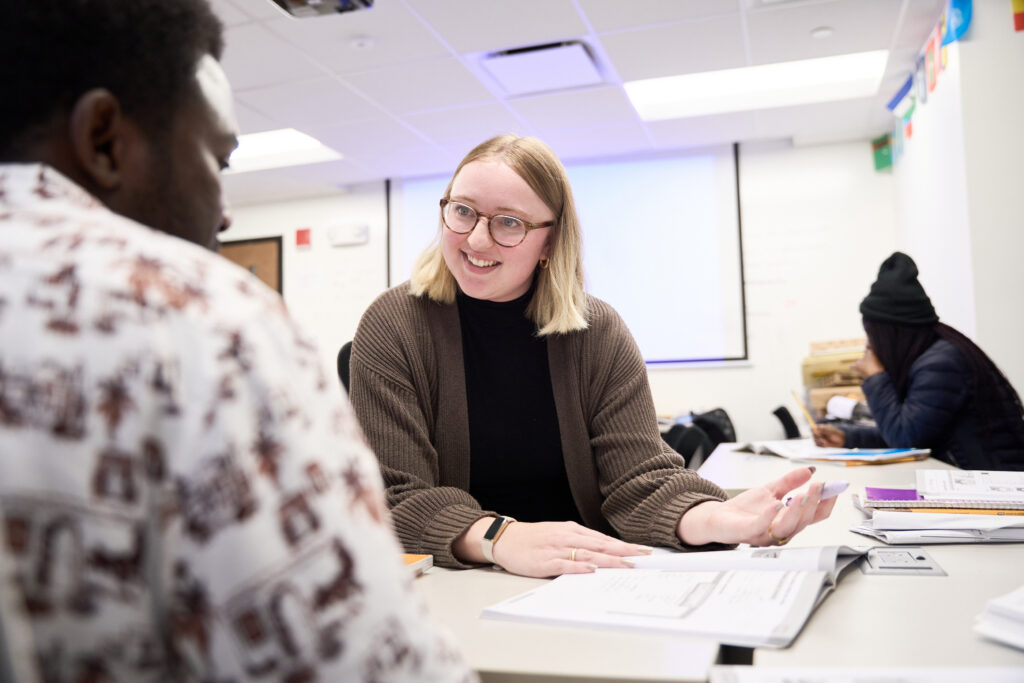
Caroline also assigned her students to read poems by Langston Hughes, Tishani Doshi, Ada Limón, Maggie Smith, and Marie-Célie Agnant. In class discussions, they learned about figurative language and poetic forms. Then it was time to try their hands at writing their own poems in English. To get them started, she offered a series of prompts, such as “Begin each sentence with the phrase, ‘I remember…’” Caroline says this is a common prompt in beginners’ workshops because of its accessibility and how it helps writers tap into their emotions.
“I was trying to frame for the students, you don’t need to have a lot of prior knowledge or practice to write poetry. You can sit down today and write something, and that’s a valuable way to spend that time.“
Having students use their developing English skills to reflect on their memories, which were often about life before coming to the U.S., proved to be both educational and therapeutic.
“The students were very thoughtful about their words. I think it pushed them beyond the level that they’ve been at with writing to try to write in a way that is also beautiful or impactful and has some emotional resonance too.“
A Different Kind of English Learning
Rudbeckia came to the U.S. in 2025. She says that her native city of Mantanzas is described as the ‘Athens of Cuba’ or the ‘Poetry City’ because it’s been home to many poets and other artists. While she herself had never written poetry before Caroline’s class, Rudbeckia says that in her family, there was a tradition of reading poetry, and she had enjoyed books by poets José Martí and Calindra Oliver Labra.
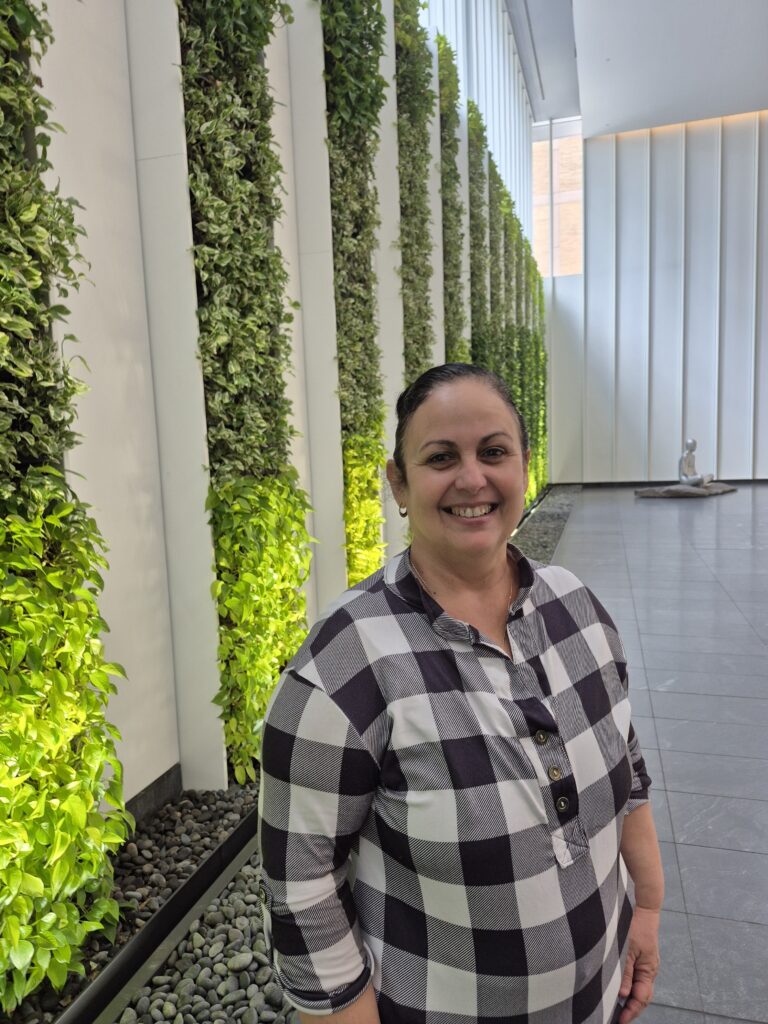
Being asked to write poetry in English while she was still learning the language was challenging—but a wonderful experience.
“This class with Caroline was marvelous. Finding out about poetry in the U.S. and learning about the lives of the poets was a different kind of English learning, but I found that Caroline transmits learning with love, and the whole class enjoyed it.”
When asked to write about a memory, Rudbeckia chose to write about her mother (for whom she is named), who passed away a few years ago.
“My mom was always my empowering person. My mom was a very strong and sensible woman. She had to change her life in accordance with the political government. She taught our family that the most important thing is for the family to be together and enjoy life. I admire my mom because she was a brilliant doctor—an orthopedic pediatric doctor—and was the best mom.”
Rudbeckia says that when she started the class, she was nervous, but Caroline helped her feel safe and supported thanks to her patience, kindness, and positive energy. “I miss the class in this moment,” she says. “[We felt like] a happy family.”
“I think the experience in the poetry class was very emotional because all of the students wrote about their feelings. This only occurs when you feel happy in a place. When you feel afraid or you don’t feel comfortable, you don’t express your feelings.”
Mom
By Rudbeckia
Today I write about my mom. Her name was Rudbeckia.
She was the first female orthopedic surgeon in Cuba. She
loved orthopedics, she loved the operating room, and she
loved teaching.
For her, orthopedics was like a family. She never stopped
studying or reading books. She had four children, and
together with my grandmother, she educated us and helped
shape the people we are today.
For her, the most important things were family and
family harmony. Her home was the center of our family, a
place where we shared both our problems and our joys. Her
granddaughters adored her as well.
She was strong, capable, disciplined, and punctual. She
passed away four years ago, but even today, whenever I
feel tired or ready to give up, I think of her. Then I tell
myself, “If she could do it, I can do it too,” and I keep
going.
My mother taught me that perseverance, love, and
dedication can overcome any obstacle.
Her example, her values, and her strength continue to
guide me every day. She will always live in my heart and in
the hearts of everyone who had the privilege of knowing
and loving her.
The Collection
Throughout the poetry unit, Caroline’s students wrote several poems in response to the prompts Caroline assigned them. On the last day of class, each student selected one of their poems, edited it, and submitted it to their “class book.” Caroline compiled the submissions into a packet and presented a copy to each student at their class graduation ceremony. That the class has now agreed to share their poems with IINE’s community is a testament to their pride in the accomplishment and the comfort their instructor has instilled in sharing their feelings through writing in a language they are still learning.
- - -
Click here to view the PDF of “Poems on Memories, Hope, and Home” or scroll up to read the collection embedded in this post.
Artículos relacionados

Maryam and Mauret: A Volunteer Helps a Young Afghan Refugee Pursue Her Dreams in New Hampshire

Restrictive and Unjust: IINE Statement on Presidential Determination on 2027 Refugee Admissions

Spotlight Report Excerpt: On Connecting Immigrant Talent to Healthcare Careers