Our donors help ensure that refugees and immigrants receive the support they need to rebuild their lives in New England, and in turn, strengthen our culture, economy, and community. In our Why They Give series, we talk with them to learn more about their connection to our mission and what inspires their support.
In our latest installment, Laurie Sorota shares the joy and meaning she finds in tutoring refugee youth, what she wishes more people understood about the immigrant journey, and her hopes for IINE’s new building in Lowell.
¿Puede hablarnos un poco de usted?
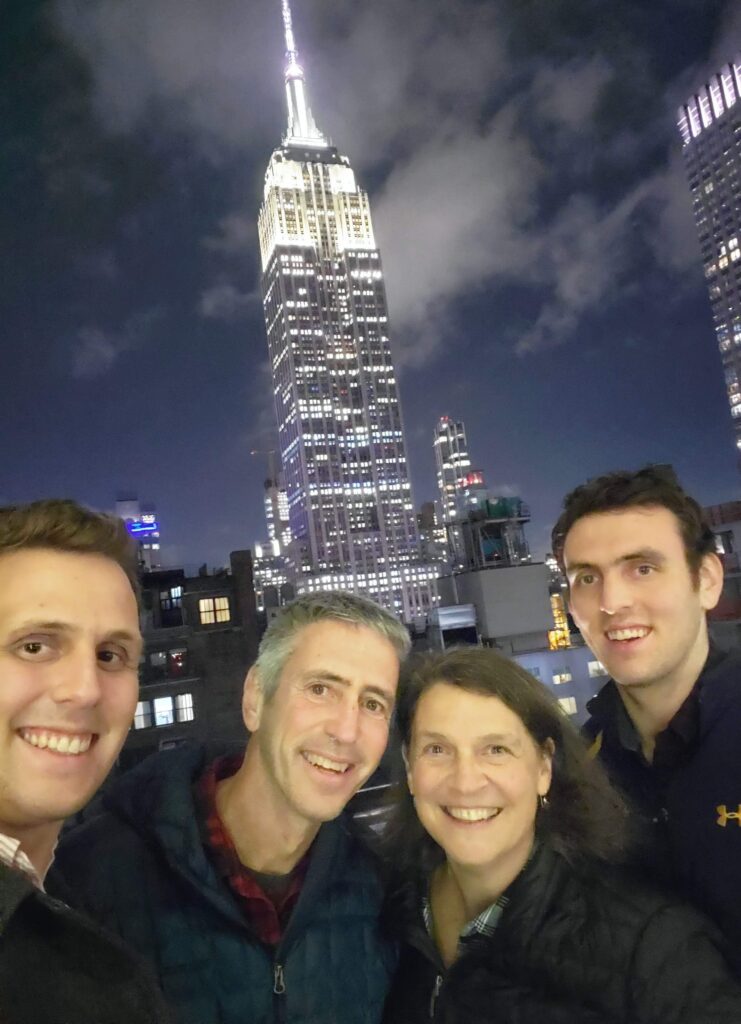
I live in Andover, Massachusetts with my husband. We raised two boys who are now leading their own full lives, one in D.C. and the other in Massachusetts. Four years ago, I retired from a 20-year career at Northern Essex Community College as a tutor and academic coach. I am a lifetime member of South Church in Andover, and as such, have been volunteering (in so many different areas) my entire life.
¿Por qué es importante para usted la filantropía?
I believe, as a society, we need to protect and encourage those who are “less fortunate.” We all go through difficult times, and without the empathy and support of others, we can easily become lost. I have found that many people just need a little boost. A kind word, a pair of clean socks, a book to read, or a simple warm meal can help someone get through a rough patch, catch their breath, and move forward. It’s an easy thing to do for another human being.
Why is volunteering at IINE important to you?
I was drawn to IINE about eight years ago when I came across a posting on volunteermatch.org looking for youth mentors. I inquired and was asked to join a group of adults working with “kids” aged 15-24. From our very first meeting, I was hooked. I loved talking with these young folks, hearing their stories, and sharing tidbits of information about life for kids their age in the U.S. In my job at the community college, I learned that people often “don’t know what they don’t know.” I applied that concept with the youth mentoring program. Helping them understand how to get a driver’s license, sign up for a library card, utilize public transportation, and even go to college were topics I knew how to teach. I loved watching the kids realize that they had some choices to make. Their lives weren’t predetermined anymore.
Can you share a meaningful moment from your volunteering?
During the COVID lockdown, I worked with several young people, mostly helping them prepare to take the HiSet (the test students must take to earn a high school diploma in the U.S.). It was during these sessions that I learned the most.
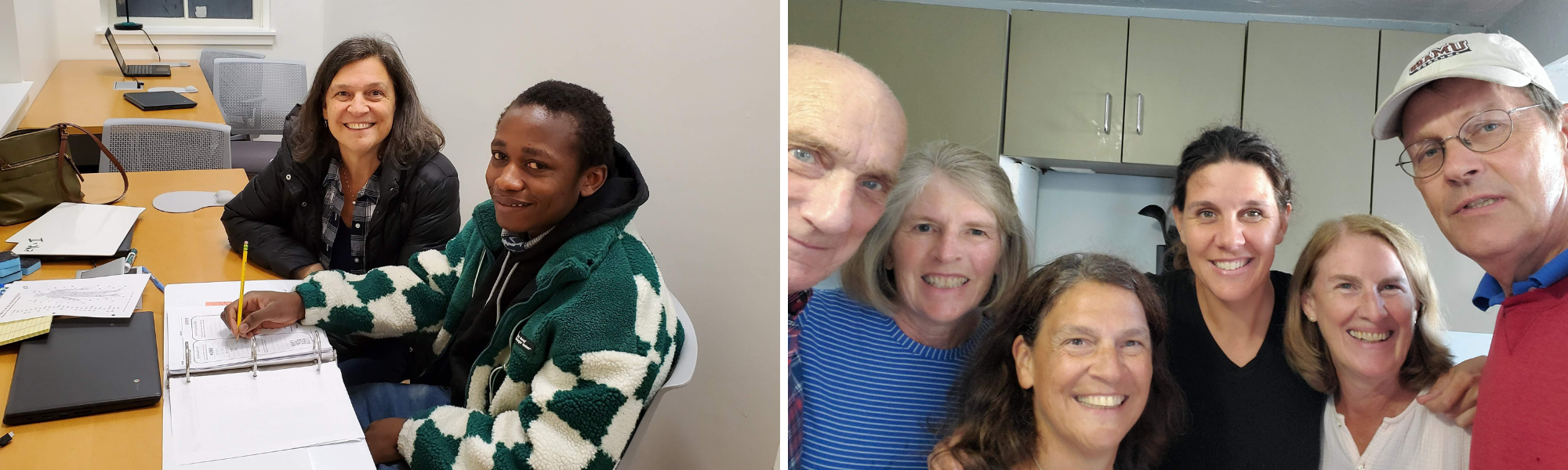
I worked with B., a man in his mid-20s who was born and raised in a Rwandan refugee camp. He was married and had a young daughter. B. drove for Uber, and his wife worked at a retirement home as a receptionist. They both spoke good English and made enough money to support themselves, but B. wanted a high school diploma.
One day I asked him, “Did you ever think that you would be married, with a kid, living in Massachusetts, and earning enough money to support your family?” He replied, “I never thought I’d eat three meals a day.” B. was making it in America.
What do you wish more people understood about refugees and immigrants?
It’s important to me that people understand the plight of refugees and immigrants. There seems to be a misconception that one day immigrants decide to come to the U.S., snap their fingers, and arrive. I would like others to understand that the average wait to enter the U.S. is approximately 12 years, and that the vetting process is extensive and includes multiple interviews. I would like others to understand that the paltry sum of money that refugees receive—designed to cover them for the first three months here—is nowhere near enough to sustain them. I would like others to understand that refugees and immigrants have left unspeakable poverty and danger in order to make a better life for themselves and their families. Finally, I would like others to understand that the U.S. is made better by blending nationalities, customs, opinions, lifestyles, and ideas. We are better when we come together as a society, learning from each other and sharing each other’s good times and bad times.
You joined IINE’s recently-formed Lowell Steering Committee, a group focused on ensuring that our new office is a resource for all Lowellians, and on providing insights and support as we enter our next stages of community engagement. Can you share what compelled you to get involved?
I chose to join the Steering Committee for a few reasons. I have volunteered at IINE working directly with clients in many ways: as a mentor, tutor, and cultural orientation leader. I’ve also worked behind the scenes: setting up apartments, purchasing and delivering groceries, working in the office, organizing donation drives, and schlepping things from here to there. This is a large organization with many moving parts. Each part is essential in providing appropriate and necessary services to those who are trying to make Lowell their new home.
Now that IINE has a permanent location in Lowell, the organization has an opportunity to further fine-tune their services and add some stability beneath all the good work they do. They can become a real presence in Lowell, not just for those recent immigrants, but for others who are here trying to make their way in Massachusetts. As I said earlier, people don’t always know what they don’t know. IINE can be that resource for them. It can be a place where they can get answers to their questions and suggestions for how to move forward. What a gift that will be to the people of Lowell.
El IINE sólo puede prestar los servicios que tanto necesitan los refugiados y los inmigrantes gracias al apoyo de nuestros generosos donantes. Hay muchas maneras diferentes de donar. Obtenga más información aquí: Donar fondos.
Artículos relacionados

IINE Sues to Block Trump-Vance Administration Rules that Strip Refugees of Legal Protections Without Due Process

What Voting Means to New Americans

Maryam and Mauret: A Volunteer Helps a Young Afghan Refugee Pursue Her Dreams in New Hampshire