metapixel
Перейти до основного змісту

Бостон
2 Boylston Street, 3rd Floor
Boston, MA 02116
617.695.9990

Lowell
585 Middlesex St.
Lowell, MA 01851
978.459.9031

Манчестер
470 Pine Street, Lower Level
Manchester, NH 03104
603.647.1500

Звертайтеся
info@iine.org
iine.org

Контакти для ЗМІ
comms@iine.org

Слідуйте за нами


Пожертвувати

Our Boston office will be closed on Monday, 8/24 for a staff meeting.

Автор: Даніель Готьє

ESOL Students Write Poetry on Memory, Hope, and Home

ESOL Students Write Poetry on Memory, Hope, and Home 

IINE offers adult English for Speakers of Other Languages (ESOL) classes for immigrants with a broad range of experience, ranging from those who never had the opportunity to learn to read and write in their first languages to advanced speakers who are looking to further hone their English skills. 

All classes are designed to help students progress towards self-sufficiency in the U.S. as quickly as possible—to empower them to navigate their new communities, pursue their academic and career goals, and reach their goals.  

When Instructor Caroline Sutphin, who has a master of fine arts, had the opportunity to teach an advanced ESOL class for the first time, she decided that after completing weeks of the standard, more practical curriculum, she was going to end the course with something new—a unit on poetry.  

“I thought it would be an interesting challenge for this group of students. It was a little out of their comfort zone, but they embraced the exercise and did a really great job with it.

Caroline’s students came from several different countries, including Haiti, Sudan, Cuba, and the Dominican Republic. Their experience with poetry was varied, and most had never written their own poems.

To familiarize them with the form, Caroline had her students read and discuss several poems written about immigration. 
 
“I also just happened to have a book of Haitian poetry, called Blue Flare. It’s bilingual, so I had one of the Haitian students read in their language, and then we read it in English. It was a fun exercise, even for the students who don’t speak Creole or French. They enjoyed hearing the music of it.” 

Caroline, an ESOL Instructor, says writing poetry was a chance for her students to practice their English and reflect on their journeys to the U.S.

Caroline also assigned her students to read poems by Langston Hughes, Tishani Doshi, Ada Limón, Maggie Smith, and Marie-Célie Agnant. In class discussions, they learned about figurative language and poetic forms. Then it was time to try their hands at writing their own poems in English. To get them started, she offered a series of prompts, such as “Begin each sentence with the phrase, ‘I remember…’” Caroline says this is a common prompt in beginners’ workshops because of its accessibility and how it helps writers tap into their emotions.  

“I was trying to frame for the students, you don’t need to have a lot of prior knowledge or practice to write poetry. You can sit down today and write something, and that’s a valuable way to spend that time.

Having students use their developing English skills to reflect on their memories, which were often about life before coming to the U.S., proved to be both educational and therapeutic. 

The students were very thoughtful about their words. I think it pushed them beyond the level that they’ve been at with writing to try to write in a way that is also beautiful or impactful and has some emotional resonance too.

A Different Kind of English Learning

Rudbeckia came to the U.S. in 2025. She says that her native city of Mantanzas is described as the ‘Athens of Cuba’ or the ‘Poetry City’ because it’s been home to many poets and other artists. While she herself had never written poetry before Caroline’s class, Rudbeckia says that in her family, there was a tradition of reading poetry, and she had enjoyed books by poets José Martí and Calindra Oliver Labra. 

Rudbeckia chose to write a poem about her mother, “a brilliant doctor” and “the best mom”

Being asked to write poetry in English while she was still learning the language was challenging—but a wonderful experience. 

“This class with Caroline was marvelous. Finding out about poetry in the U.S. and learning about the lives of the poets was a different kind of English learning, but I found that Caroline transmits learning with love, and the whole class enjoyed it.” 

When asked to write about a memory, Rudbeckia chose to write about her mother (for whom she is named), who passed away a few years ago. 

“My mom was always my empowering person. My mom was a very strong and sensible woman. She had to change her life in accordance with the political government. She taught our family that the most important thing is for the family to be together and enjoy life. I admire my mom because she was a brilliant doctor—an orthopedic pediatric doctor—and was the best mom.” 

Rudbeckia says that when she started the class, she was nervous, but Caroline helped her feel safe and supported thanks to her patience, kindness, and positive energy. “I miss the class in this moment,” she says. “[We felt like] a happy family.” 

“I think the experience in the poetry class was very emotional because all of the students wrote about their feelings. This only occurs when you feel happy in a place. When you feel afraid or you don’t feel comfortable, you don’t express your feelings.” 

Mom
By Rudbeckia
Today I write about my mom. Her name was Rudbeckia.
She was the first female orthopedic surgeon in Cuba. She
loved orthopedics, she loved the operating room, and she
loved teaching.
For her, orthopedics was like a family. She never stopped
studying or reading books. She had four children, and
together with my grandmother, she educated us and helped
shape the people we are today.
For her, the most important things were family and
family harmony. Her home was the center of our family, a
place where we shared both our problems and our joys. Her
granddaughters adored her as well.
She was strong, capable, disciplined, and punctual. She
passed away four years ago, but even today, whenever I
feel tired or ready to give up, I think of her. Then I tell
myself, “If she could do it, I can do it too,” and I keep
going.
My mother taught me that perseverance, love, and
dedication can overcome any obstacle.
Her example, her values, and her strength continue to
guide me every day. She will always live in my heart and in
the hearts of everyone who had the privilege of knowing
and loving her.

The Collection

Throughout the poetry unit, Caroline’s students wrote several poems in response to the prompts Caroline assigned them. On the last day of class, each student selected one of their poems, edited it, and submitted it to their “class book.” Caroline compiled the submissions into a packet and presented a copy to each student at their class graduation ceremony. That the class has now agreed to share their poems with IINE’s community is a testament to their pride in the accomplishment and the comfort their instructor has instilled in sharing their feelings through writing in a language they are still learning.  

- - -

Click here to view the PDF of “Poems on Memories, Hope, and Home” or scroll up to read the collection embedded in this post.

5 Things to Know About TPS

5 Things to Know About Temporary Protected Status (TPS)

IINE has served more than 13,000 immigrants from Haiti over the past several years, as well as many immigrants from Syria, and we’re acutely aware of how dire conditions remain in those countries. The recent Supreme Court ruling allowing the termination of Temporary Protected Status for both nations hit close to home.  
 
In addition to fear and dread from the many affected, we’ve heard a ripple of questions from community members about what this ruling means: What is TPS? How does someone get this immigration status? And how does it differ from other immigration statuses, like being a refugee or asylum seeker? 

Temporary Protected Status (TPS) was created as part of the Immigration Act of 1990. Advocates like Massachusetts Congressman Joe Moakley of South Boston had pushed for protections for Salvadorans who had escaped a brutal civil war and now faced returning to those dangerous conditions because they were being classified as “economic migrants” rather than asylum seekers.  

While some legislators opposed creating a new pathway to citizenship, they still recognized the need to avoid sending people back to countries in which they were likely to face harm. The compromise was a temporary legal status that would allow residents to live and work in the U.S. without fear of deportation. After a set period, the government would review conditions in the designated country and decide whether protection should continue. 

Since its creation, TPS has provided a lifeline for well over one million people from countries facing crises, from civil war in Syria to earthquakes and political violence in Haiti and the invasion of Ukraine.  
 
Here are five things to know about TPS, who it protects, and why it matters. 

1. TPS allows certain immigrants already living in the U.S. to remain for as long as returning to their countries of origin is judged to be life-threatening.

According to federal law, countries may be designated for TPS because of:

  • Armed conflict, such as civil war
  • Environmental disasters, such as earthquakes or hurricanes
  • Epidemics
  • “Other extraordinary and temporary conditions”

The Department of Homeland Security (DHS) determines whether a country qualifies for TPS after reviewing conditions on the ground, including political stability, human rights concerns, and health conditions.

To be eligible for TPS, immigrants must be nationals of the designated country, have been living in the U.S. since a specified date, and apply during a specified registration period.

2. TPS is initially granted for a short period of time and then renewed if country conditions have not improved.

TPS is initially designated for a period of six, twelve, or eighteen months. Before this period expires, DHS revisits conditions in the country.  

If the country is considered to still be in crisis, the U.S. government can renew TPS for those who have already applied and received the protection, and may redesignate the status to extend it to additional individuals fleeing the same conditions. If conditions appear to have improved enough for people to return to their country of origin safely, TPS can be ended. This has happened for Bosnia-Herzegovina, Kosovo, Angola, and Sierra Leone, for example, after wars concluded and stability improved. In many other cases, however, conflict and danger have persisted far longer than expected, and TPS has been repeatedly renewed, sometimes for many years or even decades.  
 
There is no limit to the number of times TPS can be renewed. The decision is meant to be based solely on whether conditions in the country make a safe return possible.  

3. TPS holders are thoroughly vetted, authorized to work, and contribute tremendously to the U.S. economy.

To receive TPS, applicants must pass a rigorous background check. Once approved, they are eligible to apply for a work permit, which is valid for as long as they hold the status.  

TPS holders fill roles in vital industries that face persistent worker shortages, including healthcare, eldercare, construction, hospitality, transportation, and food production.  

They were heavily represented amongst the “essential workers” who helped get us all through the COVID-19 pandemic. Today, TPS holders continue to be essential to our communities and contribute billions of dollars to the economy each year as taxpayers and consumers.  

4. Many TPS holders have built lives in the U.S., yet the status does not offer a pathway to citizenship.

While they initially flee to the U.S. out of necessity, TPS holders become our neighbors, friends, and co-workers. Over the years, or even decades, that they call the U.S. home, they buy houses, build careers, join congregations, have families, and raise American children. They become entrepreneurs at impressively high rates, and enrich our communities with cultural contributions, including cuisine, arts, ideas, and fashion. Even without the full rights and protections afforded by citizenship, they become Americans in every other important sense.  

5. New federal policies are threatening TPS, putting hundreds of thousands of lives at risk.

At the start of President Trump’s second term, TPS protected approximately 1.3 million people from 17 countries. The administration immediately announced the termination of TPS for eight of these countries and worked to restrict the status for others. 

In several cases, such as Haiti and Afghanistan, TPS terminations occurred even while the U.S. government continued to maintain travel advisories warning U.S. citizens about conditions in those same countries. 

Federal judges initially blocked or delayed several terminations, but a recent Supreme Court decision has now largely exempted TPS decisions from judicial review, giving the executive branch greater authority to terminate protections.  

Ending TPS prematurely not only threatens the lives of TPS holders, but also threatens to separate families, devastate our workforce and economy, and—because so many TPS holders work in healthcare professions with severe labor shortages—abandon patients, people with disabilities, and elders throughout the country.  

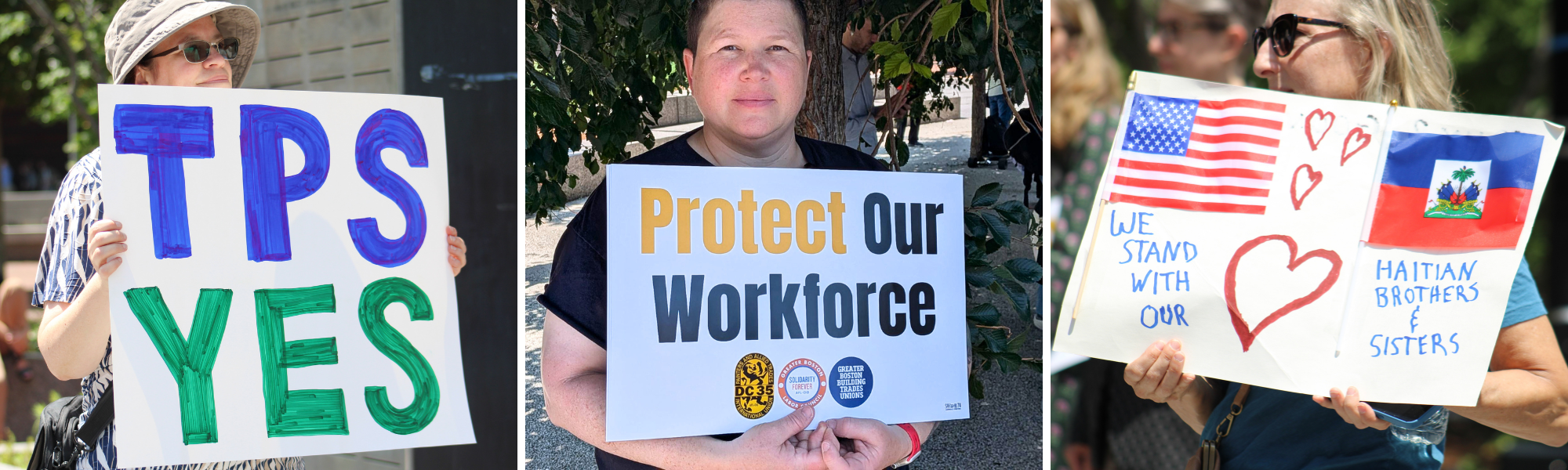
IINE joined community members in advocating for the safety and rights of TPS holders at the Protect Haitian TPS Rally in Boston on July 23, 2026

Providing a lasting solution now calls for action from Congress. It will require reversing recent harmful decisions, protecting TPS from politically driven terminations, and creating a permanent pathway to citizenship for long-term residents who have become integral members of our communities. 

- - -

Learn about IINE’s efforts to support TPS holders and how you can help.

From the Desk of the CEO: How the World Cup Has Reminded Us of Our True National Identity

By Jeff Thielman, President & CEO of the International Institute of New England

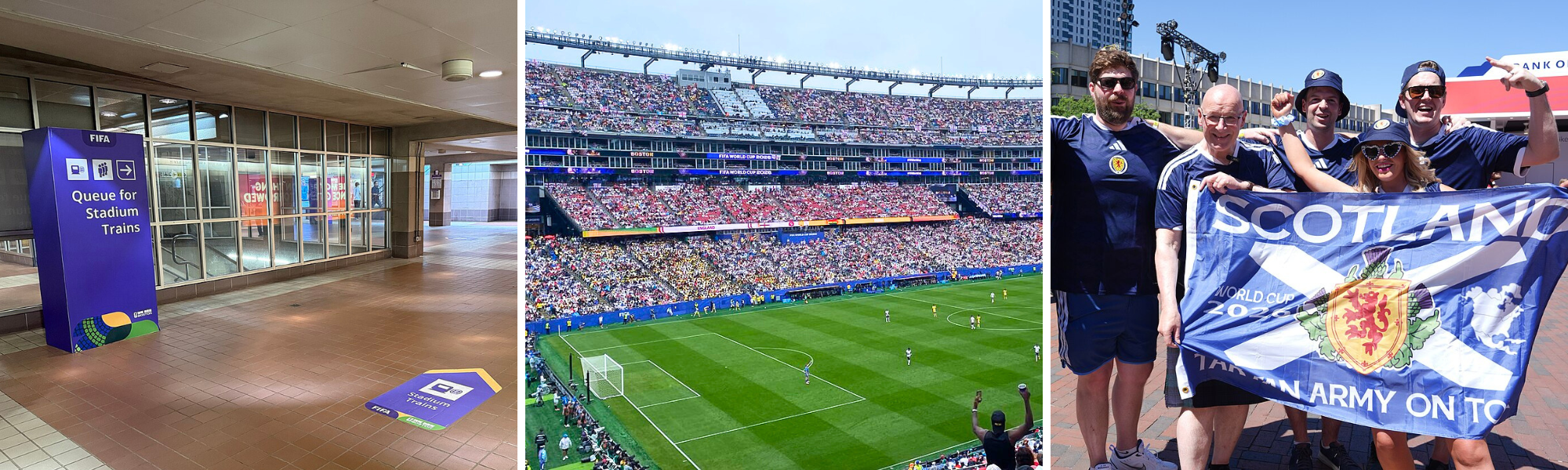
As a host of the 2026 FIFA World Cup, the U.S. has welcomed elite athletes and passionate fans from around the world. Here in New England, we’ve been in on the fun—seven  matches played at “Boston Stadium” in Foxborough drew hundreds of thousands of international visitors to our region.  

After 18 months of xenophobic laws and propaganda from our federal government, the World Cup feels like a breath of fresh air, giving us the opportunity to celebrate diverse cultures and make new friends.  

Our clients and colleagues who are lifelong fans have shown us that, for many, soccer is a common language that can go a long way to build unity, confidence, and belonging.  With its epic scale, this World Cup moment has taught us something more about all that the U.S. represents at our best. Read on to discover my five takeaways from this summer of welcome. 

1) We pride ourselves on our welcoming and diverse culture.

By now, you’ve likely encountered this sentiment from international visitors, whether in person, on the news, or via your social media feeds: We were told Americans don’t like foreigners, but in reality, they could not be more welcoming!  

The Boston Herald’s editorial page noted that “World Cup visitors have injected hosting cities with infectious enthusiasm, soaring spirits and camaraderie,” gushing over comments from visitors about the kindness and generosity of Americans.  

In the Boston Globe, Adrian Walker remarked on the incongruity of this experience with our national politics: “I recognize that people here for the World Cup are tourists, not immigrants. Even so, they are demonstrating on an hourly basis how much better letting people in is than shutting them out. Turns out building a big tent is a lot more fun than building a wall.” 
 
At IINE, we agree. Our community volunteers often form lasting bonds with the families they support, and deep appreciation for their cultures. Our employer partners are grateful to welcome refugees and immigrants onto their teams.  

In fact, a recent study shows that 89% of Americans who personally know a refugee support the U.S. refugee resettlement program. That’s easy to believe when you learn about World Cup stories like the city of Lawrence, Kansas embracing its role as host to the Algerian team who competed here this year, while human rights challenges plague their country back home. 

From the Associated Press: “The more we learned of the challenges Algerians faced to get here, the stronger our commitment became to show how welcoming our city could be,” said Ruth DeWitt, the director of community relations for the city’s convention and visitors bureau. “They quickly became our home team.”

2) Where there’s a will (to welcome the stranger), the U.S. finds a way.

Welcoming millions of people from countries around the world is a tremendous logistical challenge. We just proved we can do it. The U.S. decided that the benefits of hosting the World Cup were worth the effort of coordinating with an international body, partnering closely with Mexico and Canada, and empowering states and cities to be effective hosts. The results have been remarkable.  

Across North America, FIFA Fan Festivals drew nearly 2 million attendees in the tournament’s opening week alone. Host cities coordinated transportation, volunteers, multilingual information, security, public viewing spaces, accessibility services, and cultural programming. 

Locally, the city of Boston arranged special MBTA commuter rail service to Foxborough, planned multiple public outdoor viewing parties, and expanded nightlife policies and public gathering spaces.  

When the “Tartan Army”—tens of thousands of fans of Scotland’s national soccer team—descended on New England at once, a deep friendship blossomed, concluding with an official declaration that Glasgow is now our sister city. 

At IINE, we see heartwarming connections like this all the time. For more than a century, we’ve been helping newcomers find housing, connect to services, find their way around, and learn about our culture. We’d love to see the same spirit of coordination and support for these efforts as we’re seeing during the Cup. In some ways, the benefits are similar. Newcomers end up bringing billions of dollars into the economy, improving our image throughout the world, and making our communities more vibrant.  

3) We rally behind our immigrant communities.

While it was thrilling to watch the U.S. team, the tournament also gave our immigrant communities the opportunity to cheer on their home country teams—often with the enthusiastic support of their American neighbors.  

Massachusetts has the largest Cape Verdean immigrant population in the U.S., news to many other residents until they found themselves cheering alongside Cape Verdean fans as the tiny country—at its first World Cup—faced off against the top-rated teams of Spain and Argentina. Meanwhile, the large population of Moroccan immigrants in suburbs like Revere generated a sea of starred red flags, hats, and capes on Boston Common.  

And then, of course, there is Haiti. IINE has served more than 13,000 Haitian immigrants over the past few years. Every day they are barraged with terrible news from Haiti and ongoing hostility from the U.S. government. Haiti’s first World Cup appearance has offered much-needed joy—both for Haitians and for those of us cheering them on.   

The fact is, when divisive politics are taken out of the equation, we love being a nation of immigrants, and when given the chance, we root for each other.  

4) It feels good to be part of the international community.

Our nation’s foreign policy has become increasingly isolationist as our leaders abandon treaties and alliances, initiate armed conflicts, threaten to conquer sovereign nations, and encourage other countries to close their borders and embrace nationalism. At home, our federal government has closed the doors to refugees, asylum seekers, and many immigrants seeking to reunite with their families, study, work, and rebuild their lives here. They are teaching the world to fear and mistrust us. 

This summer, we’re getting a glimpse of something different.  

5) We value the immigrants who represent us on the world stage.

Folarin Balogun, a talented striker on the U.S. team, would not have qualified if President Trump had successfully revoked birthright citizenship

From Newsweek: “Six players on the U.S. men’s national soccer team at the 2026 World Cup were born outside the country. More than half the 26 men on the roster hold dual citizenship. And the striker who scored twice in the Americans’ opening 4-1 victory over Paraguay is eligible to play only because of a legal provision the Trump administration has sought to eliminate.” 
 
The U.S. President personally advocated for that striker, Folarin Balogun, in a controversial phone call to FIFA, yet Balogun qualified for the U.S. team through birthright citizenship.   

What happened to President Trump’s ideology in this moment? He wanted to win and recognized that an immigrant was the key to our success. Hopefully, this lesson will resonate with Americans long after the Cup is awarded.   

Spotlight Report Excerpt: On Putting Down Roots in Lowell

The below letter from IINE President & CEO Jeff Thielman is an excerpt from our July 2026 Spotlight Report on Putting Down Roots in Lowell.

To learn more about IINE’s history in the city, how this new center will lead to expanded and innovative support for refugees and immigrants, and how you can get involved with this work, click here to read the full Spotlight Report.

Lowell, Massachusetts, has long exemplified the promise of a “Gateway City.” By welcoming successive generations of immigrants and refugees, it has become an economic engine for the state and a place where cultures from across the world have mingled to create a community that is uniquely American. Immigrants helped put Lowell on the map by powering its famed role in the Industrial Revolution, and over the decades, newcomers have continued to help meet the city’s changing needs while shaping its character.

IINE’s own work began in Lowell in 1918, when a group of pioneering women at the local YWCA opened our doors to help a growing population of immigrant women and girls find their footing, integrate into the city’s workforce and civic life, and thrive in their new home. Over the past century, we’ve built on this model of welcoming and now serve thousands of newcomers every year.

As shifting federal priorities create uncertainty about our nation’s commitment to welcoming newcomers, IINE is making a bold investment in their future—right where our story began. This investment will bring our Lowell programs under one roof, creating a lasting, permanent home for opportunity, connection, and community.

Rooted in the historic Lower Highlands neighborhood, this dynamic community hub will enable us to respond to the evolving needs of immigrants, refugees, and the broader Lowell community for generations to come.

Surrounded by trusted partners and designed for growth, the new center will expand access to critical services, foster belonging, and serve as a launchpad for innovative programs that help newcomers build stable, prosperous lives.

This is a defining moment for investment in Massachusetts’ immigrant communities. While policies and priorities may change, the contributions of newcomers remain a constant source of strength and vitality for our state. In the face of uncertainty, we are choosing to lead with vision—creating new opportunities, forging stronger connections, and building a brighter future rooted in welcome, resilience, and belonging.

The Long Road to Safety: An Interactive Simulation of the U.S. Refugee Admissions Process

LONG ROAD TO SAFETY™

The Refugee Act of 1980 created a more just, efficient, secure, and strategic U.S. refugee admissions and resettlement process. It passed with bipartisan support and put into place a system that has since saved the lives of more than 3 million people from around the world.  

It included a rigorous, complex, and comprehensive vetting process for refugees referred to the U.S. for resettlement, which typically took applicants many years to complete.  

In 2025, during his first week in office, President Trump suspended the U.S Refugee Admissions Program by executive order, stranding tens of thousands of displaced people, including many who had already completed vetting and many who were still in the process. Around the world, flights were cancelled, families learned they wouldn’t be reunited, and individuals had to return to refugee camps and other temporary, subpar living situations, with no clear idea of when they would once again be considered for resettlement in the U.S. A common—and unsubstantiated—justification for the suspension was that applicants were being insufficiently vetted. In reality, refugees are the most highly vetted group to immigrate to the U.S.  

This simulation attempts to describe the many rigorous steps, along with the frequent twists, turns, and delays, that individuals faced as part of the U.S. refugee admissions process before the program was suspended. We hope that one effect will be to capture the incredible drive, resilience, and hope refugees show in completing this process while they are still processing trauma and dreaming of a brighter, safer future for themselves and their families.   

Refugee Vetting Journey Callout

Keeping Our Nation's Promise: IINE Statement on Supreme Court’s Decision on Birthright Citizenship

Keeping Our Nation’s Promise: IINE Statement on Supreme Court’s Decision on Birthright Citizenship

For more than 150 years, birthright citizenship has been a defining promise of the United States. The International Institute of New England commends the U.S. Supreme Court for upholding this fundamental principle, which reflects our national values of freedom, opportunity, and fairness.  

President Trump’s effort to end birthright citizenship would have had devastating consequences for millions. According to the ACLU, as many as 5 million children could have faced statelessness over the next two decades, creating enormous barriers to education, healthcare, and economic opportunity. Ending birthright citizenship would also have threatened to tear families apart, as parents in the U.S. with legal status grappled with the possibility of their children being detained and deported.  

The Court’s decision affirms not only constitutional precedent, but our nation’s enduring commitment to equal protection under the law. Birthright citizenship ensures that all Americans—our neighbors, our healthcare workers, our troops—can live and contribute without fear of being treated as second-class citizens.  

As we approach the 250th anniversary of the United States, we celebrate the generations of Americans whose contributions were made possible by our commitment to jus soli—the simple, powerful idea that all people born on U.S. soil are equal and belong.  

WILLOW Fund Blog

2nd Annual WILLOW Fund Panel Celebrates Women Refugees and Immigrants

On June 10, 2026, supporters, partners, and community members gathered at WBUR CitySpace for the International Institute of New England’s 2nd annual WILLOW Fund panel discussion, an inspiring morning dedicated to advancing opportunities for refugee and immigrant women. 

WILLOW stands for the Women’s Initiative for Learning, Liberation, Opportunity, and Wellbeing. The fund was created in 2024 to raise support for refugee women and girls, who make up half of the global refugee population and face unique challenges to resettlement stemming from factors like health needs, past experiences of violence, unequal access to education and opportunity, and childcare responsibilities. Tickets for the event went towards the fund, which will help cover tailored programming for IINE’s clients.  

A Young Afghan Refugee Shares Her Story

This year’s celebration featured a Suitcase Stories® performance by Beheshta, a participant in IINE’s Refugee Youth program. Beheshta read from Bridges, a collection of personal stories created in one of the program’s writing workshops. Entitled “America, I Love You,” the story shares Beheshta’s experience of escaping Taliban rule in her home country, living in a refugee camp, where she felt fear but also formed meaningful friendships, and rebuilding her life—one of freedom and hope—in Lowell, Massachusetts.  

“I have the freedom to make personal decisions about my clothes, my work, and my friends. I can independently chase my dreams and be in control of my own life. America, I love you.” 

Panelists Share Personal Experiences and Insights

This year’s panel was moderated by Dr. Claudine Gay, a distinguished political scientist and the Wilbur A. Cowett Professor of Government and Professor of African and African American Studies at Harvard University. She previously served as Harvard’s 30th president and is the daughter of Haitian immigrants. A nationally recognized scholar of democracy and political behavior, Dr. Gay brings a deep commitment to equity, representation, and inclusive leadership to her work. 

Panelists included: 

  • Ana Hebra Flaster, an award-winning author and Cuban refugee whose writing explores identity, migration, and the immigrant experience 
  • Yves Salomon-Fernández, President of Urban College of Boston, and an advocate for educational access and economic mobility for immigrant communities  
  • Mariana Siqueira, Talent Acquisition Lead at Triumvirate Environmental, who specializes in creating inclusive hiring practices and career pathways
  • Alexandra (Xan) Weber, MSW, LICSW, Senior Vice President and Chief Advancement Officer at IINE, leading fundraising, advocacy, and community engagement to expand opportunities for refugees and immigrants 

By way of introduction, IINE President and CEO Jeff Thielman framed the panel discussion by explaining that, “women are often at the center of the resettlement journey… caring for families, learning a new language, entering the workforce, and creating stability—all while adapting to a new culture themselves.” 

Over the course of the discussion, Yves Salomon-Fernández highlighted the transformative role that education can play for immigrant and refugee women, noting that access to learning doesn’t just change an individual’s life, it reshapes families and future generations. “You will see a student sitting at the kitchen table with her kids around her… those children are not going to be first-generation college students—they’re going to be legacy students.” She also underscored the importance of designing institutions that meet women where they are, especially as caregivers balancing multiple responsibilities. 

Noting with pride that her mother, a Brazilian immigrant, was in attendance at the event, Mariana Siqueira spoke to bringing her dual identities as a Brazilian and an American into her life and work. She highlighted how the unique perspectives of immigrants strengthen the American workforce. “That diversity of thought… is going to make you more well-rounded. When you bring in someone who’s worked in a different country or culture, you get new ways of solving problems.” 

Xan Weber spoke to the structural barriers refugee and immigrant women must overcome, as primary caregivers who have had less access to opportunity and must now contribute to their family’s stability as they begin rebuilding their lives. “Women… are doing a lot more for other people than for themselves, which creates real barriers to accessing support,” she said. “They come here not only to build a life for themselves, but to make sure others can have that opportunity too.” 

Ana Hebra Flaster emphasized the emotional complexity of the refugee experience—how joy and opportunity often coexist with profound loss. She spoke about the power of storytelling as a way for families, especially women across generations, to preserve identity, build resilience, and envision a future despite displacement. 

“The courage—the ability to leave everything behind, everyone you know, and start new… their dreams have come true, but their hearts have been broken at the same time,” she said. 

In closing, Dr. Gay asked each panelist what gives them hope in a challenging time for refugee and immigrant women. Each panelist found the answer simple: the gathering itself; the insight and sensitivity of their fellow panelists; and the dedication of the attendees to supporting extraordinary women and girls as they rebuild their lives and enrich our communities.  

“I believe in humans,” Flaster said. “I believe in our capacity to see the other once we get to know them… when that touches us, we change, and we become human.” 


- - -

Support refugee and immigrant women with a donation to the WILLOW Fund.

United Nations Refugee Agency Reports Record Displacement and Declining Support

United Nations Refugee Agency Reports Record Displacement and Declining Support

Call to Action Is Clear and Urgent

A newly released report by The United Nations Refugee Agency (UNHCR) shows that active global conflicts have forced people from their homes and stranded them at historic levels.

While numbers alone can never fully tell the stories of real people living with loss and fear, separation from their loved ones, and no clear path to safety, 2025 data in this “Global Trends” report is stark enough to sound an alarm about a humanitarian relief system in serious decline.

  • At the end of 2025, there were  41.6 million refugees globally.
  • One in every 70 people, or 1.4 per cent of the entire world’s population, is now forcibly displaced.
  • 70% of refugees have been displaced for five years or more with no pathway forward.
  • 39% of refugees are children.
  • A three percent decrease in refugees from 2024 does not indicate that conflicts were resolved and individuals were safe once again. Rather, it is due to an increase in people being pressured to return to the home counties they fled, with no guarantee of safety.

Far from meeting this challenge, structural support for refugee resettlement is on the decline throughout our global community.

  • Refugee resettlement collapsed by more than half, with resettled refugees dropping from 188,800 in 2024 to just 81,800 in 2025.
  • Asylum backlogs grew for the ninth consecutive year, impacting 9 million people awaiting a decision on their future.
  • Safe pathways are shrinking, with far fewer people able to access resettlement or sponsorship routes.

While these trends are disheartening, it is important to note that the actions of governments worldwide do not necessarily reflect the feelings of their communities and individuals. Here in the U.S., where the refugee resettlement and immigration systems are being undermined by federal policies, polls show that 69% of U.S. voters from both major political parties support maintaining a refugee resettlement program. This support increases to 84% when people have had personal contact with refugees.

As we approach the 250th anniversary of the signing of the Declaration of Independence, we remain a nation of immigrants that values freedom, fairness, opportunity, and the diversity that defines us. In the face of these global trends, IINE’s work at the local level has never been more important. Together, we protect and strengthen the refugee program by continuing to show up for the displaced people who reach our communities eager to contribute and succeed; by helping them to put down roots, learn English and flourish in the workforce; by amplifying their voices; by celebrating their successes; and by advocating for laws and policies that prioritize human dignity, equal opportunity, and prosperity for all.

IINE is committed to fighting for the rights and safety of refugees, but we need your support. Please consider making a donation today.

How Have Refugees Helped Shape U.S. Culture?

Quiz: How Have Refugees Helped Shape U.S. Culture?

Refugees are forced to flee their home countries to escape persecution and violence. They often spend years living in camps and undergo a rigorous vetting process before beginning their life in the U.S. with little more than a small suitcase. It’s a process that requires tremendous bravery, drive, and resilience, and gives those who endure a unique perspective on life. In the face of many challenges, refugees have helped shape U.S. culture with notable impacts in business, public service, athletics, and arts and culture.

How much do you know about these influential Americans? Take this quiz to find out!

1 / 12

Which of the following companies was co-founded by a refugee to the United States?

2 / 12

Which dance/pop hit was recorded by a refugee from Cuba?

3 / 12

Which co-founder of Google came to the U.S. as a child refugee?

4 / 12

Which popular mobile messaging app was created by a refugee?

5 / 12

Which former U.S. Secretary of State fled Europe as a child refugee during World War II?

6 / 12

What life-saving medical advancement was developed thanks to contributions from refugees?

7 / 12

Which author who came to the U.S. as a refugee later won the Pulitzer Prize for fiction?

8 / 12

Which NBA player came to the U.S. as a refugee and earned fame both as an elite defender on the court and a humanitarian?  

9 / 12

Which popular hot sauce brand was founded by a refugee who resettled in the U.S.?

10 / 12

Which of the following works of modern art was painted by a refugee? 

11 / 12

Which New England achievement was accomplished by a refugee?

12 / 12

Who said the following in a speech for World Refugee Day?

“It is due time for people to respect the plight of refugees and see their value. We must protect them, and invest in them. They are not a problem, they are part of the solution to this global crisis. They are the potential for the rebuilding and restabilization of countries.”

Your score is

The average score is 50%

0%

From the Desk of the SVP: Unpacking Refugee Resilience

Why our appreciation for the ability to endure and adapt should inspire holistic support—including for wellbeing

By Alexandra Weber, MSW, LICSW, Senior Vice President & Chief Advancement Officer

The Resilience “Superpower”

Around ten years ago, when I was working as a counselor on IINE’s Program team, I treated a Haitian woman who was living in domestic servitude at the mercy of someone who gave her a place to sleep in exchange for endless unpaid cleaning, cooking, and housekeeping. She was waiting for adjudication of her asylum case and had no money and nowhere else to go. This women is the mother of three children whom she had to leave behind in Haiti, along with their grandmother, after she was attacked by a gang because of her political beliefs and advocacy work. She was penniless, overtired, overstressed, grieving, and terrified for her children, and yet every day she put one foot in front of the other, always pushing forward no matter what she had to push through. Over time, she won her asylum case, began to heal from her trauma, found a job, became relicensed as a nurse, and brought her kids to live with her in the U.S.

When you work with refugees, you tend to draw inspiration from their resilience. We describe this skill as being like a “superpower.” In fact, “Superman” himself is an expression of this feeling, created in 1938 by the children of refugees who escaped persecution in Eastern Europe.

The stories we hear at IINE may not be supernatural, but they are no less astonishing. We meet refugees when they first arrive in the U.S. with little more than a small suitcase, and so many challenges ahead of them. We learn about what they’ve survived: violence, threats to their families, loss of their human rights and their homes, separation from their loved ones, years spent in the limbo of a refugee camp or a long and dangerous journey. Then we watch them propel forward, navigating unfamiliar terrain while learning English, acquiring new skills, excelling at entry-level jobs, and supporting their families.

While on this journey, refugees sometimes seem to be drawing on bottomless wells of strength, gratitude, and hope.

Moving Beyond Inspiration

It’s important to remember, though, that while inspirational, refugees are human, not superhuman, and we can’t always see the sacrifices inherent in their resilience—the emotional strain, suppression of grief and fear, deferral of self-care, and other hidden suffering.  As Congresswoman Ayanna Pressley reminded us at a recent immigration forum, “people celebrate resilience, but that resilience is born out of necessity—because systems have failed people.” She’ll often tell her crowds, “I don’t want you to just be resilient. I want you to be resourced.” 

One of the best ways to honor resilience is by providing resources that support healing and growth. 

Responding Holistically

At IINE, we work to balance our clients’ strengths and vulnerabilities. We offer a continuum of services from resettlement to language training, career services, and pathways to citizenship, centering the choices of adults who have survived significant adversity to ensure they feel a sense of control over the lives they are rebuilding. We also focus on services that are accessible—sensitive to their trauma and healing, hybrid to best accommodate their schedules, and holistic so that we are removing barriers to economic mobility, such as transportation and childcare. 

From L to R, clients gather from our Swahili Women’s Group, Afghan Women’s Group, and Haitian Men’s Group

Our services are delivered by case specialists who share clients’ languages and cultures. We’ve also created affinity groups, in which clients who share common backgrounds can come together in safe spaces to socialize, cook, craft, go on outings, and volunteer together. 

Centering Self-Efficacy

Another way we resource clients is through teaching while helping. We recognize that, while it can be an enormous relief to have support, true independence is what clients seek and what we need to prepare them for. We ensure immigrants understand the complicated laws, rules, and conventions that shape their lives here, but in building language, work, and navigation skills, our role is to support their agency and give them the access and tools they need to achieve self-sufficiency as quickly and sustainably as possible.

Addressing Emotional Health

In what is our greatest bow to true resilience, at IINE we acknowledge that no one is a bottomless well of strength. Trauma takes a toll, and as trauma researcher Bessel van der Kolk put it, “the body keeps the score.” The majority of IINE’s clients have experienced violence and persecution and live in its physical and emotional aftermath.  

This year, in the face of a new level of suffering under destructive immigration policy changes and indiscriminate detention and deportation, IINE has made a year-long investment in training front-line staff in our Boston office in an intervention developed by the World Health Organization to support adults in communities exposed to adversity who experience psychological distress. As a clinical social worker, I am stepping back into a limited program role to help supervise our non-clinical staff in learning techniques to help clients manage their depression, anxiety, and stress, and improve their psychosocial well-being. With additional support, we hope to expand this program throughout IINE in the years to come. We know from supporting so many people through their integration journey that wellbeing is the greatest superpower of all.  

Welcoming, supporting, and integrating refugees is a community effort. Explore opportunities to get involved.

efdjeen blog

Forced to Flee Haiti, Efdjeen Never Gave Up On Her Dreams of a Medical Career

A former IINE client, Efdjeen gave a Suitcase Stories® performance at IINE’s 2026 Golden Door Award Gala, where the below video was shown for the first time. 

A Call to Serve

When Efdjeen was a child in Haiti, she wasn’t sure what she wanted to be when she grew up. “I was curious about everything,” she says. “I loved art, and I also loved the idea of being a businesswoman.”

As she got older and thought more deeply about the question, she realized that what she really wanted to do in life was to help people. “I thought about my mom. It was always her dream to become a doctor, but she couldn’t. So I thought, ‘Okay, I got this.’” 

Making Strides

This goal motivated Efdjeen. She worked hard in high school and got accepted into a pharmacy program at a local university. It wasn’t medical school, but she found that she really enjoyed it. Rather than trying to transfer as she had originally planned, she finished the degree and found a job as a pharmacist. Meanwhile, to further her mission of helping people, she began volunteering at an international leadership organization.

“Honestly… I don’t even know when I had time to sleep.” 

Still, she felt called to pursue her original goal of becoming a doctor. On her second try, she got into medical school and earned her degree, but her graduation came at a challenging time. The COVID-19 pandemic had hit, delaying her path forward. She took the challenge in stride, taking up painting as a hobby that allowed her to explore her artistic side as she continued to work as a pharmacist.  

As soon as she was able, she went back to medical school and began her internship. Then a new challenge arose. 

“The situation in my country became more dangerous as gangs took over—but I still had to finish my internship. Every week, I traveled for hours between my job and the hospital. Sometimes, because my lighter skin complexion made me an easy target for kidnappers, just to make it there safely, I had to hide under the seat of the bus so I wouldn’t be seen.”  

Despite the fear, Efdjeen remained determined.  
 
“I was too close to the finish line. I couldn’t give up. So, I completed my internship and became that doctor.”

On Pause

When Efdjeen returned home, ready to start her new life as a doctor, she found that the reality of gang violence had grown too dangerous to avoid.

“My neighborhood was attacked. My home was destroyed. My family had to run. My doctor journey was on pause. 

She did not want to leave, but her family was terrified for her safety and convinced her it was the move she had to make. With her mother, father, and sister, she would journey to the U.S. where they could live with an aunt.  

Starting Over

After all she had achieved in Haiti, persevering through setbacks and hustling hard to realize her dreams, starting over in the U.S. would not be easy.

“We had to start over from zero, like, real zero. Not even a ‘starting from the bottom’ kind of zero. We felt so many mixed feelings: gratitude and joy because we were with our family, safe, breathing new air with no gunshot sounds, but at some point, we also felt a bit lost, uncertain about the future. Sometimes I even felt depressed, but we never gave up.”

To help support her family, Efdjeen began working as soon as she was able, finding jobs as a machine builder and tester, and as a sales associate at a local mall. She knew she wanted to get back into the medical field. But where to start? She was thrilled when she learned about the opportunity to join IINE’s free CNA for Success program, which combines contextualized ESOL instruction, Certified Nursing Assistant (CNA) clinical skills training, and job readiness training. True to form, she worked hard in the course, passed her exam, and earned her license to become a CNA.

“IINE made me start to feel comfortable with the medical terminology. It was such a great pleasure for me—but I wanted to do more than that.” Efdjeen explained her goals to her IINE Career Navigator and asked what other steps she could take. Fortunately, IINE had just launched a new initiative modeled after CNA for Success, the Medical Assistant Training program. Efdjeen enrolled, completed the course, and earned her next certification.

New Pathways

IINE helped Efdjeen secure a job as a clinical medical assistant with a partner organization, the Lowell Community Health Center.  
 
“Most of my patients are refugees and immigrants, just like me. I’m working toward a Physician Assistant program because I firmly believe that one day, I’ll become an Anesthesiologist.” 

Meanwhile, Efdjeen says she is not the only one in her family finding pathways to happiness in Lowell. “My mom is now a bus monitor, and she loves it. My sister is pursuing her finance career, met the love of her life, and got married. My dad is learning English every day, and honestly, we’re all still learning English together.” 

The resilience of Efdjeen and her family is paying off, and her new community has gained a new healer. 

- - -

Біженці та іммігранти здійснюють довгі, важкі подорожі, щоб уникнути насильства і почати нове життя в США . Ви можете надати їм допомогу, якої вони потребують. 

Employee Profile Jezabel Aponte

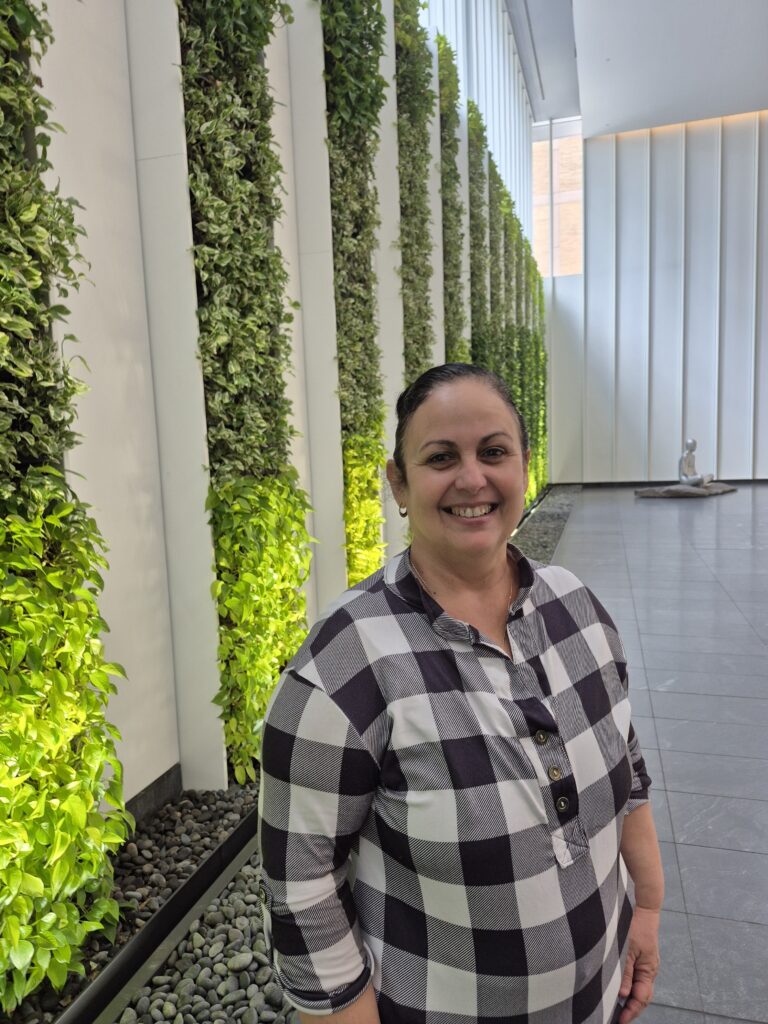
Employee Profile: Meet Jezabel Aponte, Shelter Services Program Assistant

Jezabel Aponte joined IINE’s Shelter Services team in 2025. Through case management, English classes, employment support, and legal services, this team helps newly arrived immigrant families who have entered the Massachusetts emergency shelter system to find permanent housing and progress towards self-sufficiency.  

Що вас привабило в IINE?

I first came to IINE as a food packing volunteer at the Lowell office back in 2023 when I was completing a master’s degree in innovation and global development at WPI in Worcester—it’s a program that teaches how to use technology to deliver humanitarian services. The opportunity to serve others was what drew me to IINE. In the past, while I was an undergraduate at UCA, a Jesuit University in Nicaragua, where I’m from, I had volunteered with organizations like World Vision, TECHO, Raleigh International, and the Red Cross, so I was happy to continue volunteering here in the United States. UCA truly influenced my values of serving and care for others. Unfortunately, my alma mater was seized by the Nicaraguan government in 2023.

I was also driven by a great interest in a career in humanitarian services and international development. In Nicaragua, I worked with German and Japanese cooperation agencies. I felt particularly fortunate that I get to do this work here, as sadly, in Nicaragua, more than 5,000 NGOs have been shut down. Additionally, for international students like me, opportunities to join the U.S. workforce are becoming increasingly limited, so I am truly grateful to develop professionally at IINE.

What does your role as a Program Assistant on the Shelter Services team entail?

Jezabel (second from left) and the Shelter Services team

My role mainly entails data entry in both internal and external reporting systems; I also assist with client outreach and educating our clients on how to use online services and digital tools that allow them to remotely handle certain aspects of their immigration cases, like checking court dates; checking their asylum clock (which tracks where they are on their waiting period for work authorizations and can be stopped and started by judges); filing changes of address, and monitoring the status of applications for work benefits. I recently started supporting my coworkers in connecting our clients with stable, affordable housing. I have enjoyed the opportunity to learn about shelter services given my background in civil engineering.

I also work on the Legal Helpdesk, which offers remote legal consultations to clients living in northeast Massachusetts. I am not an attorney, but I assist our Shelter Services Managing Attorney with making sure our clients, who have different digital literacy levels, make it to their online consultations, and I continue assisting them after.

As much as possible, we try to offer client assistance over WhatsApp—which we know most of our clients use—for speedy contact and a low-tech experience that doesn’t stop them from accessing our services at a distance. One of the advantages is that it reduces the exposure our clients would face in traveling for in-person appointments or going to the post office.

You have won some praise for your work on this recently, from the Massachusetts Office of Refugees and Immigrants-particularly for how well you prepare our clients for their legal services appointments.   

Getting key identifying information ahead of time really helps us understand a client’s immigration history and background before we actually meet with them. It saves a lot of time. We also help clients with obtaining digital records that are crucial for those who may have lost documentation, or for clients trying to show proof of immigration status to access assistance.  

Another important thing we help clients with is joining remote online court hearings. This option is allowed at the court’s discretion, but when granted, it can relieve our clients of the anxiety and stress that in-person hearings can cause.  

We also get all sorts of questions. You know, some people want to know what happened with their Temporary Protected Status application that they filed maybe one year ago, so we try to dig online and search for receipt numbers. Or they want to know when their next hearing is, or to talk about their options. Recently, the federal government has required people to start paying $100 for their “asylum annual maintenance fee”—$100 for every year their asylum case remains pending. So, a lot of people have had questions about that. 

What makes this role challenging and rewarding?

It is challenging to help our clients navigate constantly changing rules, but there are certainly more rewarding aspects. It is rewarding to see the youngest of our clients thriving thanks to all the efforts their parents make to stay together and stay safe in this country. It is also especially rewarding to work alongside colleagues from other departments. This work requires a holistic approach, and I am glad there are people at IINE who are incredibly effective and expert in employment services, community services, and language services, so clients can get all the help they need right here—and I think once you’ve gained a client’s trust in one department, they are more comfortable accessing another.

It has also been wonderful to learn about IINE’s digital landscape—the many ways in which IINE uses technology like case management software and other tools to streamline services (10+ for programs alone!). NGOs are generally limited in this aspect, but IINE has certainly made great efforts to serve clients efficiently.

What are some things you’ve learned from working with asylum seekers that you’d like more people to understand?  

1) Asylum seekers can be and are often denied asylum; they are highly vulnerable. The overall national grant rate for asylum cases decided by Immigration Judges was approximately 14% in FY 2023. Filing an asylum application and obtaining a work permit under pending asylum application is not the end of our client’s story. There is so much they must navigate; asylum applications can take years to resolve, and being able to pay for legal representation is one of the biggest barriers our clients face.  

2) Sometimes we use the terms “asylum seekers” and ”refugees” interchangeably, but asylum seekers are different from refugees. Asylum seekers live in a sort of legal gray area because they are authorized to remain in the country while their claims are pending, yet they do not hold a permanent status. This has implications for their eligibility for certain services and assistance.  

3) While many asylum seekers flee their countries for political and/or religious reasons, increasingly we see people fleeing poly-crises—multiple interlocking factors that drive displacement but do not always meet the standard for asylum protection, like the effects of climate change, widespread disease, and economic and political instability. Women who have fled these poly-crises and additionally have experienced domestic violence in their home countries are at particularly high risk. With programs like Temporary Protected Status (TPS) ending, some of these people have extremely limited options for protection.  

Shifting gear a bit, what do you most like to do outside of work?  

I enjoy gardening and reading. I love historical fiction and biographies.  

Any favorite books or authors you’d recommend?

Yes, there’s a Turkish author that I really love. Her name is Elif Shafak. She writes really beautiful books, mostly stories of immigrants and women. One that I enjoyed is the Island of Missing Trees. Also, a Spanish author who writes historical novels, named Julia Navarro. I’ve learned a lot of interesting history from her. 

Бажаєте приєднатися до нашої команди? Наше спільне, командно-орієнтоване середовище пропонує можливості служити біженцям та іммігрантам, навчаючись у інших співробітників та відділів. Переглянути кар'єрні можливості тут.