The Refugee Act of1980 created a more just, efficient, secure, and strategic U.S. refugee admissions and resettlement process. It passed with bipartisan support and put into place a system that has since saved the lives of more than 3 million people from around the world.
It included a rigorous, complex, and comprehensive vetting process for refugees referred to the U.S. for resettlement, which typically took applicants many years to complete.
In 2025, during his first week in office, President Trump suspended the U.S Refugee Admissions Program by executive order, stranding tens of thousands of displaced people, including many who had already completed vetting and many who were still in the process. Around the world, flights were cancelled, families learned they wouldn’t be reunited, and individuals had to return to refugee camps and other temporary, subpar living situations, with no clear idea of when they would once again be considered for resettlement in the U.S. A common—and unsubstantiated—justification for the suspension was that applicants were being insufficiently vetted. In reality, refugees are the most highly vetted group to immigrate to the U.S.
This simulation attempts to describe the many rigorous steps, along with the frequent twists, turns, and delays, that individuals faced as part of the U.S. refugee admissions process before the program was suspended. We hope that one effect will be to capture the incredible drive, resilience, and hope refugees show in completing this process while they are still processing trauma and dreaming of a brighter, safer future for themselves and their families.
For more than 150 years, birthright citizenship has been a defining promise of the United States. The International Institute of New England commends the U.S. Supreme Court for upholding this fundamental principle, which reflects our national values of freedom, opportunity, and fairness.
President Trump’s effort to end birthright citizenship would have had devastating consequences for millions. According to the ACLU, as many as 5 million children could have faced statelessness over the next two decades, creating enormous barriers to education, healthcare, and economic opportunity. Ending birthright citizenship would also have threatened to tear families apart, as parents in the U.S. with legal status grappled with the possibility of their children being detained and deported.
The Court’s decision affirms not only constitutional precedent, but our nation’s enduring commitment to equal protection under the law. Birthright citizenship ensures that all Americans—our neighbors, our healthcare workers, our troops—can live and contribute without fear of being treated as second-class citizens.
As we approach the 250th anniversary of the United States, we celebrate the generations of Americans whose contributions were made possible by our commitment to jus soli—the simple, powerful idea that all people born on U.S. soil are equal and belong.
On June 10, 2026, supporters, partners, and community members gathered at WBUR CitySpace for the International Institute of New England’s 2nd annual WILLOW Fund panel discussion, an inspiring morning dedicated to advancing opportunities for refugee and immigrant women.
WILLOW stands for the Women’s Initiative for Learning, Liberation, Opportunity, and Wellbeing. The fund was created in 2024 to raise support for refugee women and girls, who make up half of the global refugee population and face unique challenges to resettlement stemming from factors like health needs, past experiences of violence, unequal access to education and opportunity, and childcare responsibilities. Tickets for the event went towards the fund, which will help cover tailored programming for IINE’s clients.
A Young Afghan Refugee Shares Her Story
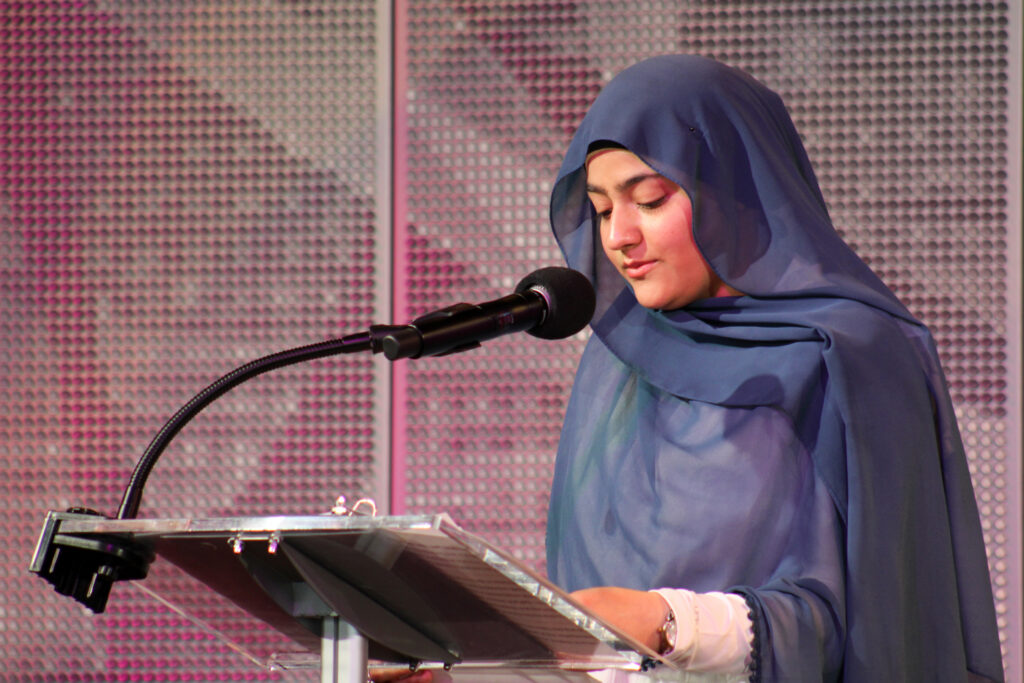
This year’s celebration featured a Suitcase Stories® performance by Beheshta, a participant in IINE’s Refugee Youth program. Beheshta read from Bridges, a collection of personal stories created in one of the program’s writing workshops. Entitled “America, I Love You,” the story shares Beheshta’s experience of escaping Taliban rule in her home country, living in a refugee camp, where she felt fear but also formed meaningful friendships, and rebuilding her life—one of freedom and hope—in Lowell, Massachusetts.
“I have the freedom to make personal decisions about my clothes, my work, and my friends. I can independently chase my dreams and be in control of my own life. America, I love you.”
Panelists Share Personal Experiences and Insights
This year’s panel was moderated by Dr. Claudine Gay, a distinguished political scientist and the Wilbur A. Cowett Professor of Government and Professor of African and African American Studies at Harvard University. She previously served as Harvard’s 30th president and is the daughter of Haitian immigrants. A nationally recognized scholar of democracy and political behavior, Dr. Gay brings a deep commitment to equity, representation, and inclusive leadership to her work.
Panelists included:
Ana Hebra Flaster, an award-winning author and Cuban refugee whose writing explores identity, migration, and the immigrant experience
Yves Salomon-Fernández, President of Urban College of Boston, and an advocate for educational access and economic mobility for immigrant communities
Mariana Siqueira, Talent Acquisition Lead at Triumvirate Environmental, who specializes in creating inclusive hiring practices and career pathways
Alexandra (Xan) Weber, MSW, LICSW, Senior Vice President and Chief Advancement Officer at IINE, leading fundraising, advocacy, and community engagement to expand opportunities for refugees and immigrants
By way of introduction, IINE President and CEO Jeff Thielman framed the panel discussion by explaining that, “women are often at the center of the resettlement journey… caring for families, learning a new language, entering the workforce, and creating stability—all while adapting to a new culture themselves.”
Over the course of the discussion, Yves Salomon-Fernández highlighted the transformative role that education can play for immigrant and refugee women, noting that access to learning doesn’t just change an individual’s life, it reshapes families and future generations. “You will see a student sitting at the kitchen table with her kids around her… those children are not going to be first-generation college students—they’re going to be legacy students.” She also underscored the importance of designing institutions that meet women where they are, especially as caregivers balancing multiple responsibilities.
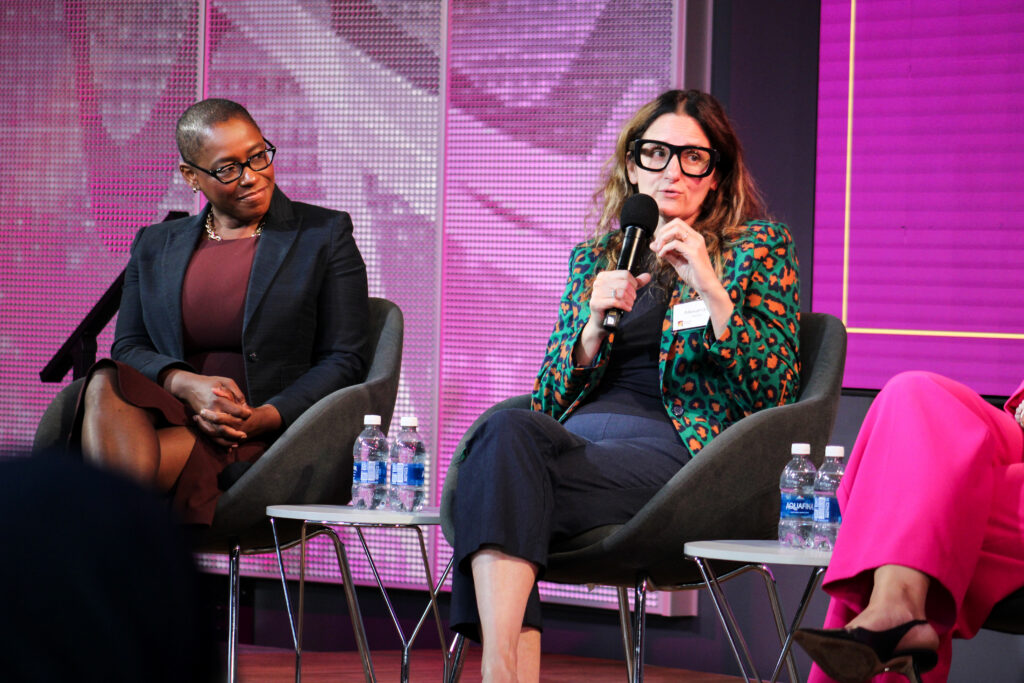
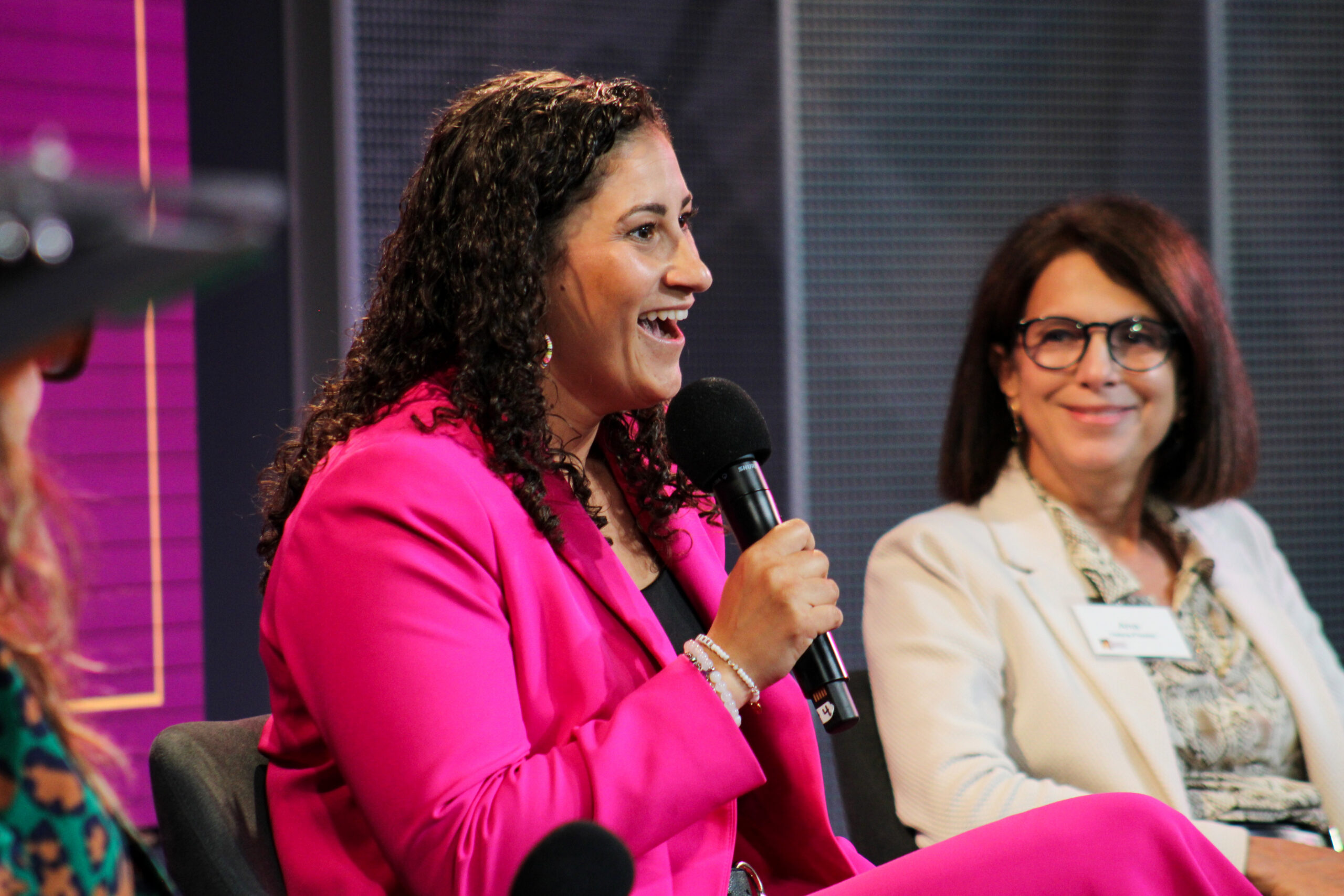
From left to right, panelists Yves Salomon-Fernández, Xan Weber, Mariana Siqueira, and Ana Hebra Flaster
Noting with pride that her mother, a Brazilian immigrant, was in attendance at the event, Mariana Siqueira spoke to bringing her dual identities as a Brazilian and an American into her life and work. She highlighted how the unique perspectives of immigrants strengthen the American workforce. “That diversity of thought… is going to make you more well-rounded. When you bring in someone who’s worked in a different country or culture, you get new ways of solving problems.”
Xan Weber spoke to the structural barriers refugee and immigrant women must overcome, as primary caregivers who have had less access to opportunity and must now contribute to their family’s stability as they begin rebuilding their lives. “Women… are doing a lot more for other people than for themselves, which creates real barriers to accessing support,” she said. “They come here not only to build a life for themselves, but to make sure others can have that opportunity too.”
Ana Hebra Flaster emphasized the emotional complexity of the refugee experience—how joy and opportunity often coexist with profound loss. She spoke about the power of storytelling as a way for families, especially women across generations, to preserve identity, build resilience, and envision a future despite displacement.
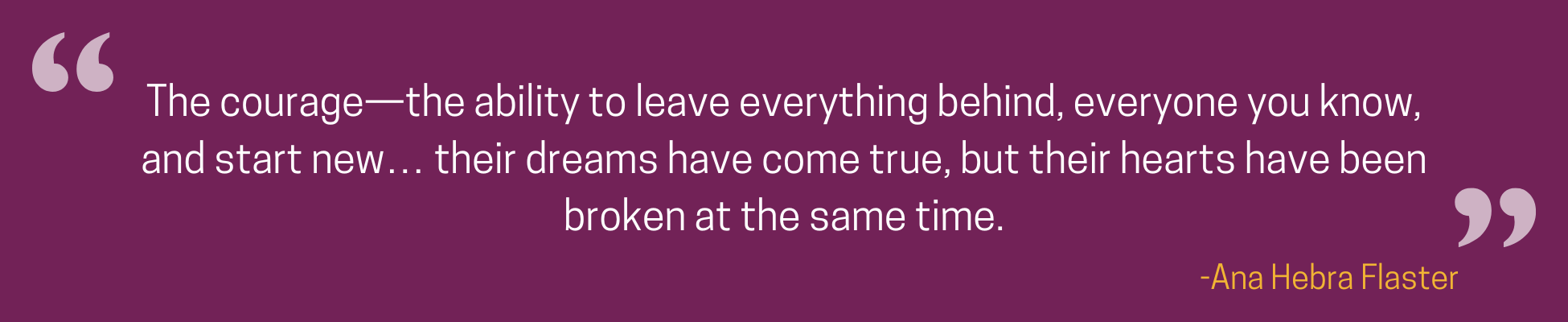
“The courage—the ability to leave everything behind, everyone you know, and start new… their dreams have come true, but their hearts have been broken at the same time,” she said.
In closing, Dr. Gay asked each panelist what gives them hope in a challenging time for refugee and immigrant women. Each panelist found the answer simple: the gathering itself; the insight and sensitivity of their fellow panelists; and the dedication of the attendees to supporting extraordinary women and girls as they rebuild their lives and enrich our communities.
“I believe in humans,” Flaster said. “I believe in our capacity to see the other once we get to know them… when that touches us, we change, and we become human.”
- - -
Support refugee and immigrant women with a donation to the WILLOW Fund.
While numbers alone can never fully tell the stories of real people living with loss and fear, separation from their loved ones, and no clear path to safety, 2025 data in this “Global Trends” report is stark enough to sound an alarm about a humanitarian relief system in serious decline.
At the end of 2025, there were 41.6 million refugees globally.
One in every 70 people, or 1.4 per cent of the entire world’s population, is now forcibly displaced.
70% of refugees have been displaced for five years or more with no pathway forward.
39% of refugees are children.
A three percent decrease in refugees from 2024 does not indicate that conflicts were resolved and individuals were safe once again. Rather, it is due to an increase in people being pressured to return to the home counties they fled, with no guarantee of safety.
Far from meeting this challenge, structural support for refugee resettlement is on the decline throughout our global community.
Refugee resettlement collapsed by more than half, with resettled refugees dropping from 188,800 in 2024 to just 81,800 in 2025.
Asylum backlogs grew for the ninth consecutive year, impacting 9 million people awaiting a decision on their future.
Safe pathways are shrinking, with far fewer people able to access resettlement or sponsorship routes.
While these trends are disheartening, it is important to note that the actions of governments worldwide do not necessarily reflect the feelings of their communities and individuals. Here in the U.S., where the refugee resettlement and immigration systems are being undermined by federal policies, polls show that 69% of U.S. voters from both major political parties support maintaining a refugee resettlement program. This support increases to 84% when people have had personal contact with refugees.
As we approach the 250th anniversary of the signing of the Declaration of Independence, we remain a nation of immigrants that values freedom, fairness, opportunity, and the diversity that defines us. In the face of these global trends, IINE’s work at the local level has never been more important. Together, we protect and strengthen the refugee program by continuing to show up for the displaced people who reach our communities eager to contribute and succeed; by helping them to put down roots, learn English and flourish in the workforce; by amplifying their voices; by celebrating their successes; and by advocating for laws and policies that prioritize human dignity, equal opportunity, and prosperity for all.
Why our appreciation for the ability to endure and adapt should inspire holistic support—including for wellbeing
By Alexandra Weber, MSW, LICSW, Senior Vice President & Chief Advancement Officer
The Resilience “Superpower”
Around ten years ago, when I was working as a counselor on IINE’s Program team, I treated a Haitian woman who was living in domestic servitude at the mercy of someone who gave her a place to sleep in exchange for endless unpaid cleaning, cooking, and housekeeping. She was waiting for adjudication of her asylum case and had no money and nowhere else to go. This women is the mother of three children whom she had to leave behind in Haiti, along with their grandmother, after she was attacked by a gang because of her political beliefs and advocacy work. She was penniless, overtired, overstressed, grieving, and terrified for her children, and yet every day she put one foot in front of the other, always pushing forward no matter what she had to push through. Over time, she won her asylum case, began to heal from her trauma, found a job, became relicensed as a nurse, and brought her kids to live with her in the U.S.
When you work with refugees, you tend to draw inspiration from their resilience. We describe this skill as being like a “superpower.” In fact, “Superman” himself is an expression of this feeling, created in 1938 by the children of refugees who escaped persecution in Eastern Europe.
The stories we hear at IINE may not be supernatural, but they are no less astonishing. We meet refugees when they first arrive in the U.S. with little more than a small suitcase, and so many challenges ahead of them. We learn about what they’ve survived: violence, threats to their families, loss of their human rights and their homes, separation from their loved ones, years spent in the limbo of a refugee camp or a long and dangerous journey. Then we watch them propel forward, navigating unfamiliar terrain while learning English, acquiring new skills, excelling at entry-level jobs, and supporting their families.
While on this journey, refugees sometimes seem to be drawing on bottomless wells of strength, gratitude, and hope.
Moving Beyond Inspiration
It’s important to remember, though, that while inspirational, refugees are human, not superhuman, and we can’t always see the sacrifices inherent in their resilience—the emotional strain, suppression of grief and fear, deferral of self-care, and other hidden suffering. As Congresswoman Ayanna Pressley reminded us at a recent immigration forum, “people celebrate resilience, but that resilience is born out of necessity—because systems have failed people.” She’ll often tell her crowds, “I don’t want you to just be resilient. I want you to be resourced.”
One of the best ways to honor resilience is byproviding resources that support healing and growth.
Responding Holistically
At IINE, we work to balance our clients’ strengths and vulnerabilities. We offer a continuum of services from resettlement to language training, career services, and pathways to citizenship, centering the choices of adults who have survived significant adversity to ensure they feel a sense of control over the lives they are rebuilding. We also focus on services that are accessible—sensitive to their trauma and healing, hybrid to best accommodate their schedules, and holistic so that we are removing barriers to economic mobility, such as transportation and childcare.
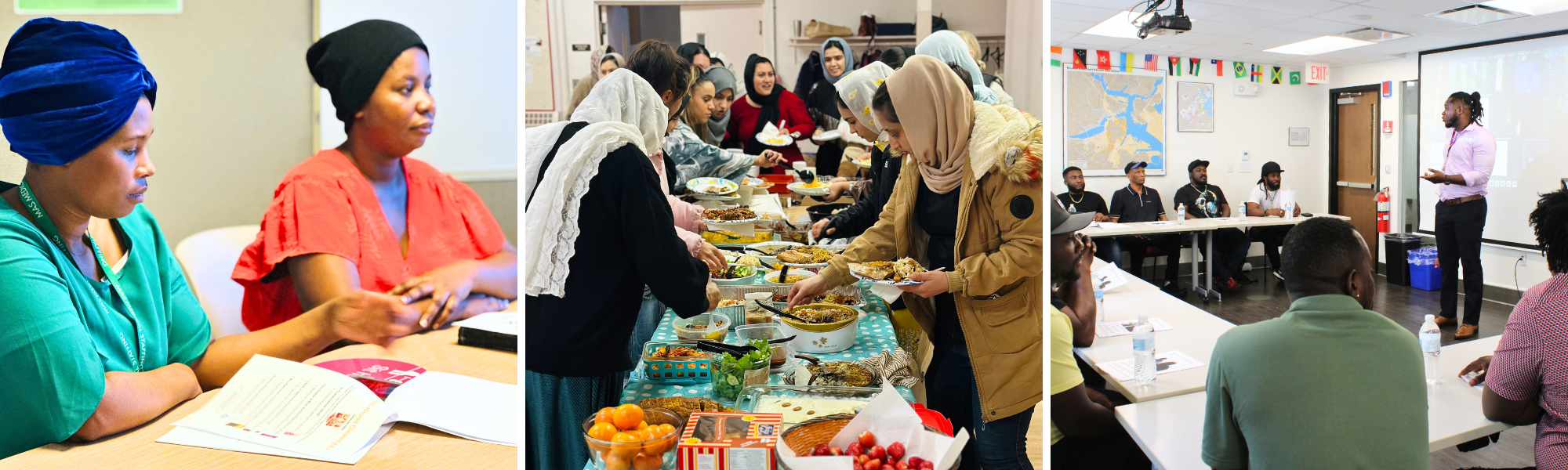
From L to R, clients gather from our Swahili Women’s Group, Afghan Women’s Group, and Haitian Men’s Group
Our services are delivered by case specialists who share clients’ languages and cultures. We’ve also created affinity groups, in which clients who share common backgrounds can come together in safe spaces to socialize, cook, craft, go on outings, and volunteer together.
Centering Self-Efficacy
Another way we resource clients is through teaching while helping. We recognize that, while it can be an enormous relief to have support, true independence is what clients seek and what we need to prepare them for. We ensure immigrants understand the complicated laws, rules, and conventions that shape their lives here, but in building language, work, and navigation skills, our role is to support their agency and give them the access and tools they need to achieve self-sufficiency as quickly and sustainably as possible.
Addressing Emotional Health
In what is our greatest bow to true resilience, at IINE we acknowledge that no one is a bottomless well of strength. Trauma takes a toll, and as trauma researcher Bessel van der Kolk put it, “the body keeps the score.” The majority of IINE’s clients have experienced violence and persecution and live in its physical and emotional aftermath.
This year, in the face of a new level of suffering under destructive immigration policy changes and indiscriminate detention and deportation, IINE has made a year-long investment in training front-line staff in our Boston office in an intervention developed by the World Health Organization to support adults in communities exposed to adversity who experience psychological distress. As a clinical social worker, I am stepping back into a limited program role to help supervise our non-clinical staff in learning techniques to help clients manage their depression, anxiety, and stress, and improve their psychosocial well-being. With additional support, we hope to expand this program throughout IINE in the years to come. We know from supporting so many people through their integration journey that wellbeing is the greatest superpower of all.
Welcoming, supporting, and integrating refugees is a community effort. Explore opportunities to get involved.
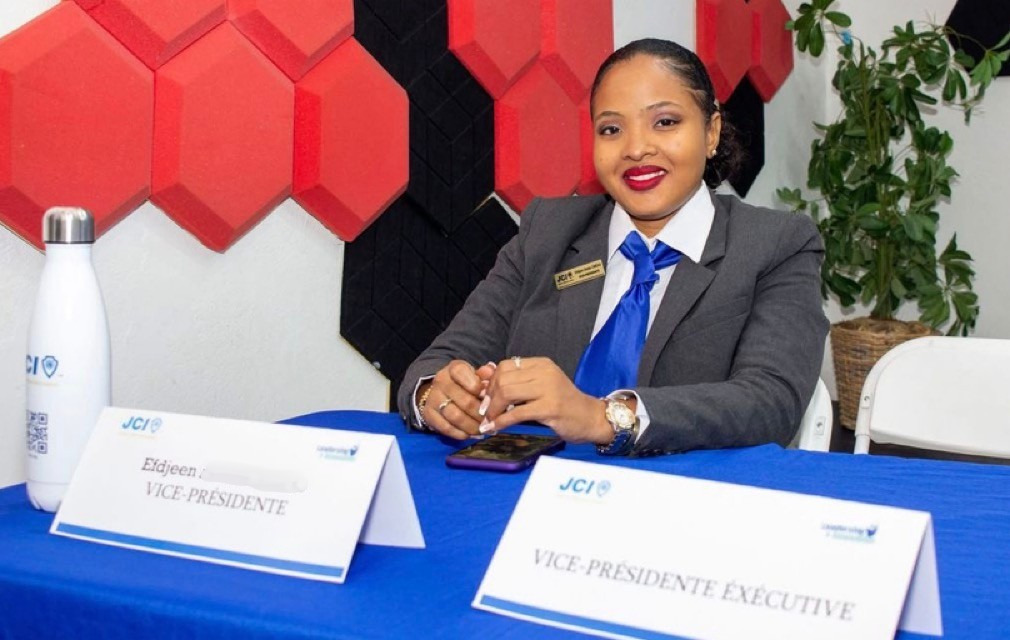
A former IINE client, Efdjeen gave a Suitcase Stories® performance at IINE’s 2026 Golden Door Award Gala, where the below video was shown for the first time.
A Call to Serve
When Efdjeen was a child in Haiti, she wasn’t sure what she wanted to be when she grew up. “I was curious about everything,” she says. “I loved art, and I also loved the idea of being a businesswoman.”
As she got older and thought more deeply about the question, she realized that what she really wanted to do in life was to help people. “I thought about my mom. It was always her dream to become a doctor, but she couldn’t. So I thought, ‘Okay, I got this.’”
Making Strides
This goal motivated Efdjeen. She worked hard in high school and got accepted into a pharmacy program at a local university. It wasn’t medical school, but she found that she really enjoyed it. Rather than trying to transfer as she had originally planned, she finished the degree and found a job as a pharmacist. Meanwhile, to further her mission of helping people, she began volunteering at an international leadership organization.
“Honestly… I don’t even know when I had time to sleep.”
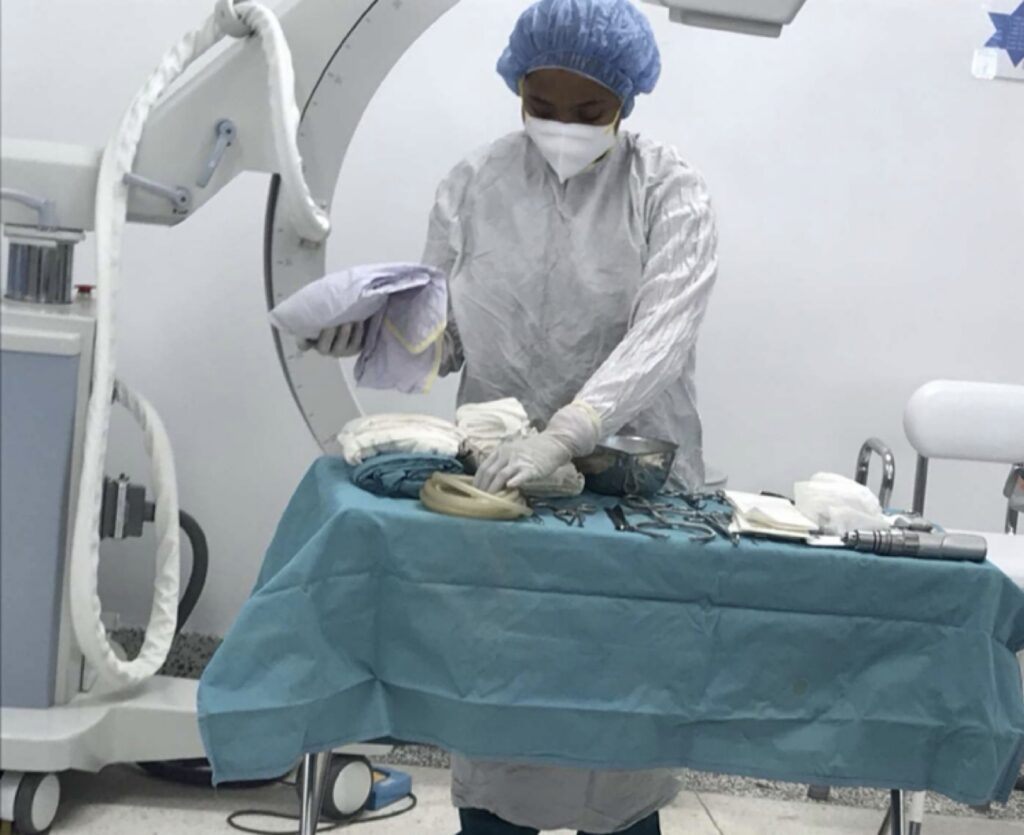
Still, she felt called to pursue her original goal of becoming a doctor. On her second try, she got into medical school and earned her degree, but her graduation came at a challenging time. The COVID-19 pandemic had hit, delaying her path forward. She took the challenge in stride, taking up painting as a hobby that allowed her to explore her artistic side as she continued to work as a pharmacist.
As soon as she was able, she went back to medical school and began her internship. Then a new challenge arose.
“The situation in my country became more dangerous as gangs took over—but I still had to finish my internship. Every week, I traveled for hours between my job and the hospital. Sometimes, because my lighter skin complexion made me an easy target for kidnappers, just to make it there safely, I had to hide under the seat of the bus so I wouldn’t be seen.”
Despite the fear, Efdjeen remained determined.
“I was too close to the finish line. I couldn’t give up. So, I completed my internship and became that doctor.”
On Pause
When Efdjeen returned home, ready to start her new life as a doctor, she found that the reality of gang violence had grown too dangerous to avoid.
“My neighborhood was attacked. My home was destroyed. My family had to run. My doctor journey was on pause.
She did not want to leave, but her family was terrified for her safety and convinced her it was the move she had to make. With her mother, father, and sister, she would journey to the U.S. where they could live with an aunt.
Starting Over
After all she had achieved in Haiti, persevering through setbacks and hustling hard to realize her dreams, starting over in the U.S. would not be easy.
“We had to start over from zero, like, real zero. Not even a ‘starting from the bottom’ kind of zero. We felt so many mixed feelings: gratitude and joy because we were with our family, safe, breathing new air with no gunshot sounds, but at some point, we also felt a bit lost, uncertain about the future. Sometimes I even felt depressed, but we never gave up.”
To help support her family, Efdjeen began working as soon as she was able, finding jobs as a machine builder and tester, and as a sales associate at a local mall. She knew she wanted to get back into the medical field. But where to start? She was thrilled when she learned about the opportunity to join IINE’s free CNA for Success program, which combines contextualized ESOL instruction, Certified Nursing Assistant (CNA) clinical skills training, and job readiness training. True to form, she worked hard in the course, passed her exam, and earned her license to become a CNA.
“IINE made me start to feel comfortable with the medical terminology. It was such a great pleasure for me—but I wanted to do more than that.” Efdjeen explained her goals to her IINE Career Navigator and asked what other steps she could take. Fortunately, IINE had just launched a new initiative modeled after CNA for Success, the Medical Assistant Training program. Efdjeen enrolled, completed the course, and earned her next certification.
New Pathways
IINE helped Efdjeen secure a job as a clinical medical assistant with a partner organization, the Lowell Community Health Center.
“Most of my patients are refugees and immigrants, just like me. I’m working toward a Physician Assistant program because I firmly believe that one day, I’ll become an Anesthesiologist.”
Meanwhile, Efdjeen says she is not the only one in her family finding pathways to happiness in Lowell. “My mom is now a bus monitor, and she loves it. My sister is pursuing her finance career, met the love of her life, and got married. My dad is learning English every day, and honestly, we’re all still learning English together.”
The resilience of Efdjeen and her family is paying off, and her new community has gained a new healer.
- - -
Refugiados e inmigrantes emprenden largos y difíciles viajes para huir de la violencia y rehacer sus vidas en Estados Unidos. Tú puedes darles la ayuda que necesitan.
Jezabel Aponte joined IINE’s Shelter Services team in 2025. Through case management, English classes, employment support, and legal services, this team helps newly arrived immigrant families who have entered the Massachusetts emergency shelter system to find permanent housing and progress towards self-sufficiency.
¿Qué le atrajo del IINE?
I first came to IINE as a food packing volunteer at the Lowell office back in 2023 when I was completing a master’s degree in innovation and global development at WPI in Worcester—it’s a program that teaches how to use technology to deliver humanitarian services. The opportunity to serve others was what drew me to IINE. In the past, while I was an undergraduate at UCA, a Jesuit University in Nicaragua, where I’m from, I had volunteered with organizations like World Vision, TECHO, Raleigh International, and the Red Cross, so I was happy to continue volunteering here in the United States. UCA truly influenced my values of serving and care for others. Unfortunately, my alma mater was seized by the Nicaraguan government in 2023.
I was also driven by a great interest in a career in humanitarian services and international development. In Nicaragua, I worked with German and Japanese cooperation agencies. I felt particularly fortunate that I get to do this work here, as sadly, in Nicaragua, more than 5,000 NGOs have been shut down. Additionally, for international students like me, opportunities to join the U.S. workforce are becoming increasingly limited, so I am truly grateful to develop professionally at IINE.
What does your role as a Program Assistant on the Shelter Services team entail?
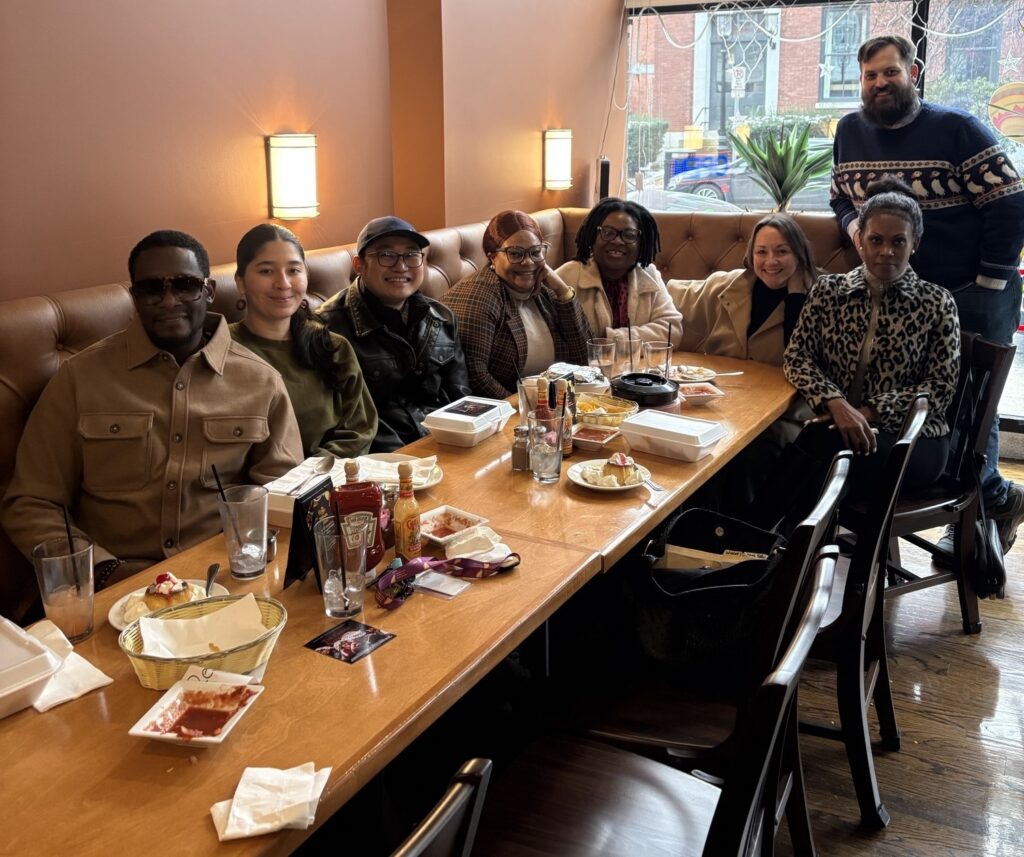
Jezabel (second from left) and the Shelter Services team
My role mainly entails data entry in both internal and external reporting systems; I also assist with client outreach and educating our clients on how to use online services and digital tools that allow them to remotely handle certain aspects of their immigration cases, like checking court dates; checking their asylum clock (which tracks where they are on their waiting period for work authorizations and can be stopped and started by judges); filing changes of address, and monitoring the status of applications for work benefits. I recently started supporting my coworkers in connecting our clients with stable, affordable housing. I have enjoyed the opportunity to learn about shelter services given my background in civil engineering.
I also work on the Legal Helpdesk, which offers remote legal consultations to clients living in northeast Massachusetts. I am not an attorney, but I assist our Shelter Services Managing Attorney with making sure our clients, who have different digital literacy levels, make it to their online consultations, and I continue assisting them after.
As much as possible, we try to offer client assistance over WhatsApp—which we know most of our clients use—for speedy contact and a low-tech experience that doesn’t stop them from accessing our services at a distance. One of the advantages is that it reduces the exposure our clients would face in traveling for in-person appointments or going to the post office.
You have won some praise for your work on this recently, from the Massachusetts Office of Refugees and Immigrants-particularly for how well you prepare our clients for their legal services appointments.
Getting key identifying information ahead of time really helps us understand a client’s immigration history and background before we actually meet with them. It saves a lot of time. We also help clients with obtaining digital records that are crucial for those who may have lost documentation, or for clients trying to show proof of immigration status to access assistance.
Another important thing we help clients with is joining remote online court hearings. This option is allowed at the court’s discretion, but when granted, it can relieve our clients of the anxiety and stress that in-person hearings can cause.
We also get all sorts of questions. You know, some people want to know what happened with their Temporary Protected Status application that they filed maybe one year ago, so we try to dig online and search for receipt numbers. Or they want to know when their next hearing is, or to talk about their options. Recently, the federal government has required people to start paying $100 for their “asylum annual maintenance fee”—$100 for every year their asylum case remains pending. So, a lot of people have had questions about that.
What makes this role challenging and rewarding?
It is challenging to help our clients navigate constantly changing rules, but there are certainly more rewarding aspects. It is rewarding to see the youngest of our clients thriving thanks to all the efforts their parents make to stay together and stay safe in this country. It is also especially rewarding to work alongside colleagues from other departments. This work requires a holistic approach, and I am glad there are people at IINE who are incredibly effective and expert in employment services, community services, and language services, so clients can get all the help they need right here—and I think once you’ve gained a client’s trust in one department, they are more comfortable accessing another.
It has also been wonderful to learn about IINE’s digital landscape—the many ways in which IINE uses technology like case management software and other tools to streamline services (10+ for programs alone!). NGOs are generally limited in this aspect, but IINE has certainly made great efforts to serve clients efficiently.
What are some things you’ve learned from working with asylum seekers that you’d like more people to understand?
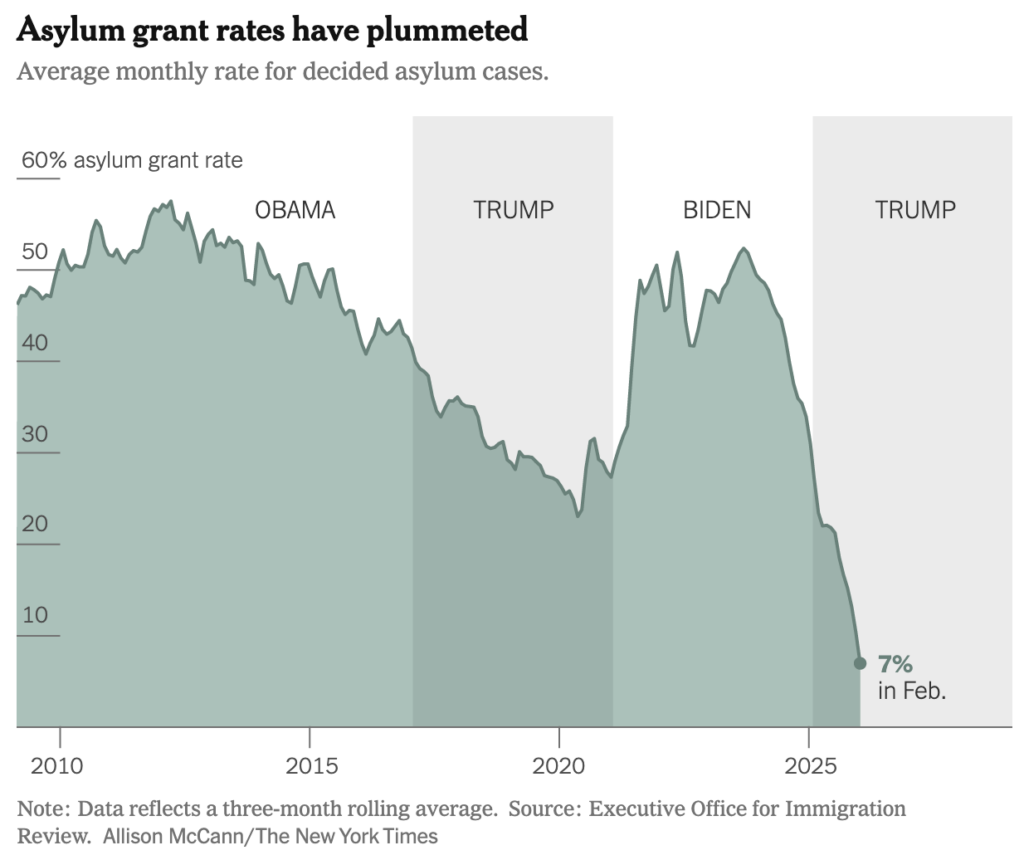
1) Asylum seekers can be and are often denied asylum; they are highly vulnerable. The overall national grant rate for asylum cases decided by Immigration Judges was approximately 14% in FY 2023. Filing an asylum application and obtaining a work permit under pending asylum application is not the end of our client’s story. There is so much they must navigate; asylum applications can take years to resolve, and being able to pay for legal representation is one of the biggest barriers our clients face.
2) Sometimes we use the terms “asylum seekers” and ”refugees” interchangeably, but asylum seekers are different from refugees. Asylum seekers live in a sort of legal gray area because they are authorized to remain in the country while their claims are pending, yet they do not hold a permanent status. This has implications for their eligibility for certain services and assistance.
3) While many asylum seekers flee their countries for political and/or religious reasons, increasingly we see people fleeing poly-crises—multiple interlocking factors that drive displacement but do not always meet the standard for asylum protection, like the effects of climate change, widespread disease, and economic and political instability. Women who have fled these poly-crises and additionally have experienced domestic violence in their home countries are at particularly high risk. With programs like Temporary Protected Status (TPS) ending, some of these people have extremely limited options for protection.
Shifting gear a bit, what do you most like to do outside of work?
I enjoy gardening and reading. I love historical fiction and biographies.
Any favorite books or authors you’d recommend?
Yes, there’s a Turkish author that I really love. Her name is Elif Shafak. She writes really beautiful books, mostly stories of immigrants and women. One that I enjoyed is the Island of Missing Trees. Also, a Spanish author who writes historical novels, named Julia Navarro. I’ve learned a lot of interesting history from her.
¿Le interesa unirse a nuestro equipo? Nuestro entorno colaborativo y orientado al trabajo en equipo ofrece oportunidades para atender a refugiados e inmigrantes, al tiempo que se aprende de otros empleados y departamentos. Consulte aquí las oportunidades profesionales.
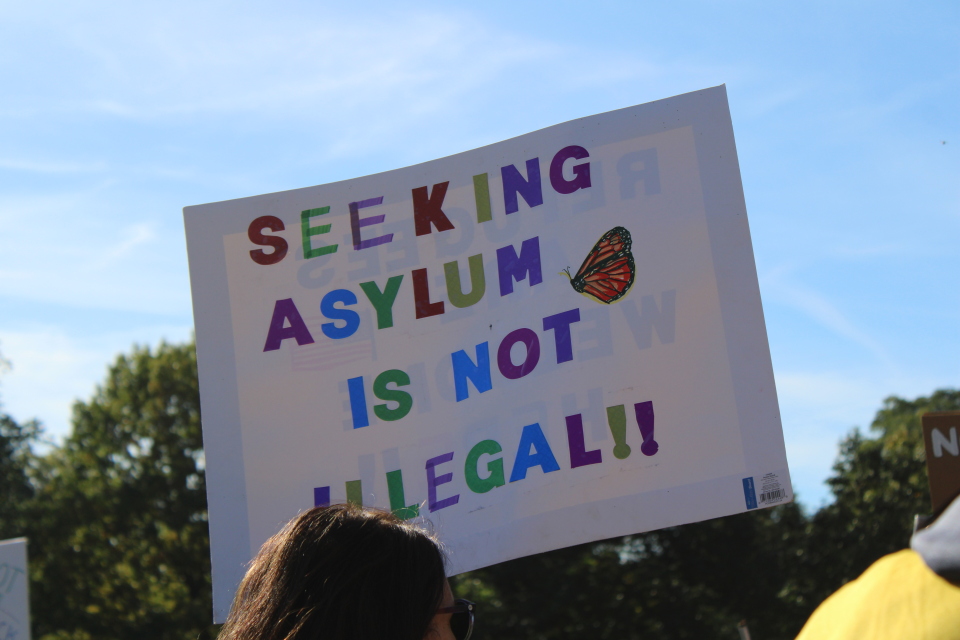
Asylum seekers are individuals who flee their home countries for fear of being persecuted based on their race, religion, nationality, social group or political opinion. To find lasting protection in the U.S., they must formally prove that their fear is well-founded and that it would be unsafe for them to return home.
The right to apply for asylum has been considered sacred for centuries and is enshrined in both international conventions and U.S. law. Still, asylum is the subject of much debate and is often misunderstood.
Here are five things to know about seeking asylum in the U.S.
1. The difference between an asylum seeker and a refugee is how they apply for protection and from where.
The Refugee Act of 1980 formally established both the U.S. Refugee Admissions Program and the process for seeking asylum in the U.S. The goal was to create a fairer and more standardized process through which people fleeing persecution could rebuild their lives in the U.S.
Within this process:
Refugeesapply to come and live in the U.S. from the temporary safety of a third country. Out of millions of applicants each year, only a small fraction receive referrals from UN agencies, NGOs, or the U.S. Embassy to begin the resettlement process. Those referred then live in refugee camps or other temporary housing while undergoing a screening process that often lasts years before they can gain admission.
Asylum seekers are people who do not have access to this pathway but are in immediate danger. Often undertaking long and dangerous journeys, they make their way to the U.S. and apply for protection when they first reach the border or from within the U.S.
When successful, both entry paths can lead to permanent legal protection, temporary resettlement support with the aim of enabling self-sufficiency as quickly as possible, and pathways to citizenship.
Since 2025, both pathways have been limited through executive orders that are subject to ongoing court challenges.
2. There are two main ways to apply for asylum: affirmative and defensive.
In affirmative cases, applicants proactively apply to U.S. Citizenship and Immigration Services (USCIS) and are interviewed by an asylum officer to prove their claim.
Defensive cases are filed when people facing deportation claim that they would be returning to life-threatening conditions. These cases are decided by an immigration judge in court with government attorneys arguing for deportation. Many applicants face these hearings without a lawyer arguing on their side.
As access to the affirmative asylum process has become more limited, more people are being pushed into the defensive system. One recent development is the use of a new “expedited” approach, in which USCIS agents pre-screen asylum seekers before they can apply affirmatively, raising significant due process concerns. Those who pass the pre-screening are often placed directly into defensive asylum proceedings in immigration court.
3. There is no fast or guaranteed pathway to asylum.
Applying for asylum is an act of urgency and hope. Decisions do not happen quickly, and protection is not guaranteed.
Applicants must apply for asylum within one year of entering the country. To say that cases are backlogged would be an understatement—in recent years, more than one million asylum cases have been pending at a time, with wait times often stretching five years or more. This waiting period is a limbo in which travel is limited, families remain separated, and fears are constant.
When cases do reach review, applicants must navigate a complex legal process that may involve multiple hearings, detailed documentation requirements, and strict legal standards.
4. Asylum seekers work, pay taxes, and contribute while their cases are pending.
Asylum seekers are legally allowed to live in the U.S. while their cases are pending. Under current rules, after 150 days, they can apply for authorization to work, and then wait at least thirty days for processing. Once authorized they can support themselves and their families, pay taxes, and contribute to the local economy.
Many asylum seekers work in industries facing persistent labor shortages, including healthcare, direct caregiving, food service, and construction. Beyond economic participation, asylum seekers become part of their communities. They send their children to school, rent homes, join religious congregations, build social ties, and contribute to civic life.
If their cases are successful and they become “asylees”, they can apply for:
5. The legal right to seek asylum in the U.S. has been systematically weakened and is now under attack.
Asylum has long been considered a sacred right. The term comes from the ancient Greek word “asylon,” which described spaces like shrines and temples from which a person being hunted by persecutors could not be seized or sent back into danger.
It has had a special meaning for the U.S., which held itself up as an example to the world of a strong and prosperous “land of the free” that welcomes those who have lived under tyranny to join and contribute, regardless of what they look like, where they come from, how they worship, or who they love.
Seeking asylum in the U.S. remains legal, but the system has become severely strained and undermined.
In recent years, the number of people forcibly displaced by war, political repression, and climate change has grown exponentially—but the U.S. asylum system has not kept pace. Rather than expanding the infrastructure needed to fairly evaluate claims, guide people to safety, and support integration, politicians have focused on preventing all migrants—including people seeking asylum—from reaching the border, blocking them once they arrive, and removing those who manage to get through.
Recent executive actions have unilaterally:
closed legal entry points
blocked people from applying between ports
allowed deportations without full immigration court hearings
added significant application and renewal fees
tightened work authorization rules
removed immigration judges en masse
attempted to detain asylum seekers while their cases were pending
These actions have been challenged in court and continue to be adjudicated.
- - -
Asylum seekers urgently need our support. You can help by sharing the truth about who they are, raising your voice about policies that restrict access and target applicants, and by donating to IINE so that we can continue to provide asylum seekers in New England with services they need to survive and thrive in our communities.
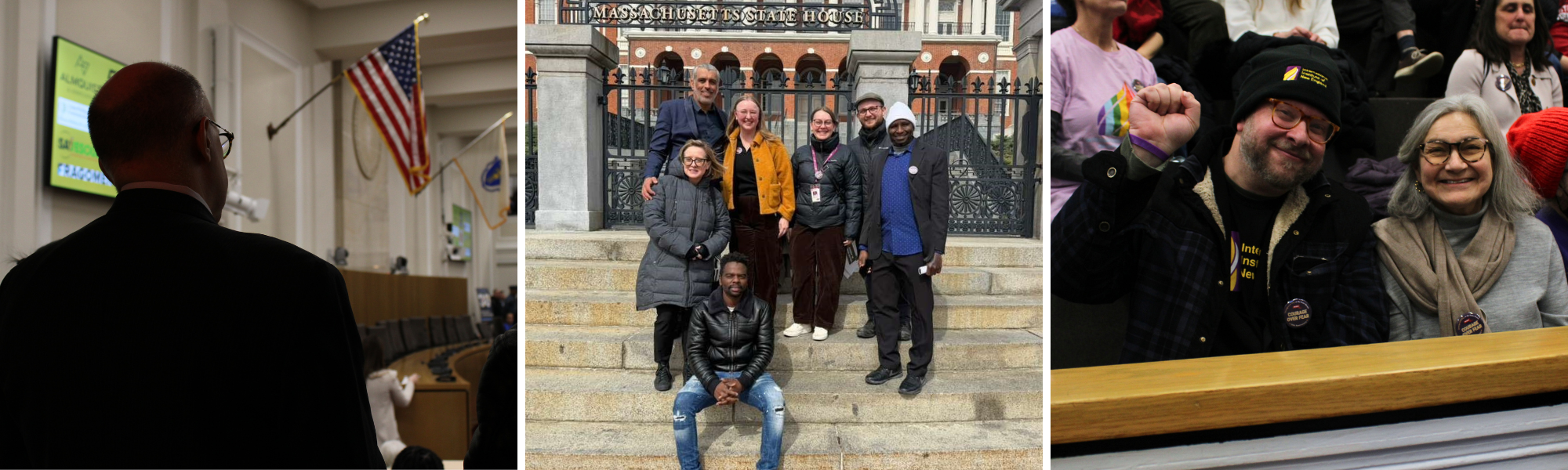
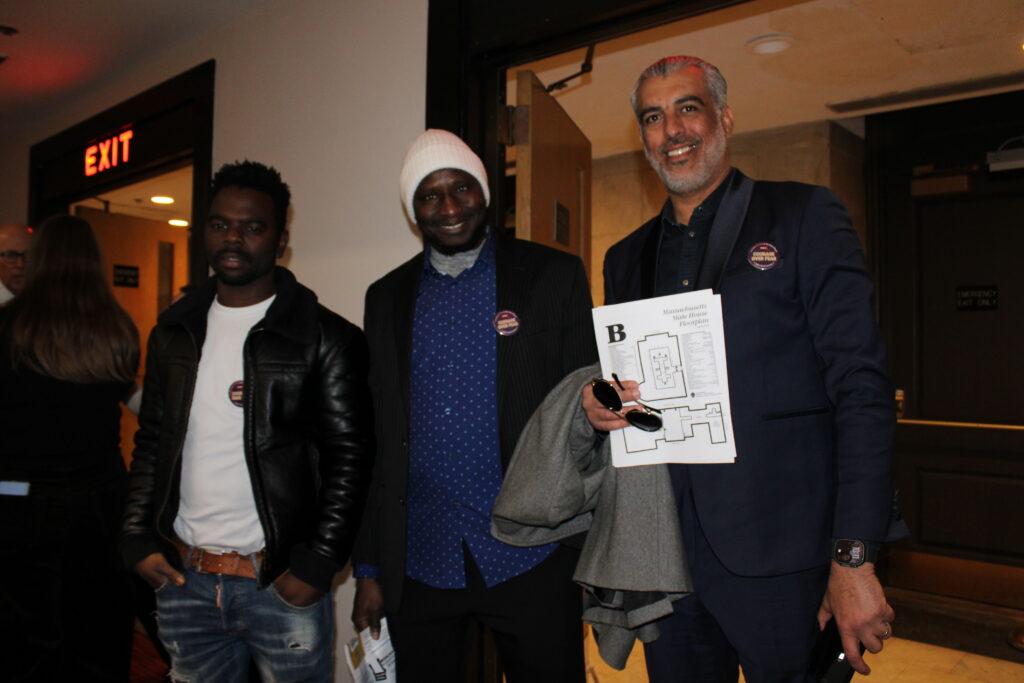
The theme was Courage Over Fear. On March 18, 1,200 immigrants and advocates headed to Boston’s Beacon Hill to make the 30th annual Immigrants Day at the Statehouse the biggest ever. Among them were IINE staff, volunteers, and students from an adult English for Speakers of Other Languages (ESOL) class.
Organized by the Massachusetts Immigrant and Refugee Advocacy Coalition (MIRA), of which IINE is a member, the event provided a significant show of support at a time when landmark legislation to protect immigrant communities was being actively debated in the building.
The day included a rally, followed by the opportunity for immigrants and advocates to share their thoughts and concerns directly with their representatives.
Writing Skills, Self-Expression, and Civic Engagement
IINE ESOL Instructor Caroline Sutphin, who brought members of her advanced class, says that she saw the event as an incredible learning opportunity for her students: “I wanted our students to feel the support of the community and the power of showing up and telling their stories in person.”
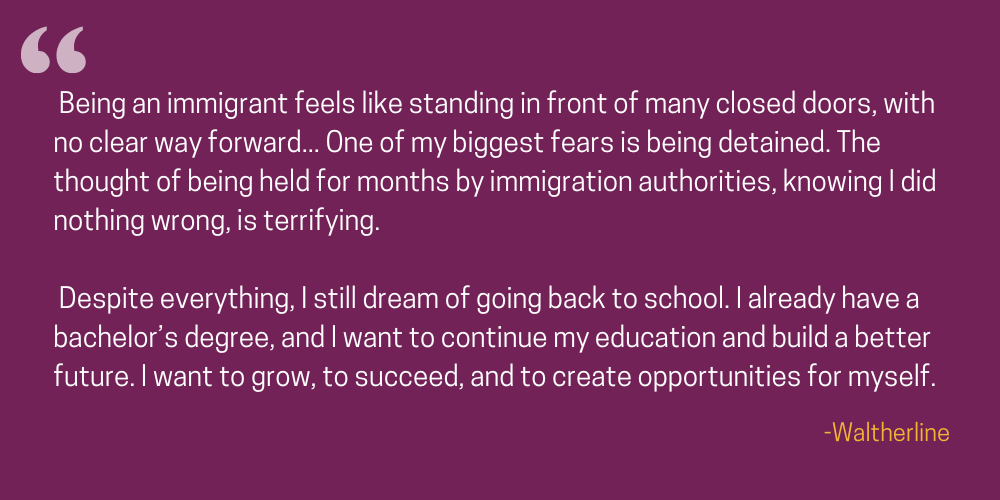
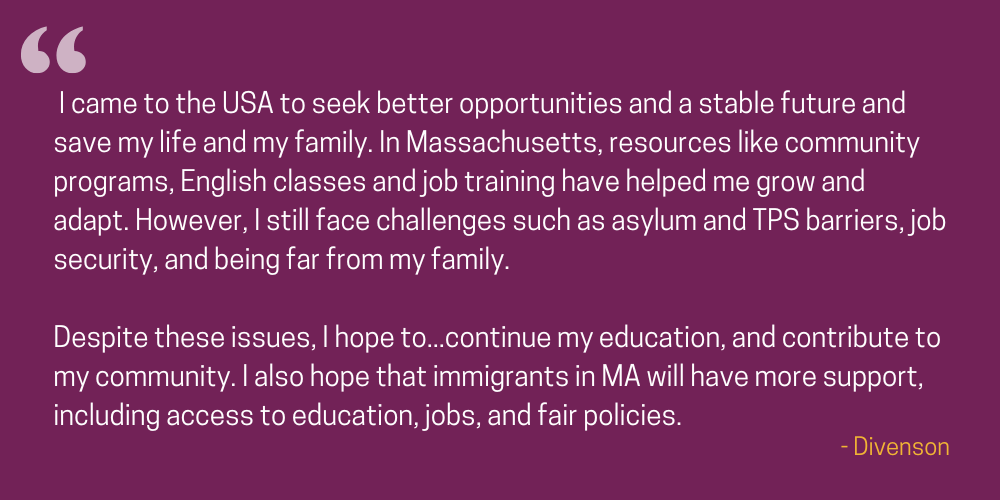
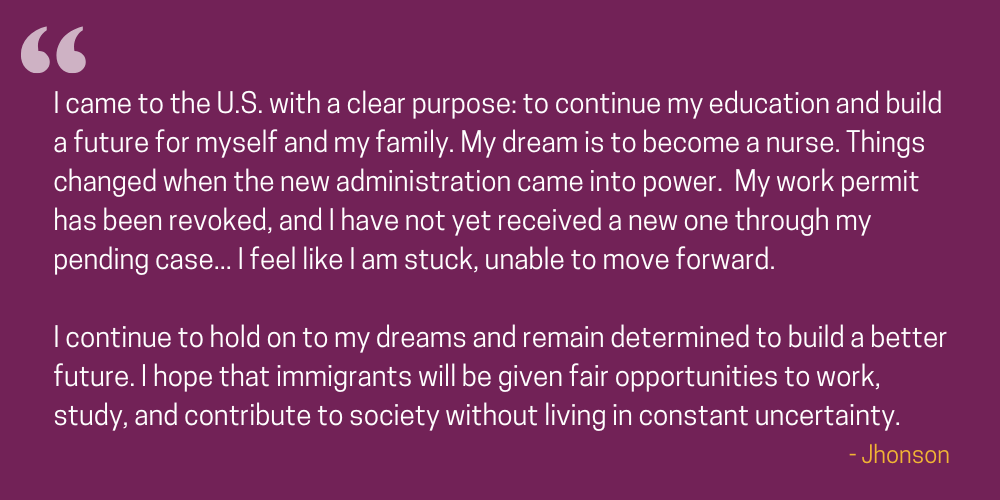
Leading up to the event, she dedicated class time to helping her students craft personal testimonies about their experiences as immigrants in Boston, the fears provoked by harmful legislation, and their hopes for the future.
Caroline says that she invited her whole class to attend Immigrants Day at the Statehouse, but that because of the way immigrants are being targeted for detention and deportation without due process, many were afraid to participate. Others were excited by the opportunity.
“The students who were eager to come became advocates for their classmates,” she explains. “They carried their written testimonies with them and prepared to share them.”
A Wonderful Journey
Hicham, an ESOL student who had come to Boston from Morocco three months earlier to join his wife, was particularly excited. Even before understanding the whole context, he says he was just eager to practice his English conversation skills.
“I wanted to go because I’m very sociable. I took a class in real estate [and wanted] to have interaction with people, and so when she told me about the event, I said yes, I’ll do it!”
Hicham was thrilled when he came to understand that he would be in the State House and have the chance to hear from fellow immigrants, community advocates, and state leaders. Finding himself under the golden dome, in a packed hearing room, joining sing-alongs led by the Be Vocal activist choir, and hearing speakers from various immigrant communities, and legislators, proved to be a moving experience.
“It was a wonderful journey,” he says. “When I went to the State House, I felt something powerful.”
Hicham (R) with his ESOL classmates at the State House
He was inspired to hear directly from Governor Maura Healey, and from several representatives and senators. The message he came away with was that “immigrants have to be comfortable here. In Massachusetts, we are all the same, immigrants or not immigrants.”
Hicham particularly appreciated being there with IINE—fellow classmates, members of the Education team, and IINE leadership. “I even got a picture with the big man!” he said with a smile, referring to President & CEO Jeffrey Thielman. “I want to thank IINE for this opportunity. It was not just a celebration; it was something very special.”
Giving Testimony
MIRA provided participants with talking points about key immigration legislation being debated, and after the rally, they spread out to find the representatives from their districts. Among them were IINE volunteers who had been learning about issues specifically facing refugees through monthly meetings and an email newsletter.
Hicham and his classmates joined Caroline and other members of IINE’s Education team on their office trips, helping to put some real faces to the populations whose safety was at the heart of the bills in discussion. Hicham also had the chance to record spoken testimony with a videographer from MIRA’s team. For Hicham, it was a meaningful opportunity to share his story.
Honorable Representative, thank you for allowing me to address you today.
My name is Hicham, and I stand before you as a proud resident of Massachusetts, a professional working to build a future in real estate and community development, and a husband whose life changed the day he met the woman who would become his wife.
My journey to the United States began with love. I married my wife, and it was through our marriage that I came to this country. Leaving my home, my family, and everything familiar was not an easy decision, but love gives you courage. It gives you purpose. It gives you a reason to build a new life from the ground up.
When I arrived in Massachusetts, I arrived not as someone looking for a shortcut, but as someone ready to work, to contribute, and to honor the commitment I made both to my wife and to this Commonwealth. Together, we built our life step by step. She supported me as I learned the systems, pursued my education, and worked toward my professional goals. Our relationship is a partnership built on respect, patience, and shared dreams.
It is because of her that I stand here today. Her belief in me has been my foundation. Our story is a reminder that behind every resident of this state whether born here or newly arrived there is a human story, a family, a set of hopes that drive them forward.
Massachusetts is a place where people can build a future through hard work and opportunity. It is a place where families like mine can grow, contribute, and feel at home. My commitment to this state is rooted not only in my professional ambitions, but in the life my wife and I are building together: a life grounded in love, responsibility, and the desire to give back.
At the International Institute of New England, I have had the privilege of studying alongside classmates who inspire me every day. We come from different countries, cultures, and backgrounds, yet we share the same determination to learn, to grow, and to build a better future here in Massachusetts. My colleagues are hardworking, respectful, and committed to improving their English so they can contribute to their communities and support their families. In our classroom, we encourage one another, we celebrate each other’s progress, and we prove that when people are given opportunity and education, they rise. Their resilience reminds me that the strength of this Commonwealth comes from the diversity and dedication of its people.
I want to express my sincere gratitude to the International Institute of New England for the support, guidance, and opportunity they have given us. IINE is more than a school, it is a community that welcomes people from every corner of the world and helps them rebuild their lives with dignity and hope. The teachers, staff, volunteers show patience and professionalism.
Thank you for your time, your service, and your dedication to the people of this Commonwealth.
Now that he has had the experience of testifying, Hicham says this is only the beginning. “I will do it again!” he says, “and other events with IINE—I am on it!”
- - -
Refugiados e inmigrantes emprenden largos y difíciles viajes para huir de la violencia y rehacer sus vidas en Estados Unidos. Tú puedes darles la ayuda que necesitan.
The International Institute of New England (IINE) raised over $1.7 million at its 44th annual Golden Door Award, held Wednesday night at the Omni Seaport Hotel in Boston, a figure highlighting the organization’s resilience and strong community support in the face of increasingly restrictive federal immigration policy.
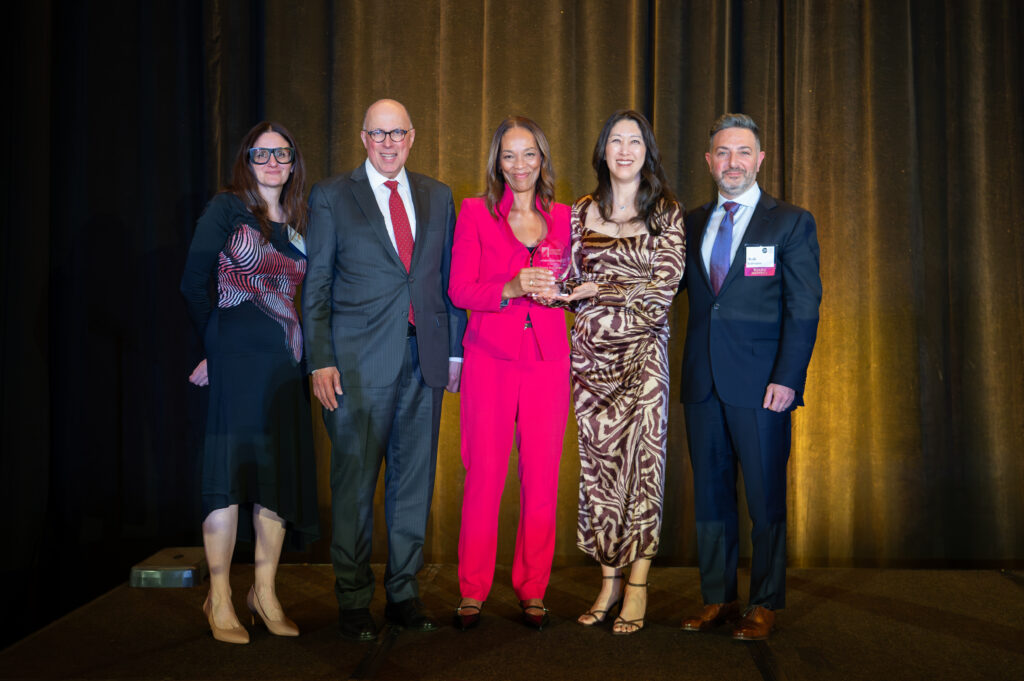
From L to R: IINE SVP & Chief Advancement Officer Xan Weber, IINE President & CEO Jeff Thielman, Alnylam Pharmaceuticals CEO Dr. Yvonne Greenstreet, Takeda CEO-Elect Julie Kim, IINE Board of Directors Chair Avak Kahvejian
The evening honored Dr. Yvonne Greenstreet, CEO of Alnylam Pharmaceuticals, with the Golden Door Award for her leadership in driving scientific breakthroughs that have led to life-saving medicines, now available in 70 countries worldwide. In accepting the award, Dr. Greenstreet reflected on how the promise of America is best realized when the skills, resilience, and determined spirit of immigrants are met with opportunity.
This gala took place amid a challenging period for refugee and immigrant communities, marked by ongoing humanitarian crises and shifting federal policies. During this time, organizations like IINE continue to play an essential role in providing direct services, guidance, and support to newcomers navigating complex systems. The funds raised will support IINE’s critical programs across Massachusetts and New Hampshire, including refugee resettlement, English language education, workforce training, and immigration legal services.
“Every year brings new challenges to the world of immigration: policies shift, conflicts emerge across the globe, and more and more individuals are forced out of their homes in the pursuit of safety. But one thing has never changed. Our region’s success will always depend on welcoming talent, energy, and innovation from around the world,” said Jeff Thielman, President and CEO of the International Institute of New England.
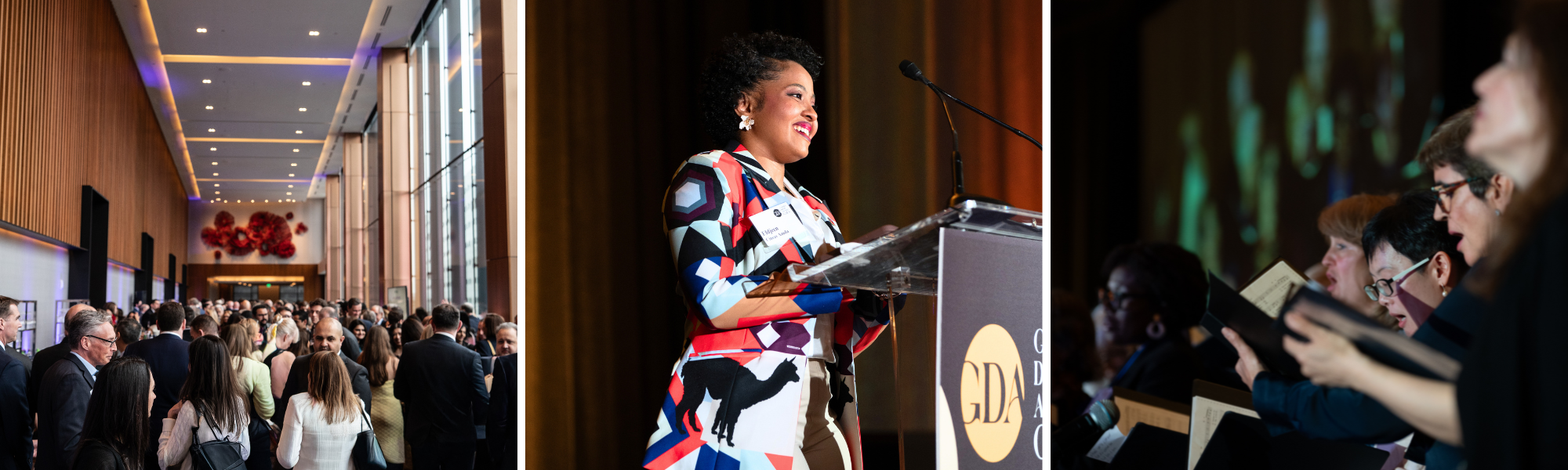
The gala was attended by over 600 guests, bringing together leaders from the business, biotech, philanthropy, healthcare, construction, and civic sectors in support of IINE’s work. GDA host committee co-chairs and past honorees, Julie Kim, Graham Robinson, Anthony Consigli, Dr. Victor Dzau, Dr. Noubar Afeyan, Dr. Srikant Datar, Stephane Bancel, and Belinda Termeer the wife of our 1999 honoree the late Henri Termeer joined IINE supporters, longtime partners, clients, volunteers, and staff to honor both Dr. Greenstreet and the collective impact of the organization’s community over the past 100 years.
The evening program included a performance by Back Bay Chorale’s ESOL Chorus, and a Suitcase Stories® performance from an IINE client who reflected on her journey from Haiti to Massachusetts, and her unwavering commitment to pursuing a career in medicine—even when it meant starting over in the U.S. Guests were also invited to explore the Centennial Walk, an art exhibition that debuted last year and highlights IINE’s 100-year history in Boston and the city’s deep immigrant roots.
Since opening its doors more than a century ago, IINE has served more than 100,000 immigrants and refugees and currently supports thousands of individuals each year.
- - -
Learn more about our annual celebration of immigrant achievements and contributions at the Golden Door Award gala.
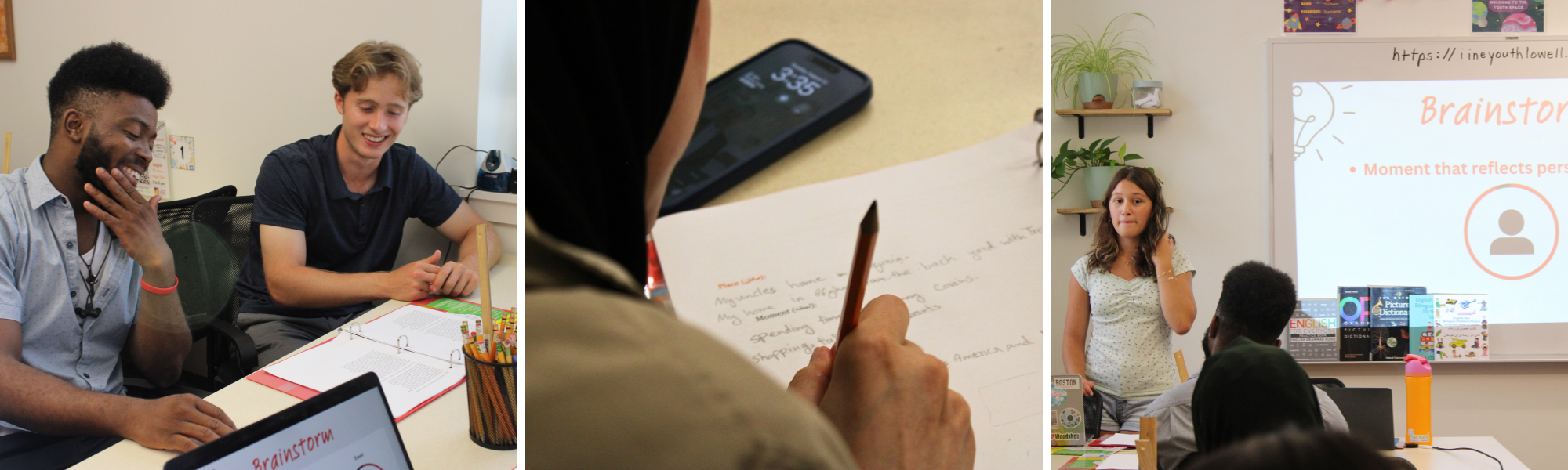
A new publication developed within IINE’s Refugee Youth Program brings young voices to the center stage. Bridges: Personal Narratives by Immigrant Youth features eight stories written by clients in the Lowell program, with the support of community volunteers. The young authors reflect on important moments in their lives, their challenges and dreams, and the gratitude they feel to be Americans.
Building Bridges
The Bridges project was spearheaded by Lena Aloise, a sophomore at Groton High School, who had volunteered as an English tutor in the Refugee Youth Program. As explained in the book’s preface, she felt “the writing process fit the IINE Youth program’s focus on English Language Learning and affirmation of diverse experiences and wanted to help share the voices of young immigrants with their communities.”
Lena secured grant funding for the project from her school and reached out to IINE Youth Program Manager Isabel Goes to collaborate. Together, they recruited students and volunteers and drafted a lesson plan for a six-session creative writing workshop, which launched in August of 2025.
The Writers’ Workshop
Each student received a personalized binder containing vocabulary resources, materials on story structure, and activity handouts. In early workshop sessions, they studied the art of personal narratives through stories and poems, and brainstormed people, places, and events of importance to them that might inspire their own writing. They learned how to craft interesting hooks, expand their stories’ settings, and develop strong openings, conflicts, and endings.
The participants received feedback from the IINE Youth Program team, as well as students at Groton. Once they finalized their pieces, the participants celebrated with their peers over pizza and soft drinks, and their manuscript was sent to IINE’s Marketing team to be designed and published.
Reflections
“They were so excited and proud to get the actual books in their hands!” says Isabel. “I’m proud of them for their achievement and also love that they had the chance to express themselves. Some have already said they have more stories to tell! We’ll be launching another series of workshops for them this summer.”
Lena is equally pleased with how the project turned out, “I was surprised by and incredibly grateful for the eagerness that many of the writers brought to each session of the workshop, especially after learning that many were joining after a full day of work at summer jobs!” she says.
Key to success, Lena says, was the strength of the collaboration, “I was so happy to see the commitment of the volunteers and the team at IINE—they really worked hard to help make the workshop the best it could be. The volunteers were excited to contribute ideas and perspective while being respectful of the writers’ visions and our plan, and deserve a huge shout-out for all their support.”
For Lena, this supportive relationship between new arrivals and the community they’ve found in Lowell is one of the major themes that shines through in the students’ stories: “I definitely feel as though the connecting thread among most was the people or experiences offering them support throughout emotionally challenging periods of change,” she says. “Whether it was a parent, a sport, or a friend, the stories focused on a source of comfort and inspiration, which I feel is a testament to all the writers’ resilience and optimism.”
The Broader Message
Isabel says she plans to get the book into school libraries in Lowell where she particularly hopes it will find its way into the hands of other immigrant youth.
Lena hopes the authors’ words will have a positive effect on other readers, as well: “In a culture that can be dismissive of diverse experiences, I hope that Bridges can be a small part of affirming the unique outlook that immigrant and refugee youth contribute to their communities, and a reminder of the importance of celebrating stories of all kinds.”
- - -
Refugiados e inmigrantes emprenden largos y difíciles viajes para huir de la violencia y rehacer sus vidas en Estados Unidos. Tú puedes darles la ayuda que necesitan.