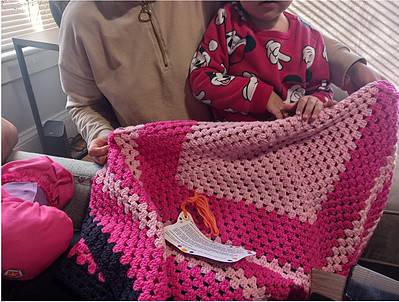
Під час суворого холоду своєї першої зими в Новій Англії кілька клієнтів IINE з числа біженців знаходять тепло в красивих ковдрах ручної роботи від багаторічного волонтера Лідії Волшин, яка працює в громаді.
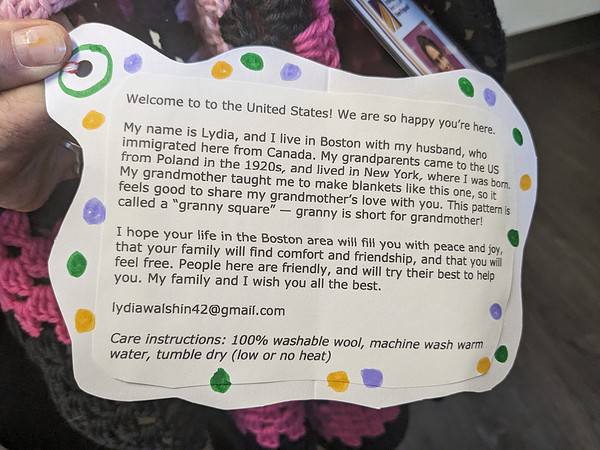
Щоразу, коли Лідія дарує одну з барвистих "вітальних ковдр", які вона зв'язала гачком, вона прикріплює до неї листівку з вітальним посланням, що пояснює їхню історію:
"Ласкаво просимо до Сполучених Штатів. Ми дуже раді, що ви тут.
Мене звуть Лідія, я живу в Бостоні з чоловіком, який іммігрував сюди з Канади. Мої бабуся і дідусь приїхали до США з Польщі в 1920-х роках і жили в Нью-Йорку, де я народилася. Бабуся навчила мене робити такі ковдри, як ця, тож мені приємно поділитися з вами любов'ю моєї бабусі. Цей візерунок називається "бабусин квадрат" - "бабуся" - це скорочено від "бабуся"!
Я сподіваюся, що ваше життя в Бостоні наповнить вас миром і радістю, що ваша сім'я знайде затишок і дружбу, а ви відчуєте себе вільними. Люди тут доброзичливі і намагатимуться зробити все можливе, щоб допомогти вам. Я і моя сім'я бажаємо тобі всього найкращого."
Лідія почала робити привітальні ковдри ще у 2017 році в рамках національного проекту крафтивізму. Свої ковдри вона відправляла спочатку до музейних експозицій, а потім на південний кордон, де їх роздавали новоприбулим іммігрантам. Це був один із способів використати свої навички для позитивних дій і полегшити тривогу, яку вона відчувала через антиіммігрантську риторику і політику, пов'язану з нещодавніми президентськими виборами.
Ще одна - волонтерство в якості викладача англійської мови як іноземної. "Я ніколи раніше не займалася такою роботою, але я все життя була письменницею", - пояснює Лідія. Вона - кулінарний письменник, автор кількох електронних книг і блогу під назвою Lydia Likes It. "Я досить добре володію англійською мовою, багато подорожувала, і в багатьох країнах світу мені доводилося прокладати собі шлях як людині, яка розмовляє лише англійською, тому я вирішила спробувати, і мені це сподобалося".
Мешканка бостонського Чайнатауну, вона почала працювати волонтером у кількох місцевих агенціях, що обслуговують іммігрантів, і їй особливо сподобалося працювати з IINE.
"IINE був чудовим! Викладач був дуже креативним і дійсно мене захопив! Студенти, очевидно, поважали його. Вони старанно працювали і багато сміялися. Вони були сповнені рішучості досягти успіху, чого б це не коштувало, і це мене дуже вразило".
Лідія постійно продовжує працювати волонтером у класах ESOL, використовуючи свою пристрасть до їжі, міжнародного футболу та письменництва, щоб спілкуватися з дорослими учнями з усього світу.
Лідія зв'язалася з координатором волонтерів IINE Кейт Вайдлер, яка з радістю прийняла вітальні ковдри Лідії. Лідія почала робити і дарувати все більше і більше таких ковдр. Вона не знає, хто саме їх отримає, але каже: "Я намагаюся відправляти їх з великою любов'ю в серці і сподіваюся, що цей дух приведе їх туди, куди їм потрібно".
Анніс Робертс - одна з спеціалістів IINE, яка мала честь подарувати вітальну ковдру новоприбулій родині. "Їхній майже трирічній доньці вона дуже сподобалася!" каже Енніс. "Вона любить рожевий колір, тому ця ковдра ідеально їй підійшла. Коли я йшла, вона загортала в неї свою ляльку, тож можна з упевненістю сказати, що вона була дуже щаслива отримати її!"
Лідія називає рожеві візерунки своїми ковдрами "Барбі". Вона також полюбляє робити райдужні візерунки. "Я роблю багато райдужних речей, тому що вважаю, що веселка - це оптимізм, і ми намагаємося сказати людям: "Ми дуже раді, що ви тут. Ми хочемо, щоб у вас було чудове життя, і ми тут, щоб допомогти вам". Я думаю, що веселки говорять саме це".
Вона сподівається, що інші волонтери приєднаються до неї у виготовленні вітальних ковдр, і підкреслює, що це простий проект для будь-якого майстра з волоконного мистецтва. Їх можна зшити, в'язати або зв'язати гачком, а на сайті Welcome Blanket Website пропонує викрійки, фотографії та джерела матеріалів. Для неї цей проєкт - спосіб не втрачати динаміку.
"Як людина, яка все ще навчає студентів і ходить на заняття, це те, що я можу робити вдома, щоб продовжувати рух, але трохи тихіше і спокійніше. Мені приносить радість уявляти, як люди відкривають коробку, бачать ковдру і кажуть: "Вау!" Я вважаю, що це чудово".
Якщо ви хочете долучитися до виготовлення вітальних ковдр, ви можете зв'язатися з Лідією безпосередньо за адресою lydiawalshin42@gmail.com.
Андрій приєднався до IINE у 2023 році після роботи з венесуельськими іммігрантамимігрантами як асистент викладання англійської мови за програмою Фулбрайта в Колумбії та минулі зусилля з іммігрантами та біженцями як аспірантка у Вустері, штат Массачусетс..Як спеціаліст програми допомоги жертвам торгівлі людьми TVAP (Trafficking Victim Assistance Program) в нашому бостонському офісі, Ендрю забезпечує наших клієнтів-іммігрантів, які постраждали від торгівлі людьми, підтримкою та ресурсами, необхідними для того, щоб вони могли відновити своє життя. У нашому новому профілі співробітника Ендрю розповідає про TVAP та поширені помилкові уявлення про програму, ділиться тим, як виглядає його повсякденна робота в IINE, а також дає поради тим, хто зацікавлений у подібній ролі.
Що привело вас до Міжнародного інституту Нової Англії?
Коли я вперше звернулася до IINE, я не обов'язково хотіла працювати у сфері протидії торгівлі людьми - так сталося, що мене направила подруга в той самий час, коли IINE шукав найняти спеціаліста з кейсів TVAP (Програма допомоги жертвам торгівлі людьми). Однак, я дуже рада, що це спрацювало. Мені завжди завжди дуже подобалося працювати з людьми, які походять з більш неблагополучних верств населенняі особливо мені подобалася робота з представниками різних культур.тому що довгий час, мене цікавило вивчення мов і знайомство з тим, як живуть різні люди. Як спеціаліст програми TVAP, я маю можливість допомагати найбільш нужденним клієнтам IINE з числа іммігрантів.
Розкажіть більше про роботу, яку ви виконуєте в TVAP.
TVAP є неймовірно важливою. Ця програма по суті для людей, які нещодавно вийшли з активної фази торгівлі людьми, але або ще не отримали легального статусу, а отже, не можуть не можуть працювати легально і не можуть претендувати на багато державних виплат - або отримали легальний статус, але статус, але але все ще працюють над тим, щоб стати на ноги. TVAP працює над тим, щоб заповнити прогалини - від надання фінансової допомоги до допомоги клієнтам в отриманні медичної допомоги та забезпечення їх їжею. Мова йде про те, щоб про надання допомоги в критичний момент, коли багатьом клієнтам більше немає до кого звернутися за допомога щоб вони могли знову стати на ноги і рухатися до самозабезпечення.
Що люди зазвичай не розуміють про TVAP?
Я думаю, що є три основні хибні уявлення. По-перше, люди неправильно розуміють, що таке торгівля людьми - це не просто переміщення людей. Це контрабанда - переміщення людей через кордон. На відміну від цього, торгівля людьми передбачає дію, засоби та мету. Наприклад, використання несприятливого становища людини або відсутності у неї правового статусу для примусу її до надання трудових або сексуальних послуг проти її волі. Цей примус є визначальним аспектом торгівлі людьми.
По-друге, хоча секс-торгівля більш відома і висвітлюється в ЗМІ, в реальності торгівля людьми набагато поширеніша, ніж торгівля людьми. Приблизно 80-90% жертв торгівлі людьми в США зазнали трудової експлуатації.
Нарешті, я думаю, що багато людей навіть не знають, що TVAP існує! Є багато людей, які мають право на підтримку через TVAP, але не отримують послуг, бо не знають, що це можливо. Тому ми завжди працюємо над тим, щоб залучити більше клієнтів.
Як виглядає ваше повсякденне життя?
Як і у кожного з нас в IINE, мій день дуже різниться. Іноді я працюю в офісі, допомагаючи клієнтам оформити певні пільги/програми - це часто включає в себе проходження складних бюрократичних процедур. В інші дні я відвідую клієнтів вдома і допомагаю їм усім, чим можу. Це може бути роздача зимового одягу - так багато наших клієнтів не мають теплих пальт, шарфів і т.д. - або просто перевірка того, що їм потрібно.
Мені часто доводиться бути адвокатом для моїх клієнтів. Як людина, яка жила в країні, де державна мова не є моєю рідною, я знаю, як важко буває відстоювати свої інтереси, особливо коли йдеться про складні політичні питання. Тому я роблю все можливе, щоб вони отримували допомогу, якої потребують і на яку заслуговують.
Ендрю та його друзі святкують "Día de las Velitas" у Медельїні протягом року, який він провів у Колумбії як асистент викладача англійської мови за програмою Фулбрайта
Що б ви порадили тим, хто цікавиться цією роботою?
Думаю, щоб займатися такою роботою, треба мати любов до людей взагалі. Ви маєш сприймати людей, яким ви допомагаєте, як рівних собі, які мають свої власні життя та історії, як і ви, але народилися в інших обставинах. Це Це все ще професійні стосунки, які ви формуєте зі своїми клієнтами, але я думаю, що сприйняття їх як рівних - це ключ до того, щоб допомогти їм з повагою та співчуттям.
Як ви любите проводити час поза офісом?
Я дуже люблю природу і мистецтво! З дев'яти років беру участь у театральних постановках і хорах з дев'яти років. Я вважаю, що акторська майстерність і спів є справжнім катарсисом від повсякденних життєвих стресів, особливо коли ти можеш захопити аудиторію, залучаючи її до історії, яку розповідаєш.емоції аудиторії, залучаючи їх до історії, яку ти розповідаєш. Я також дуже люблю природу і біг.. I брала участь в університетському кросі в коледжі, і хоча я не сумую за перегонами, я все ще люблю повільні довгі пробіжки на природі..
Бажаєте приєднатися до нашої команди? Наше спільне, командно-орієнтоване середовище пропонує можливості служити біженцям та іммігрантам, навчаючись у інших співробітників та відділів. Переглянути кар'єрні можливості тут.
AНастасія не хотіла не хотіла залишати свій дім в Одесі, Україна, але коли вторгнення посилилосявона зрозуміла, що не має вибору. Приїхавши до Бостона влітку 2023 року влітку 2023 року зі своїм чоловіком, Анастасія звернулася до до Міжнародного інституту Нової Англії за базових послуг та підтримки упрацевлаштуванні. Команда з працевлаштування IINEдопомогла їймаксимально ефективно використати свій новий початок у кар'єрі, про яку вона мріяла. Анстасія поділилася своєю історією своїми словами.
Мене звуть Анастасія, я з України. До початку війни я щасливо жила у своєму рідному місті - Одесі. З підліткового віку я дуже любила моду. Закінчуючи Одеський національний університет, я почала будувати свій справжній зв'язок з модою, і, нарешті, коли я отримала ступінь магістра економіки, я зрозуміла, що моя справжня пристрасть - це мода, і що я хочу зробити її своєю роботою.
Я почала будувати свою кар'єру в індустрії моди, ставши модним інфлюенсером, почавши вести блог про моду в Instagram у 2015 році. Потім я також почала працювати з різними українськими модними брендами як бренд-менеджер, керівник відділу маркетингу, стиліст і навіть дизайнер.
Можу також сказати, що жити в США було моєю дитячою мрією. Всі ті різдвяні фільми 90-х, які я дивився, застрягли глибоко в моїй пам'яті.
У день, коли почалася війна, я був спустошений, але не хотів їхати. Я народилася в Україні і прожила там усе своє життя. Мені було дуже страшно, але я залишився. Минув рік, я втратив роботу, багато моїх друзів виїхали, я на власні очі бачив, як бомбили моє рідне місто, і я провів багато холодних зимових ночей без жодних зручностей, які потрібні людині у 2023 році - без електрики, води, інтернету, мобільного зв'язку та тепла. Тож я вирішив, що настав час їхати. Поїхати туди, куди прагнуло моє серце, щоб мати можливість жити мирно, працювати і просто жити власним життям, знаючи, що я в безпеці і що я можу допомогти своїм батькам.
На жаль, такі сумні обставини привели мене сюди. Але я безмежно вдячна за можливість почати тут своє життя заново, жити в мирі, мати можливість працювати, утримувати сім'ю і просто жити повноцінним життям.
Завдяки Міжнародному інституту Нової Англії я маю можливість працювати і професійно розвиватися в моїй улюбленій індустрії - моді.
IINE дуже допоміг мені - зробити моє резюме ідеальним і пройти співбесіду. Мій спеціаліст з працевлаштування завжди був на зв'язку, тож я могла легко поставити будь-які запитання. Воназв'язала мене з директором магазину Gucci. Це така мрія здійснилася. Будучи фанатом бренду, знаючи всю історію, що стоїть за продукцією, я не могла навіть уявити, що одного дня зможу стати частиною команди команди Gucci.
Я пройшла чотири серії співбесід протягом двох місяців, і врешті-решт отримала роботу координатора команди. Поки що це неповний робочий день, але є величезна можливість для зростання.
Я щойно розпочала свою роботу, але вона мені вже дуже подобається. Щодня я дізнаюся щось нове, зустрічаю багато цікавих людей і не можу дочекатися, щоб дізнатися більше, зробити більше, професійно зростати.
Я безмежно вдячна за допомогу.
Ми пишаємося тим, що прийняли, розселили та підтримуємоед біженців у регіоні Нової Англії вже понад 100 років. Дізнайтеся більше про нашуроботу з переселення біженців тут.
З непохитною підтримкою ви стояли поруч з українцями, які тікали від раптового вторгнення в їхню країну; ви були поруч з тисячами гаїтян, які були змушені покинути свої домівки через насильство, політичні заворушення та стихійні лиха; ви підтримували біженців, які втікали з кризових зон по всьому світу. Ми зіткнулися з клубком мінливих імміграційних законів, мінливою державною підтримкою та жахливою житловою кризою в нашому регіоні. Ви продовжували з'являтися, і це мало величезне значення. Ми змогли створити абсолютно нові команди та програми, щоб відповідати кожній хвилині, і допомогли понад 10 000 людей, які терміново потребували підтримки - неймовірний перший результат.
Забігаючи наперед, скажу, що потреби та виклики, без сумніву, зростатимуть, але збільшена спроможність, імпульс та міцні партнерські стосунки з громадами відкривають перед нами величезні можливості. У 2024 році ми зможемо допомогти ще більшій кількості біженців та іммігрантів і гарантувати, що кожен з них досягне вирішальних етапів на шляху до самозабезпечення. Ми можемо зміцнити сусідські мережі, які вони створюють після прибуття. Нарешті, визнаючи, що єдина константа - це зміни, ми можемо розробити плани, які забезпечать прийом і підтримку біженців та іммігрантів у Новій Англії в далекому майбутньому. У зв'язку з цим, ось три новорічні резолюції IINE на 2024 рік:
Новорічна резолюція №1: IINE буде прагнути до того, щоб кожен біженець та іммігрант, якому ми служимо, досягнув важливих етапів на шляху до самозабезпечення.
IINE працює з іммігрантами на різних етапах їхнього шляху до стабільності та інтеграції. Наші клієнти мають різний правовий статус і отримують різний рівень федеральної підтримки залежно від країни походження та способу в'їзду до США. Зважаючи на розбіжності в підтримці та ресурсах, ми працюємо з кожною людиною, щоб встановити та досягти індивідуальних цілей. У майбутньому IINE прагнутиме до більшої справедливості у підтримці всіх наших клієнтів, починаючи від рівня володіння англійською мовою, доступу до охорони здоров'я і закінчуючи можливостями працевлаштування.
Новорічна резолюція №2: Ми зміцнимо мережі громадської підтримки для новоприбулих.
Ми можемо допомогти біженцям та іммігрантам відчути себе по-справжньому бажаними у своїх нових громадах, безпосередньо зв'язавши їх із сусідами та соціальними мережами. У 2024 році IINE продовжить розвивати нашу програму спонсорства громад "Переселяємось разом пропонуючи волонтерським групам різні способи зближення з новоприбулими сім'ями, зобов'язання допомагати їм орієнтуватися в нових громадах і формувати взаємні дружні зв'язки, які приносять користь як новоприбулим, так і приймаючим громадам.
Новорічна постанова №3: Ми будемо підвищувати стійкість до погодних явищ, які ми не можемо контролювати.
Ми не знаємо точно, що буде наступного року, але, вистоявши протягом останнього десятиліття перед викликами, пов'язаними зі згортанням національної програми допомоги біженцям, пандемією Covid-19, раптовою евакуацією з Афганістану, приймаючи сотні переміщених українців і підтримуючи величезну хвилю новоприбулих бездомних гаїтянських сімей, ми знаємо, що наша організація повинна бути готовою до несподіваних змін у політиці, конфліктів і стихійних лих, а також до їхніх людських жертв. На нашому горизонті - вирішальні президентські вибори, безпрецедентні кліматичні зміни та невпинні війни по всьому світу.
Підготовка до реагування на потреби людей, переміщених по всьому світу, вимагає від IINE побудови систем, які полегшують швидке навчання нового персоналу, водночас гарантуючи, що нинішні співробітники не перевантажені, що вони мають ресурси, необхідні для ефективної роботи, і що у них є сильні партнери в місцевих громадах, які завжди готові допомогти нам прийняти і підтримати новоприбулих людей.
Від вас - нашої спільноти - також багато в чому залежатиме, чи зможете ви надати нам постійну підтримку, необхідну для того, щоб ми могли продовжувати реагувати, що б не сталося.
Будь ласка, продовжуйте допомагати біженцям та іммігрантам наступного року. Ми вирішили, що ми теж будемо. Вони потрібні нашим громадам, а вони - нам, і разом ми зможемо надати їм гостинний прийом і підтримку, яких вони потребують на шляху до того, щоб зробити Нову Англію кращим місцем для всіх.
Ще раз дякуємо за вашу постійну підтримку. Завдяки вам біженці та іммігранти знаходять безпеку та надію в нашому регіоні.
Олександра Вебер, старший віце-президент та директор з розвитку Міжнародного інституту Нової Англії
В IINE нам дуже пощастило, що нас оточує спільнота палких прихильників, які прагнуть змінити на краще життя біженців та іммігрантів. Наші волонтери, зокрема, відіграють вирішальну роль у забезпеченні наших клієнтів необхідною допомогою - від допомоги студентам ESOL до наставництва молоді біженців, відвозять клієнтів на медичні прийоми та співбесіди, доставляють продукти, облаштовують квартири та багато іншого. Без їхньої підтримки ми не змогли б обслуговувати тисячі біженців та іммігрантів щороку.
Тому багато людей часто дивуються, коли дізнаються, що волонтерство - це не єдиний спосіб мати реальний і відчутний вплив на сім'ї біженців та іммігрантів. Насправді, підтримка IINE через пожертви йде так само далеко - якщо не далі - у допомозі новоприбулим людям, яким ми служимо. Ознайомлення з фактами про імміграцію, поширення правди в приватних і публічних розмовах, а також звернення за підтримкою до обраних вами представників влади - це також потужні способи підтримати наших нових сусідів. Якщо ви зацікавлені в участі, але не знаєте, з чого почати або як мати найбільший вплив, ця публікація для вас!
Кожен долар має значення - більше, ніж ви думаєте
Коли ви робите пожертву, ви гарантуєте, що біженці та клієнти отримають професійні послуги, що враховують травми
Ваша пожертва гарантує, що біженці та іммігранти отримають професійні та травмо-орієнтовані послуги з підтримки - навіть коли державне фінансування зменшується.
Як професійні послуги допомагають людям? Процес подання заяви на отримання державних пільг, включаючи грошову допомогу, продукти харчування та медичне обслуговування, є складним і важким для розуміння, особливо для тих, для кого англійська мова не є рідною. Клієнти IINE з числа біженців та іммігрантів не змогли б отримати доступ до критично важливих базових пільг без підтримки нашого кваліфікованого, професійного, багатомовного та мультикультурного персоналу. Наші професійні фахівці з догляду також вміють орієнтуватися в дуже делікатних темах, надавати допомогу з урахуванням травм і забезпечувати конфіденційність. Хоча багато хто з наших прихильників прагне надавати безпосередню допомогу нашим клієнтам, це вимагає значної підготовки, досвіду та делікатності. Коли ви вирішуєте пожертвувати кошти, ви гарантуєте, що біженці та іммігранти отримують кваліфіковану допомогу, якої вони відчайдушно потребують для побудови кращого життя в наших громадах.
Кризи неодмінно настануть, але державне фінансування - ні, і ви можете подолати цей розрив
Єдине, що ми знаємо з упевненістю, це те, що кількість переміщених осіб у світі зростає. Оскільки конфлікти та зміни клімату продовжують змушувати людей покидати свої домівки, сім'ї та окремі люди продовжуватимуть ризикувати своїм життям у пошуках безпеки - і IINE буде тут для них. Однак, не існує подібного довготривалого фінансування з боку федерального та державного бюджетів. Особливо в останні роки, коли імміграційна політика США зазнала глибоких і непередбачуваних змін, обсяг фінансування, яке ми отримуємо, також зазнав змін. Щоб витримати коливання у фінансуванні і мати змогу реагувати на потреби всіх, хто цього потребує, IINE покладається на постійну підтримку наших громад і донорів - таких людей, як ви. Коли ви робите пожертву, ви допомагаєте нам бути здатними прийняти, обійняти і забезпечити найвищий рівень послуг для тих, хто потребує допомоги зараз і тих, хто її потребуватиме в майбутньому.
Ваш голос має значення
Коли ви навчаєтесь самі свою громаду, та її представників, ви допомагаєте змінити шкідливі наративи навколо імміграції та іммігрантів
Публічні дискусії навколо імміграції часто бувають гарячими, політизованими і, що небезпечно, сповненими неточностей. Ознайомлення з процесом імміграції, рівнем підтримки, яку отримують біженці та іммігранти, і тим, як вони повертають цю підтримку у вигляді дивідендів, а потім поширення цієї інформації серед інших, може допомогти змінити громадську думку. Почніть з виправлення цих поширених непорозумінь:
Міф: Процес легального в'їзду в США та перебування в країні простий.
Реальність: Це далеко не так. Для біженців процес приїзду до США пропонується дуже небагатьом, він складається з кількох етапів і часто займає роки (див. нашу статтю в блозі "Пояснювач: Програма переселення біженців у США", щоб дізнатися більше). Для багатьох інших іммігрантів, які мають право на в'їзд до США, складність і вартість процесу подання заяви на отримання дозволу на в'їзд є дуже високою. Опинившись тут, багато біженців та іммігрантів стикаються з нелегкою боротьбою за те, щоб змінити тимчасовий статус на більш постійний, який дозволить їм залишитися в країні, а після того, як заяви подані, на їх розгляд можуть піти роки. Близько десяти років тому, у 2012 році, середній час розгляду заяви на отримання громадянства становив 4,6 місяця. До 2023 року тривалість очікування збільшилася втричі - до 15,5 місяців.
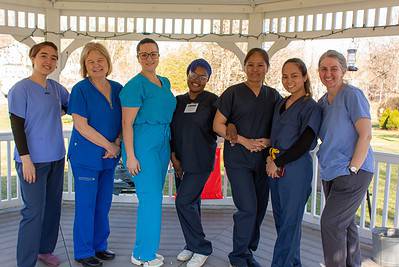
Випускники програми IINE "Сертифікований асистент медсестринства", які відіграватимуть ключову роль у нашій економіці разом з багатьма іншими працівниками-іммігрантами.
Міф:Багато іммігрантів є злочинцями..
Реальність: Немає жодних доказів, які б підтверджували твердження про вищий рівень злочинності серед іммігрантів. Насправді, дослідження показали протилежне.Масштабне дослідження 2018 року показало. що зі зростанням імміграції у великих містах США з 1970 по 2010 рік рівень злочинності знизився.
Міф: Іммігранти отримують несправедливий рівень підтримки від уряду і є виснаженням для економіки США.
Реальність: Багато біженців та іммігрантів пережили неймовірні труднощі та довгі, небезпечні подорожі, щоб потрапити до США. Коли вони вперше приїжджають, багато з них отримують базову підтримку для стабілізації через право на участь у таких програмах, як талони на харчування. Більшість іммігрантських родин, які отримують підтримку, натомість роблять внесок в економіку країни протягом усього життя. Згідно з нещодавнім звіту Американської імміграційної радиу 2021 році сукупна купівельна спроможність іммігрантів у США становила 1,4 трильйона доларів і вони сплатили 525 мільярдів доларів податків. Новоприбулі зміцнюють нашу робочу силу, заповнюючи вакансії у сфері охорони здоров'я, STEM, будівництва, екологічних послуг тощо. 22% підприємців по всій країні народилися за межами США. У багатьох штатах Нової Англії іммігранти є ключовою, а часто і єдиною стратегією боротьби зі скороченням робочої сили. Наша місцева та національна економіка залежить від іммігрантів.
Дякуємо за вашу зацікавленість у підтримці біженців та іммігрантів у нашій громаді. Дізнайтеся більше про ці питання, підписавшись на підписавшись на нашу розсилку та слідкуючи за нами в соціальних мережах, та зробіть свій внесок у зміну життя коли ви пожертвуєте сьогодні.
Рік тому Діана і Ренді жили на своїй батьківщині, на Кубі, і будували кар'єру в медицині. Діана була на четвертому курсі медичної школи, а Ренді розпочав свою резидентуру, щоб підготуватися до роботи акушером-гінекологом.
Коли вона могла, Діана відвідувала свою матір на Тринідаді. З кожною поїздкою вона все більше усвідомлювала, наскільки життя на Тринідаді відрізняється від життя на Кубі - наскільки більше свободи і вища якість життя існують за межами її рідної країни. "[На Кубі] кажуть, що вони - єдина країна у світі, де освіта безкоштовна і медицина безкоштовна. Це, по суті, брехня. Коли ви їдете на Тринідад, там є державна охорона здоров'я, і навіть ліки, які ви купуєте, є безкоштовними", - каже Діана. Ці усвідомлення залишили в неї відчуття зради з боку уряду її країни.
Діана вирішила поділитися своїм гнівом і занепокоєнням у соціальних мережах. У річницю протестів проти кубинського уряду 11 липня 2021 року, які були жорстоко придушені, кубинці знову вийшли на вулиці. Натхненна, Діана вивісила білу тканину на своєму будинку на знак солідарності з протестувальниками. Цей вчинок повністю змінив її та Ренді життя.
Кубинська влада звернула на це увагу і швидко знайшла сторінку Діани у Фейсбуці. Наслідки не забарилися. Ренді звільнили з роботи, а Діану вигнали з медичної школи. На акаунти Діани в соціальних мережах посипалися повідомлення з погрозами вбивства. Ренді попереджали, що він повинен залишити Діану, оскільки вона принесе йому неприємності, але він залишився на її боці.
"[На Кубі] можна втратити все життя через пост [у соціальних мережах]," каже Діана. "Це не має сенсу. Ренді шість чи сім років вивчав медицину даремно. Я була четвертою в класі в школі. Їм було байдуже, коли вони мене вигнали."
Новий дім
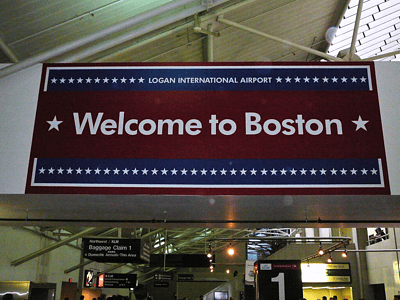
Діана відчула почуття безпеки, коли вони з Ренді вперше прибули в аеропорт Логан у Бостоні
Діана і Ренді проведуть рік на Тринідаді, в очікуванні наступних кроків і можливості пустити коріння в безпечному місці. Зрештою, отримавши статус біженців, Діана та Ренді переїхали до Массачусетсу у вересні цього року.
"Перше, що мене справді вразило - це великий прапор в аеропорту," згадує Діана. "Я відчула себе в безпеці. Ніби нарешті ми опинилися в єдиному місці, де ми могли отримати необхідну допомогу."
Діана та Ренді одразу відчули, що їм раді. Члени команди IINE зустріли Діану та Ренді в аеропорту і відвезли їх до номера готелю, де на них чекала тепла їжа. За кілька тижнів координатор IINE з питань житла знайшов і облаштував для них квартиру за межами Бостона.. "Це дивовижно,"каже Діана.Вона дуже велика для нас, і в ній багато вікон, тому ми отримуємо багато світла. Він прекрасний."
"Місце дійсно дивовижне, - додає Ренді, посміхаючись. "Все поруч: автобусні зупинки, Market Basket, CVS. Це 5-10 хвилин ходьби від усього, що вам дійсно потрібно."
Проте, починати все з чистого аркуша в абсолютно новій громаді та країні було нелегко. Ренді пам'ятає, що, починаючи з аеропорту, все здавалося набагато більшим і розлогішим, ніж те, до чого він звик на Кубі. Для Діани було важко "зрозуміти тутешню систему. Все відрізняється, і потрібно звертати увагу на всі деталі," каже вона, -і те, що ми сідаємо в автобус і метро, це для нас нове. Ми ніколи раніше не їздили в метро"."
Діана та Ренді чекають на автобусній зупинці біля свого нового будинку
Спеціаліст IINE Енніс Робертс підключила їх до федеральних пільг, включаючи продукти харчування, грошову допомогу та медичні послуги, а також допомогла їм зорієнтуватися на новому місці проживання. "Енніс допомагала нам з усім, що стосувалося навчання, як тут жити, наприклад, з відвідуванням лікарів, стоматологів,"розповідає Діана, -з усім, і вона дуже добре пояснювала, що робити."
Ренді, який володіє англійською мовою гірше, ніж Діана, вдячний за те, що його зарахували на курс IINE "Англійська мова для носіїв інших мов", і прагне вдосконалюватися. Одне з перших завдань було особливо важливим для нього і для Діани, яка допомагала йому з ним. Його попросили написати про найважливішу страву в його країні. Ренді та Діана не мали жодного уявлення, що це може бути; зазвичай їм ледве вистачало на їжу. Пошук в Інтернеті підказав їм, що національною їжею Куби є страва з яловичини під назвою "Ропа В'єха". Вони були шоковані, згадавши, що кубинським громадянам заборонено їсти яловичину, оскільки корів використовують лише для видобутку та експорту молока. Це було нагадуванням про те, як контролювали і маніпулювали спілкуванням у його колишній країні, коли він працював над вивченням мови своєї нової домівки.
Зліт кар'єри
Як і більшість новоприбулих до США, Діана та Ренді прагнули якнайшвидше приєднатися до робочої сили. Вони відчувають полегшення і радість від того, що спеціаліст з питань працевлаштування IINE Ліз Кунеш допомогла їм знайти роботу протягом перших трьох місяців.
"Вона дійсно допомагала нам у всьому, що стосувалося роботи,"розповідає Діана. "Допомагала нам подавати заявки на роботу і заповнювати всі паперові документи - це було дійсно чудово, тому що деякі документи були дійсно заплутані."
Ліз навчила їх складати резюме, проходити співбесіди, знаходити та подавати заявки на вакансії, що відповідають їхнім інтересам та досвіду. Діана каже, що перед кожною співбесідою вона телефонувала або писала їм. "'У вас є якісь запитання? Вам потрібно щось потренувати?" і організовувала для них спільні поїздки, коли громадський транспорт був недоступний. "Ми дійсно відчували підтримку кожного разу, коли нам доводилося робити щось нове."
Зараз Ренді почав працювати помічником по догляду на дому. Він вважає, що йому дуже пощастило не тільки з роботою, пов'язаною з його навчанням, але й з першою роботою, на яку він подав заявку, оскільки під час орієнтації його попередили, що це може зайняти деякий час. Він вже думає про майбутнє:
"Ми цінуємо, що хоча ми вже маємо роботу, є сесії, які інформують про інші професії... Я думаю, що ми могли б почати працювати, в тому числі і вночі, [з метою] не сидіти на одному місці, працювати, а також вчитися і вдосконалюватися"."
Діана почала працювати косметологом у магазині безмитної торгівлі в аеропорту Лоґан - місці, яке дало їй перше відчуття безпеки тут. "Це справді дивовижно. Коли я була дитиною, все, про що я думала - це літаки. Вони мені дуже подобаються. Можливо, тому що на Кубі дуже дивно бачити літак або перебувати в аеропорту - ці професії призначені тільки для військових, - це дійсно дивно, що я можу працювати в аеропорту."
Відчуття гостинності
"Я дуже хвилювався перед тим, як приїхати сюди.," каже Діана."Все мало бути новим, а ми нічого нічого не знаємо про життя, але мене заспокоює те, що люди завжди готові поставити запитання.до кого можна задати питання.Всі добрі до тебе, добре ставляться. Це дивовижно. Це дуже приємно, коли люди добрі до тебе, навіть коли ти навіть якщо ти не місцевий.Ми дуже вдячні-цій країні та всім в IINE, хто дійсно допоміг нам."
Ми пишаємося тим, що прийняли, розселили та підтримуємоед біженців у регіоні Нової Англії вже понад 100 років. Дізнайтеся більше про нашуроботу з переселення біженців тут.
Доктор Кафоріо визнаний за свій внесок у розвиток галузі охорони здоров'я в США.
БОСТОН - 6 грудня 2023 року - Міжнародний інститут Нової Англії (IINE) оголосив д-ра Джованні Кафоріо, виконавчого голову правління та колишнього генерального директора Bristol Myers Squibb, лауреатом 42-ї премії "Золоті двері". Ця престижна нагорода щорічно присуджується лідеру, який народився за межами США і зробив видатний внесок в американське суспільство. Кафоріо буде нагороджений на церемонії вручення премії "Золоті двері", яка відбудеться в понеділок, 4 березня 2024 року, в готелі Fairmont Copley Plaza в Бостоні.
"Ми дякуємо доктору Кафоріо за те, що він отримав 42-гу нагороду "Золоті двері", і за його надзвичайне лідерство в Bristol Myers Squibb. Під його керівництвом організація здійснила революцію в лікуванні раку", - сказав Джефф Тілман, президент і головний виконавчий директор Міжнародного інституту Нової Англії (International Institute of New England). "Доктор Кафоріо є прикладом прагнення та співчуття до біженців та іммігрантів, які відзначаються нагородою "Золоті двері", що вшановує їхній величезний внесок в американське суспільство".
Доктор Кафоріо обіймав посаду головного виконавчого директора Bristol Myers Squibb з травня 2015 року по жовтень 2023 року. Народився та отримав освіту в Італії, д-р Кафоріо присвятив себе керівництву зусиллями Bristol Myers Squibb у дослідженні та розробці революційних лікарських засобів. У 2000 році д-р Кафоріо обійняв посаду віце-президента та генерального директора в Італії у Всесвітній групі лікарських засобів, а у 2001 році додав відповідальність за Грецію та Ізраїль, а у 2003 році - за Південно-Східну Європу. У 2007 році він переїхав до США і обійняв посаду старшого віце-президента з питань онкології в США.
Колишній лікар, який створив провідний портфель імунотерапевтичних препаратів, що докорінно змінюють методи лікування раку, допоміг зміцнити культуру Bristol Myers Squibb, орієнтовану на пацієнта, - культуру, в основі якої лежать інновації, швидкість, підзвітність і пристрасть до справи. Як лідер, він зосереджений на бізнес-цінності культури компанії, яка заохочує та винагороджує різноманітність та інклюзивність.
"Відданий лікар, лідер і візіонер, Джованні є справді гідним лауреатом цієї нагороди, - сказав Тед Семюелс, провідний незалежний директор Bristol Myers Squibb і член приймаючого комітету GDA. "Як іммігрант, Джованні підтримує різноманітний досвід та перспективи наших співробітників. Він також очолював прагнення Bristol Myers Squibb диверсифікувати наші клінічні дослідження, щоб допомогти групам населення, які найбільше цього потребують. Джованні щиро вірить у продовження розробки методів лікування та лікарських засобів для всіх і всюди".
"Дякую Міжнародному інституту Нової Англії за це неймовірне визнання, - сказав д-р Джованні Кафоріо, виконавчий голова правління та колишній генеральний директор Bristol Myers Squibb. "Для мене велика честь приєднатися до довгого списку видатних біженців та іммігрантів, які представляють різні професії в академічних колах, музиці та культурі, на політичній арені, в біотехнологіях тощо, і всі вони відзначені за їхню невід'ємну роль у розвитку своїх громад у США".
Отримавши нагороду "Золоті двері", д-р Кафоріо приєднується до видатного списку минулих лауреатів, серед яких лауреат 2023 року д-р Шрікант М. Датар, Стефан Бансель, д-р Решма Кевалрамані, д-р Нубар Афеян, д-р Рафаель Рейф, д-р Джозеф Аун, суддя Маргарет Маршалл, Йо-Йо Ма, Ань Ван, Стівен Мугар, І.М. Пей та інші.
ПРО МІЖНАРОДНИЙ ІНСТИТУТ НОВОЇ АНГЛІЇ
Міжнародний інститут Нової Англії (IINE) створює можливості для біженців та іммігрантів досягти успіху через переселення, освіту, кар'єрне зростання та шляхи до громадянства. Розташований у Бостоні та Лоуеллі, штат Массачусетс, і Манчестері, штат Нью-Гемпшир, IINE щорічно обслуговує понад 10 000 осіб, включаючи людей, переміщених внаслідок політичної нестабільності, насильства та кліматичних криз, дітей та дорослих, які постраждали від торгівлі людьми, а також дітей без супроводу дорослих, які приєднуються до членів сім'ї в Новій Англії. IINE пропонує широкий спектр програм і послуг, щоб допомогти цим новоприбулим відчути себе бажаними гостями, досягти стабільності та безпеки, отримати доступ до ресурсів у нових громадах, просунутися в освіті та працевлаштуванні, а також інтегруватися у свої громади. Досвід IINE ґрунтується на більш ніж столітньому досвіді роботи, і завдяки постійному партнерству з громадськими групами та підтримці благодійників по всій Новій Англії, IINE продовжуватиме свою діяльність протягом наступних 100 років і надалі.
Нагорода "Золоті двері" вже понад 50 років є традицією IINE, яка вшановує людей, народжених за межами США, які зробили видатний внесок в американське суспільство. Наш щорічний гала-вечір - це нагода, яка закликає нас об'єднатися для святкування досягнень іммігрантів, які відіграли невід'ємну роль у наших громадах, економіці та суспільстві. Дізнайтеся більше про церемонію нагородження "Золоті двері" 2024 року тут.
Дорогі Ахмеде, Зухро і Метре, Ласкаво просимо до Бостона! Мене звати Сурадж Чодрі. Мені 16 років, я вчуся в Південній середній школі Ньютона, ось-ось розпочнеться 11клас. Дозвольте розповісти вам дещо про Бостон. Це дуже гарне і привітне місто. Сюди приїжджають і живуть люди з усього світу - вони дуже підтримують і хочуть бачити, як інші досягають успіху і роблять все добре.
- Волонтер IINE Сурадж Чодрі у своєму листі до новоприбулої сім'ї біженців
Коли Сурадж Чодрі дізнався, що у свої 16 років він занадто молодий для літнього стажування в IINE, він не розгубився. Він сказав координатору волонтерів IINE Кейт Вайдлер, що хоче "простягнути руку допомоги у будь-який спосіб".
Кейт зробила дві пропозиції: він міг би написати листа, щоб привітати новоприбулу сім'ю біженців, або зібрати пожертви на побутові речі, яких вони потребують. Сурадж зробив і те, і інше. Його гарно написаний лист був доставлений родині з Афганістану, а збір пожертв приніс близько шістдесяти пальт, щоб допомогти новоприбулим сім'ям зігрітися під час їхньої першої зими в Новій Англії.
"Що мене вразило в Сураджі, - згадує Кейт, - так це його ініціативність і наполегливість. Я подала йому кілька ідей, і він почав їх реалізовувати, залучаючи свою сім'ю, друзів та однокласників. Він зв'язувався зі мною телефоном і електронною поштою, щоб спланувати і лист, і збір пальт, і домовився про те, щоб відвезти їх після шкільного дня".
"Я зв'язався з кількома невеликими школами та підприємствами і встановив скриньки для пожертвування пальт зі знаком IINE, - розповідає Сурадж. "Люди були дуже щедрими і пожертвували багато пальт у хорошому і навіть новому стані. Я сподіваюся, що ці пальта допоможуть біженцям протягом зимового сезону, і сподіваюся, що незабаром організую ще одну акцію".
Кейт була не менш вражена листом, який він написав. "Його лист теплий і дружній, - каже вона. "Мені подобається, як він запрошує сім'ю долучитися до того, що може запропонувати Бостон, і знаходить спільні інтереси, такі як спорт і їжа. Він розповідає їм цікаві речі про себе і, здається, щиро цікавиться сім'єю та їхнім переїздом до Бостона. Отримавши такий лист, я б відчула себе бажаною і підтриманою, а це і є бажаний результат: дати сім'ям біженців відчути, що їх хочуть бачити в нашому місті і запрошують до участі в міських заходах".
"Я просто подумав про те, що хотів би знати, якщо колись поїду з Бостона, - каже Сурадж, - як краще пересуватися, що це за місто і чи привітні люди. На початку цього року я приймав у себе вдома аргентинського студента за обміном, і однією з речей, які ми з ним зробили, був похід на гру "Селтікс" на стадіоні "TD Garden". Він був такий щасливий і вдячний, що я включила це в свій лист. Я також вирішив додати до листа фотографії, щоб родина могла впізнати його в обличчя. Я сподіваюся, що афганська сім'я знайшла в моєму листі деяку розраду".
Саме завершення аргентинської програми обміну студентами привело Сураджа до пошуку стажування за участю іммігрантів. Коли його пошуки привели його до Міжнародного інституту Нової Англії, він був зворушений місією.
"Робота, яку виконує IINE, змінює життя біженців на краще і дає їм шанс на повсякденне життя. Оскільки це перший крок перед тим, як біженці увійдуть у свій новий дім і громаду, важливо, щоб вони відчували себе бажаними гостями. Як член сім'ї індійських іммігрантів, я не з чуток знаю, з якими труднощами зіткнулися мої батьки, і я хотів би допомогти іншим сім'ям, а також підвищити обізнаність про проблеми, з якими стикаються біженці, коли вони вперше прибувають, і про те, як ми можемо їх підтримати".
Що ми побачимо далі від Сураджа?
"Чесно кажучи, - каже він, - я тільки починаю, і це дає мені відчуття, що я роблю щось важливе. Сподіваюся, я зможу продовжувати в тому ж дусі!"
Ми поспілкувалися з кількома співробітниками, які святкували ювілеї, щоб дізнатися, що привело їх до Міжнародного інституту Нової Англії, як змінилися їхні ролі та організація з того часу, і що їм найбільше подобається в роботі сьогодні.
Емма Понд, кар'єрний навігатор
Відсвяткувала 1 рік роботи у 2023 році
Емма зі студентом на нещодавній випускній церемонії "На старт, увага, марш!
Що вперше надихнуло вас приєднатися до IINE?
До роботи в IINE я працював у Міжнародному комітеті порятунку в Нью-Йорку. Я щойно провів рік, працюючи в цьому місті, і три місяці в міжнародній організації Lifting Hands International в Греції. Я знав, що хочу продовжувати працювати у сфері переселення, і незабаром знайшов IINE. Мене вразила історія IINE та робота, яку IINE проводить у Новій Англії. Я була так схвильована, коли мене запросили на співбесіду на посаду кар'єрного навігатора!
Рік потому, як змінилася ваша роль і IINE?
Моя роль змінилася протягом першого року роботи тут. Я почала з посади асистента викладача кар'єрного навігатора, який керував програмою MassHire "Готовий, на старт, до роботи!" (RSS). (RSS). Незабаром я почала працювати з клієнтами безпосередньо, щоб знайти роботу і набрати наступну когорту. Наразі я викладав у двох групах RSS та шести курсах водійських навичок. Останній курс RSS закінчився 17.11.23, і тепер я розпочинаю наступний етап - пошук роботи.
Що вам найбільше подобається у вашій сьогоднішній ролі?
Моя улюблена частина роботи - викладання. Мені подобається спілкуватися зі студентами і відчувати, що я роблю щось корисне. Коли студенти в моєму класі формують дружбу та підтримують один одного, це робить мене ще щасливішою. Курс водіння, який я почала викладати в травні цього року, також виявився напрочуд цікавою та корисною частиною моєї роботи. Курс водійських прав триває лише чотири дні, але за ці чотири дні студенти вчаться тому, що їм потрібно знати, щоб скласти іспит на отримання водійських прав. Надзвичайно приємно бачити, як студенти відвідують заняття, складають іспит, а потім пишуть мені, що вони склали іспит з водіння і тепер мають водійське посвідчення. Наявність посвідчення відкриває двері до багатьох можливостей; бути маленькою частиною цієї новоствореної агенції - це щось особливе.
Юсуф Абді, менеджер з питань кар'єри
Святкуватиме 10-річний ювілей своєї роботи у 2024 році
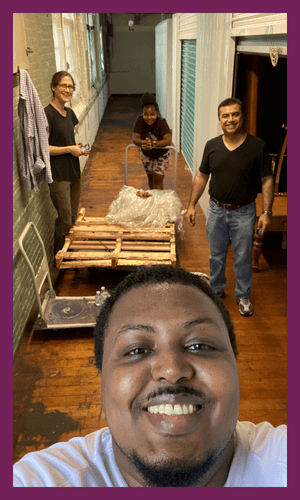
Юсуф (на передньому плані), співробітники та волонтери IINE готують квартиру для новоприбулої сім'ї іммігрантів
Що вперше надихнуло вас приєднатися до IINE?
Америка - це країна іммігрантів, яка, по суті, приймає новоприбулих і дає їм можливість перебудувати своє життя. IINE підтримує цю роботу, приймаючи біженців та людей, які були змушені покинути свої домівки. Як біженка, я хотіла бути частиною цієї роботи.
Я приєдналася до команди кар'єрних послуг, тому що пошук роботи - це фундаментальний крок для іммігрантів, щоб стати самодостатніми та незалежними. Робота - це ключ до того, щоб платити за оренду житла, мати власний автомобіль і гідно жити в нових громадах.
Можливість підтримувати біженців та іммігрантів надихає мене щодня у моїй роботі. Для всіх, хто працює в IINE, це більше, ніж просто робота - ми всі разом працюємо над досягненням мети - допомогти новоприбулим до нашої країни.
Майже десять років потому, як змінилася ваша роль та IINE?
Коли я прийшла в офіс Лоуелла на посаду спеціаліста з працевлаштування, ми були командою з двох осіб. Коли у 2016 році адміністрація змінилася у 2016 році, наша команда скоротилася до мене. Це був дуже складний момент у часі. Відтоді, на щастя, ми значно зросли - і ми мусили це зробити, щоб підтримати великий приплив афганських іммігрантів [у 2021 році]. Сьогодні нас семеро.
Я пройшла шлях від спеціаліста до керівника, а тепер є керівником команди. За час роботи в IINE я багато чому навчилася часу в IINE я багато чому навчилася, і я вдячна за те, що мені надали багато можливостей для навчання. можливостей для навчання.
Що вам найбільше подобається у вашій сьогоднішній ролі?
Бачити, як наші клієнти починають з нуля, в багатьох випадках, і стають самодостатніми - це завжди мотивує мене. Протягом багатьох років я спостерігала, як новоприбулі клієнти, яким я допомогла знайти роботу, купують автомобілі, записують своїх дітей до школи, а потім їхні діти закінчують школу і вступають до університету. Дивовижно бачити це зростання. І наші клієнти дуже вдячні. Це те, що змушує мене займатися цією роботою.
Мені також подобається будувати мости між нашими клієнтами та місцевими партнерами-роботодавцями. Я не лише допомагаю нашим клієнтам, а й сприяю розвитку місцевої економіки, а роботодавці дякують нам за підтримку їхнього бізнесу. Наприклад, під час пандемії багатьом медичним закладам терміново знадобився персонал. Вони звернулися до мене, і ми змогли зіграти величезну роль, зв'язавши їх з нашими клієнтами та задовольнивши їхні потреби за короткий час.
Нарешті, мені дуже подобається спільнота, яка існує в IINE. Кожен, хто вперше приходить до нас, переживає перехідний період. Вони ще не є самодостатніми і потребують тимчасової підтримки. Наші клієнти це розуміють, і коли вони стають більш самодостатніми, вони допомагають іншим. Так наші конголезькі клієнти допомагають нашим афганським клієнтам, а тепер наші афганські клієнти допомагають нашим гаїтянським клієнтам. Вони підвозять їх на зустрічі, вітають їх у своєму районі - між ними існує довіра, незважаючи на те, що всі вони походять з дуже різного походження, тому що їх об'єднує зв'язок через IINE. Бачити цю готовність віддавати, це дуже важливо. Ми тут як сім'я.
Пем Серемет, спеціаліст освітніх програм
Відсвяткувала 3-річний ювілей роботи у 2023 році
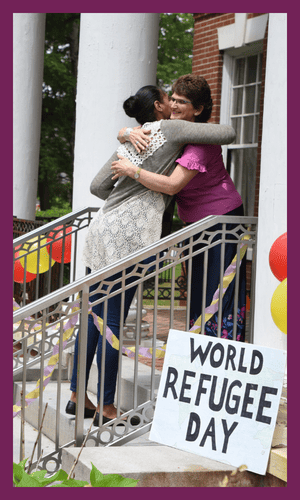
Пем (праворуч) вітає студента ESOL з його досягненнями під час святкування Всесвітнього дня біженців, організованого IINE
Що вперше надихнуло вас приєднатися до IINE?
У 2013 році я повернулася до школи, щоб отримати ступінь магістра, тому що в приватній школі, де я викладала, була міжнародна програма, і я подумала, що було б добре вивчити ESOL (англійську мову для носіїв інших мов), щоб допомогти цій програмі. У 2016 році я отримала ступінь магістра освіти зі спеціалізацією в галузі ESOL. Я планувала "піти на пенсію" з початкової школи і перейти на вищий рівень, щоб стати викладачем англійської мови для старшокласників. Однак у 2018 році школа закрилася. Тож... я шукала місце, де змогла б використати свої навички ESOL, щоб допомогти учням досягти успіху. Коли я прочитала місію IINE, я зрозуміла, що це місце, частиною якого я хочу бути.
Три роки по тому, як змінилася ваша роль і IINE?
Мене взяли на роботу в жовтні 2020 року, в розпал COVID. У нас було чотири класи, і я вела два з них. Три з них проходили в Zoom, і я мала шістьох студентів курсу грамотності, яких я мала навчити користуватися Zoom на їхніх телефонах, щоб група "Грамотність/Початковий рівень" все ще могла зустрічатися через Zoom. До січня ми всі були в Zoom. Потім я розділила групи "Грамотність" і "Початківці" через великий розрив між цими двома групами. Сьогодні у нас є сім класів ESOL, два класи з охорони здоров'я та клас LNA (ліцензований асистент медсестринства). У нас також стало більше викладачів та допоміжного персоналу в освітній команді з тих пір, як я почала працювати. Ми переїхали з нашого офісу на Пайн-стріт до церкви Бруксайд і школи Святого Рафаїла, щоб розмістити більші класи, і все ще маємо довгий список очікування для дорослих, які хочуть вивчати англійську мову!
Інша частина моєї роботи - це навчальна програма. Я займаюся написанням навчальних планів для трьох рівнів ESOL, так що якщо студент вступає на нашу програму на рівні 1, він може безперервно проходити всі три рівні і мати міцний фундамент з фонетики, читання, граматики, письма, говоріння та аудіювання, коли він закінчить нашу програму. Я переглядаю навчальну програму, щоб вибрати найкращі варіанти для наших студентів. Оскільки не існує ОДНОГО навчального плану, який охоплює все, я завжди шукаю зовнішні ресурси, щоб доповнити та покращити навчальну програму.
Що вам найбільше подобається у вашій сьогоднішній ролі?
Я люблю свою роботу в IINE! Мені подобається допомагати моїм студентам вдосконалюватись у багатьох аспектах англійської мови! Я відчуваю задоволення, коли вони досягають своїх цілей і святкую разом з ними. Коли я бачу, що студентам важко, я намагаюся реалізувати можливості для практики цих навичок і заохочую їх продовжувати рухатися вперед. Мені подобається співпрацювати з іншими членами освітньої команди. Ми ділимося думками та ідеями, спираємося на пропозиції один одного, а також розділяємо обов'язки, коли це необхідно! Я дуже вдячна за свою роботу та людей, з якими я працюю в IINE!
CJ Mbaike, бюджетний аналітик
Відсвяткував 1 рік роботи у 2023 році
CJ приєднався до фінансової команди у 2022 році
Що вперше надихнуло вас приєднатися до IINE?
Перше, що надихнуло мене приєднатися до IINE - це місія. Будучи іммігрантом з Нігерії, я знаю, як важко може бути влаштуватися в новій країні, де у вас може не бути сім'ї або родичів, і вам потрібно пристосуватися до культурних відмінностей. Бажання допомогти таким, як я, надихнуло мене працювати в такій організації, як IINE.
Три роки по тому, як змінилася ваша роль і IINE?
Моя роль значно трансформувалася: від саморозвитку до зростання команди та компанії, я стала невід'ємною частиною фінансової команди та командним гравцем, який підтримує місію IINE.
Що вам найбільше подобається у вашій сьогоднішній ролі?
Найбільше в моїй роботі мені подобається готувати бюджет і отримувати грант. Наприклад, коли я готую бюджет для команди з розвитку і отримую електронного листа про те, що нам присуджено грант, я відчуваю себе приголомшливо і це дуже приємно.
Кейт Бертіно, керуючий юрист
Відсвяткувала 3-річний ювілей роботи у 2023 році
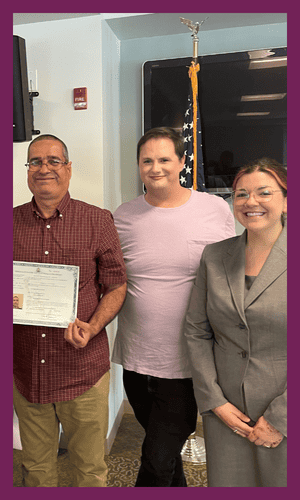
Кейт (праворуч) супроводжує свого клієнта А.А. на церемонії прийняття присяги на вірність громадянству США
Що вперше надихнуло вас приєднатися до IINE?
Я був натхненний місією і вирішив продовжувати працювати в галузі права, де я міг би принести найбільшу користь моїй громаді.
Три роки по тому, як змінилася ваша роль і IINE?
Коли я вперше почала працювати в IINE на посаді помічника адвоката, відділ імміграційних правових послуг складався з трьох осіб. З того часу мене підвищили до керуючого адвоката, і я керую трьома людьми з дев'яти членів команди. Було дуже цікаво спостерігати, як наша програма розвивається і продовжує надавати якісні юридичні послуги.
Що вам найбільше подобається у вашій сьогоднішній ролі?
Мені подобається бути наставником для своїх співробітників і працювати з командою відданих і пристрасних професіоналів.
Бажаєте приєднатися до нашої команди? Наше спільне, командно-орієнтоване середовище пропонує можливості служити біженцям та іммігрантам, навчаючись у інших співробітників та відділів. Переглянути кар'єрні можливості тут.
Фаріда Ніазі, колишня біженка з Афганістану, яка з 2019 року живе в Лоуеллі, штат Массачусетс, каже, що їй подобається свобода, яку вона тут відчуває.
"У Сполучених Штатах релігія відрізняється, і всі різні, але ніхто не говорив мені про мій хіджаб, або ні про що.. Тут добре те, що ти робиш і хто ти хто ти є, а не те, що ти носиш. Тому мені тут подобається".
Тепер, коли Фаріда більше не відчуває, що її змушують носити хіджаб, вона радіє можливості зробити свій вибір. Однак Фаріда і багато інших афганців, яких вона зустріла в Лоуеллі, намагаються знайти якісний традиційний одяг.
"Я ношу хіджаб і довгий одяг. Я шукала. Особливо влітку, коли дуже спекотно, це важко. Я не знайшла його. Сюди приїжджає багато сімей з Афганістану, і я подумала, що якщо I матиму таку проблему, то вони також вони також мають цю проблему".
Фаріда каже, що оскільки вона жила в місті в Афганістані і працювала вчителькою, перехід до життя в Лоуеллі був для неї легшим, але багато афганських жінок у Лоуеллі з різним походженням можуть бути "сором'язливими" і не наважуватися залишати свої домівки. Відсутність одягу, в якому вони почуваються комфортно і зручно, ще більше ускладнює їхнє життя, посилюючи їхню ізоляцію.
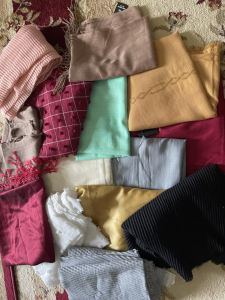
Фаріда постачає високоякісні тканини з Афганістану, Індії та Пакистану
Щоб вирішити цю проблему, Фаріда започаткувала власний бізнес із пошиття та імпорту традиційного афганського одягу за доступними цінами. Працюючи через WhatsApp з постачальниками з Афганістану, Індії та Пакистану, вона обирає високоякісні тканини, предмети одягу та аксесуари і організовує їх доставку. Потім вона публікує фотографії і приймає замовлення через афганську сторінку Лоуелла у Фейсбуці. Клієнти можуть прийти до неї додому, щоб помацати тканину і переконатися в якості одягу. Ціни договірні, і вона намагається тримати їх якомога доступнішими, поки розбудовує свій бізнес. Минув близько року, і справи йдуть добре.
"Коли клієнти приходять один раз, вони приходять знову, а ті, хто побував, розповідають іншим".
Фаріда навчилася шити, коли жила в Афганістані, вимірюючи тканину, обводячи контури власних суконь і викроюючи по них. Вона вдосконалила свої навички завдяки доступу до швейних машин у Міжнародному інституті Нової Англії, з яким родина Ніазі має глибокі зв'язки. Коли IINE допоміг Фариді, її чоловікові та їхнім трьом дітям переїхати до Лоуелла, що, за її словами, "стало для неї Божим благословенням", вона возз'єдналася з членами сім'ї, яких IINE переселив раніше: батьками та сестрами Сафіною і Хасіною, які зараз працюють спеціалістами IINE, допомагаючи своїм колегам-біженцям.
Завдяки цьому зв'язку Фаріда знайшла ще один спосіб допомогти афганським жінкам почуватися менш ізольованими в Лоуеллі. Протягом останніх двох літніх місяців вона веде щотижневі групи з шиття для афганських жінок, які є клієнтками IINE. Іноді вона викладає, але, що важливіше, працюючи з перекладачами, вона дає учасницям можливість спілкуватися одна з одною і з волонтерами під час спільної роботи над своїм ремеслом. Іноді це призводить до того, що вони отримують необхідну підтримку від соціальних працівників IINE.
Традиційна афганська сукня, пошита Фаридою
"Добре те, що ми залучені до спільноти і знаємо один одного. Іноді люди мають проблеми, які вони не обговорюють. Для афганських жінок важливо знати, що вони розмовляють з кимось, хто розмовляє англійською. Іноді вони не мали роботи, не могли потрапити на прийом до лікаря або мали проблеми вдома, але нікому не розповідали, бо не хотіли пояснювати".
Фаріда сподівається, що деякі з жінок, з якими вона шиє, будуть працювати з нею, коли вона одного дня зможе відкрити кравецьку майстерню в громаді. Багато хто вже висловив зацікавленість. А поки що життя Фариди сповнене роботою, трьома дітьми і новонародженим немовлям, красивою тканиною і звуками телефону, що дзижчить від сповіщень у WhatsApp про останні замовлення на одяг.
Завдяки відданим жертводавцям Міжнародний інститут Нової Англії підтримує тисячі сімей біженців та іммігрантів. Дізнайтеся від жертводавців про їхні особисті зв'язки з IINE та про причини, які спонукають їх підтримувати нашу місію.
Уейд Рубінштейн
Член Лідерської ради
"У 2017 році на заході Suitcase Stories® я вперше дізналася про Міжнародний інститут Нової Англії. Мене настільки зворушили почуті історії, що я стала волонтером IINE в Лоуеллі, викладаючи англійську мову новоприбулим мігрантам. Це суто американський досвід - сидіти в класі IINE з двадцятьма людьми різних національностей, статі та віку, які разом вивчають англійську мову.
Як син і онук іммігрантів до Сполучених Штатів, я відчуваю себе зобов'язаним допомагати людям, які шукають кращого життя для себе та своїх родин. Моя дружина, Джилл Блок, і я прагнемо підтримувати місію IINE своїми благодійними пожертвами. Приємно усвідомлювати, що наші внески допомагають людям з усього світу оселитися в Новій Англії та будувати продуктивне життя".
Ведуча ділиться своєю подорожжю на заході Suitcase Stories®.
Пем Чанг
Репетитор з англійської мови
"Іммігранти, часто біженці, прибувають до США спантеличені, налякані, і пригнічені.. Вони приїжджають сюди з надією на краще життя, ніж те, яке вони залишили, і у багатьох дійсно не було вибору. Мені пощастило народитися і вирости тут, і я радий поділитися своєю удачею з іншими, хто пройшов складний шлях..
IINE надає інструменти для іммігрантів для досягнення успіху, а ми отримуємо вигоду від того, що вони тут. Озирніться навколо і подивіться, хто надає послуги в ресторанах, готелях та аеропортах, не кажучи вже про охорону здоров'я тощо. Для мене важливо допомогти забезпечити людей інструментами, необхідними для досягнення успіху в цій новій країні, чужому світі. І мені цікаво і приємно вчитися у них.. Багато чого можна отримати від дружби та допомоги цих новоприбулих членів нашої спільноти, і я твердо переконана, що я і ви повинні робити пожертви для IINE, щоб допомогти йому продовжувати свою роботу.Міжнародний інститут робить чудову роботу, під великим тиском, з витонченістю, турботою і добрим гумором."
Студентка нашої програми підготовки сертифікованих молодших медичних сестер
Енні та Боб Шмальц
Давні прихильники
"Після виборів 2016 року ми були в жаху від антиіммігрантської риторики та активності і почали шукати шляхи допомоги біженцям.Тоді ми дізналися про IINE. Ми принесли програму від IINE до нашої спільноти пенсіонерів Карлтон-Віллард і зібрали речі для пожертвування. Я була присутня на щорічному банкеті з нагоди нагородження в Бостоні. Наш син є адвокатом вІмміграційній службі, і ми знаємо, що відбувається з цієї точки зору. Наш зв'язок з IINE - це реальний спосіб, яким ми можемо щось зробити."
Джуліанна Мехеган
Відданий прихильник
"Я підтримую Міжнародний інститут Нової Англії через його багаторічний досвід та перевірені результати у допомозі іммігрантам та біженцям. IINE розробив програми для підтримки цих новоприбулих ізабезпечення їх медичним обслуговуванням, мовними навичками та навчанням, необхідними для того,щоб стати повноцінними громадянами. Зараз, як ніколи, послуги IINE потрібні для того, щоб полегшити життя новим поколінням іммігрантів".
Наші студенти ESOL отримують допомогу від викладачів та тьюторів
Я народився і виріс на півдні штату Мен. Я отримала ступінь бакалавра зоології та магістра педагогіки в Університеті штату Мен, а потім ступінь магістра бізнес-адміністрування у Школі Тука при Дартмутському коледжі. Незабаром після цього, у 1982 році, я переїхала до Бостона, і з тих пір живу тут! Ми з чоловіком виростили трьох дітей на Бікон Хілл. Ми маємо довгу історію з цим містом і вважаємо, що нам пощастило назвати його своїм домом.
Що стосується моєї кар'єри, то моя перша посада після приїзду до Бостона була в Bain & Company, фірмі з управлінського консалтингу. Я пропрацював там більше десяти років, врешті-решт ставши партнером, а потім перейшов до Genzyme Corporation. На той час це була молода біотехнологічна компанія. За 18 років роботи в ній я виконував різні ролі, зокрема керував глобальною бізнес-стратегією та операціями підрозділу біохірургії, а також допомагав розвивати стартап у сфері генетичної діагностики. Це була чудова організація та культура, і можливість допомагати багатьом людям з точки зору охорони здоров'я була справді вершиною моєї кар'єри. Після виходу на пенсію я в основному займаюся роботою в правлінні, підтримуючи низку медико-біологічних наук та неприбуткових організацій.
Розкажіть нам про yнашу подорож до Міжнародного інституту Нової Англії.
Для мене, хлопця з маленького містечка в штаті Мен, приєднання до таких глобальних компаній, як Bain та Genzyme, дійсно розширило мої перспективи. У мене була можливість подорожувати по всьому світу і знайомитися з людьми з дуже відмінним від мого походженням. Це допомогло мені сформувати більш глобальну точку зору.
Вперше я дізнався про IINE, коли організація вшановувала Анрі Термеєра, голландського іммігранта та генерального директора Genzyme, на церемонії вручення премії " Золоті двері". Я ближче познайомився з IINE через Золтана Чімму, який відповідав за людські ресурси в Genzyme, а згодом став головою правління IINE на багато років. З кожним заходом, який я відвідував, і кожною розмовою, яку я вів, я все більше вражався неймовірною роботою та впливом IINE. Я став членом Керівної ради і залишався в ній до цього року, поки не став членом правління.
Що ви вважаєте найважливішим внеском члена правління?
Звичайно, існують управлінські та фідуціарні обов'язки. IINE є дуже добре керованим та ефективним у цих сферах, тому я вважаю, що найважливішим аспектом моєї ролі як члена правління стає консультативна відповідальність - допомагати IINE залишатися зосередженим на своїй місії та своєму майбутньому. Було дуже цікаво взяти на себе цю роль в той час, коли IINE розробляє новий стратегічний план і готується збільшити свої інвестиції в приватну філантропію. Мене вразило те, як IINE впродовж багатьох років відповідав на виклики, що поставали перед ним. Забезпечення нашої здатності продовжувати долати будь-які шторми, що трапляються на нашому шляху, вимагає потужного фандрейзингу, і я з нетерпінням чекаю можливості підтримати цю роботу.
Я вважаю, що IINE зробив похвальну роботу, зібравши раду дуже талановитих людей з різноманітним досвідом і поглядами. Це створює потужний діалог. Я з нетерпінням чекаю можливості використати свій кар'єрний досвід та досвід у сфері філантропії у нашій спільній роботі.
Що вас найбільше хвилює в майбутньому IINE?
Я вчуся все життя, тому більше за все, я я з радістю вчуся! IINE's бізнес модель дуже складна, з точки зору численних потоків фінансування. Eкожна людина доклала неймовірних зусиль, щоб вивести IINE на той рівень впливу, якого вона досягла сьогодні, коли організація обслуговує тисячі біженців та іммігрантів.. Я з нетерпінням чекаю можливості вчитися у моїх колег-членів правління та керівництва IINE.
Що надихає вас на благодійність?
Нас із сестрою виховували неймовірна неймовірна мама, яка сама підтримувала нашу сім'ю, будучи відданою своїй справі шкільною вчителькою. Завдяки підтримці моєї сім'ї, а також низці чудових можливостей і стипендій, я змогла здобути вищу освіту вipsя змогла досягти успіху. Я відчуваю себе дуже щасливоюі і для мене для мене важливо повернутися, допомогти іншим знайти можливості та досягти успіху.повернутися, допомогти іншим знайти можливості та досягти успіху.




 Мене звуть Анастасія, я з України. До початку війни я щасливо жила у своєму рідному місті - Одесі. З підліткового віку я дуже любила моду. Закінчуючи Одеський національний університет, я почала будувати свій справжній зв'язок з модою, і, нарешті, коли я отримала ступінь магістра економіки, я зрозуміла, що моя справжня пристрасть - це мода, і що я хочу зробити її своєю роботою.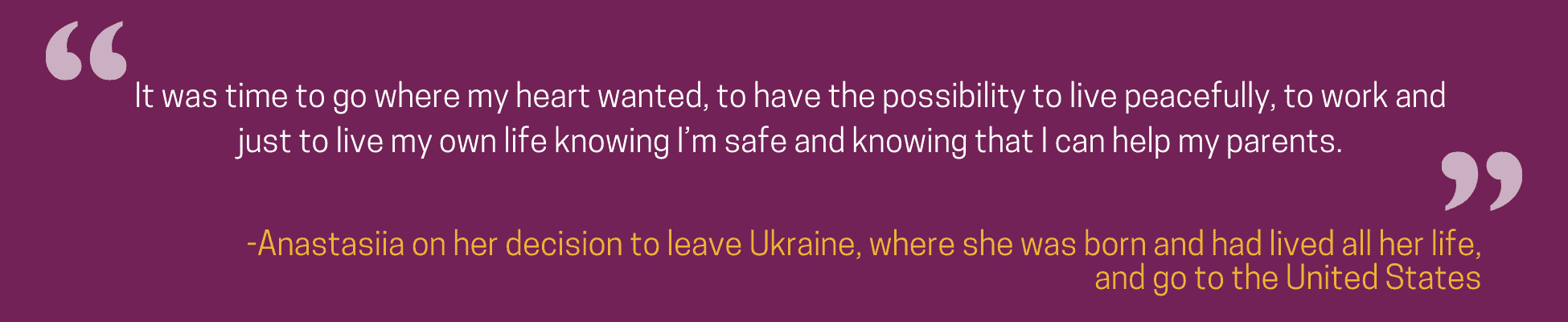















 Я народився і виріс на півдні штату Мен. Я отримала ступінь бакалавра зоології та магістра педагогіки в Університеті штату Мен, а потім ступінь магістра бізнес-адміністрування у Школі Тука при Дартмутському коледжі. Незабаром після цього, у 1982 році, я переїхала до Бостона, і з тих пір живу тут! Ми з чоловіком виростили трьох дітей на Бікон Хілл. Ми маємо довгу історію з цим містом і вважаємо, що нам пощастило назвати його своїм домом.