metapixel
Перейти до основного змісту

Бостон
2 Boylston Street, 3rd Floor
Boston, MA 02116
617.695.9990

Lowell
585 Middlesex St.
Lowell, MA 01851
978.459.9031

Манчестер
470 Pine Street, Lower Level
Manchester, NH 03104
603.647.1500

Звертайтеся
info@iine.org
iine.org

Контакти для ЗМІ
comms@iine.org

Слідуйте за нами


Пожертвувати

Our Boston office will be closed on Monday, 8/24 for a staff meeting.

Автор: Даніель Готьє

Ride 2025

“I Do This in Their Honor”: Cyclists Raise Awareness and Funds at Sixth Annual Ride for Refugees and Immigrants

The Mission

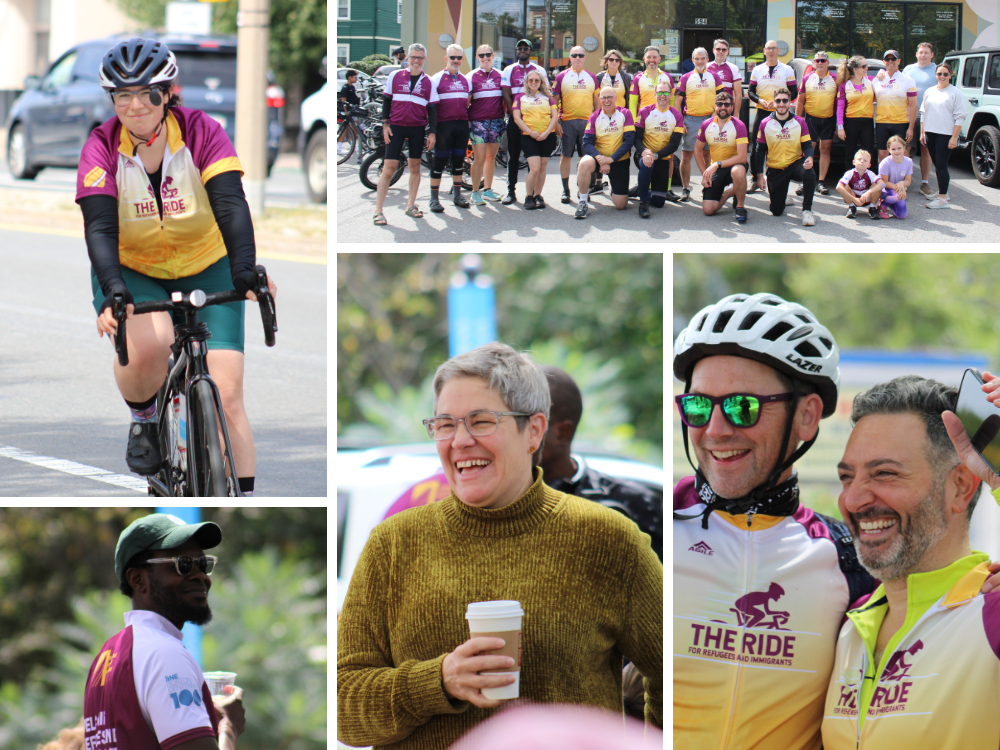
On September 21, thirty members of the IINE community, including staff, board members, volunteers, and their families, donned custom jerseys, mounted their bikes, and set off for a morning of pedaling their hearts out to raise awareness and funds in support of IINE’s mission. 

The annual Ride for Refugees and Immigrants, which was created by IINE Leadership Council member Will Krause, brings together seasoned and novice riders, united by their desire to support our newest neighbors. For weeks leading up to this year’s big day, riders gathered donations from their personal networks, spreading the word about IINE’s work and raising critical funds to help refugees and immigrants access food, shelter, and healthcare, English language and job skills training, and immigration legal support.  
 
For many, this year’s Ride felt particularly urgent as dramatic changes in federal immigration policy have dealt new challenges to refugees and immigrants in our communities—but on the day, while engaged together in action and celebration, the riders were all smiles. 
 

The Routes

Riders chose between two routes: a 12-mile route that started at the Bike Source in Bedford, Massachusetts and ended at the Kickstand Café in Arlington, and a 50-mile loop that began and ended at the café with stops in Lowell to tour IINE’s office and in Bedford to link up with the 12-milers for the home stretch.  

Participants rode at their own paces with designated team leaders guiding the way. Riders’ branded jerseys provided an important visual reminder for everyone they passed that our communities support our refugee and immigrant neighbors.  

The Finish Line

In the early afternoon, the Kickstand Café buzzed with bike-riders as one wave after another reached the finish line. IINE staff members were there to cheer on each finisher, and snacks and refreshments awaited to help them recover and celebrate. Many riders lingered long after the dismount to cheer on fellow finishers and socialize.   

One common theme heard from first-time 50-milers, as they mopped their brows, was that it felt easy to push through any of the day’s physical challenges when they thought about the cause. The challenges refugees and immigrants face are incomparable—surviving crises in their countries of origin, leaving their homes and loved ones behind, starting over in an unfamiliar place with little more than a suitcase, navigating complicated and ever-changing immigration laws, and so much more. This is not only a story shared by IINE’s clients, but also a story that can be found in each rider’s family history, and one that made their own lives as Americans possible.  

This year’s Ride for Refugees and Immigrants raised more than $50,000 in much-needed support for IINE’s mission. A huge thank you to everyone who participated!   

IINE’s annual events raise critical funds for our refugee and immigrant community members. Learn more and join us for an upcoming event.

Why They Give: Donor Profile

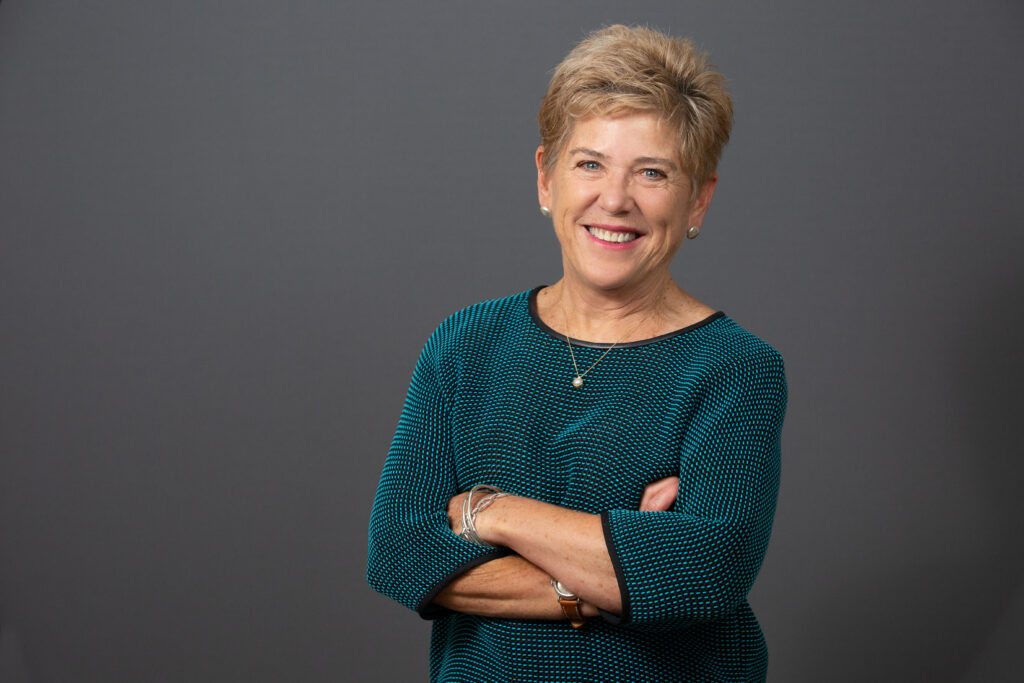
Why They Give: An Interview with IINE Donor Leigh Bivings

Our donors help ensure that refugees and immigrants receive the support they need to find stability, learn English, secure jobs, and pursue their dreams in our communities. In our Why They Give series, we talk with them to learn more about their connection to our mission and what inspires their support. 

In our latest installment, Leigh Bivings, a generous supporter of IINE and member of our Leadership Council, shares how she first became involved with the International Institute of New England, her experience supporting a family from Cameroon, and how she finds purpose in giving back to the immigrant community.  

Можете розповісти трохи про себе?

I grew up in Arizona and completed most of my undergraduate and graduate degrees in California. I then spent a few years abroad, including in Latin America, where I volunteered with the Peace Corps, and in London, where I met my husband.  

When I was accepted to Stanford University to complete a PhD in Economics, I headed back to California, this time with my husband in tow. I graduated in 1992 and accepted a job in Boston, and we have been living in the South End of the city ever since.  

My career has had essentially three chapters – I worked as a management consultant at The Monitor Group, which has since been acquired by Deloitte, I did due diligence work for private equity firms at a firm called Stax, and then I started a wealth management firm called Artemis. I sold the firm to Beacon Pointe at the end of last year, and so I am finishing up this chapter.  

In my free time, I love reading history, being outdoors, traveling domestically and internationally, and playing tennis.  

Чому філантропія важлива для вас?

I have been very fortunate in my life in most dimensions. I feel that because I have the time, energy, and capacity to give back, it’s important that I do.  

I’ve been able to provide financial support to several organizations, and I also served on the board of the Boston YWCA for many years, and both of these opportunities have allowed me to make an impact.  

I’ve also volunteered as a Big Sister with Big Brothers Big Sisters of America, and I’ve served as a mentor to young women through Year Up, a nonprofit focused on providing workforce training. These experiences taught me that I truly enjoy providing direct support when I can – which ultimately led me to IINE. 

On that note, how did you become involved with IINE?

It was August of 2022, and I had some time on my hands (no one wants to talk to their financial advisor in the summer!). I had been following the coverage of Russia’s invasion of Ukraine, and I was really searching for a way to help. My husband and I own a 5-story brownstone and live on the top three floors. At the time the war broke out, we didn’t have anyone on the bottom two floors, and I remember thinking, “We have this great one-bed apartment and not a soul living there!”  

I began reading about the United 4 Ukraine program, which was looking for volunteers to provide housing and support to newly arriving Ukrainian refugees. My husband and I signed up to help through Welcome.US, and we were matched with a lovely Ukrainian family. Ultimately, the family, who are Russian speakers, ended up resettling in Estonia where there’s a large Russian-speaking community, but we have stayed in touch with them ever since.  

Around the same time that we learned the family wouldn’t end up coming to the U.S., a friend of mine reached out about joining a group of IINE volunteers to help welcome a Cameroonian family—two women and one of their sons. I said yes, and I joined their Resettle Together group in December of 2023.  

It wasn’t an easy adjustment for the family, but they are doing well now. The women are settled in a nice apartment, they both have full-time jobs, and they’re learning English. We helped enroll the young boy in school when they arrived, and this past summer, all of the members of our volunteer group chipped in so he could attend summer camp. It’s been a very rewarding experience to see the family progress, and to help play a role.  

What advice would you give to someone who is interested in learning more about welcoming and supporting refugees and immigrants?

I would say it’s very rewarding because it’s so tangible. These days, I’m thinking a lot about what I can do to help the populations who are being disproportionately affected by the current presidential administration. I can write checks, I can support lawyers and advocates, I can attend protests, and through organizations like IINE, I can have a direct impact – that feels important.  

I would also say be prepared to learn a lot, including how hard it is to be poor in this country. The high cost of living; challenges in accessing public benefits, healthcare, and public transportation; the need to work multiple jobs to make ends meet – this is not an easy place to resettle. Accompanying the family throughout their first year in the U.S., I saw how resilient and determined you have to be.  

Last question – do you have a personal connection to IINE’s mission that inspires your support? 

I do. My mother was born in Britain, and she and her parents were living in southern France when there was news of the Germans coming during the war.  My mother and grandmother were sent to a relocation camp for several months, but ultimately were released because my grandmother had American citizenship. They were able to escape to Portugal and then make their way to New York, where they had family members living.  

I think of their journey, and how grateful I am to be here, and that inspires my desire to help immigrants.  

IINE може надавати такі необхідні послуги біженцям та іммігрантам лише завдяки підтримці наших щедрих жертводавців. Існує багато різних способів пожертвувати. Дізнайтеся більше тут: Пожертвувати кошти.

“I Always Want to Give Back”: Suraj Budathoki’s Journey from a Refugee Camp to the NH Statehouse 

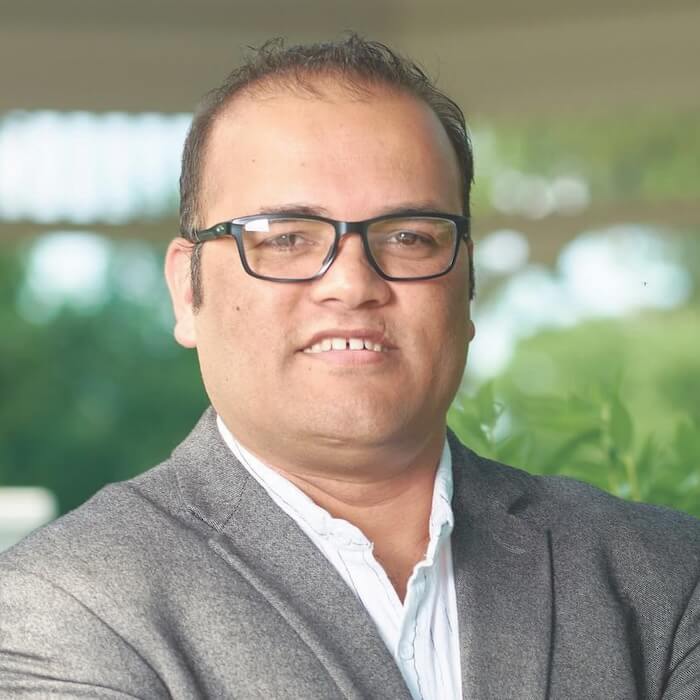
In November of 2024, Suraj Budathoki was elected to represent Hillsborough County District 40 in the New Hampshire State House, becoming the first Bhutanese-American State Representative in U.S. history. In his acceptance speech, Suraj said his victory was “the culmination of 16 years of dedication, resilience, and commitment to this community.” 

 In a recent interview, Suraj spoke to IINE about this journey. 

Learning Resilience 

Suraj became a refugee at the age of nine when the Bhutanese government suddenly stripped members of the Nepalese-speaking Lhotshampa minority of their citizenship and drove them from their homes. He spent the next nearly twenty years of his life in a refugee camp in Nepal.  

Suraj says his time there “taught me a lot; the resilience, the continuity to do things and not give up.”  

When he finally arrived in the U.S. after decades of waiting, he landed in Atlanta, Georgia. He recalls seeing a group of people at the airport handing out gifts to arriving children. “There is compassion for immigrants and refugees here,” he remembers thinking.   

Still, life was far from easy. Suraj arrived with a bachelor’s degree and a nearly-completed master’s degree but soon found himself working two full-time jobs for minimum wage—a day shift at a fast-food restaurant followed by an overnight shift stocking grocery shelves. It was difficult to save or build a social life.  

Work and Welcome in Manchester 

Suraj was excited when a friend from home told him about his life up north in Manchester, New Hampshire, where he had been resettled by the International Institute of New England. Manchester was smaller and easier to navigate. Jobs there offered better starting pay, and through IINE, Suraj could train to become a Licensed Nursing Assistant within a month.  

He was sold. In 2009, Suraj moved to Manchester, “and that’s what I did! I finished the Licensed Nursing Assistant program and then within two months, I got my license! The Employment team helped me get a job and after that I’ve been working with IINE for many, many years.” 

Suraj took to New Hampshire right away. “The mountains and the green vegetation resemble my small town in Bhutan,” he says, and compared to the sprawl of Atlanta, the compactness of Manchester was closer to the life he knew in Nepal. As in Atlanta, he took on two full-time jobs, but these he found more meaningful and in line with his goals. One was at a rehabilitation center for adults with traumatic brain injuries. The second one was to train adults who hadn’t completed high school to create resumes and help them find jobs.  

These early jobs helped Suraj build up his English skills. He soon went back to school at Manchester Community College and then transferred to Southern New Hampshire University to study Political Science.  

“Then life took off.” 

Building Community 

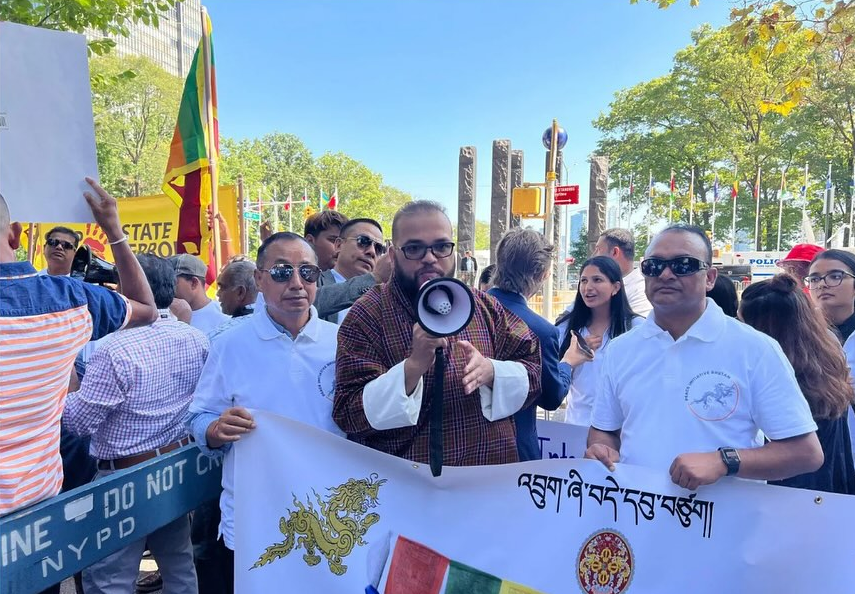
Suraj (center) has advocated for peace in Bhutan throughout his career

With his newfound confidence and vision, Suraj co-founded Bhutanese Community New Hampshire (BCNH), a non-profit dedicated to helping fellow Bhutanese refugees to integrate and thrive. He served briefly as the organization’s first executive director and then joined its board.  

“My first focus was learning to get grants,” Suraj says, and he still vividly remembers the story of his first submission, trudging through the rain to hand off his big envelope in-person, and then waiting months for a response. Finally, he heard back that he had won $6,000 for his mission. He was thrilled.  

With practice, he became more and more adept at grant writing, securing grants as large as $1 million.  

“I was able to hire 23 staff! Can you believe it?” 

Even more exciting was turning the funding into medical care, mental health services, and employment support for his community. BCNH formed a close partnership with IINE, who referred newly resettled Bhutanese clients for additional support. As it grew, BCNH expanded its mission to accept clients from additional countries and changed to its current name: Building Community New Hampshire.  

Feeling the Bern 

In 2016, Suraj was able to exercise his political science muscles when the presidential campaign of Vermont Senator Bernie Sanders opened a field office in New Hampshire.  

“It was my first time working on a campaign and I got the second-highest post for New Hampshire! That was my first opportunity to get to know Bernie, his team, and the people of New Hampshire. I was so privileged to work on his campaign and travel a lot across the state.” 
 
Suraj says that talking to people throughout the state had a profound effect on him. “I heard a lot of people’s often painful stories, and I could relate from when I was in a refugee camp…It’s not having money to pay rent; the cold; not enough food for the elderly who invested their life making America better, supported their kids growing up, when they were young and then paid taxes, and at the end of the life they have nothing to enjoy.” 

Suraj decided to tackle these issues head-on at the community level. His founded Bloom and Shine, LLC, a human services agency that provides in-home behavioral and physical healthcare to New Hampshire seniors. 
 
“I felt I needed to do something, and Bloom and Shine is something. Providing caregiver services to the elderly and disabled, it’s something I feel proud of.” 

Pursuing Peace 

While deepening his roots in his new community, Suraj was also studying international development, completing a master’s degree from Norwich University, and beginning a Ph.D. program at Saybrook University with a focus on conflict resolution. His research revealed clear historical patterns of opposing sides in ethnic conflicts becoming increasingly entrenched in their mutual opposition as suffering increased. 

“I saw that happen in Bhutan in the ‘90s. My Ph.D. is on how to find a solution. How can we transform that adversarial relationship into a conducive, friendly relationship? As I did more research on conflict resolution and negotiations, I found that there are peacebuilding and reconciliation methods that can bring two conflicting parties together.” 

Inspired by his research, he launched the Peace Initiative for Bhutan (PIB). 

“I talked to many young Bhutanese-Americans, college students, and other like-minded individuals, and they also had the same kind of idea. We came together to form this peace initiative. The approach is distinct from what our leaders did in the past. We are not doing this to win—to defeat the other side. We’re doing this to find common ground—to resolve through dialogue.” 

The goal of the initiative is to heal relations between the nation of Bhutan and its refugee diaspora. This reconciliation would allow Bhutanese refugees to return home in peace to reunite their loved ones.  

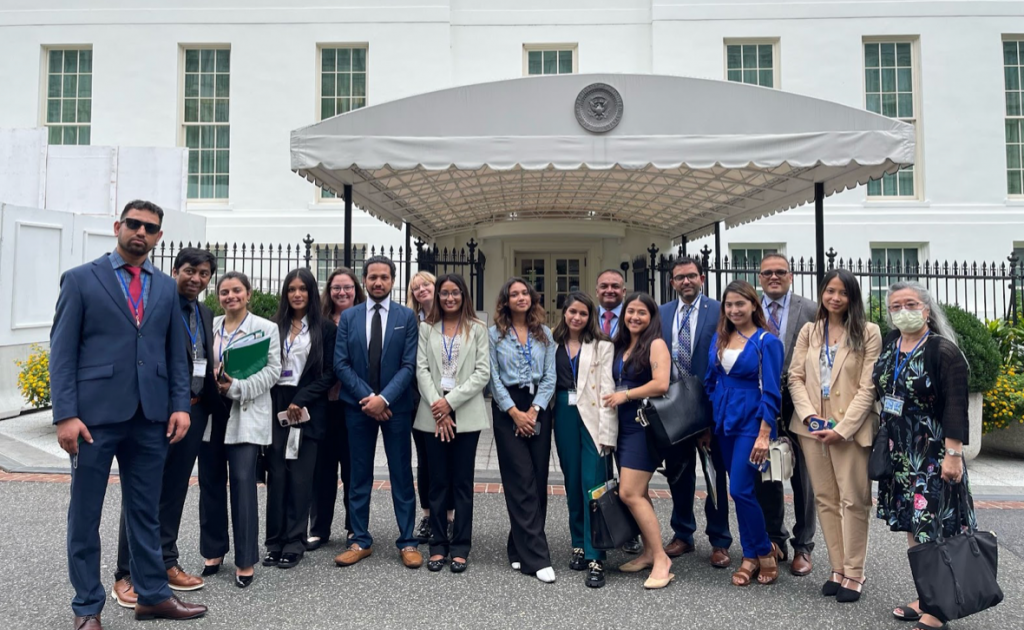
Members of the Peace Initiative Bhutan on the trip to D.C.

The first step for PIB was to draft their own peace plan and send it directly to the king of Bhutan. When they didn’t receive a response, they posted their plan online and alerted the press. Next, to draw further attention, they got the U.S. government involved. Suraj traveled to Washington D.C. and lobbied to get both the U.S. House of Representatives and the U.S. Senate to introduce resolutions calling for reconciliation.  

Bhutan began to listen. 

“We did a couple of rounds of informal dialogue with people inside Bhutan, also some parliamentarians,” Suraj says. “This has never happened before with other approaches. Our method is based on mutual respect, based on love to the other side.” 

The People’s House 

Suraj’s success with the Bernie Sanders campaign, his empathy for the struggles of working people in New Hampshire, and his progress with PIB all inspired him to make his own run for the State House of Representatives. His victory was a huge source of inspiration for fellow Bhutanese refugees. New Americans Magazine reported, “Suraj’s win quickly became a sensation on social media, sparking pride and celebration across the Bhutanese diaspora, which includes former refugees resettled across eight Western countries. Bhutanese-American social media platforms lit up with messages of pride, congratulatory posts, and reflections on the significance of this victory.” 

While ever hopeful, Suraj is learning about the challenges of belonging to a minority party in a state legislature. 

“We don’t have much say in any bills or regulations. We don’t have that power. We do share what we think, what we believe would bring positive change, but supporting the middle class or poor community is not what always gets attention. It feels painful when we see bills cutting support to the elderly, to the university system, to special education, and many others in New Hampshire.” 

Suraj is committed to speaking up for vulnerable constituents, but sometimes he worries about others’ misconceptions of his background and journey.  

“I testified in one of the committees against a bill, and I told them my success story. I came here as a refugee. 100 people work in my company. I’m going to college. I paid this much in taxes, etc…People may feel I’m taking their space. They see themselves working day and night, but I came here a few years ago, and now here I am running a company and a state representative. They may not understand the human side, the hard work, of what we as immigrants do here.”   

He wishes more people understood about his time working two jobs for minimum wage to build a foundation, missing many nights of sleep and the family he left behind at the refugee camp. 

But like his Peace Initiative, he sees his political work as an experiment and says that his political career is “just getting started.” In the arc of his career, it’s one more way to heed the calling he first heard back in the refugee camp in Nepal. 

“The international community, the United States and many other countries, they helped us a lot. We were not able to go to work outside of the camp, and we were fed and supported by many Western countries…We always feel we should give back for those many years we were given—and that’s the call—I always want to give back to the community. Whatever I’m doing now, being a State Representative or running this home health care business, it’s always supporting community, providing employment and uplift.”  

---

Біженці та іммігранти здійснюють довгі, важкі подорожі, щоб уникнути насильства і почати нове життя в США . Ви можете надати їм допомогу, якої вони потребують. 

Atefa's Story

Atefa’s Story: With Ongoing Support, a Young Refugee Builds a Brighter Future

Atefa’s story is featured in our Spotlight Report: Who We Can Serve and How in a Rapidly Shifting Landscape. Click here to read the full Spotlight.

When the Taliban retook control of Afghanistan, Atefa, her mother, and three brothers escaped their home, resettling as refugees in Lowell in 2022. As the eldest sibling, Atefa quickly took on adult responsibilities. She became her family’s interpreter and spokesperson at doctor’s visits and school appointments – all while balancing learning an entirely new culture and language.  

At first, school was frustrating for Atefa. In Afghanistan, she had already begun college, but her high school transcripts were among the many possessions she had to leave behind, and without them, she had to begin her American education as a freshman at Lowell High School. Still, she stayed focused and determined. For support, she went to nearly every tutoring session provided by IINE’s Refugee Youth Mentoring program, bringing her brothers along to make sure they progressed as well. That year, Atefa earned honors recognition for her grades. 

During her junior year, Atefa began exploring the college application process. When IINE’s Youth team advised her to join extracurricular activities to stand out, she became a student ambassador, helping fellow newcomers adjust to life in Lowell. Her leadership and service led to her acceptance into the National Honor Society in her senior year.  

That summer, Atefa went back to her IINE mentors for guidance, and they suggested volunteer work. In addition to working at a grocery store, participating in school groups, and helping her family, she began giving back to support other IINE clients. She delivered fresh produce and packaged goods to families, provided interpretation, and peer-tutored fellow refugee youth.  

Atefa’s relentless dedication was rewarded when she was accepted to four colleges! She chose the University of Massachusetts Amherst, where she will study civil engineering starting in the fall of 2025. As she prepares for this next chapter, she continues to reach out to the IINE Youth Team for guidance on class selection, financial aid, and housing. 

---

Refugees and immigrants come to the U.S. after enduring unimaginable hardships. You can give them the help they need to rebuild their lives here. 

In New Hampshire, Investing in English Language Classes Makes Everyone’s Healthcare Better

A Healthcare Success Story

As in much of the country, if you live in New Hampshire and you need medical care, you’re likely to get help from some people who began their lives in other countries. Immigrants and refugees make up about 18% of the U.S. healthcare workforce. In New Hampshire, they make about 7% and are particularly prevalent in patient-facing roles, such as home healthcare aides, drivers, cleaners, and food preparers. They’re the people who help you feel comfortable, safe, and cared for when you’re at your most vulnerable.  

These are roles for which there are dangerous shortages in New Hampshire, a state with a rapidly aging population. It’s an urgent need that creates an opportunity for newcomers seeking entry-level jobs that may not require a local work history and more than basic English skills.  

“Matching newcomers with New Hampshire healthcare employers has been a real success story in general,” says Kayla Rossmeissl, IINE’s Director of Program Design and Evaluation. “Employers are getting fast-learning, resilient, highly motivated workers, who have the benefit of IINE to help support their orientation and development. Our clients often say they’re excited to be helping people in their times of need and giving back to the community that’s welcomed them.” 

A Desire for Investment

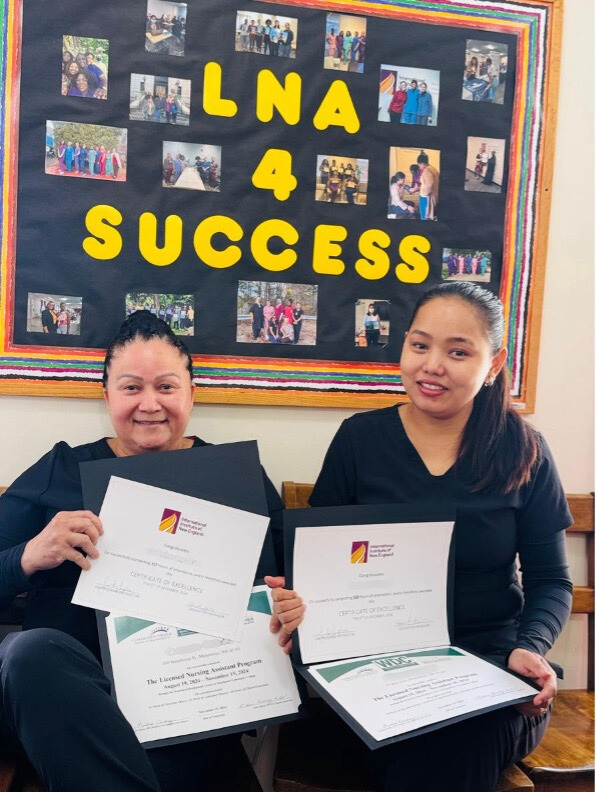
In 2019, Kayla helped develop LNA for Success—an IINE skills training program that combines English language instruction, vocational training, higher education partnerships, and apprenticeship, to help prepare immigrants and refugees for the job of Licensed Nursing Assistant. She says that in promoting this program over the next few years, IINE discovered a real desire for greater investment.  

“We had been doing a lot of community presentations and working closely with [LNA for Success partner] Manchester Community College. We started to discover a lot more partners who are looking for ways to help get refugees and immigrants more economically stable—career laddering, higher paying jobs, things like that.” 

She also found healthcare providers looking to invest in their immigrant employees. At one networking event, representatives from two local hospitals sought her out. 

“They were just like, ‘Kayla, I heard you set up these ESOL programs. Can we chat?’ From there, we were all brainstorming to come up with a program to help their workers.” 

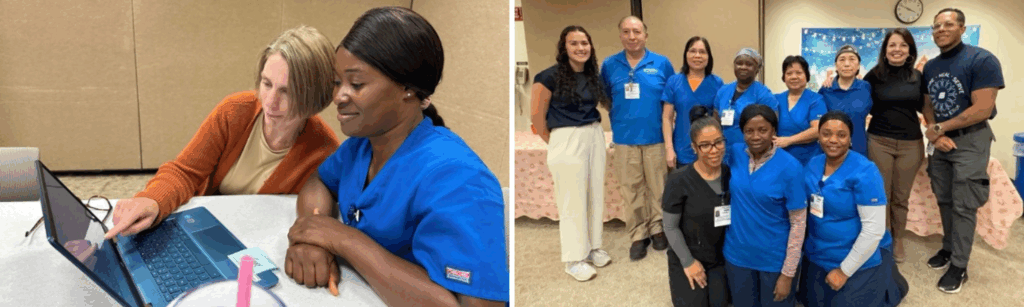
Both hospitals were interested in paying their employees to deepen their English language skills during the workday, through on-site, workplace-focused English for Speakers of Other Languages (ESOL) classes. 

“Which is amazing,” Kayla says, “because a lot of families are juggling multiple part-time jobs and childcare, and wouldn’t otherwise have time to take classes.” 

Kayla wasted no time in developing a curriculum for a pilot “ESOL 4 Healthcare” program, conducting interviews with partners to learn about their goals and challenges.  

“They wanted to see people become more confident in speaking English, because even though they are in environmental services [maintenance], they do greet the patients in their rooms, and they interact with other staff in the hospital, like their supervisors. So, having more confidence in communication, being able to read and write emails, improving digital literacy skills, and navigating internal systems like clocking in and out—these were all things we could help with that could improve everyone’s experience.” 

Gaining Confidence

“I would say for me personally, what I see in the students, cohort after cohort, is confidence,” says Becky Marden, Director of Workforce Development at Elliot Hospital in Manchester.  
 
“In their evaluations, they’ll say things like, ‘I’ve gained the confidence to say hello to my manager in the morning, whereas before I might just have avoided eye contact,’ and things like that. And that’s what inspires me to keep pushing for this class and making it better every cohort.” 

Having helped develop the concept, Elliot Hospital is now in its third year of ESOL 4 Healthcare. Becky says that she’s frequently blown away by the improvement that Elliot’s English language learners make in listening, reading, and writing skills over the course of a cohort—which spans two hours/day, six days/week for sixteen weeks, an impressive investment of staff time. In addition to the improvement in workplace communication and staff-patient relationships, she says that Elliot is gratified to be able to provide some meaningful support to some truly impressive people, which, in the most recent cohort, were six students from six different countries. 

“For me it’s also about the social contacts outside of work—they can use email or finally set up a bank account for the first time. These are some of the most resilient and hardworking employees we have. I could never go to another country and work someplace and not speak the language. I would just be so frustrated. And yet they’ve done it and they’re working in our community.” 

Becky says her CEO shares this feeling. After attending an ESOL 4 Healthcare graduation, he invited several of the recent graduates to a Board Meeting so that the hospital’s leadership could meet them, and they could showcase their new English skills. For Becky, the next step is developing apprenticeship programs within the hospital to help English language learners on staff to advance in their careers there.  

“Some of them have healthcare experience from their previous country. We had a nurse practitioner in one program. We had a labor and delivery nurse in another, and they just want to work in the healthcare field. Their credentials don’t come over, their education doesn’t come over, but here they are, sometimes cleaning toilets just so they can be in healthcare. How do we get them back to the bedside? ‘Cause that’s where we need them.” 

This is the Future

Elliot Hospital is currently one of nine IINE ESOL 4 Healthcare partners, and the number is growing quickly. They include providers offering mental health care, senior assisted living, and more. One new partner, Dartmouth Hitchcock Hospital, offers English classes remotely to reach student in more rural areas, and has developed apprenticeships in Phlebotomy and Lab Tech.  

“I’ve got five more in the queue!” says Kayla. “I really think this is the future. There’s a lot of interest in bridging the gap. There’s tremendous need here, from people who can really benefit from these kinds of jobs, and from employers who are always interested in a stable source of new staff members who come to them recommended and supported.” 

Investing in job training opportunities for refugees and immigrants creates a stronger workforce for us all. Help newcomers grow their careers and our economy by donating to IINE today.

Immigrants in the U.S. Workforce

Quiz: Immigrants in the U.S. Workforce

Test your knowledge of the role immigrants play in the U.S. workforce with this quiz.  

1 / 5

According to the U.S. Bureau of Labor Statistics, in 2024, what percentage of the U.S. workforce were immigrants? 

2 / 5

What percentage of the total U.S. healthcare workforce are immigrants?

3 / 5

Besides healthcare, which of the following roles are significantly filled by immigrants in the U.S.?

4 / 5

All immigrants residing in the U.S. contribute to the U.S. tax base. About how much tax revenue did immigrants generate in 2023?

5 / 5

When immigrants lose their work authorization or are forced to leave the country, what typically happens to the jobs they leave behind?

Your score is

The average score is 59%

0%

Soccer blog

Shared Goals: How Refugees and Immigrants Bond Through Soccer

It’s the most popular sport in the world. You can play it in a schoolyard, a gym, a park, or even a refugee camp. You don’t need expensive equipment or to even agree if it’s called “soccer,”futbol,” or something else entirely. You just need a ball, a goal, and a group of fellow players. Once you start playing together, you tend to become friends. For these reasons, “the beautiful game” is providing some beautiful opportunities for IINE clients to connect with one another across backgrounds. 

A Clinic for Lowell Youth 

IINE Youth Program Manager Isabel Goes says she’s noticed a clear pattern: “Anytime we talk about sports when we first meet with clients, it’s like, ‘OK, well, does that mean like, soccer?!‘” Her clients are definitely fans. She remembers one showing up to a workshop in head-to-toe Cristiano Ronaldo gear, and the delight of clients unwrapping soccer gear at a holiday gift swap.  

Olf (L) stopping by IINE’s offices to donate soccer equipment to refugee youth

When she decided to organize a youth soccer clinic last June, she knew she’d have plenty of support. Her first call was to Olf Mouyaka, a former refugee from the Democratic Republic of the Congo who grew up in Lowell after being resettled by IINE, and recently founded a soccer-based youth development program called the Football Leadership Organization. Olf had donated soccer equipment to IINE in the past and had experience running clinics.  

Next, to recruit participants, she turned to her colleague Yusuf Abdi. Yusuf’s official job is as IINE’s Career Services Manager, but after hours, he puts tremendous effort and passion into organizing community pick-up soccer games for IINE clients and other members of Lowell’s immigrant community.

“He was like, ‘I already have all these clients coming out for soccer,’ so I said, ‘OK, well, send them our way, have them join us for an official youth program!’” 

Yusuf did just that, and he showed up in his favorite jersey with his son in tow so they could both join in the fun. The clinic was a success, and for Yusuf, it was just the tip of the iceberg. 

“Everyone Show Up at the Park!”

“In the summer, I try to do it six days a week,” Yusuf says, “and I wash all the pinnies after each game!” That’s no small commitment, but he plans to keep it up “as long as I’m helping youth, doing something good, and making them feel a sense of social connection.” 

A former refugee from Somalia, Yusuf has been a passionate soccer fan all his life. As an adult living in Lowell, he joined an indoor recreational league organized by members of the local Cambodian community. He saw some familiar faces in the stands, and again at a regular game organized by member of the West African community: “The youth just came to watch, and I said, hey, they want to run around and play too…so I told them, ‘OK, I will bring the pinnies, soccer balls, and goal posts. Everyone show up at the park!'” 

Yusuf ordered the equipment and continued to recruit participants, including clients who he knew were between jobs and needed an outlet and some social connection.  

Yusuf (center) arranges regular soccer games for clients to have fun, grow their English skills, and build community

To organize meetups, he checked the availability of public parks and then created a Facebook group and a WhatsApp chat moderated by a refugee from the Democratic Republic of the Congo, who is able to translate messages into French and Portuguese.  

His meetups bring out people of all ages and backgrounds, “Each day the language changes some. You may hear a lot of Swahili, a lot of Portuguese, or a lot of Haitian Creole.”  

Together they play informal, tournament-style games. On Fridays, two local coaches, Coach Kwezi from Ghana and Coach Hugo from Guatemala, show up to offer instruction, run drills, and lead more structured games. Yusuf shares video clips of games in the WhatsApp channel, so players can celebrate their successes and learn from their mistakes. 

Though the language barrier can be challenging at first, everyone understands the basics.  

“Everyone can kick and everyone can try to score. Everyone is quiet when they arrive, but their faces are different when the game ends—happy smiles.” 

In fact, the games give players a great chance to practice their English skills without thinking about it too much, and players form bonds quickly.  

They chat, and some of them, they’re not able to communicate, but they try. You know, ‘Why’d you miss the ball?’ ‘You should pass to me.’ And some build confidence. You can see players become happier over time, come out of isolation. Their lives begin to change. That drives me.” 

Specifically, Yusuf says clients became inspired by friends they’ve met on the soccer field to follow their lead in steps like pursuing GEDs or higher education.  

Yusuf loves the mentorship, community, and social connection the sport offers – no matter a player’s age.   

“I’m in my 40s. I’m not like a youth of 18 or 20, but I’m still engaged. Soccer is a language that doesn’t require much talking, it’s more of action, and it builds trust. When I’m playing with a group from Ivory Coast, Cameroon, and Liberia who don’t know me, they get to know me, I become a friend of theirs. That’s how you get connected.” 

Balling in Boston

According to IINE Volunteer & Donations Specialist Emily Dionne, in Boston, the idea of convening some regular pick-up soccer in the park came from super-volunteer, Suraj Chaudhry of Newton South High School.  

“Suraj has been involved with a ton of different things. He suggested just doing a one-off game and then it just kind of grew from there with the Employment and Skills Training teams really taking it into their own hands to keep it going, which was really great.” 

Emily got Suraj together with some other volunteers to plan the first game. They circulated a flyer, Suraj borrowed pinnies and balls from his school, and Emily brought some pizzas for a post-game social. 

“A good 30-40 people came out, including staff, volunteers, and clients,” says Emily. “We were so surprised. It was a really fun gathering.” 

The one-off game quickly evolved into a weekly Saturday morning meetup. Games are kept informal with teams chosen by counting off, and consistent winners are often broken up to make contests more even.  

“It’s a really great way to build community and have people meet each other, especially in Boston, since everybody’s kind of separated across the city,” says Emily.  

“I think it’s a good way to have a bonding activity that isn’t necessarily based around things we do at IINE like having people work on resumes or attend workshops—it’s purely fun. It’s also a team mentality—everybody coming together for one goal.” 

Emily says the game has led to connections off the field, too. In the WhatsApp chat, between posting video clips of their game highlights, people have started organizing social outings throughout the city.  

When Suraj had to step away, Lead Career Navigator Gordon Parris gladly took over the organizing with the help of Career Navigator Luqman Alkhaneqeeni.  

Gordon (far right), Emily (second from right), and Luqman (kneeling) gather fellow IINE staff and clients weekly for a pick-up soccer game

A former refugee who has lived in Jordan, Iraq, and Turkey, Luqman has been playing soccer since he was four years old. It’s been a throughline for him as his life has continued to change. He couldn’t have been more excited to learn that his new workplace was hosting a regular game. “It’s one of my talents, let’s say,” he says with a smile. “When I learned about the game my first week on the job, I said, ‘Let’s go! I’m in!’”  

Luqman says he sees soccer as “a global phenomenon which unites millions of people. Also, back home it’s used as a cultural expression. Every time I’m playing, I see emotions, joy, that transcends all borders.” 

We have some kids who are 9, 10, 13 years-old that run circles around us,” Gordon adds,  “so when he says it transcends all borders, including ages, he’s being literal.” 

Gordon is originally from South Africa where he also grew up playing soccer. “We’re all there because there’s something that we kind of miss from home. It’s something that we all grew up doing in completely different ways. Everyone gets the goofy jokes of like, you know, looking one way, kicking the other way, that kind of thing. It’s a common language, and therefore, unifying.” 

Now in its second year, the pick-up game continues to go strong. So what’s next for the franchise?  

“We’re going to keep it simple,” says Emily. “We’re just going to keep playing soccer.” 

“The Most Lovely People”: A Volunteer Group’s Experience Supporting a Refugee Family from Nigeria

Boston Bound volunteer group members with Tani and her family

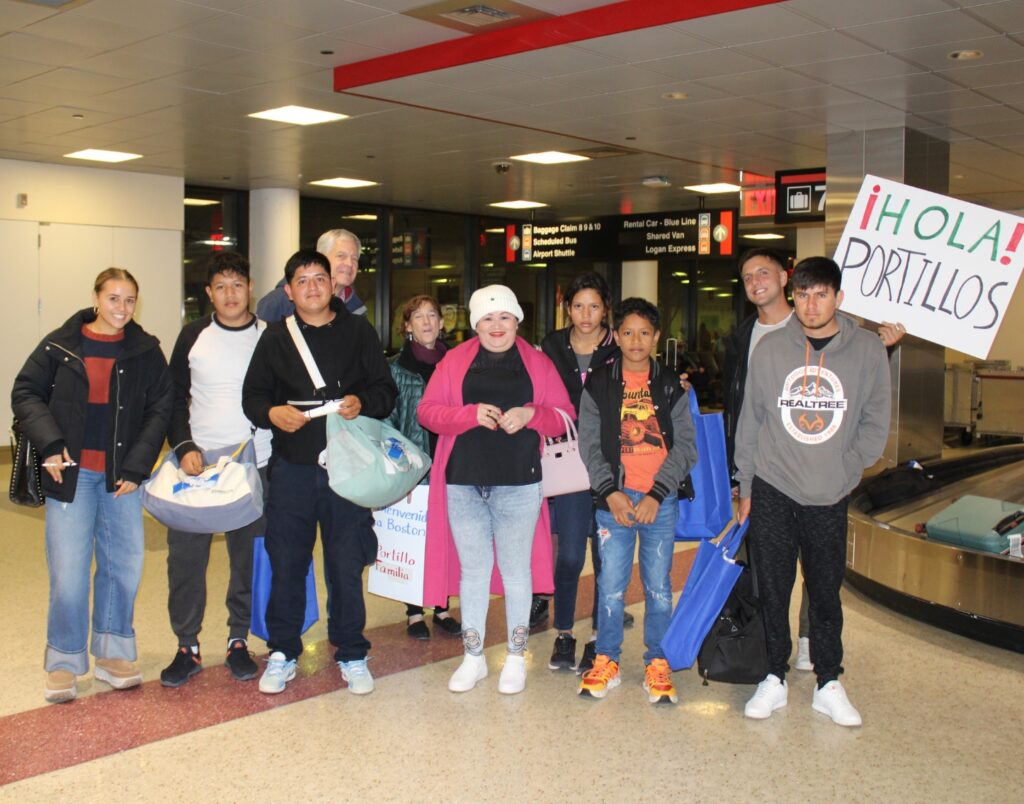
Tani and her six children were among the last refugees to arrive safely in Boston just before the indefinite suspension of the U.S. Refugee Admissions Program. In the weeks leading up to their arrival at Logan Airport, a group of friends from Boston and Brookline had been eagerly preparing to support them through IINE’s Resettle Together program

The volunteer group, who call themselves “Boston Bound,” is led by Jenny Miller. Jenny first learned about IINE when her daughter was looking for a community service project in the lead-up to her Bat Mitzvah. Through IINE, she was able to deliver food to local immigrant families and to donate books to refugee children after running a donation drive at her school.

Jenny remained on IINE’s volunteer email list, and when she learned about other opportunities to get involved, she was inspired. “These were things I could actually do. I work full-time [and am] crazy busy, but I had a few hours at night to go grocery shopping and bring food to a new family. Or I had a few hours on the weekend to help someone learn how to navigate the T,” she says.  

“IINE provided great support, and it was deeply satisfying, like disproportionately satisfying even when I never met the family. Dropping off groceries felt so tangible. At a time when it felt hard to find other ways [to help], it just felt really good to be able to do that.” 

She talked about the experience with her friends, a group of fellow parents of tweens. After the 2024 election, when they began sharing their fears over anti-immigrant policies taking hold in January, she proposed sponsoring a refugee family through Resettle Together as a concrete way to honor their values. 

Soon they all found themselves gathered around a dining room table in front of a large piece of paper, divvying up tasks from finding donated furniture, to apartment cleaning, to scheduling shopping trips for food and clothing.  
 
“When we started letting people know that we were doing this, it was amazing how many people wanted to help,” says Jenny, “Our kids did a drive for toiletries, soap, and detergent, and all that kind of kitchen stuff before Tani and her children arrived, and we got six months’ worth of stuff!” 

Eager to befriend Tani’s teenage children, the kids of Boston Bound also collected gifts, prepared a bracelet-making kit, and made a photobook with pictures of all the group members to show the new arrivals how many new friends they now had.  

When the family arrived, Boston Bound group members took turns hosting them for home-cooked West African-style meals, playing board games with their children, taking them to local parks and playgrounds and kicking around a soccer ball, going on shopping trips, helping them learn how to navigate public transportation, and more. They became close quickly. “They are the most lovely people,” Jenny says of Tani and her family. “They are a very close family, very warm, incredibly supportive of each other. I think what struck me was they came here with so much curiosity and eagerness to learn—also a love of their new home, and they really extended that to all of us. They have been so welcoming to all of us. Even with the language barrier, which, when they arrived was almost total. There was still so much warmth.” 

While IINE case workers helped the family enroll in ESOL classes, secure work authorizations, and become oriented to the U.S. workplace, Boston Bound helped make sure the family had access to food and healthcare, enrolled in school, got library cards, and practiced reading and speaking English. Meanwhile, a beautiful friendship formed. 

IINE Case Specialist Nijimbere Lahayiloyi shares more about what it means to welcome refugees, and how critical volunteer support is

“They’ve invited us to celebrate their birthdays at their home, and that’s been just wonderful—so joyful,” Jenny says. “They’ve taught us the songs that they sing for birthdays, and dances, and the music they listen to. They’ve also come to some of our houses for birthday celebrations or just for dinner, and that’s been really lovely too. Every time I visit, they try to send me home with food.”   

When IINE’s Employment team was able to get them job interviews, Boston Bound helped them practice and prepare. Now, all eligible family members have started jobs in food service. 

“Having this support has meant so much,” says Mariamu, one of Tani’s daughters. “We have been able to have people to practice English with and to help us with things we don’t yet understand. We are very grateful for their willingness to assist us.They have been with us since our first day in Boston. They help us understand the community we live in; they often visit us and make sure we are okay. They have done so much to help us in many ways. We appreciate them and pray that God blesses them in everything.” 

Jenny shares how Boston Bound came together and the “privilege and joy” of becoming close with Tani and her children

---

Біженці та іммігранти здійснюють довгі, важкі подорожі, щоб уникнути насильства і почати нове життя в США . Ви можете надати їм допомогу, якої вони потребують. 

Історія Пруденс: Як біженка та гуманітарна працівниця знайшла рятівну підтримку в США 

Батько чотирьох дітей, Пруденс присвятив своє життя боротьбі за права людини та проти корупції в уряді. Після втечі з рідної Бурунді до Судану він заснував фонд для захисту дітей і співпрацював з кількома міжнародними агентствами з розвитку для підтримки біженців.  

Коли зміна режиму дала йому підстави вважати, що це безпечно, Пруденс повернувся до Бурунді, сповнений рішучості допомогти зробити життя там кращим. Він започаткував ініціативи, спрямовані на розширення прав і можливостей людей, які живуть у важкодоступних сільських громадах країни, надаючи їм доступ до цифрових платіжних систем і цифрових засобів масової інформації. На жаль, ці досягнення привернули увагу тих, хто хотів ними зловживати. Коли президент Бурунді вирішив балотуватися на третій термін, що було заборонено конституцією країни, він попросив Пруденс поширити неправдиву інформацію про те, що він має широку підтримку. Пруденс відмовилася. Це призвело до того, що він став об'єктом політичного переслідування. Нові загрози його життю змусили його сім'ю переїхати спочатку до Великобританії, а потім до Руанди.  

Син Пруденс, Джошуа, народився з небезпечним пороком серця, і йому терміново потрібна була складна операція. Отримати таку допомогу, будучи біженцем, було б нелегко, але Пруденс знайшла надію, коли дізналася, що це можна зробити в Бостонській дитячій лікарні.  

Пруденс зрозумів, що здоров'я його сина і безпека його сім'ї залежать від того, чи знайде він прихильність і підтримку в штаті Массачусетс. Чудові стосунки зі спонсором Стівом Гроссом з фонду "Життя - це добре" та Міжнародним інститутом Нової Англії зробили цю мрію реальністю.  

Дивіться їхню історію нижче: 

---

Біженці та іммігранти здійснюють довгі, важкі подорожі, щоб уникнути насильства і почати нове життя в США . Ви можете надати їм допомогу, якої вони потребують. 

Зі столу генерального директора: Уявлення про краще майбутнє для гуманітарної імміграції

Джефф Тільман, президент і головний виконавчий директор Міжнародного інституту Нової Англії

Минулого року, коли ми святкували 100 років підтримки біженців та іммігрантів у Великому Бостоні, ми знайшли таке необхідне натхнення в нашій історії. Протягом століття ми працювали з нашими громадами, щоб зробити наш дім місцем для нових починань. Незважаючи на виклики та невдачі, ми приймали покоління хоробрих, стійких людей, які рятувалися від переслідувань в інших країнах, і вони зробили це місце кращим для всіх нас.

На цьому шляху ми завжди виступали за більш справедливу систему гуманітарної імміграції. Сьогодні часті зміни в політиці часто змушують нас реагувати та захищатися в нашій адвокації, але важливо розуміти, за що ми боремося за що ми боремося а також проти чого ми боремося.

Як би виглядала розумна, стратегічна, гуманітарна імміграційна система? 

1) Це вийшло б за рамки партійної політики.

Президент Картер підписав Закон про біженців 1980 року

Коли Закон про біженців 1980 року був представлений, він був прийнятий значною двопартійною більшістю в Палаті представників і одностайним голосуванням у Сенаті. Американці з різних політичних сил погодилися, що нація, віддана свободі людини, повинна приймати людей, які рятуються від переслідувань тиранів і терористів, що Конгрес повинен відігравати певну роль у прийнятті важливого рішення про те, скільки людей приймати, і що ми повинні мати стандартизовану, добре забезпечену систему розселення та інтеграції сімей і окремих осіб у наші громади.

В останні роки цей гуманний, логічний і двопартійний підхід був значною мірою відкинутий. Протягом обох своїх термінів президент Трамп одноосібно ухвалював рішення своїм указом про те, скільки людей і звідки мають отримати притулок. Величезні скорочення щорічного прийому біженців без згоди Конгресу зрадили союзників, кинули напризволяще людей, які цього потребують, і завадили довгостроковому плануванню державами того, як найкраще прийняти та інтегрувати цих нових членів суспільства. Адміністрація Трампа також застосовувала такі дискримінаційні практики, як заборони на в'їзд на основі національного походження та релігії, а також визначення пріоритетів однієї групи однієї групи над усіма іншими.

The ГРАЦІЯ Акт, одна з потенційних реформ, запропонованих сенатором від штату Массачусетс Едвардом Маркі, зобов'язує США приймати щонайменше 125 000 біженців щороку. Це допоможе усунути політику з рішень про прийом біженців і створить стабільність, необхідну для поліпшення нашої готовності підтримувати сім'ї та окремих осіб, які прибувають до США.

2) Це буде співпраця на всіх рівнях.

Розумна імміграційна політика визнає, що світ взаємопов'язаний, і збалансовує потреби людей, які переїжджають, з потребами приймаючих громад.

На міжнародному рівні це може включати в себе співпрацю в рамках Глобального договору про біженцівспільна робота з сусідніми країнами з метою:

  • запобігати причинам переміщення,
  • боротися з транскордонною торгівлею людьми,
  • безпечно обмінюватися відповідними даними про населення, яке переміщується,
  • розділити відповідальність за переселення,
  • заздалегідь планувати на випадок надзвичайних ситуацій, і
  • забезпечити гуманне ставлення до тих, хто перетинає кордони в пошуках притулку.
Члени Консультативної ради з питань біженців IINE зустрілися, щоб обговорити, як покращити досвід переселення

У США ефективна політика повинна враховувати необхідність возз'єднання сімей і дозволяти людям переселятися в місця, де вже існують громади іммігрантів, які можуть надати їм підтримку з боку громади. Це також дозволило б спрямовувати біженців у райони, які потребують зростання населення і задоволення потреб у робочій силі.

Громадам, які приймають велику кількість людей під час надзвичайних ситуацій, надаватиметься цільова підтримка та рекомендації. Це може включати ресурси для тих, хто забезпечує житло, освіту, охорону здоров'я, транспорт і працевлаштування.  

Опинившись тут, біженці зможуть зробити свій внесок у розробку ефективних стратегій інтеграції за допомогою таких моделей, як Консультативна рада з питань біженців IINE в Нью-Гемпширі - група, яка збирається для обговорення потреб і проблем, а також для надання зворотного зв'язку законодавцям.  

3) Це буде безпечно та ефективно.

Після того, як біженці були змушені покинути свої рідні країни через переслідування та погрози насильства, вони чекають у "третіх країнах", поки їхні заяви будуть розглянуті та перевірені США, перш ніж вони отримають статус біженця і зможуть в'їхати в країну. Вони можуть роками нудитися в таборах для біженців, жити в наметах і покладатися на допомогу гуманітарних організацій у забезпеченні їжею, водою та санітарними умовами.

Співробітники IINE відвідали американо-мексиканський кордон влітку 2024 року, щоб краще зрозуміти небезпечні умови, з якими стикаються шукачі притулку.

Ті, хто не може подати заяву на отримання статусу біженця, часто здійснюють довгі та небезпечні подорожі до США, щоб подати прохання про притулок на американському кордоні. За часів адміністрації Байдена вони могли записатися на прийом до лікаря через урядовий мобільний додаток, але час очікування становив у середньому дев'ять місяців. Під час очікування заявники були вразливі до насильницьких злочинів і крадіжок. Опинившись у США, заявники жили в страху і невизначеності, очікуючи в середньому шість років на винесення рішення за їхніми заявами про надання притулку.  

Систему легального в'їзду до США навмисно зробили неефективною. Протягом багатьох років противники імміграції працювали над тим, щоб скоротити фінансування і загальмувати роботу системи. США повинні підвищити ефективність наших процесів перевірки та адекватно фінансувати нашу імміграційну правову систему, щоб убезпечити шукачів свободи.

4) Це було б справедливо.

Оскільки процес перевірки біженців може тривати роками, були створені інші життєво важливі гуманітарні імміграційні статуси, які дозволяють великим групам людей, чиї домівки раптово стали непридатними для життя, тимчасово в'їхати до США і залишатися тут, поки їхні рідні країни не стануть безпечними. Зазвичай вони отримують візи терміном на два роки, після чого їхнє перебування або продовжується, або припиняється залежно від умов у їхніх рідних країнах.  

Цим особам, як і агентствам з підтримки іммігрантів, не надається фінансування, щоб допомогти їм забезпечити безпечне житло. У деяких випадках їх в'їзд залежав від наявності спонсорів у США, які зобов'язувалися надати їм початкове житло. В інших випадках, не маючи куди звернутися, вони можуть почати своє життя в США на вулиці або в притулках для бездомних. На відміну від людей зі статусом біженця, їхні візи не дають їм автоматичного дозволу на працевлаштування. Вони повинні подати заяву - виклик для тих, хто не говорить англійською і не знає правил - і процес затвердження може зайняти місяці.  

Завдяки підтримці новоприбулі роблять величезний внесок у свої нові громади. За останні роки IINE допомогла тисячам іммігрантів, які опинилися в такій ситуації, і вони змогли повноцінно брати участь в американському житті - приєднатися до робочої сили, записати своїх дітей до шкіл, відвідувати місцеві місця поклоніння і допомагати робити свої райони кращими місцями для життя. І весь цей час над їхніми головами висить візовий дедлайн, і вони перебувають у владі рішень, які часто ґрунтуються на політиці, а не на реальній безпеці їхньої країни. З підтримкою вони можуть подати заяву на отримання притулку, але цей процес є надзвичайно повільним і дорогим, а успіх далеко не гарантований.  

Справедлива система надавала б підтримку цим групам населення після їхнього прибуття на благо всіх, не допускаючи їх до притулків і якнайшвидше залучаючи їх до робочої сили. Вона також надасть їм більш досяжні шляхи до постійного місця проживання та громадянства. Крім того, інвестиції в персонал і процеси, необхідні для подолання величезного багаторічного відставання в розгляді заяв про надання притулку, зменшили б час очікування рішень для заявників, чиї заяви в кінцевому підсумку були відхилені, знизили б потребу в тривалому утриманні під вартою, рейдах Імміграційної служби та полюваннях на нелегальних іммігрантів, а також створили б стабільнішу і ефективнішу імміграційну систему. 

5) Реагування на нові загрози. 

У світі, що вже переживає рекордну кількість переміщених осіб, зміна клімату є екстремальною і швидко зростаючою причиною, яка, ймовірно, погіршиться в найближчі роки. Глобальне потепління впливає на запаси продовольства і води, зменшує площу придатних для життя земель, спричиняє руйнівні стихійні лиха і погіршує умови дефіциту і напруженості, які завжди були причиною переміщення.  

США мають багату історію прийняття жертв стихійних лих, які приєдналися до нашої нації. Однак наразі не існує жодних законних шляхів для кліматичних переселенців з усього світу, які могли б оселитися у Сполучених Штатах. Це готує нас до потенційної кризи. Ми знаємо, що все більше людей неминуче будуть переміщені, і багато з них приїдуть до США. Як і будь-яке масове переміщення, це може призвести до жахливих конфліктів і страждань. Проте, завдяки співпраці та стратегічному плануванню, ми можемо врятувати мільйони життів, створити нові міцні міжнародні партнерства та значно зміцнити нашу країну.

За підтримки IINE сенатор від штату Массачусетс Едвард Маркі та сенатор від штату Нью-Йорк Нідія Веласкес запропонували Закон про кліматичних переміщених осіб. Серед інших необхідних заходів, він створить новий гуманітарний шлях для людей, переміщених кліматичними змінами.

6) Визнати біженців національним надбанням, яким вони є. 

Замість того, щоб зосереджуватися на обмеженнях і квотах, краща гуманітарна імміграційна система справді зосередилася б на гостинності, гарантуючи, що США є бастіоном свободи, можливостей і справедливості, який приваблює шукачів свободи на наші береги, підтримує культурний плюралізм і подає яскравий приклад для всього світу.

Як написала письменниця Амела Колудер, "біженець - це той, хто вижив і може творити майбутнє". За визначенням, біженці - це неймовірно стійкі та цілеспрямовані люди, які обирають США своїм домом, і вони, як правило, не мають собі рівних у своїй любові до цієї країни. Коли ми запитуємо наших клієнтів про їхні цілі на майбутнє, вони кажуть, що хочуть віддячити країні, яка так багато їм дала. Якщо говорити суто економічно, в довгостроковій перспективі інвестиції в біженців приносять мільярди більше доходу, ніж витрачається на їхнє розселенняа внесок, який вони роблять у нашу культуру і наші громади, є незмірним.

Адміністрація закрила двері нашої країни для біженців, але наша робота не припиняється і не може припинитися. Ми зосереджені на захисті наших клієнтів та інформуванні їх про їхні права; наданні більш інтенсивної підтримки біженцям та іммігрантам, які вже перебувають у наших громадах; а також на адвокації більш гуманної імміграційної політики на міському, державному та федеральному рівнях. Будь ласка, розгляньте можливість підтримати цю важливу роботу вже сьогодні.

Закон про біженців 1980 року

5 речей, які потрібно знати про Закон про біженців 1980 року

Розуміння мети та впливу Закону про біженців у 45-ту річницю його прийняття 

Сорок п'ять років тому Закон про біженців створив більш справедливий, ефективний, безпечний і стратегічний процес прийому та розселення біженців. Відтоді він врятував життя понад 3 мільйонам людей з усього світу. Допомога біженцям інтегруватися в наші громади незмірно зміцнила культуру та економіку нашої країни, а також наш авторитет у світі.

Сьогодні, коли кількість вимушених переселенців по всьому світу зростає до рекордних рівнів, і ситуація погіршується зростаючою загрозою зміни клімату, чинна президентська адміністрація намагається в односторонньому порядку зачинити "золоті двері", які відкрила ця програма.  

Наш обов'язок - відродити надію, яку породив цей Закон, і відновити наше лідерство як притулку свободи і можливостей. Відзначаючи сорок п'яту річницю цього закону, пропонуємо 5 речей, які варто знати про Закон про біженців 1980 року.

1) Закон про біженців 1980 року офіційно визначив, хто є біженцем. 

Перша сторінка Закону про біженців 1980 року. Джерело: Національний архів.

Для людей, які були змушені покинути свої домівки, визначення "біженець" має значення життя або смерті. Включення до програми може означати безпечне нове місце проживання та підтримку, необхідну для процвітання.

Закон про біженців 1980 року привів законодавство США у відповідність до формулювань Організації Об'єднаних Націй, визначивши біженцем будь-кого, хто не може або не бажає повертатися до своєї країни через "переслідування або обґрунтовані побоювання переслідувань" за ознакою раси, належності до певної соціальної групи, політичних поглядів, релігії чи національного походження.

Важливо, що це наше найбільш інклюзивне визначення на сьогоднішній день, яке виключає умови, засновані на національності людей, часу їх переміщення або країнах, з яких вони були змушені шукати притулку.

2) Встановлено єдиний уніфікований процес перевірки, прийому та розселення біженців. 

Закон про біженців створив Програму прийому біженців США (USRAP ) для ретельної перевірки біженців за кордоном за єдиними критеріями, а також Управління з розселення біженців (ORR) для забезпечення новоприбулих послугами, необхідними для якнайшвидшого становлення самодостатності. Фінансування було надано для укладення контрактів з мережею перевірених і контрольованих громадських організацій, таких як IINE, для надання вітального прийому, допомоги з житлом, підключення до федеральних пільг і місцевих служб, навчання англійської мови, культурної орієнтації, підтримки кар'єри та юридичних послуг. 

До створення цих офісів прийом і розселення біженців могли бути несистематичними і непослідовними, ставати предметом дискусій під час активної кризи і призводити до різних механізмів для різних груп населення. USRAP та ORR стали інвестицією в справедливість, краще планування та більш плавну інтеграцію. 

3)Він визначив партнерство між Президентом і Конгресом у визначенні кількості вступників.

Президент Картер підписав Закон про біженців 1980 року, який набув чинності закону

Застосовуючи систему стримувань і противаг до цього процесу, Закон надав Президенту право встановлювати щорічну максимальну кількість прийнятих біженців, але тільки після консультацій з Конгресом. Президент отримав право збільшувати цю кількість під час надзвичайних ситуацій з вимогою, що обґрунтування для цього також має бути надіслане до Конгресу, який, зрештою, контролює бюджетний процес, що фінансує ці зусилля.  

4)Вона гарантувала право подати заяву про надання притулку.

Закон про біженців не лише стандартизував процес пошуку притулку за межами США, але й стандартизував процес подачі заяви на отримання статусу біженця на території США або на їхньому кордоні. Шукачі притулку повинні будуть довести, що вони відповідають тим самим критеріям, які встановлені для біженців - переслідування або обґрунтовані побоювання переслідування, які не дозволяють їм повернутися додому. Ті, кому це вдасться, отримають такі ж права і підтримку, як і біженці, які подають заяви з-за кордону.  

Цей процес врятував життя мільйонам людей, яким загрожувала небезпека, які були змушені швидко покинути свої домівки з обмеженими ресурсами, яким було легше дістатися кордону, ніж пройти процедуру прийому біженців.  

5)Вона була справді двопартійною.

Закон про біженців 1980 року був прийнятий Сенатом одноголосно 85 голосами проти 0. Закон, внесений "ліберальним левом", сенатором від штату Массачусетс Едвардом Кеннеді, мав трьох співавторів-республіканців, а також значну допомогу в його ухваленні від затятого консерватора Строма Термонда, який на той час був провідним республіканцем в юридичному комітеті Палати представників Конгресу США. Країна рахувалася з наслідками війни у В'єтнамі, своєю зростаючою роллю у світі та відповідальністю перед переміщеними особами. Обидві партії розглядали Закон про біженців як створення більш справедливого, впорядкованого і безпечного процесу імміграції на гуманітарних підставах, який підтверджував нашу відданість справі свободи і покращував наш міжнародний авторитет.  

Біженці та іммігранти здійснюють довгі, важкі подорожі, щоб уникнути насильства і почати нове життя в США . Ви можете надати їм допомогу, якої вони потребують. 
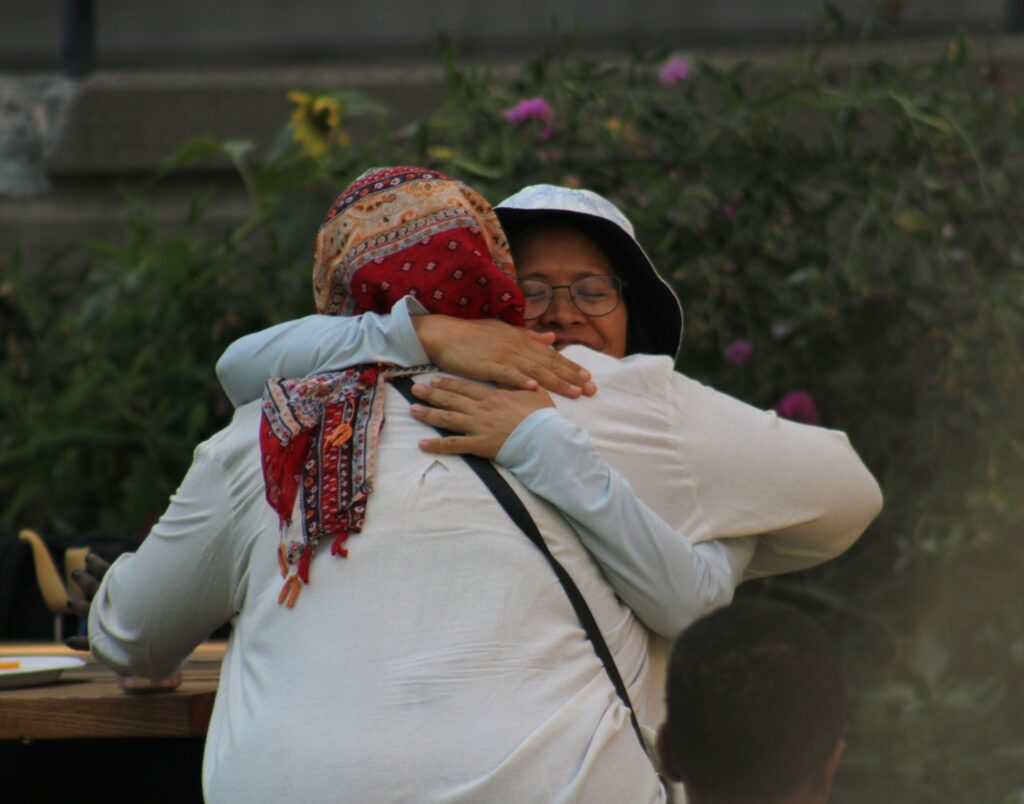
Агенції з переселення штату Массачусетс аплодують законодавчому керівництву за інвестиції в розмірі 5 мільйонів доларів у Фонд правового захисту іммігрантів

Агенції з переселення штату Массачусетс аплодують законодавчому керівництву за інвестиції в розмірі 5 мільйонів доларів у Фонд правового захисту іммігрантів

БОСТОН - 9 червня 2025 року - Вісім переселенських агенцій, що працюють по всій території Співдружності, вітають Палату представників штату Массачусетс за включення 5 мільйонів доларів нового фінансування Фонду правового захисту іммігрантів до бюджету на 26 фінансовий рік.

У той час, коли фінанси штату виснажені, можливості для нових інвестицій обмежені, а потрясіння з федеральним фінансуванням вимагають обережності у витратах штату, створення цього нового фонду підкреслює відданість Палати представників захисту прав усіх мешканців штату Массачусетс та їхнє прагнення до цього. Ця важлива інвестиція забезпечить юридичну підтримку тисячам мешканців штату Массачусетс, які проходять складні імміграційні процедури - багато з яких стикаються з ризиком затримання або депортації без доступу до адвоката. Агенції з питань переселення висловлюють подяку керівництву та членам Палати представників за визнання того, що належна правова процедура та юридичне представництво є важливими для справедливої та гуманної імміграційної системи.

"У той час, коли наші громади відчувають зростаючі потреби і підвищену невизначеність, це фінансування посилає важливий сигнал про те, що штат Массачусетс рішуче підтримує наших сусідів-іммігрантів і громади, - сказав Джефф Тільман, генеральний директор Міжнародного інституту Нової Англії, - Створення Фонду правового захисту іммігрантів у ці неспокійні часи говорить багато про що: Палата представників і законодавчі органи підтримують вас. "Створення Фонду правового захисту іммігрантів у ці неспокійні часи говорить громадам, які стикаються з несправедливими переслідуваннями: Палата представників і законодавчий орган штату Массачусетс стоять за вами".

"Надання адекватної юридичної допомоги приносить користь усім жителям, - сказав рабин Джеймс Грін, генеральний директор Єврейської сімейної служби Західного Массачусетсу. "Цей фонд допоможе іммігрантам, які щодня зміцнюють нашу робочу силу, податкову базу та економіку, а також збагачують культурне життя наших громад, залишитися в штаті".

Агентства з питань переселення висловлюють особливу подяку лідеру Френку Морану та голові Дейву Роджерсу за підтримку цього запиту на фінансування, а також спікеру Рону Маріано, голові Комітету з питань бюджету Палати представників Аарону Міхлевіцу та керівництву Палати представників за те, що вони включили його до бюджету Палати представників. Ми також вдячні за довготривалу прихильність і підтримку Сенату та адміністрації Хілі і сподіваємось, що це фінансування буде включено до остаточного бюджету на 26 фінансовий рік. Ми вдячні за лідерство наших обраних посадових осіб у Співдружності.