metapixel
Skip to main content

Tag : Histoire d'un client

Ali Blog Post

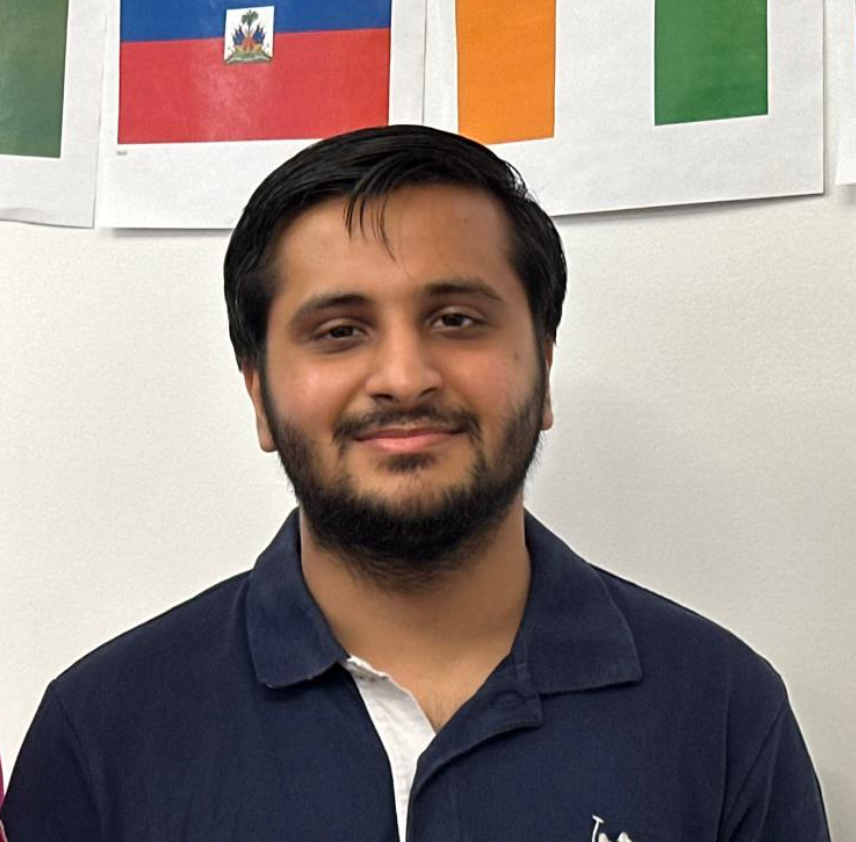
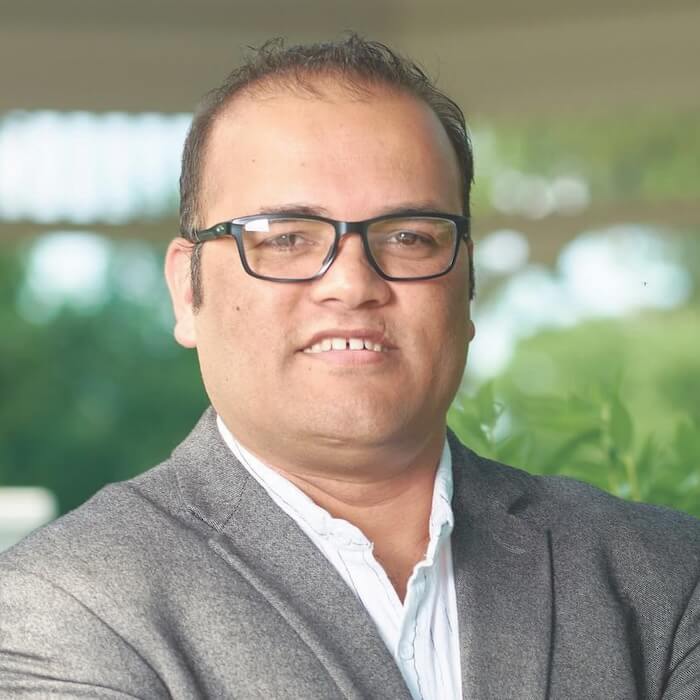
“A Journey of Hope”: In Massachusetts, an Afghan Refugee Builds a Future in Biotech

Activism in Afghanistan

Ali grew up in Afghanistan during the Civil War—a tumultuous time where his mother would carry him “under her chest, protecting from the bullets flying around.” Ali lost several loved ones who bravely fought against the Taliban’s oppressive rule. It’s these hardships that inspired his educational and career goals: “I always wanted to make a social impact and change the environment.”

As a young man, Ali decided to pursue a sociology degree while pushing for social reform. His efforts included helping fellow Afghans who were targeted for their activism; working with the U.S. government on projects to empower Afghan women across the country, including through economic partnerships and trainings on how to advocate for their rights; supporting Afghanistan’s peace negotiation team; and advocating for the 2250 resolution on Youth, Peace and Security. 

“Young people can change the discourse of conflict,” Ali says of this work. “The people who are mostly fighting together on the battlefields are the young people, so if we want to bring peace to the world or make social change, we have to invest in young people instead of investing in harm and conflict.” 

The Taliban Takeover

When the Taliban retook control of Afghanistan in 2021, Ali saw much of the progress he had worked for begin to recede quickly. His heart broke when the women in his sociology classes were expelled to comply with new laws preventing their education.  

“Everything changed for so many Afghans because the collapse of a political system is not just the collapse of a political system, but it is also the collapse of the people’s routines, their lives, and everything.” 

Like the people he had been helping, Ali was now targeted for his activism and was forced to leave his home to seek safety. Thankfully, the U.S. refugee resettlement program was there for him. 

Landing in Lowell

Starting life as a refugee in Lowell reminded Ali of his own work with clients back in Afghanistan. He was trying to help them stay hopeful and be resilient, and now, “it was a time in which I had to be resilient myself because I had to start everything from scratch here in the U.S.” 

He arrived with nothing but a small suitcase and knowing no one. Fortunately, the IINE team was there to greet him. “From the time I arrived here, one of the IINE volunteers helped me to get to the home where I live right now,” he says, and an IINE Career Navigator “helped me to find my first job in the U.S.,” an entry-level job in medical manufacturing. Deeper than that, “It was really peace of mind and comfort and strength that I got from IINE, instead of just barely struggling by myself…Those are the things that I think fundamentally change the life of people.” 

Pursuing New Goals

As Ali began to adjust to life in Lowell, he found community, “There are wonderful, wonderful people I met here.” He was gratified to learn that there was a sizable community of Afghans in his neighborhood, including fellow clients at IINE. He began volunteering his time to help them.  

Meanwhile, Ali set his sights on advancing in his career. He quickly used his newly gained experience in medical manufacturing to land a new job as a Process Technician at a major pharmaceutical company. He found that the work suited him, and the company was supportive.  

To eventually progress at his new company, he would need an advanced degree in engineering. Even though he had been studying sociology in Afghanistan, this idea was exciting to him—and Ali was eager to resume his education. 

 “I think sociology and engineering management have a common ground…to bring change within a system or process. In sociology, you are focusing in a broader scope of studying social structures. Engineering management is more focused on smaller change…but basically, it’s all about managing change and improving processes.” 

He told his IINE Career Navigator, Ashley, “I want to go for my master’s, but I don’t know where to start. I’ve never written an app for a university here. It’s completely different then the system we have back in Afghanistan.” 

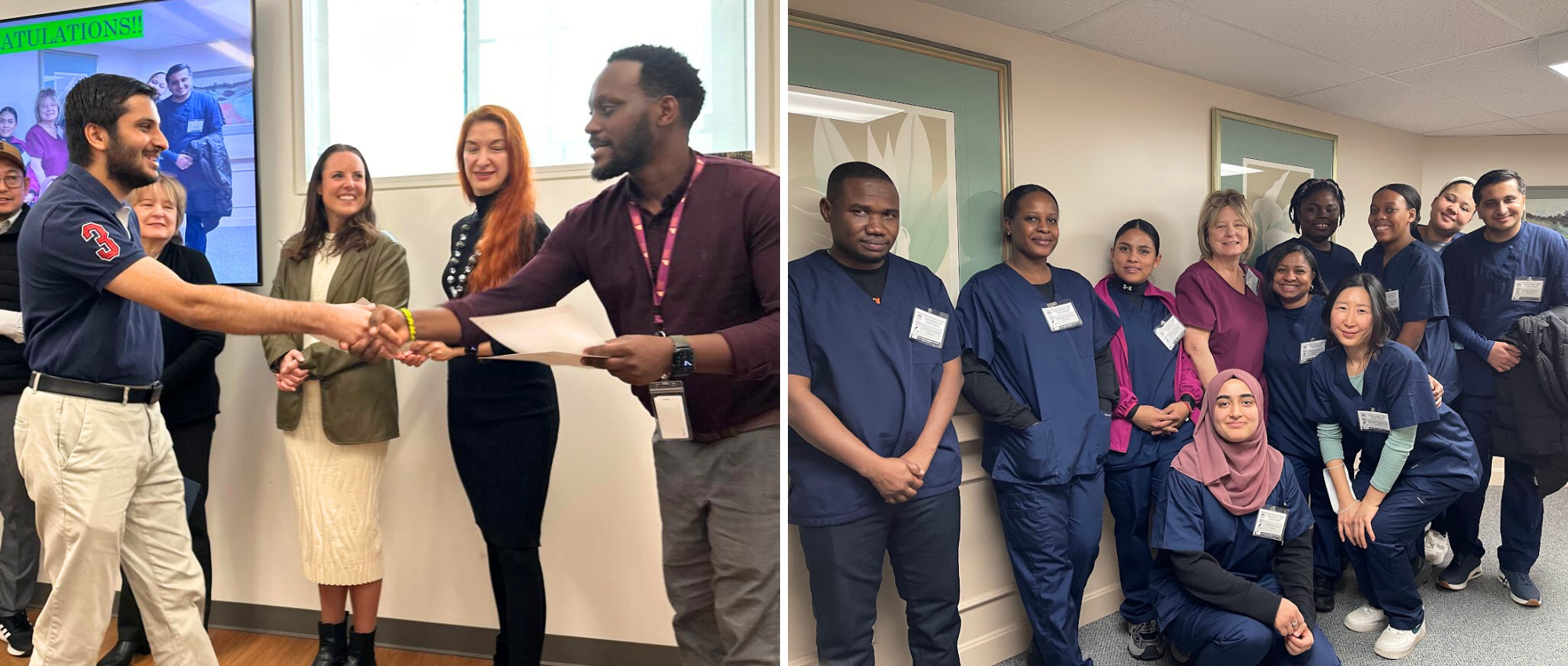
Ashley dove into the application process, helping Ali transfer credits and secure transcripts from his university in Afghanistan, get letters of recommendation from his new employer, and edit his resume. She also supported him with writing his personal statement, encouraging him to speak candidly about the hardships he had overcome. 

“The personal statement was the document we worked on the most because we wanted to make sure it showcased to the admissions team who he was as a person and how this degree would help him progress,” Ashley says. “His personal family story, how he highly values the opportunity to get an education, and his desire to help not only the people he loves but the wider community that he is a part of—these were all poignant parts of his essay.” 

A Bright Future

Ali was thrilled to be accepted to Tufts University with a partial scholarship. Ashley was thrilled, too. “One of the better parts of my job is the opportunity to see my clients’ growth and watch them reap the hard work they put into their career goals,” she says. “Ali is a wonderful example of that and has an incredibly bright future ahead!” 

For Ali, each new victory is a continuation of his life’s work. In advancing his education and career, he sees himself as carrying on the aspirations of those he left behind in Afghanistan, especially his parents, and the women and girls who are still dreaming of the opportunity to receive an education. He will never stop looking for ways to advocate for them. 

“I think it’s a common duty of all of us, I and everyone, to keep this discourse [going], to be the voice of Afghan women until they are allowed to [pursue] education. Let’s not forget them. It’s a collective responsibility to be the voice of the Afghan movement.” 

- - -

Les réfugiés et les immigrants entreprennent des voyages longs et difficiles pour échapper à la violence et reconstruire leur vie aux États-Unis. Vous pouvez leur apporter l'aide dont ils ont besoin. 

Music Fundraisers

How Live Music Is Bringing Communities Together to Support Refugees and Immigrants

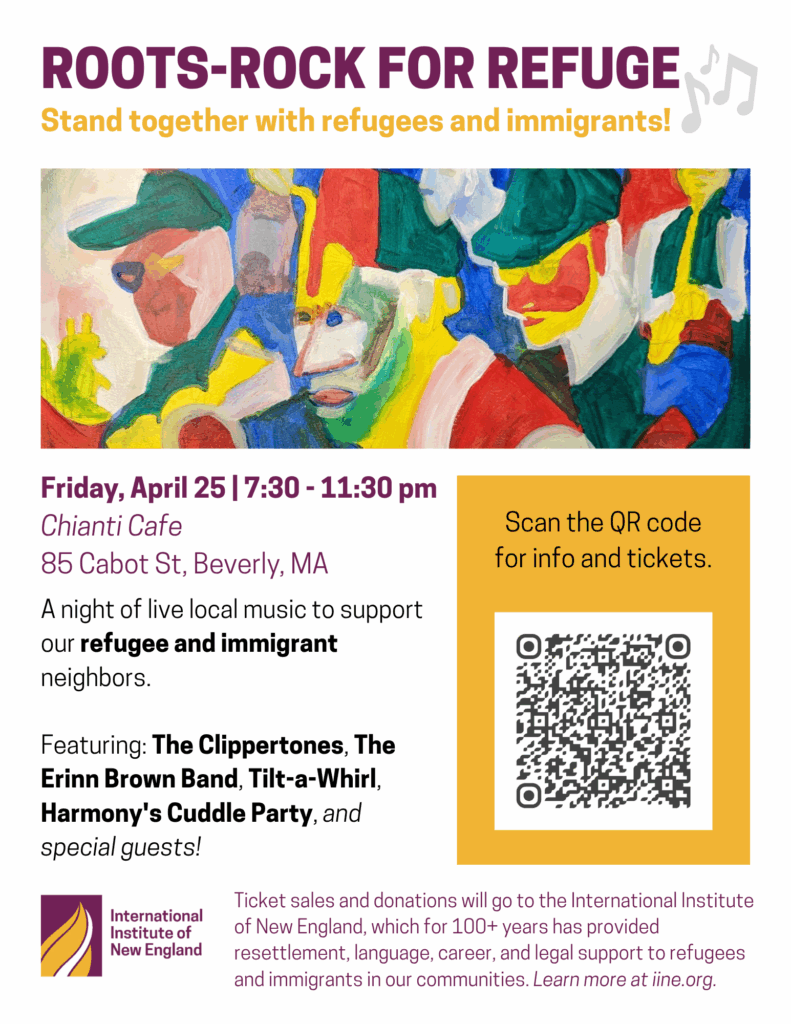
When community members tell us they want to bring their friends and neighbors together to support IINE’s work for refugees and immigrants, it’s always music to our ears. When actual bands are involved, even better! We recently talked with three local musicians who held concerts to raise funds and awareness for IINE. Here’s what they told us about their inspiration and impact.  

Paul Green, Bassist for the Wicked Pickers Trio

Harvard University Astrophysicist and IINE Volunteer

Wicked Pickers Trio

What made you want to put together a music fundraiser for IINE? 
Well, a lot of Jews have a family history of being refugees. My mother fled Vienna with her parents in 1938 and came to New York with the help of [a resettlement agency], and you know, you just read in the news these days about all the struggles that refugees and asylum seekers go through. Immigrants in general are having a really hard time, even though most of this country is composed of immigrants. As has happened before in history, they seem to be the scapegoats for people who are having other troubles.  

I was particularly interested in the story of refugees from Afghanistan because many of them were under threat because they had helped the U.S. in their efforts to defend against the Taliban takeover. A couple of years ago, I volunteered with IINE specifically to help Nazia [an Aghan refugee]. When she first came to the country, we had the privilege of hosting her in our house for a few weeks as she was getting settled. Naturally she experienced a huge culture shock. She’s separated from everything she knows, her family, her friends, her culture. We were glad to be able to provide as soft a landing as we could and to help her with the basics, like understanding the T. IINE was very supportive and very, very well organized. So that was impressive. 

Risa [of the Honey Steelers] is the other person who helped organize the benefit concert and offered to host it in her backyard. We wanted both bands to play. It came about just because we were so disturbed by the current administration’s policies. It’s easy to feel helpless and ineffective in the face of all this. I know that agencies like yours are completely overwhelmed at the moment and in dire need of funding. So we decided it would be a good thing to do, and that if we sweetened it with music, that a lot of people might be interested in showing up. 

Why do you think music works so well in uniting people for a cause? 
When you’re experiencing music with a group of people, everybody is experiencing a similar feeling at the same time, which is kind of rare in life, and so it engenders a real community feeling. I think all of us at the concert have felt troubled by what’s going on in the country and then on top of it, or maybe as a form of solace, we all got to experience the same music together at the same time—so I think it’s a bonding thing. 

We ended with a beautiful instrumental that our guitar player, Bill Morris, had written called Far From Home, which felt especially moving and apropos.  

What advice would you give to other people who are interested in organizing a music fundraiser for IINE? 

Well, first I’d say it’s not that hard, and it’s a lot of fun! There’s a hunger for it, too. People want to do something and come together in community.  

Reach out to your contact lists – ask them to play, spread the word, help with set up, etc. It’s very rewarding and well worth the effort. 

Edson Fwenk, Drummer and Co-Founder of Artists Aspiring for Social Change

Haitian Immigrant and Music and Business Student at Bunker Hill Community College

What made you want to put together a music fundraiser for IINE? 

We wanted to gather around immigration—to plead the case of the ones who don’t have a voice—to sing it out loud or scream it out loud. So we came together and had a show.  

Tell us about the acts that participated.  

The vibe was like a punch: You had a little bit of Casta, which is a Latin band. You had Harmony’s Cuddle Party, which is prog. You had Militia Rashad and Sasha Deity, who both came with like a very militant rap. And then you had Sylvia North, who came with an acoustic guitar and was just singing—very smooth, very nice.  

So, multicolor, multifaceted – everyone could listen to someone who was their cup of tea.  

Why do you think music works so well in uniting people for a cause? 

Music is spiritual. To write a song or create a melody, this comes from the person’s soul. And so when it hits somebody else with the amount of passion that the person created that sound with, it resonates on a deeper level. I think music has this power to finetune somebody’s attention, and bring their soul to the perfect tuning. 

We realized that a concert could bring people together, even if we have different taste in music, and when we’re together, we can hear each other. I might not know a lot of Latin music, but whenever my prog band is playing, all right, I’m vibing. Whenever your band is playing, I’ll listen to what your band has to say. 

What advice would you give other people who are interested in throwing a music fundraiser for IINE? 

There can be push back when you’re coming in the name of minorities. People may say things about you or to you, but you have to approach this from a standpoint of love. It needs to come from the passion for the cause. It’s not about we get to play music, but it’s about I care for those people. It’s love. 

Peter Rowley, Guitarist, Vocalist, and Songwriter for The Clippertones

Malden Middle School Civics Teacher and Malden High School Soccer Coach

What made you want to put together a music fundraiser for IINE? 

Just watching the news and being aware of how immigrants are viewed and treated made me want to do something. I’d been wanting to help for a while, but having an administration that is, you know, pretty xenophobic propelled me to act instead of just sitting and complaining. 

I knew I wasn’t alone in feeling overwhelmed and frustrated, so I wanted the concert to be an opportunity for people. I’ve been in different protest movements at different times, and what has always helped keep my spirits alive is knowing that there are other people who are out there being vocal about their views. 

I wanted to use local bands for the community aspect, and I wanted the vibe to be, you know, truthful, but not depressing; enjoyable, uplifting music, but honest music. It’s a party; we can still have a good time, and we can still support each other, and raise each other’s spirits. And it’s not just about our spirits, we can do something—let people know that there are groups that are doing a lot of great work to help America stay a diverse, welcoming, and compassionate place.  

Why do you think music works so well in uniting people for a cause? 

Well, I think music is often the glue. You know, it’s the outlet, it’s the expression, it’s your raw emotions, your hopes, your aspirations, your fears. It’s an opportunity for people to say what they feel, and I think a lot of people love live music because of the unpredictability. The raw energy can be a lot of fun. You get to see a different side of people. 

Folk, and Americana music in particular, brings the protest tradition, and the idea of the melting pot we’re supposed to be. That’s what I was raised to understand—that we have people of different faiths, views, ethnicities, backgrounds, and worldviews, and what’s great is when we come together and get to experience some of those different perspectives. 

What advice would you give other people who are interested in throwing a music fundraiser for IINE? 

Try to find a supportive venue. If they’re supportive of the cause, they can really help with cutting costs. And if you can, try to pull a team together to help get the word out. Plan ahead, but try not to overthink it. Try to bring in bands that are on your same wavelength but have their own draws, and encourage them to bring out as many people as possible. I think if you do that, you’ll have a good time and feel like you accomplished something.  

- - -

IINE depends on community support to serve refugees and immigrants in New England. There are many ways to get involved as a donor, volunteer, or advocate. Want to host your own fundraiser? Contact us. 

Ride 2025

“I Do This in Their Honor”: Cyclists Raise Awareness and Funds at Sixth Annual Ride for Refugees and Immigrants

The Mission

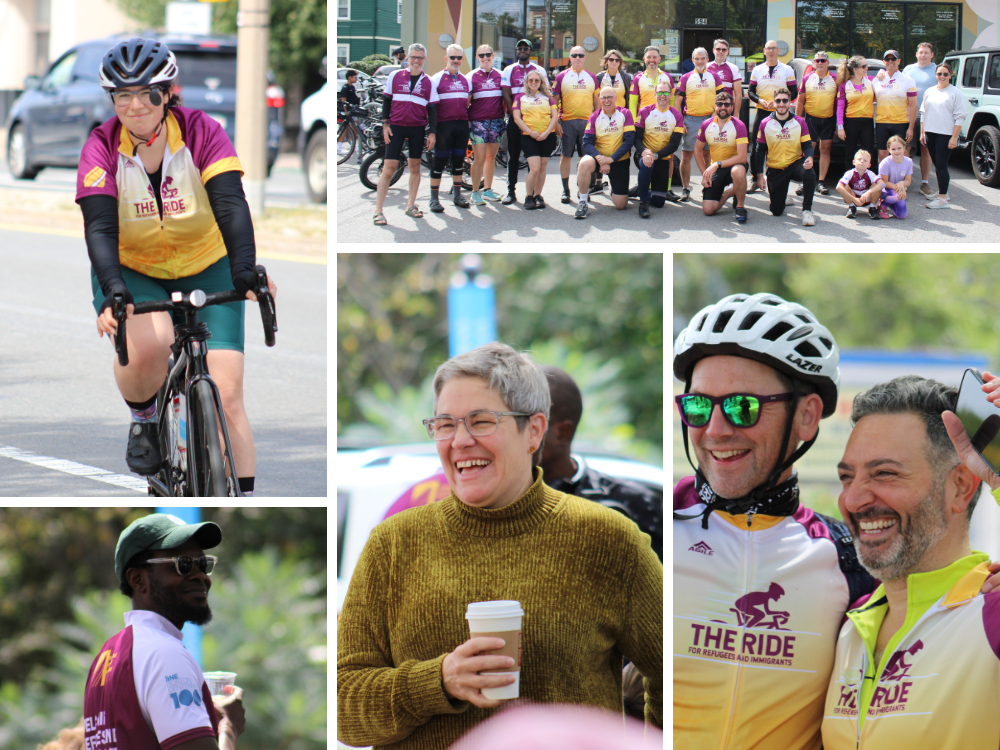
On September 21, thirty members of the IINE community, including staff, board members, volunteers, and their families, donned custom jerseys, mounted their bikes, and set off for a morning of pedaling their hearts out to raise awareness and funds in support of IINE’s mission. 

The annual Ride for Refugees and Immigrants, which was created by IINE Leadership Council member Will Krause, brings together seasoned and novice riders, united by their desire to support our newest neighbors. For weeks leading up to this year’s big day, riders gathered donations from their personal networks, spreading the word about IINE’s work and raising critical funds to help refugees and immigrants access food, shelter, and healthcare, English language and job skills training, and immigration legal support.  
 
For many, this year’s Ride felt particularly urgent as dramatic changes in federal immigration policy have dealt new challenges to refugees and immigrants in our communities—but on the day, while engaged together in action and celebration, the riders were all smiles. 
 

The Routes

Riders chose between two routes: a 12-mile route that started at the Bike Source in Bedford, Massachusetts and ended at the Kickstand Café in Arlington, and a 50-mile loop that began and ended at the café with stops in Lowell to tour IINE’s office and in Bedford to link up with the 12-milers for the home stretch.  

Participants rode at their own paces with designated team leaders guiding the way. Riders’ branded jerseys provided an important visual reminder for everyone they passed that our communities support our refugee and immigrant neighbors.  

The Finish Line

In the early afternoon, the Kickstand Café buzzed with bike-riders as one wave after another reached the finish line. IINE staff members were there to cheer on each finisher, and snacks and refreshments awaited to help them recover and celebrate. Many riders lingered long after the dismount to cheer on fellow finishers and socialize.   

One common theme heard from first-time 50-milers, as they mopped their brows, was that it felt easy to push through any of the day’s physical challenges when they thought about the cause. The challenges refugees and immigrants face are incomparable—surviving crises in their countries of origin, leaving their homes and loved ones behind, starting over in an unfamiliar place with little more than a suitcase, navigating complicated and ever-changing immigration laws, and so much more. This is not only a story shared by IINE’s clients, but also a story that can be found in each rider’s family history, and one that made their own lives as Americans possible.  

This year’s Ride for Refugees and Immigrants raised more than $50,000 in much-needed support for IINE’s mission. A huge thank you to everyone who participated!   

IINE’s annual events raise critical funds for our refugee and immigrant community members. Learn more and join us for an upcoming event.

“I Always Want to Give Back”: Suraj Budathoki’s Journey from a Refugee Camp to the NH Statehouse 

In November of 2024, Suraj Budathoki was elected to represent Hillsborough County District 40 in the New Hampshire State House, becoming the first Bhutanese-American State Representative in U.S. history. In his acceptance speech, Suraj said his victory was “the culmination of 16 years of dedication, resilience, and commitment to this community.” 

 In a recent interview, Suraj spoke to IINE about this journey. 

Learning Resilience 

Suraj became a refugee at the age of nine when the Bhutanese government suddenly stripped members of the Nepalese-speaking Lhotshampa minority of their citizenship and drove them from their homes. He spent the next nearly twenty years of his life in a refugee camp in Nepal.  

Suraj says his time there “taught me a lot; the resilience, the continuity to do things and not give up.”  

When he finally arrived in the U.S. after decades of waiting, he landed in Atlanta, Georgia. He recalls seeing a group of people at the airport handing out gifts to arriving children. “There is compassion for immigrants and refugees here,” he remembers thinking.   

Still, life was far from easy. Suraj arrived with a bachelor’s degree and a nearly-completed master’s degree but soon found himself working two full-time jobs for minimum wage—a day shift at a fast-food restaurant followed by an overnight shift stocking grocery shelves. It was difficult to save or build a social life.  

Work and Welcome in Manchester 

Suraj was excited when a friend from home told him about his life up north in Manchester, New Hampshire, where he had been resettled by the International Institute of New England. Manchester was smaller and easier to navigate. Jobs there offered better starting pay, and through IINE, Suraj could train to become a Licensed Nursing Assistant within a month.  

He was sold. In 2009, Suraj moved to Manchester, “and that’s what I did! I finished the Licensed Nursing Assistant program and then within two months, I got my license! The Employment team helped me get a job and after that I’ve been working with IINE for many, many years.” 

Suraj took to New Hampshire right away. “The mountains and the green vegetation resemble my small town in Bhutan,” he says, and compared to the sprawl of Atlanta, the compactness of Manchester was closer to the life he knew in Nepal. As in Atlanta, he took on two full-time jobs, but these he found more meaningful and in line with his goals. One was at a rehabilitation center for adults with traumatic brain injuries. The second one was to train adults who hadn’t completed high school to create resumes and help them find jobs.  

These early jobs helped Suraj build up his English skills. He soon went back to school at Manchester Community College and then transferred to Southern New Hampshire University to study Political Science.  

“Then life took off.” 

Building Community 

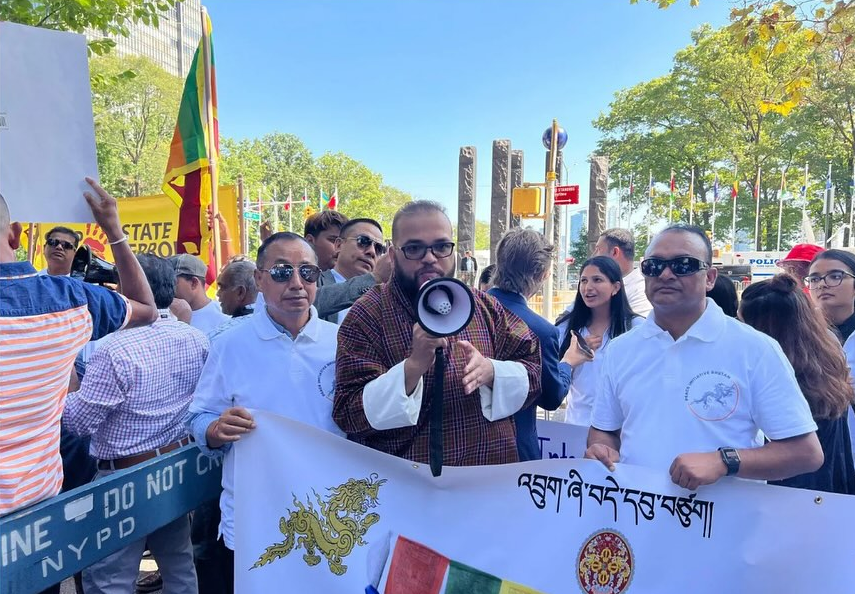
Suraj (center) has advocated for peace in Bhutan throughout his career

With his newfound confidence and vision, Suraj co-founded Bhutanese Community New Hampshire (BCNH), a non-profit dedicated to helping fellow Bhutanese refugees to integrate and thrive. He served briefly as the organization’s first executive director and then joined its board.  

“My first focus was learning to get grants,” Suraj says, and he still vividly remembers the story of his first submission, trudging through the rain to hand off his big envelope in-person, and then waiting months for a response. Finally, he heard back that he had won $6,000 for his mission. He was thrilled.  

With practice, he became more and more adept at grant writing, securing grants as large as $1 million.  

“I was able to hire 23 staff! Can you believe it?” 

Even more exciting was turning the funding into medical care, mental health services, and employment support for his community. BCNH formed a close partnership with IINE, who referred newly resettled Bhutanese clients for additional support. As it grew, BCNH expanded its mission to accept clients from additional countries and changed to its current name: Building Community New Hampshire.  

Feeling the Bern 

In 2016, Suraj was able to exercise his political science muscles when the presidential campaign of Vermont Senator Bernie Sanders opened a field office in New Hampshire.  

“It was my first time working on a campaign and I got the second-highest post for New Hampshire! That was my first opportunity to get to know Bernie, his team, and the people of New Hampshire. I was so privileged to work on his campaign and travel a lot across the state.” 
 
Suraj says that talking to people throughout the state had a profound effect on him. “I heard a lot of people’s often painful stories, and I could relate from when I was in a refugee camp…It’s not having money to pay rent; the cold; not enough food for the elderly who invested their life making America better, supported their kids growing up, when they were young and then paid taxes, and at the end of the life they have nothing to enjoy.” 

Suraj decided to tackle these issues head-on at the community level. His founded Bloom and Shine, LLC, a human services agency that provides in-home behavioral and physical healthcare to New Hampshire seniors. 
 
“I felt I needed to do something, and Bloom and Shine is something. Providing caregiver services to the elderly and disabled, it’s something I feel proud of.” 

Pursuing Peace 

While deepening his roots in his new community, Suraj was also studying international development, completing a master’s degree from Norwich University, and beginning a Ph.D. program at Saybrook University with a focus on conflict resolution. His research revealed clear historical patterns of opposing sides in ethnic conflicts becoming increasingly entrenched in their mutual opposition as suffering increased. 

“I saw that happen in Bhutan in the ‘90s. My Ph.D. is on how to find a solution. How can we transform that adversarial relationship into a conducive, friendly relationship? As I did more research on conflict resolution and negotiations, I found that there are peacebuilding and reconciliation methods that can bring two conflicting parties together.” 

Inspired by his research, he launched the Peace Initiative for Bhutan (PIB). 

“I talked to many young Bhutanese-Americans, college students, and other like-minded individuals, and they also had the same kind of idea. We came together to form this peace initiative. The approach is distinct from what our leaders did in the past. We are not doing this to win—to defeat the other side. We’re doing this to find common ground—to resolve through dialogue.” 

The goal of the initiative is to heal relations between the nation of Bhutan and its refugee diaspora. This reconciliation would allow Bhutanese refugees to return home in peace to reunite their loved ones.  

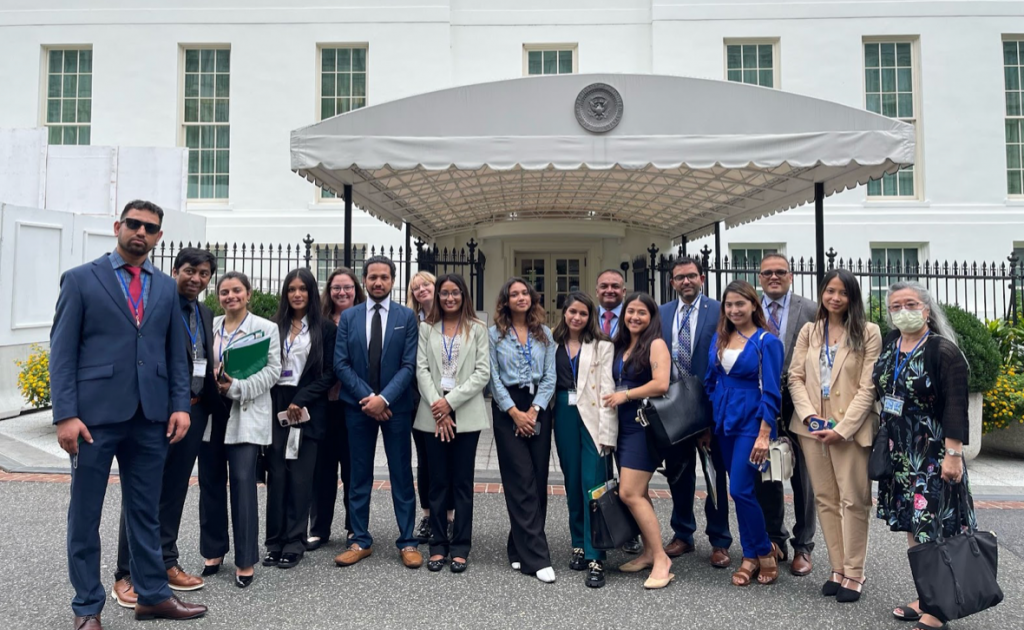
Members of the Peace Initiative Bhutan on the trip to D.C.

The first step for PIB was to draft their own peace plan and send it directly to the king of Bhutan. When they didn’t receive a response, they posted their plan online and alerted the press. Next, to draw further attention, they got the U.S. government involved. Suraj traveled to Washington D.C. and lobbied to get both the U.S. House of Representatives and the U.S. Senate to introduce resolutions calling for reconciliation.  

Bhutan began to listen. 

“We did a couple of rounds of informal dialogue with people inside Bhutan, also some parliamentarians,” Suraj says. “This has never happened before with other approaches. Our method is based on mutual respect, based on love to the other side.” 

The People’s House 

Suraj’s success with the Bernie Sanders campaign, his empathy for the struggles of working people in New Hampshire, and his progress with PIB all inspired him to make his own run for the State House of Representatives. His victory was a huge source of inspiration for fellow Bhutanese refugees. New Americans Magazine reported, “Suraj’s win quickly became a sensation on social media, sparking pride and celebration across the Bhutanese diaspora, which includes former refugees resettled across eight Western countries. Bhutanese-American social media platforms lit up with messages of pride, congratulatory posts, and reflections on the significance of this victory.” 

While ever hopeful, Suraj is learning about the challenges of belonging to a minority party in a state legislature. 

“We don’t have much say in any bills or regulations. We don’t have that power. We do share what we think, what we believe would bring positive change, but supporting the middle class or poor community is not what always gets attention. It feels painful when we see bills cutting support to the elderly, to the university system, to special education, and many others in New Hampshire.” 

Suraj is committed to speaking up for vulnerable constituents, but sometimes he worries about others’ misconceptions of his background and journey.  

“I testified in one of the committees against a bill, and I told them my success story. I came here as a refugee. 100 people work in my company. I’m going to college. I paid this much in taxes, etc…People may feel I’m taking their space. They see themselves working day and night, but I came here a few years ago, and now here I am running a company and a state representative. They may not understand the human side, the hard work, of what we as immigrants do here.”   

He wishes more people understood about his time working two jobs for minimum wage to build a foundation, missing many nights of sleep and the family he left behind at the refugee camp. 

But like his Peace Initiative, he sees his political work as an experiment and says that his political career is “just getting started.” In the arc of his career, it’s one more way to heed the calling he first heard back in the refugee camp in Nepal. 

“The international community, the United States and many other countries, they helped us a lot. We were not able to go to work outside of the camp, and we were fed and supported by many Western countries…We always feel we should give back for those many years we were given—and that’s the call—I always want to give back to the community. Whatever I’m doing now, being a State Representative or running this home health care business, it’s always supporting community, providing employment and uplift.”  

---

Les réfugiés et les immigrants entreprennent des voyages longs et difficiles pour échapper à la violence et reconstruire leur vie aux États-Unis. Vous pouvez leur apporter l'aide dont ils ont besoin. 

Atefa's Story

Atefa’s Story: With Ongoing Support, a Young Refugee Builds a Brighter Future

Atefa’s story is featured in our Spotlight Report: Who We Can Serve and How in a Rapidly Shifting Landscape. Click here to read the full Spotlight.

When the Taliban retook control of Afghanistan, Atefa, her mother, and three brothers escaped their home, resettling as refugees in Lowell in 2022. As the eldest sibling, Atefa quickly took on adult responsibilities. She became her family’s interpreter and spokesperson at doctor’s visits and school appointments – all while balancing learning an entirely new culture and language.  

At first, school was frustrating for Atefa. In Afghanistan, she had already begun college, but her high school transcripts were among the many possessions she had to leave behind, and without them, she had to begin her American education as a freshman at Lowell High School. Still, she stayed focused and determined. For support, she went to nearly every tutoring session provided by IINE’s Refugee Youth Mentoring program, bringing her brothers along to make sure they progressed as well. That year, Atefa earned honors recognition for her grades. 

During her junior year, Atefa began exploring the college application process. When IINE’s Youth team advised her to join extracurricular activities to stand out, she became a student ambassador, helping fellow newcomers adjust to life in Lowell. Her leadership and service led to her acceptance into the National Honor Society in her senior year.  

That summer, Atefa went back to her IINE mentors for guidance, and they suggested volunteer work. In addition to working at a grocery store, participating in school groups, and helping her family, she began giving back to support other IINE clients. She delivered fresh produce and packaged goods to families, provided interpretation, and peer-tutored fellow refugee youth.  

Atefa’s relentless dedication was rewarded when she was accepted to four colleges! She chose the University of Massachusetts Amherst, where she will study civil engineering starting in the fall of 2025. As she prepares for this next chapter, she continues to reach out to the IINE Youth Team for guidance on class selection, financial aid, and housing. 

---

Refugees and immigrants come to the U.S. after enduring unimaginable hardships. You can give them the help they need to rebuild their lives here. 

In New Hampshire, Investing in English Language Classes Makes Everyone’s Healthcare Better

A Healthcare Success Story

As in much of the country, if you live in New Hampshire and you need medical care, you’re likely to get help from some people who began their lives in other countries. Immigrants and refugees make up about 18% of the U.S. healthcare workforce. In New Hampshire, they make about 7% and are particularly prevalent in patient-facing roles, such as home healthcare aides, drivers, cleaners, and food preparers. They’re the people who help you feel comfortable, safe, and cared for when you’re at your most vulnerable.  

These are roles for which there are dangerous shortages in New Hampshire, a state with a rapidly aging population. It’s an urgent need that creates an opportunity for newcomers seeking entry-level jobs that may not require a local work history and more than basic English skills.  

“Matching newcomers with New Hampshire healthcare employers has been a real success story in general,” says Kayla Rossmeissl, IINE’s Director of Program Design and Evaluation. “Employers are getting fast-learning, resilient, highly motivated workers, who have the benefit of IINE to help support their orientation and development. Our clients often say they’re excited to be helping people in their times of need and giving back to the community that’s welcomed them.” 

A Desire for Investment

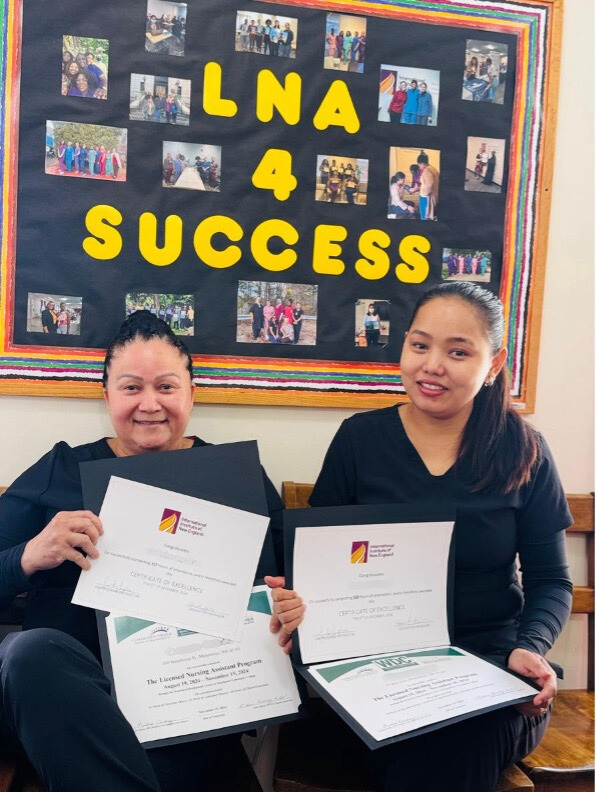
In 2019, Kayla helped develop LNA for Success—an IINE skills training program that combines English language instruction, vocational training, higher education partnerships, and apprenticeship, to help prepare immigrants and refugees for the job of Licensed Nursing Assistant. She says that in promoting this program over the next few years, IINE discovered a real desire for greater investment.  

“We had been doing a lot of community presentations and working closely with [LNA for Success partner] Manchester Community College. We started to discover a lot more partners who are looking for ways to help get refugees and immigrants more economically stable—career laddering, higher paying jobs, things like that.” 

She also found healthcare providers looking to invest in their immigrant employees. At one networking event, representatives from two local hospitals sought her out. 

“They were just like, ‘Kayla, I heard you set up these ESOL programs. Can we chat?’ From there, we were all brainstorming to come up with a program to help their workers.” 

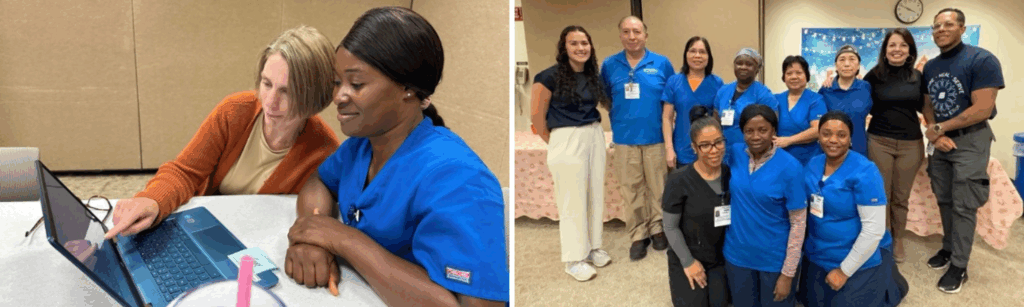
Both hospitals were interested in paying their employees to deepen their English language skills during the workday, through on-site, workplace-focused English for Speakers of Other Languages (ESOL) classes. 

“Which is amazing,” Kayla says, “because a lot of families are juggling multiple part-time jobs and childcare, and wouldn’t otherwise have time to take classes.” 

Kayla wasted no time in developing a curriculum for a pilot “ESOL 4 Healthcare” program, conducting interviews with partners to learn about their goals and challenges.  

“They wanted to see people become more confident in speaking English, because even though they are in environmental services [maintenance], they do greet the patients in their rooms, and they interact with other staff in the hospital, like their supervisors. So, having more confidence in communication, being able to read and write emails, improving digital literacy skills, and navigating internal systems like clocking in and out—these were all things we could help with that could improve everyone’s experience.” 

Gaining Confidence

“I would say for me personally, what I see in the students, cohort after cohort, is confidence,” says Becky Marden, Director of Workforce Development at Elliot Hospital in Manchester.  
 
“In their evaluations, they’ll say things like, ‘I’ve gained the confidence to say hello to my manager in the morning, whereas before I might just have avoided eye contact,’ and things like that. And that’s what inspires me to keep pushing for this class and making it better every cohort.” 

Having helped develop the concept, Elliot Hospital is now in its third year of ESOL 4 Healthcare. Becky says that she’s frequently blown away by the improvement that Elliot’s English language learners make in listening, reading, and writing skills over the course of a cohort—which spans two hours/day, six days/week for sixteen weeks, an impressive investment of staff time. In addition to the improvement in workplace communication and staff-patient relationships, she says that Elliot is gratified to be able to provide some meaningful support to some truly impressive people, which, in the most recent cohort, were six students from six different countries. 

“For me it’s also about the social contacts outside of work—they can use email or finally set up a bank account for the first time. These are some of the most resilient and hardworking employees we have. I could never go to another country and work someplace and not speak the language. I would just be so frustrated. And yet they’ve done it and they’re working in our community.” 

Becky says her CEO shares this feeling. After attending an ESOL 4 Healthcare graduation, he invited several of the recent graduates to a Board Meeting so that the hospital’s leadership could meet them, and they could showcase their new English skills. For Becky, the next step is developing apprenticeship programs within the hospital to help English language learners on staff to advance in their careers there.  

“Some of them have healthcare experience from their previous country. We had a nurse practitioner in one program. We had a labor and delivery nurse in another, and they just want to work in the healthcare field. Their credentials don’t come over, their education doesn’t come over, but here they are, sometimes cleaning toilets just so they can be in healthcare. How do we get them back to the bedside? ‘Cause that’s where we need them.” 

This is the Future

Elliot Hospital is currently one of nine IINE ESOL 4 Healthcare partners, and the number is growing quickly. They include providers offering mental health care, senior assisted living, and more. One new partner, Dartmouth Hitchcock Hospital, offers English classes remotely to reach student in more rural areas, and has developed apprenticeships in Phlebotomy and Lab Tech.  

“I’ve got five more in the queue!” says Kayla. “I really think this is the future. There’s a lot of interest in bridging the gap. There’s tremendous need here, from people who can really benefit from these kinds of jobs, and from employers who are always interested in a stable source of new staff members who come to them recommended and supported.” 

Investing in job training opportunities for refugees and immigrants creates a stronger workforce for us all. Help newcomers grow their careers and our economy by donating to IINE today.

Soccer blog

Shared Goals: How Refugees and Immigrants Bond Through Soccer

It’s the most popular sport in the world. You can play it in a schoolyard, a gym, a park, or even a refugee camp. You don’t need expensive equipment or to even agree if it’s called “soccer,”futbol,” or something else entirely. You just need a ball, a goal, and a group of fellow players. Once you start playing together, you tend to become friends. For these reasons, “the beautiful game” is providing some beautiful opportunities for IINE clients to connect with one another across backgrounds. 

A Clinic for Lowell Youth 

IINE Youth Program Manager Isabel Goes says she’s noticed a clear pattern: “Anytime we talk about sports when we first meet with clients, it’s like, ‘OK, well, does that mean like, soccer?!‘” Her clients are definitely fans. She remembers one showing up to a workshop in head-to-toe Cristiano Ronaldo gear, and the delight of clients unwrapping soccer gear at a holiday gift swap.  

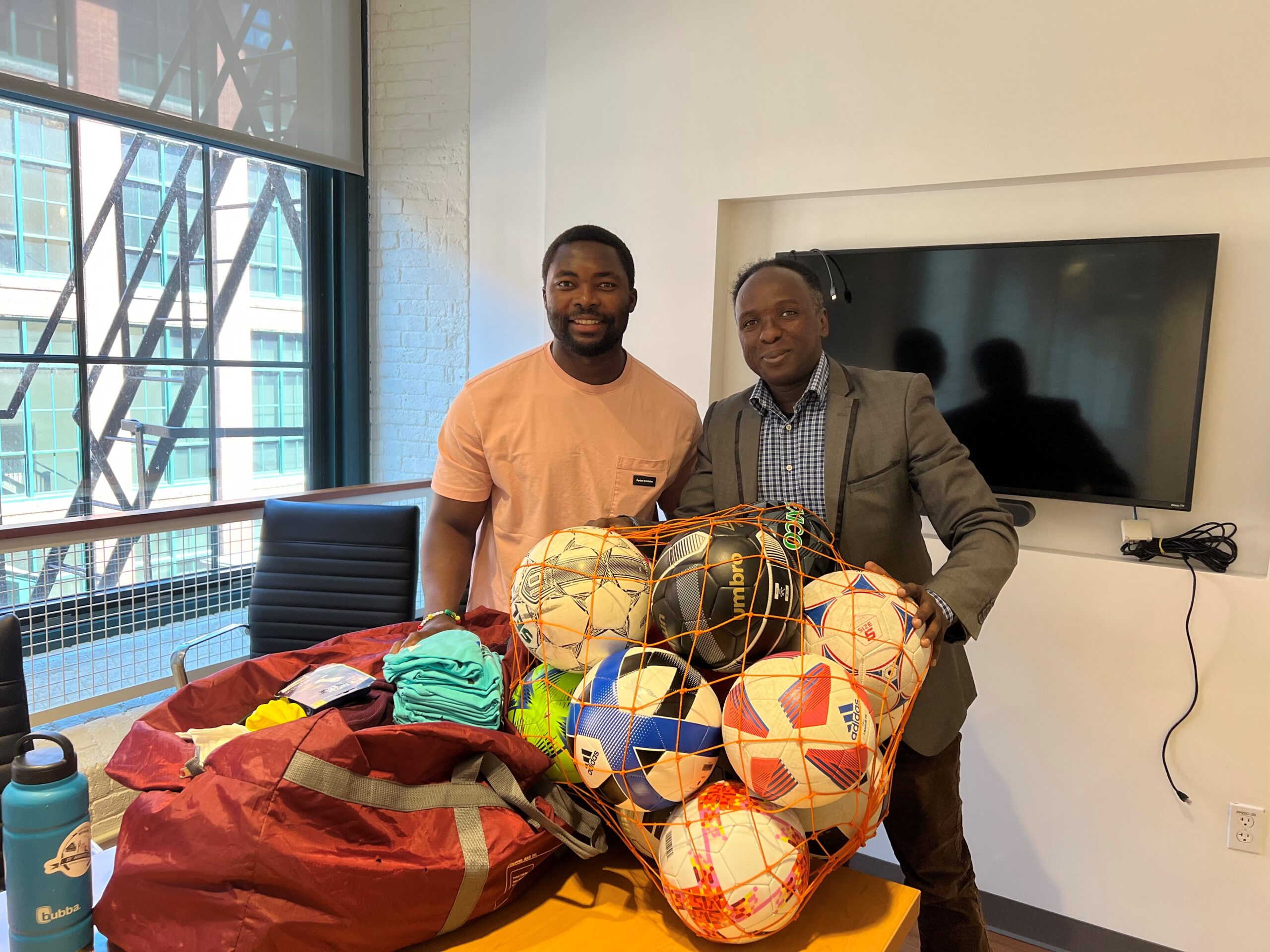
Olf (L) stopping by IINE’s offices to donate soccer equipment to refugee youth

When she decided to organize a youth soccer clinic last June, she knew she’d have plenty of support. Her first call was to Olf Mouyaka, a former refugee from the Democratic Republic of the Congo who grew up in Lowell after being resettled by IINE, and recently founded a soccer-based youth development program called the Football Leadership Organization. Olf had donated soccer equipment to IINE in the past and had experience running clinics.  

Next, to recruit participants, she turned to her colleague Yusuf Abdi. Yusuf’s official job is as IINE’s Career Services Manager, but after hours, he puts tremendous effort and passion into organizing community pick-up soccer games for IINE clients and other members of Lowell’s immigrant community.

“He was like, ‘I already have all these clients coming out for soccer,’ so I said, ‘OK, well, send them our way, have them join us for an official youth program!’” 

Yusuf did just that, and he showed up in his favorite jersey with his son in tow so they could both join in the fun. The clinic was a success, and for Yusuf, it was just the tip of the iceberg. 

“Everyone Show Up at the Park!”

“In the summer, I try to do it six days a week,” Yusuf says, “and I wash all the pinnies after each game!” That’s no small commitment, but he plans to keep it up “as long as I’m helping youth, doing something good, and making them feel a sense of social connection.” 

A former refugee from Somalia, Yusuf has been a passionate soccer fan all his life. As an adult living in Lowell, he joined an indoor recreational league organized by members of the local Cambodian community. He saw some familiar faces in the stands, and again at a regular game organized by member of the West African community: “The youth just came to watch, and I said, hey, they want to run around and play too…so I told them, ‘OK, I will bring the pinnies, soccer balls, and goal posts. Everyone show up at the park!'” 

Yusuf ordered the equipment and continued to recruit participants, including clients who he knew were between jobs and needed an outlet and some social connection.  

Yusuf (center) arranges regular soccer games for clients to have fun, grow their English skills, and build community

To organize meetups, he checked the availability of public parks and then created a Facebook group and a WhatsApp chat moderated by a refugee from the Democratic Republic of the Congo, who is able to translate messages into French and Portuguese.  

His meetups bring out people of all ages and backgrounds, “Each day the language changes some. You may hear a lot of Swahili, a lot of Portuguese, or a lot of Haitian Creole.”  

Together they play informal, tournament-style games. On Fridays, two local coaches, Coach Kwezi from Ghana and Coach Hugo from Guatemala, show up to offer instruction, run drills, and lead more structured games. Yusuf shares video clips of games in the WhatsApp channel, so players can celebrate their successes and learn from their mistakes. 

Though the language barrier can be challenging at first, everyone understands the basics.  

“Everyone can kick and everyone can try to score. Everyone is quiet when they arrive, but their faces are different when the game ends—happy smiles.” 

In fact, the games give players a great chance to practice their English skills without thinking about it too much, and players form bonds quickly.  

They chat, and some of them, they’re not able to communicate, but they try. You know, ‘Why’d you miss the ball?’ ‘You should pass to me.’ And some build confidence. You can see players become happier over time, come out of isolation. Their lives begin to change. That drives me.” 

Specifically, Yusuf says clients became inspired by friends they’ve met on the soccer field to follow their lead in steps like pursuing GEDs or higher education.  

Yusuf loves the mentorship, community, and social connection the sport offers – no matter a player’s age.   

“I’m in my 40s. I’m not like a youth of 18 or 20, but I’m still engaged. Soccer is a language that doesn’t require much talking, it’s more of action, and it builds trust. When I’m playing with a group from Ivory Coast, Cameroon, and Liberia who don’t know me, they get to know me, I become a friend of theirs. That’s how you get connected.” 

Balling in Boston

According to IINE Volunteer & Donations Specialist Emily Dionne, in Boston, the idea of convening some regular pick-up soccer in the park came from super-volunteer, Suraj Chaudhry of Newton South High School.  

“Suraj has been involved with a ton of different things. He suggested just doing a one-off game and then it just kind of grew from there with the Employment and Skills Training teams really taking it into their own hands to keep it going, which was really great.” 

Emily got Suraj together with some other volunteers to plan the first game. They circulated a flyer, Suraj borrowed pinnies and balls from his school, and Emily brought some pizzas for a post-game social. 

“A good 30-40 people came out, including staff, volunteers, and clients,” says Emily. “We were so surprised. It was a really fun gathering.” 

The one-off game quickly evolved into a weekly Saturday morning meetup. Games are kept informal with teams chosen by counting off, and consistent winners are often broken up to make contests more even.  

“It’s a really great way to build community and have people meet each other, especially in Boston, since everybody’s kind of separated across the city,” says Emily.  

“I think it’s a good way to have a bonding activity that isn’t necessarily based around things we do at IINE like having people work on resumes or attend workshops—it’s purely fun. It’s also a team mentality—everybody coming together for one goal.” 

Emily says the game has led to connections off the field, too. In the WhatsApp chat, between posting video clips of their game highlights, people have started organizing social outings throughout the city.  

When Suraj had to step away, Lead Career Navigator Gordon Parris gladly took over the organizing with the help of Career Navigator Luqman Alkhaneqeeni.  

Gordon (far right), Emily (second from right), and Luqman (kneeling) gather fellow IINE staff and clients weekly for a pick-up soccer game

A former refugee who has lived in Jordan, Iraq, and Turkey, Luqman has been playing soccer since he was four years old. It’s been a throughline for him as his life has continued to change. He couldn’t have been more excited to learn that his new workplace was hosting a regular game. “It’s one of my talents, let’s say,” he says with a smile. “When I learned about the game my first week on the job, I said, ‘Let’s go! I’m in!’”  

Luqman says he sees soccer as “a global phenomenon which unites millions of people. Also, back home it’s used as a cultural expression. Every time I’m playing, I see emotions, joy, that transcends all borders.” 

We have some kids who are 9, 10, 13 years-old that run circles around us,” Gordon adds,  “so when he says it transcends all borders, including ages, he’s being literal.” 

Gordon is originally from South Africa where he also grew up playing soccer. “We’re all there because there’s something that we kind of miss from home. It’s something that we all grew up doing in completely different ways. Everyone gets the goofy jokes of like, you know, looking one way, kicking the other way, that kind of thing. It’s a common language, and therefore, unifying.” 

Now in its second year, the pick-up game continues to go strong. So what’s next for the franchise?  

“We’re going to keep it simple,” says Emily. “We’re just going to keep playing soccer.” 

“The Most Lovely People”: A Volunteer Group’s Experience Supporting a Refugee Family from Nigeria

Boston Bound volunteer group members with Tani and her family

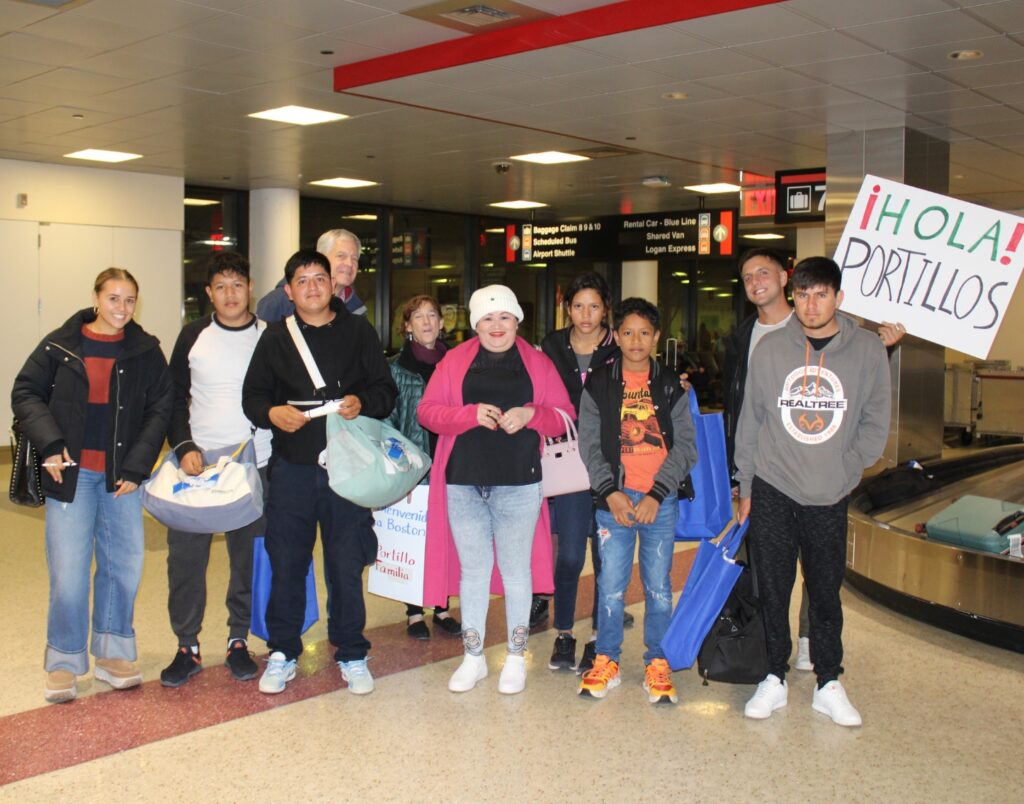
Tani and her six children were among the last refugees to arrive safely in Boston just before the indefinite suspension of the U.S. Refugee Admissions Program. In the weeks leading up to their arrival at Logan Airport, a group of friends from Boston and Brookline had been eagerly preparing to support them through IINE’s Resettle Together program

The volunteer group, who call themselves “Boston Bound,” is led by Jenny Miller. Jenny first learned about IINE when her daughter was looking for a community service project in the lead-up to her Bat Mitzvah. Through IINE, she was able to deliver food to local immigrant families and to donate books to refugee children after running a donation drive at her school.

Jenny remained on IINE’s volunteer email list, and when she learned about other opportunities to get involved, she was inspired. “These were things I could actually do. I work full-time [and am] crazy busy, but I had a few hours at night to go grocery shopping and bring food to a new family. Or I had a few hours on the weekend to help someone learn how to navigate the T,” she says.  

“IINE provided great support, and it was deeply satisfying, like disproportionately satisfying even when I never met the family. Dropping off groceries felt so tangible. At a time when it felt hard to find other ways [to help], it just felt really good to be able to do that.” 

She talked about the experience with her friends, a group of fellow parents of tweens. After the 2024 election, when they began sharing their fears over anti-immigrant policies taking hold in January, she proposed sponsoring a refugee family through Resettle Together as a concrete way to honor their values. 

Soon they all found themselves gathered around a dining room table in front of a large piece of paper, divvying up tasks from finding donated furniture, to apartment cleaning, to scheduling shopping trips for food and clothing.  
 
“When we started letting people know that we were doing this, it was amazing how many people wanted to help,” says Jenny, “Our kids did a drive for toiletries, soap, and detergent, and all that kind of kitchen stuff before Tani and her children arrived, and we got six months’ worth of stuff!” 

Eager to befriend Tani’s teenage children, the kids of Boston Bound also collected gifts, prepared a bracelet-making kit, and made a photobook with pictures of all the group members to show the new arrivals how many new friends they now had.  

When the family arrived, Boston Bound group members took turns hosting them for home-cooked West African-style meals, playing board games with their children, taking them to local parks and playgrounds and kicking around a soccer ball, going on shopping trips, helping them learn how to navigate public transportation, and more. They became close quickly. “They are the most lovely people,” Jenny says of Tani and her family. “They are a very close family, very warm, incredibly supportive of each other. I think what struck me was they came here with so much curiosity and eagerness to learn—also a love of their new home, and they really extended that to all of us. They have been so welcoming to all of us. Even with the language barrier, which, when they arrived was almost total. There was still so much warmth.” 

While IINE case workers helped the family enroll in ESOL classes, secure work authorizations, and become oriented to the U.S. workplace, Boston Bound helped make sure the family had access to food and healthcare, enrolled in school, got library cards, and practiced reading and speaking English. Meanwhile, a beautiful friendship formed. 

IINE Case Specialist Nijimbere Lahayiloyi shares more about what it means to welcome refugees, and how critical volunteer support is

“They’ve invited us to celebrate their birthdays at their home, and that’s been just wonderful—so joyful,” Jenny says. “They’ve taught us the songs that they sing for birthdays, and dances, and the music they listen to. They’ve also come to some of our houses for birthday celebrations or just for dinner, and that’s been really lovely too. Every time I visit, they try to send me home with food.”   

When IINE’s Employment team was able to get them job interviews, Boston Bound helped them practice and prepare. Now, all eligible family members have started jobs in food service. 

“Having this support has meant so much,” says Mariamu, one of Tani’s daughters. “We have been able to have people to practice English with and to help us with things we don’t yet understand. We are very grateful for their willingness to assist us.They have been with us since our first day in Boston. They help us understand the community we live in; they often visit us and make sure we are okay. They have done so much to help us in many ways. We appreciate them and pray that God blesses them in everything.” 

Jenny shares how Boston Bound came together and the “privilege and joy” of becoming close with Tani and her children

---

Les réfugiés et les immigrants entreprennent des voyages longs et difficiles pour échapper à la violence et reconstruire leur vie aux États-Unis. Vous pouvez leur apporter l'aide dont ils ont besoin. 

L'histoire de Prudence : Comment une réfugiée et humanitaire a trouvé aux États-Unis un soutien qui lui a sauvé la vie 

Père de quatre enfants, Prudence a consacré sa vie à la défense des droits de l'homme et à la lutte contre la corruption. Après avoir fui son Burundi natal pour le Soudan, il a créé une fondation pour défendre la cause des enfants et a travaillé avec plusieurs agences internationales de développement pour aider les réfugiés.  

Lorsqu'un changement de régime lui a fait croire qu'il était en sécurité, Prudence est retourné au Burundi, déterminé à améliorer la vie dans ce pays. Il a lancé des initiatives visant à autonomiser les personnes vivant dans les communautés rurales du pays, difficiles à atteindre, en leur donnant accès à des systèmes de paiement et à des médias numériques. Malheureusement, ces avancées ont attiré l'attention de ceux qui souhaitaient les utiliser à mauvais escient. Lorsque le président du Burundi a décidé de briguer un troisième mandat - ce qui n'était pas autorisé par la constitution du pays - il a demandé à Prudence de diffuser le faux message selon lequel il bénéficiait d'un large soutien. Prudence a refusé. Il est alors devenu la cible de persécutions politiques. De nouvelles menaces contre sa vie ont poussé sa famille à se déplacer, d'abord au Royaume-Uni, puis au Rwanda.  

Pour ne rien arranger, le fils de Prudence, Joshua, était né avec une dangereuse maladie cardiaque, et il avait besoin d'urgence d'une intervention chirurgicale compliquée. Obtenir ces soins en tant que réfugié ne serait pas facile, mais Prudence a retrouvé l'espoir lorsqu'il a appris que cela était possible à l'hôpital pour enfants de Boston.  

Il est devenu évident pour Prudence que la santé de son fils et la sécurité de sa famille dépendaient de l'accueil et du soutien qu'il trouverait dans le Massachusetts. Une relation remarquable avec le parrain Steve Gross de la Life is Good Foundation, et avec l'International Institute of New England, a fait de ce rêve une réalité.  

Regardez leur histoire ci-dessous : 

---

Les réfugiés et les immigrants entreprennent des voyages longs et difficiles pour échapper à la violence et reconstruire leur vie aux États-Unis. Vous pouvez leur apporter l'aide dont ils ont besoin. 

Loi sur les réfugiés de 1980

5 choses à savoir sur la loi sur les réfugiés de 1980

Comprendre l'objectif et l'impact de la loi sur les réfugiés à l'occasion de son 45e anniversaire 

Il y a quarante-cinq ans, la loi sur les réfugiés a créé une procédure d'admission et de réinstallation des réfugiés plus juste, plus efficace, plus sûre et plus stratégique. Depuis, elle a sauvé la vie de plus de 3 millions de personnes dans le monde entier. Aider les réfugiés à s'intégrer dans nos communautés a considérablement renforcé la culture et l'économie de notre pays, ainsi que notre position dans le monde.

Aujourd'hui, alors que les déplacements atteignent des niveaux record dans le monde entier et sont aggravés par la menace croissante du changement climatique, l'administration présidentielle actuelle a tenté de fermer unilatéralement la "porte dorée" que ce programme avait ouverte.  

Il est de notre responsabilité de raviver l'espoir que cette loi a suscité et de reprendre notre rôle de leader en tant que havre de liberté et d'opportunités. Alors que nous célébrons son quarante-cinquième anniversaire, voici 5 choses à savoir sur la loi sur les réfugiés de 1980.

1) La loi sur les réfugiés de 1980 définit officiellement ce qu'est un réfugié. 

La première page de la loi sur les réfugiés de 1980. Source : Archives nationales : Archives nationales.

Pour les personnes contraintes de fuir leur foyer, la définition du terme "réfugié" a des implications de vie ou de mort. L'intégration peut signifier un nouvel endroit sûr où vivre et le soutien nécessaire pour s'y épanouir.

La loi de 1980 sur les réfugiés a aligné le droit américain sur le langage utilisé par les Nations unies, définissant un réfugié comme toute personne qui ne peut ou ne veut pas retourner dans son pays d'origine en raison de "persécutions ou de craintes fondées de persécutions" dues à la race, à l'appartenance à un groupe social particulier, aux opinions politiques, à la religion ou à l'origine nationale.

Il est important de noter que cette définition est la plus complète que nous ayons adoptée à ce jour, car elle supprime les conditions fondées sur la nationalité des personnes, la date de leur déplacement ou les pays dans lesquels elles ont été forcées de chercher refuge.

2) Elle a établi une procédure uniforme pour l'examen, l'accueil et la réinstallation des réfugiés. 

La loi sur les réfugiés a créé le programme américain d'admission des réfugiés (U.S. Refugee Admissions Program - USRAP) afin de contrôler rigoureusement les réfugiés à l'étranger sur la base de critères cohérents, et le bureau de réinstallation des réfugiés (Office of Refugee Resettlement - ORR) afin de s'assurer que les nouveaux arrivants bénéficient des services nécessaires pour devenir autonomes le plus rapidement possible. Des fonds ont été alloués pour passer des contrats avec un réseau d'agences communautaires vérifiées et contrôlées, telles que l'IINE, afin d'assurer l'accueil, l'aide au logement, la connexion aux prestations fédérales et aux services locaux, l'apprentissage de l'anglais, l'orientation culturelle, l'aide à la carrière et les services juridiques. 

Avant la création de ces bureaux, l'admission et la réinstallation des réfugiés pouvaient se faire de manière ad hoc et incohérente, faire l'objet d'un débat pendant une crise active et aboutir à des arrangements différents pour des populations différentes. L'USRAP et l'ORR ont constitué un investissement dans l'équité, une meilleure planification et une intégration plus harmonieuse. 

3)Elle a défini un partenariat entre le président et le Congrès pour fixer le nombre d'admissions.

Le président Carter signe la loi sur les réfugiés de 1980

Appliquant un système de freins et de contrepoids au processus, la loi habilite le président à fixer un nombre annuel maximum d'admissions de réfugiés, mais uniquement après consultation du Congrès. Le président a été autorisé à augmenter ce nombre en cas d'urgence, à condition qu'une justification soit également envoyée au Congrès, qui contrôle en dernier ressort le processus de budgétisation permettant de financer l'effort.  

4)Elle garantit le droit de demander l'asile.

La loi sur les réfugiés a non seulement normalisé la procédure de demande de refuge à l 'extérieur des États-Unis, mais aussi la procédure de demande de statut protégé à l'intérieur des États-Unis ou à la frontière. Les demandeurs d'asile devront prouver qu'ils remplissent les mêmes critères que les réfugiés, à savoir la persécution ou la crainte fondée de persécution qui les empêche de rentrer chez eux. Ceux qui y parviendraient se verraient accorder les mêmes droits et le même soutien que les réfugiés introduisant une demande à l'étranger.  

Cette procédure a permis de sauver la vie de millions de personnes menacées, contraintes de fuir rapidement leur foyer avec peu de ressources, et qui pouvaient plus facilement atteindre la frontière que d'accéder à la procédure d'admission des réfugiés.  

5)Elle était vraiment bipartisane.

La loi sur les réfugiés de 1980 a été adoptée à l'unanimité par le Sénat, par 85 voix contre 0. Présentée par le "lion libéral", le sénateur Edward Kennedy du Massachusetts, cette loi comptait trois coparrains républicains et a été notamment soutenue par le conservateur convaincu Strom Thurmond, alors membre républicain de premier rang de la commission judiciaire de la Chambre des représentants. Le pays s'interrogeait sur la guerre du Viêt Nam, sur l'évolution de son rôle dans le monde et sur sa responsabilité à l'égard des personnes déplacées. La loi sur les réfugiés a été considérée par les deux partis comme créant un processus d'immigration plus équitable, plus ordonné et plus sûr pour des raisons humanitaires, affirmant notre engagement en faveur de la cause de la liberté et améliorant notre position sur la scène internationale.  

Les réfugiés et les immigrants entreprennent des voyages longs et difficiles pour échapper à la violence et reconstruire leur vie aux États-Unis. Vous pouvez leur apporter l'aide dont ils ont besoin. 

Retrouver nos racines : Les dirigeants de l'IINE parlent des voyages de leurs familles aux États-Unis.

Retrouver nos racines : Les dirigeants de l'IINE parlent des voyages de leurs familles aux États-Unis.

Alors que nous célébrons le centenaire de Boston - 100ans d'accueil et de soutien aux réfugiés et aux immigrants - nous nous rappelons que nous avons presque tous une histoire d'immigration à partager, que nous ayons été le premier membre de notre famille à construire une vie aux États-Unis, ou que ce soient nos parents, nos grands-parents ou des générations plus anciennes qui aient fait le premier le courageux voyage vers ce pays. 

Pour notre blog, les membres de notre conseil d'administration et de notre conseil de direction racontent comment leurs familles sont venues s'installer aux États-Unis. 

Carolina San Martin

Managing Director, Global Head of Sustainable Investing Research, State Street Global Advisors ; membre du conseil d'administration de l'IINE

Rio de Janeiro, 1976 : Ma mère, une jeune Argentine douée pour les langues, se retrouve mère célibataire dans un pays étranger. Enfant, elle rêvait de quitter un jour l'Argentine, mais ce n'était pas au Brésil qu'elle rêvait d'aller, c'était aux États-Unis. Aussi inattendue et difficile que soit sa situation, elle est désormais libre de poursuivre son rêve. Quelques années plus tard, l'occasion se présente. Ses excellents résultats dans une entreprise américaine en voie de mondialisation lui permettent d'être mutée au siège de l'entreprise aux États-Unis.

Smyrna, Géorgie, 1979 : je m'installe au jardin d'enfants. Je ne parle pas anglais, personne autour de moi ne parle espagnol ou portugais. Je ne comprends pas ce que dit la maîtresse ni comment les choses fonctionnent, mais petit à petit, je me débrouille. Sur le moment, je vois ma situation comme un handicap. Je suis le différent, l'étranger. Je ressens toutes les réactions et les insécurités que l'on peut attendre d'un enfant dans cette situation : lorsque les enfants rient et que je ne les comprends pas, je me demande, Est-ce qu'ils se moquent de moi? Lorsque nous apprenons les règles de grammaire et que nous écrivons en classe, je pense, Quel retard vais-je prendre puisque j'apprends encore l'anglais ?

Boston, Massachusetts, 2025 : Avec le recul, ce que je considérais comme un obstacle - le fait d'être l'immigré différent - s'est révélé être un immense cadeau. J'ai compris très tôt à quel point je pouvais grandir en étant déterminé à comprendre les choses. Il ne s'agissait pas seulement de s'adapter - je comprenais ma capacité à apprendre et à accomplir plus que ce dont je semblais capable, tout cela grâce au fait d'être la personne différente dans cette classe de maternelle.

Fereshtah Thornberg

Vice-président exécutif, responsable des ventes et de la gestion des clients, Amérique du Nord, State Street ; membre du conseil d'administration de l'IINE

Ma mère, trois de mes frères et sœurs et moi-même avons quitté Kaboul, en Afghanistan, en 1989, en direction de New Delhi. C'était vers la fin de l'invasion russe et l'influence des talibans suscitait de plus en plus d'inquiétudes. Nous avons émigré à New Delhi en tant que réfugiés pendant que mon père s'efforçait de trouver un moyen de quitter Kaboul. Nous avons vécu dans une chambre individuelle louée à New Delhi pendant que nous nous installions et que nous travaillions sur notre prochain objectif, à savoir nous installer en Europe ou en Amérique. Ma mère a commencé à faire du bénévolat dans le centre de réfugiés, puis a été embauchée à temps plein. Je me suis efforcée d'acquérir des compétences qui me permettraient de trouver un emploi, tout en préparant mon diplôme universitaire à distance. J'ai commencé par prendre des cours de dactylographie, puis j'ai rejoint un programme d'études en informatique.

Quatre ans plus tard, nous avons reçu nos cartes vertes et nous nous sommes envolés pour New York où nous avions de la famille et un système de soutien. L'installation à New York a été bien plus difficile qu'à New Delhi, et je me dis souvent que j'aurais aimé avoir accès à une organisation comme l'International Institute of New England. 30 ans plus tard, nous menons une vie très réussie et épanouie, et il ne se passe pas une semaine sans que nous nous remémorions notre parcours. 

Tuan Ha-Ngoc

Président et PDG retraité d'AVEO Oncology ; membre du conseil d'administration de l'IINE

Je suis né et j'ai grandi au Viêt Nam pendant la guerre du Viêt Nam. En 1969, j'ai eu l'occasion de quitter le pays pour poursuivre des études supérieures, à condition qu'une fois diplômé, je retourne au Viêt Nam pour aider à construire le pays malgré la guerre. J'ai atterri à l'université de Paris, où j'ai obtenu un diplôme de pharmacie. J'avais prévu de rentrer au pays à l'été 1975, lorsque le pays est tombé sous le joug communiste en avril. J'avais deux options : rentrer et vivre sous un gouvernement communiste ou rester à Paris et demander l'asile, ce que j'ai fait. J'ai toujours en ma possession le document délivré par le HCR, qui me considérait comme "apatride". C'est un mot qui m'est resté en tête jusqu'à aujourd'hui. J'avais l'impression de n'appartenir à aucun endroit, d'être seul sur un bateau dans un vaste océan - pas au sens propre, bien sûr, mais c'est exactement ce qu'ont vécu beaucoup de mes compatriotes.  

Heureusement, mes parents et mes frères et sœurs ont pu quitter le Vietnam et me rejoindre en France. J'y suis resté deux ans pendant lesquels j'ai obtenu une maîtrise en administration des affaires à l'INSEAD. En 1976, j'ai rejoint une société américaine, Baxter Healthcare, à son siège européen de Bruxelles. Puis, en 1978, deux choses se sont produites : je me suis marié avec ma ravissante épouse et ma société a décidé de me transférer à son siège social américain à Chicago.  

Nous y sommes arrivés en novembre avec très peu d'argent, sans famille ni amis sur lesquels compter, et avec ma femme qui parlait très peu l'anglais. C'est ainsi que nous avons commencé notre vie aux États-Unis. En 1984, j'ai été recruté par l'une des premières sociétés de biotechnologie, ce qui nous a amenés à Boston, où nous sommes restés depuis.

Deborah Dunsire

Président, Neurvati Neurosciences ; ancien PDG, H. Lundbeck A/S ; conseiller principal, Blackstone Life Sciences ; membre, IINE Leadership Council

Je suis née au Zimbabwe de parents immigrés écossais, et mon mari est l'aîné de la troisième génération de familles mixtes anglaises et néerlandaises. Après des études de médecine, j'ai travaillé comme médecin généraliste et mon mari comme interne en orthopédie. J'ai rejoint l'industrie pharmaceutique et j'ai été transférée en Suisse, où mon mari a rejoint la même entreprise. En 1994, nous avons tous deux reçu une offre d'emploi au siège social américain, dans le New Jersey, et nous nous sommes lancés dans une aventure de plus de 30 ans aux États-Unis. Nous avons également appris que l'anglais n'est pas le même partout dans le monde !

Mon mari et moi avons été naturalisés américains en 2004 et avons élevé nos deux fils ici.

Wade Rubinstein 

Fondateur et président de The Bike Connector, Inc. et membre du conseil d'administration de l'IINE

Je suis fils d'immigrés. La famille de ma mère est arrivée à Boston dans les années 1920 après avoir fui les pogroms en Russie. Mon père, qui a grandi dans une ville qui fait aujourd'hui partie de l'Ukraine, a survécu à l'Holocauste. Pendant la guerre, il s'est caché pendant trois ans. Les Soviétiques l'ont libéré au printemps 1944. Orphelin après la guerre, mon père a vécu dans des camps de personnes déplacées en Tchécoslovaquie et en Allemagne. Il est entré clandestinement en Palestine en 1946 et est venu aux États-Unis en tant que réfugié au début des années 1950 pour rejoindre des membres de sa famille qui s'y trouvaient déjà. 

Les parcours de mes parents m'ont façonné de manière fondamentale. Grâce à leur résilience et à leur travail acharné, j'ai eu la chance de devenir un diplômé universitaire de première génération.

J'ai étudié l'informatique au Boston College. Après l'université, j'ai travaillé chez Digital Equipment Corporation pendant 10 ans, avant de travailler dans plusieurs jeunes entreprises de télécommunications. En 2003, j'ai quitté ce domaine pour obtenir un diplôme d'enseignement élémentaire. J'ai enseigné à West Newton pendant quelques années. Ensuite, j'ai décidé d'ouvrir un magasin de glaces, Reasons to Be Cheerful, que j'ai tenu pendant huit ans. J'ai vendu le magasin en 2018 et j'ai fondé The Bike Academy, qui était un programme de vélo après l'école à Lowell et qui s'est transformé en l'organisation à but non lucratif que je dirige aujourd'hui, The Bike Connector.   

J'ai toujours pensé que la vie était trop courte pour ne pas poursuivre ses intérêts ; cela rend les choses intéressantes ! Pour moi, c'est l'occasion de vivre le rêve américain, ce que je ne peux faire que grâce aux choix et aux sacrifices de mes parents.  

Örn Almarsson

PDG et cofondateur d'Axelyf ; membre du Conseil de direction de l'IINE

En 1989, j'ai quitté mon Islande natale pour poursuivre des études supérieures aux États-Unis, marquant ainsi le début d'un parcours scientifique et personnel remarquable. Animée d'une profonde passion pour la chimie et la science moléculaire et désireuse de contribuer positivement à la santé humaine, je me suis lancée dans un programme de doctorat en chimie bio-organique à l'université de Californie, m'immergeant dans la recherche de pointe à l'intersection de la chimie organique et des sciences biologiques. Ma réussite universitaire et mon dynamisme intellectuel m'ont conduit à un poste de chercheur post-doctoral au Massachusetts Institute of Technology (MIT), l'un des principaux centres mondiaux d'innovation en science et en technologie.

Au MIT, j'ai affiné mon expertise sous la direction de scientifiques et d'ingénieurs de renommée mondiale, et je me suis orienté vers des applications translationnelles de la chimie dans les produits pharmaceutiques. C'est là que j'ai noué d'importantes relations scientifiques et professionnelles qui ont contribué à lancer ma carrière dans l'industrie. Mon premier poste dans l'industrie pharmaceutique a été occupé chez Merck, où j'ai contribué à la découverte et au développement de médicaments dans un environnement de R&D dynamique et approfondi, réputé pour sa rigueur et son excellence scientifiques. Ce poste a marqué le début de mon engagement durable à faire progresser les thérapies pour la santé humaine.

Au fil des ans, mes contributions se sont étendues à de multiples domaines thérapeutiques, l'un des plus remarquables étant mon travail sur la formulation et le système d'administration de Spikevax, le vaccin COVID-19 de Moderna basé sur l'ARNm. Mon expertise dans le domaine de l'administration de médicaments, en particulier des systèmes à base de lipides, a joué un rôle important dans l'évaluation réussie et le déploiement final du vaccin en période de crise mondiale. Outre cette réalisation très visible, j'ai travaillé sur de nombreux autres produits pharmaceutiques et technologies d'administration qui ont amélioré les soins aux patients et les résultats thérapeutiques en psychiatrie et dans le traitement des infections, par exemple.

Mon parcours est aussi celui d'une famille, d'un partenariat et d'un objectif commun. Ma femme, Brynja, également originaire d'Islande, a été une présence constante tout au long de ce voyage, offrant son soutien et construisant un foyer chaleureux et biculturel aux États-Unis. Ensemble, nous avons élevé trois enfants qui ont chacun trouvé leur propre voie dans les soins de santé et les produits pharmaceutiques, poursuivant l'héritage de la recherche scientifique et de l'impact sur la santé publique qui définit notre famille. Qu'il s'agisse de recherche biologique, de biotechnologie, de prestation de soins de santé ou d'éducation, chaque membre de notre famille apporte une contribution unique au domaine, incarnant les valeurs de l'éducation, du service et de la citoyenneté mondiale.

D'un jeune étudiant islandais à un leader scientifique qui a contribué à façonner l'une des interventions médicales les plus importantes au monde, l'histoire de mon immigration est celle du dévouement, de la résilience et d'un impact durable. 

Jeffrey Thielman

Président-directeur général de l'Institut international de la Nouvelle-Angleterre

Mon arrière-grand-mère, Antoinette, est venue d'Italie aux États-Unis au début des années 1900. Elle est venue de Naples en bateau. C'est un mariage arrangé qui l'a amenée ici. Elle a eu sept enfants, dont le père de ma mère, mon grand-père, que j'adorais et qui est devenu sénateur de l'État du Connecticut.  

Mon arrière-grand-mère avait très peu d'argent et n'a jamais bien appris l'anglais. Elle a eu beaucoup de mal à s'adapter et à apprendre une nouvelle culture, mais elle a travaillé très, très dur pour s'assurer que ses fils et ses filles soient des citoyens à part entière de notre pays. Je suis fière de lui rendre hommage par mon travail d'aujourd'hui.

Au cours de l'année de notre centenaire, nous célébrons 100 ans d'aide aux réfugiés et aux immigrés du Grand Boston, qui a changé leur vie, et nous préparons notre deuxième siècle de service. Pour en savoir plus, cliquez ici : IINE Boston Centennial(en anglais).

Miniature du blog du Bashir

 Réfugié somalien, Bashir poursuit ses rêves à Boston

Bashir parle chaleureusement de la culture dans laquelle il a grandi.

"BashirLa culture somalienne est fondée sur l'hospitalité. Les Somaliens forment une communauté unie, une communauté qui se connecte les uns aux autres. Ils vivent comme une famille. La culture somalienne est basée sur l'amour mutuel, sur l'accueil des gens". 

Tragiquement, à l'âge de seize ans, il a dû quitter sa communauté bien-aimée en Somalie. "J'ai quitté mon pays à cause des combats qui s'y déroulaient", explique-t-il. "À cause des groupes extrémistes comme Al-Shabaab, qui ont tué deux membres de ma famille sous mes yeux. Ma famille a décidé de m'envoyer dans un autre pays parce que je risquais d'être la prochaine cible de ces milices".

En Éthiopie, Bashir a passé des années dans un camp de réfugiés. Bien qu'il n'ait jamais perdu l'espoir d'un avenir meilleur, la vie quotidienne était difficile.

"Vous ne pouvez pas l'imaginer si vous n'avez pas été sur place", déclare Bashir. "Vous voyez que les gens n'ont pas d'eau potable, qu'ils n'ont pas d'abri suffisant pour la famille - parfois, vous voyez une famille élargie de dix personnes ou plus qui vit dans une seule pièce.

Après deux ans, il semblait que la chance de Bashir était arrivée lorsqu'il s'est vu accorder officiellement le statut de réfugié et la promesse d'être réinstallé aux États-Unis. Nous étions en 2016. Une nouvelle administration présidentielle est entrée à la Maison Blanche et, en l'espace d'une semaine, a adopté une interdiction générale de l'immigration pour les ressortissants de pays majoritairement musulmans. La porte qui s'était finalement ouverte pour Bashir était désormais fermée.

Malgré cela, Bashir était déterminé à rester positif. Il s'est consacré à la collaboration avec des organismes d'aide afin d'améliorer la vie dans le camp. Il a appris l'anglais et est devenu travailleur social pour l'Organisation pour la réhabilitation et le développement, qui aide les personnes handicapées, et pour le Comité international de secours, grâce auquel il a contribué à sensibiliser les membres de la communauté au problème de la violence sexuelle. Il a également travaillé comme enseignant dans ce qu'il décrit comme "ma propre mini-école", aidant des personnes de tous âges à apprendre à lire et à écrire.

Sept ans plus tard, les États-Unis sont redevenus plus accueillants pour les réfugiés, et une autre porte s'est ouverte pour Bashir.

"En 2023, j'ai obtenu la destination de mes rêves. En tant que jeune homme, j'ai compris que venir en Amérique serait une porte d'entrée pour réaliser mes rêves de vie : travailler dans un environnement paisible, reconstruire ma vie, m'aider et aider ma famille."

Bashir s'est rendu aux États-Unis par ses propres moyens. À son arrivée, une équipe de l'IINE l'a accueilli et l'a conduit à une chambre d'hôtel où un repas chaud lui avait été préparé. Au bout d'une semaine, l'IINE a aidé Bashir à emménager dans un appartement entièrement meublé.

Il était ravi d'être dans sa nouvelle maison, mais il lui a fallu du temps pour s'adapter.

"Lorsque vous arrivez dans un environnement différent de celui dans lequel vous avez vécu toute votre vie, c'est un choc. Je me souviens que lorsque je suis arrivé, c'était en mars et il faisait si froid à Boston. Je venais de 70 degrés Fahrenheit et j'arrivais ici - il faisait 17 ou 20 ans - [c'était] vraiment difficile !

"Sans votre famille et vos amis, sans les personnes que vous connaissez et qui ont la même culture, ce n'est pas facile", dit-il.

Avec le temps, Bashir a commencé à trouver une communauté. Ses colocataires, trois autres réfugiés, venaient tous de pays différents, mais les barrières linguistiques initiales se sont vite estompées pour laisser place à une amitié florissante. Bashir se souvient des heures passées dans le salon et la cuisine qu'ils partageaient, à s'aider mutuellement à s'adapter. Pendant ce temps, Bashir travaillait avec l'IINE sur tous les sujets, qu'il s'agisse de savoir comment se déplacer dans Boston, de suivre l'orientation de la main-d'œuvre américaine ou de postuler à un emploi.

Les Américains sont vraiment très gentils... Tout le monde vous demande d'où vous venez, et quand vous le dites, ils vous disent "Bienvenue" et essaient de vous aider.

"Tout le monde a été très gentil avec moi", se souvient-il, "mon gestionnaire de cas, le gestionnaire du site, mon soutien juridique, tout le monde était accueillant lorsque j'avais besoin de les rencontrer".

Aujourd'hui, Bashir aime travailler comme concierge dans un immeuble résidentiel et comme interprète pour une agence qui travaille avec des écoles et des hôpitaux. À l'IINE, il s'est découvert une passion pour le codage et s'est fixé comme objectif à long terme de devenir développeur de logiciels. L'IINE l'a mis en contact avec un programme de formation professionnelle dans le cadre duquel il apprend le développement de l'interface utilisateur.

Tournoi de football de Bashir
Bashir (à gauche) célèbre la victoire de son équipe de football, en compagnie de l'organisateur du tournoi (au milieu) et de l'entraîneur de son équipe (à droite).

Une fois qu'il est devenu suffisamment indépendant pour prendre ses propres dispositions, Bashir a trouvé un appartement dans un quartier où se trouve une communauté assez importante de réfugiés somaliens. Il vit près d'une mosquée, joue au football et se réjouit de faire à nouveau partie d'une communauté somalienne. Il s'agit en quelque sorte de belles retrouvailles, mais Bashir affirme que le sentiment d'acceptation et de soutien qu'il a reçu à Boston va bien au-delà de son quartier.

"Le peuple américain est vraiment gentil. Je pense que tout le monde a une idée de la signification des immigrants. Ces gens sont vraiment gentils et accueillants. Tout le monde demande, D'où venez-vous ? et quand vous leur dites, ils vous répondent, Wow, bienvenue ! et ils essaient de vous aider".

Pendant qu'il travaille, étudie et profite de sa nouvelle vie, Bashir poursuit quelques autres de ses rêves américains. Il dit qu'au cours des deux prochaines années, il a hâte d'avoir sa première voiture, de voter pour la première fois aux élections américaines et de "rendre quelque chose à la communauté américaine qui m'a beaucoup aidé".

---

Les réfugiés et les immigrants entreprennent des voyages longs et difficiles pour échapper à la violence et reconstruire leur vie aux États-Unis. Vous pouvez leur apporter l'aide dont ils ont besoin.