metapixel
Skip to main content

Tag : Histoire d'un client

efdjeen blog

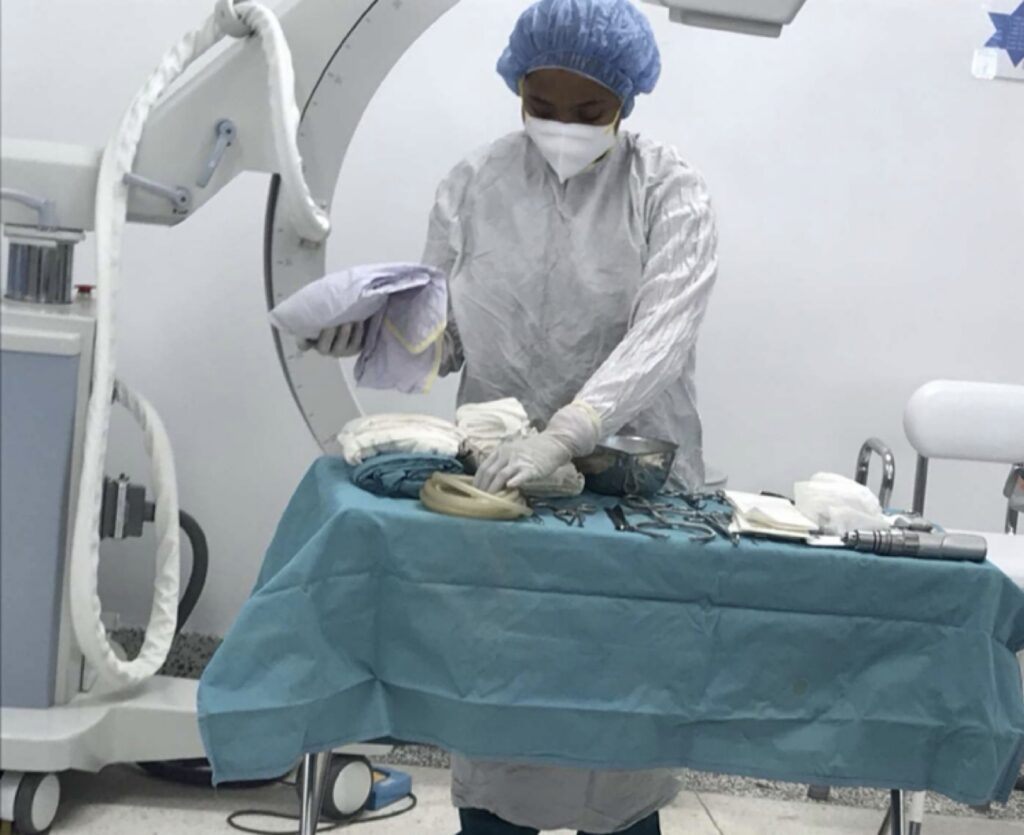
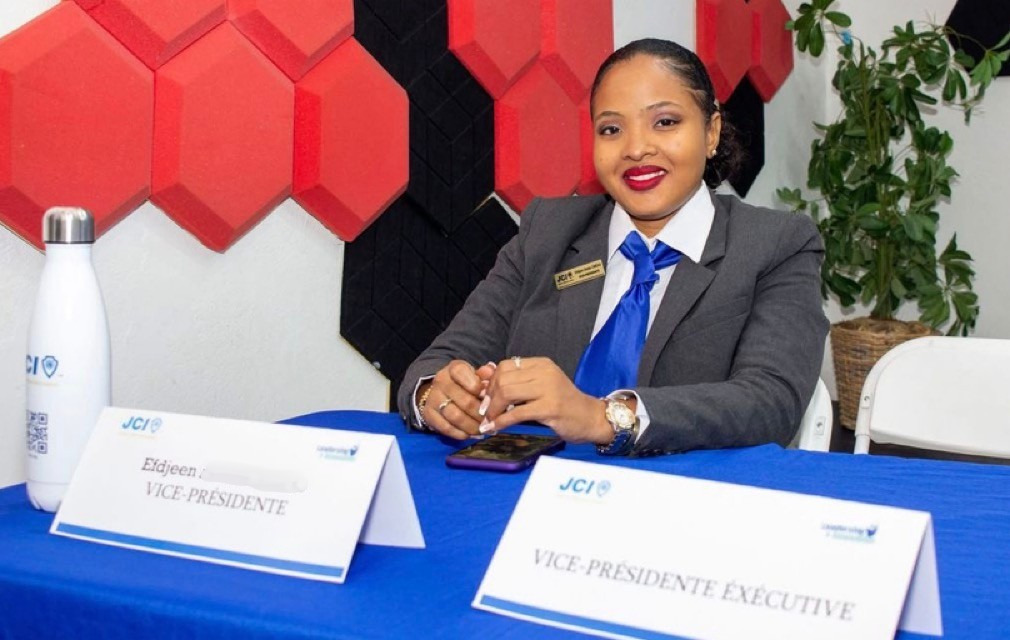
Forced to Flee Haiti, Efdjeen Never Gave Up On Her Dreams of a Medical Career

A former IINE client, Efdjeen gave a Suitcase Stories® performance at IINE’s 2026 Golden Door Award Gala, where the below video was shown for the first time. 

A Call to Serve

When Efdjeen was a child in Haiti, she wasn’t sure what she wanted to be when she grew up. “I was curious about everything,” she says. “I loved art, and I also loved the idea of being a businesswoman.”

As she got older and thought more deeply about the question, she realized that what she really wanted to do in life was to help people. “I thought about my mom. It was always her dream to become a doctor, but she couldn’t. So I thought, ‘Okay, I got this.’” 

Making Strides

This goal motivated Efdjeen. She worked hard in high school and got accepted into a pharmacy program at a local university. It wasn’t medical school, but she found that she really enjoyed it. Rather than trying to transfer as she had originally planned, she finished the degree and found a job as a pharmacist. Meanwhile, to further her mission of helping people, she began volunteering at an international leadership organization.

“Honestly… I don’t even know when I had time to sleep.” 

Still, she felt called to pursue her original goal of becoming a doctor. On her second try, she got into medical school and earned her degree, but her graduation came at a challenging time. The COVID-19 pandemic had hit, delaying her path forward. She took the challenge in stride, taking up painting as a hobby that allowed her to explore her artistic side as she continued to work as a pharmacist.  

As soon as she was able, she went back to medical school and began her internship. Then a new challenge arose. 

“The situation in my country became more dangerous as gangs took over—but I still had to finish my internship. Every week, I traveled for hours between my job and the hospital. Sometimes, because my lighter skin complexion made me an easy target for kidnappers, just to make it there safely, I had to hide under the seat of the bus so I wouldn’t be seen.”  

Despite the fear, Efdjeen remained determined.  
 
“I was too close to the finish line. I couldn’t give up. So, I completed my internship and became that doctor.”

On Pause

When Efdjeen returned home, ready to start her new life as a doctor, she found that the reality of gang violence had grown too dangerous to avoid.

“My neighborhood was attacked. My home was destroyed. My family had to run. My doctor journey was on pause. 

She did not want to leave, but her family was terrified for her safety and convinced her it was the move she had to make. With her mother, father, and sister, she would journey to the U.S. where they could live with an aunt.  

Starting Over

After all she had achieved in Haiti, persevering through setbacks and hustling hard to realize her dreams, starting over in the U.S. would not be easy.

“We had to start over from zero, like, real zero. Not even a ‘starting from the bottom’ kind of zero. We felt so many mixed feelings: gratitude and joy because we were with our family, safe, breathing new air with no gunshot sounds, but at some point, we also felt a bit lost, uncertain about the future. Sometimes I even felt depressed, but we never gave up.”

To help support her family, Efdjeen began working as soon as she was able, finding jobs as a machine builder and tester, and as a sales associate at a local mall. She knew she wanted to get back into the medical field. But where to start? She was thrilled when she learned about the opportunity to join IINE’s free CNA for Success program, which combines contextualized ESOL instruction, Certified Nursing Assistant (CNA) clinical skills training, and job readiness training. True to form, she worked hard in the course, passed her exam, and earned her license to become a CNA.

“IINE made me start to feel comfortable with the medical terminology. It was such a great pleasure for me—but I wanted to do more than that.” Efdjeen explained her goals to her IINE Career Navigator and asked what other steps she could take. Fortunately, IINE had just launched a new initiative modeled after CNA for Success, the Medical Assistant Training program. Efdjeen enrolled, completed the course, and earned her next certification.

New Pathways

IINE helped Efdjeen secure a job as a clinical medical assistant with a partner organization, the Lowell Community Health Center.  
 
“Most of my patients are refugees and immigrants, just like me. I’m working toward a Physician Assistant program because I firmly believe that one day, I’ll become an Anesthesiologist.” 

Meanwhile, Efdjeen says she is not the only one in her family finding pathways to happiness in Lowell. “My mom is now a bus monitor, and she loves it. My sister is pursuing her finance career, met the love of her life, and got married. My dad is learning English every day, and honestly, we’re all still learning English together.” 

The resilience of Efdjeen and her family is paying off, and her new community has gained a new healer. 

- - -

Les réfugiés et les immigrants entreprennent des voyages longs et difficiles pour échapper à la violence et reconstruire leur vie aux États-Unis. Vous pouvez leur apporter l'aide dont ils ont besoin. 

Immigrants Day at the MA State House

Together in Action: The IINE Community Participates in Immigrants Day at the MA State House

A Historic Showing

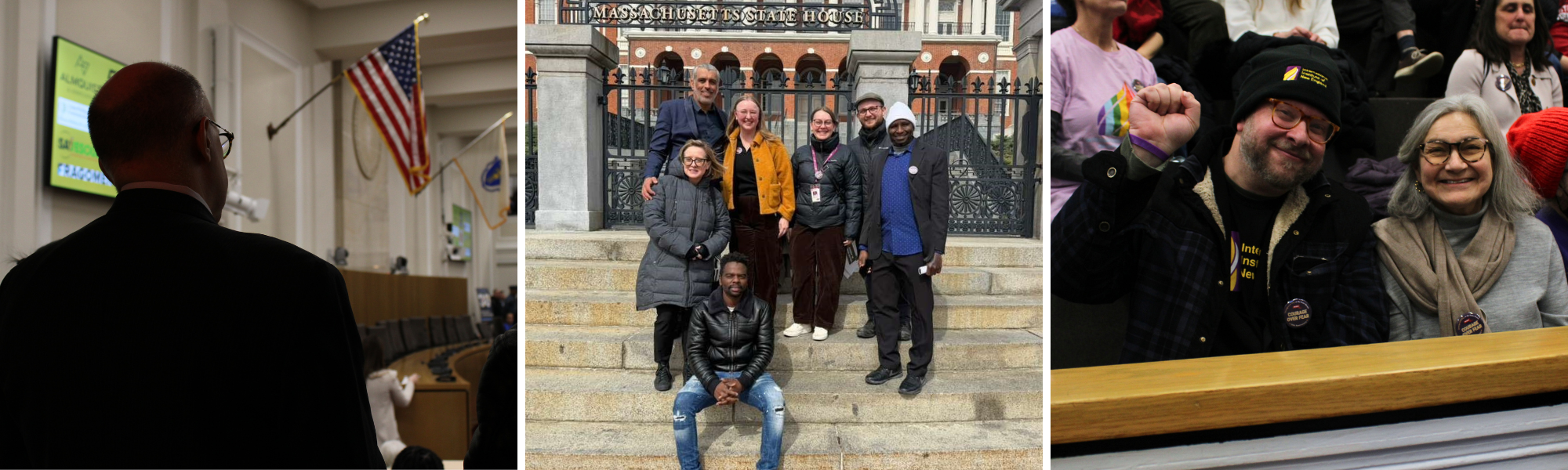
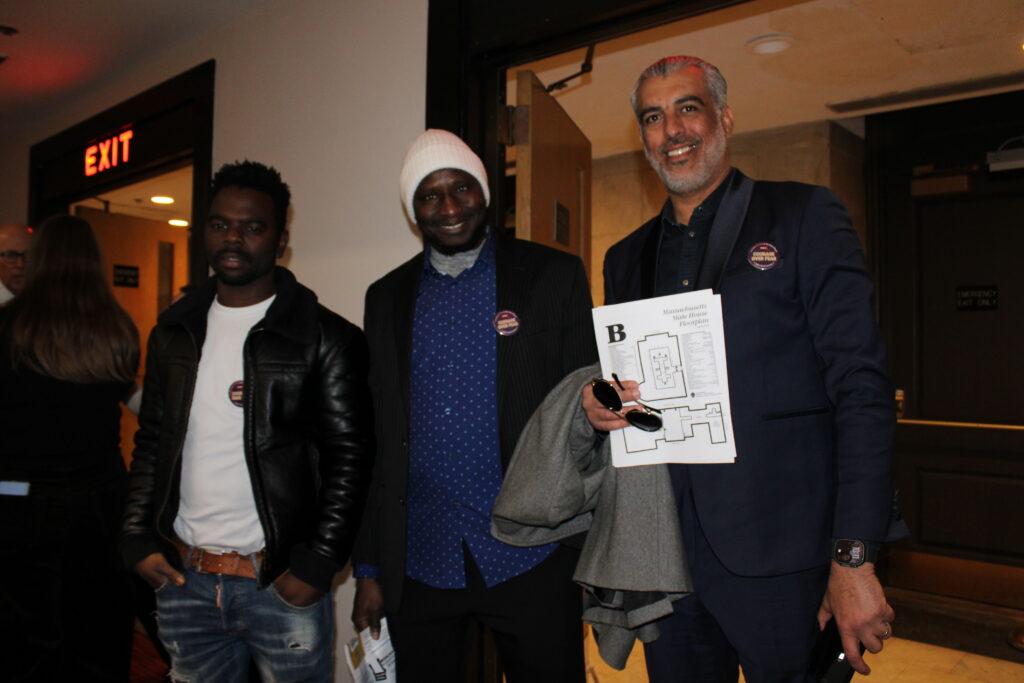
The theme was Courage Over Fear. On March 18, 1,200 immigrants and advocates headed to Boston’s Beacon Hill to make the 30th annual Immigrants Day at the Statehouse the biggest ever. Among them were IINE staff, volunteers, and students from an adult English for Speakers of Other Languages (ESOL) class.

Organized by the Massachusetts Immigrant and Refugee Advocacy Coalition (MIRA), of which IINE is a member, the event provided a significant show of support at a time when landmark legislation to protect immigrant communities was being actively debated in the building.

The day included a rally, followed by the opportunity for immigrants and advocates to share their thoughts and concerns directly with their representatives.

Writing Skills, Self-Expression, and Civic Engagement

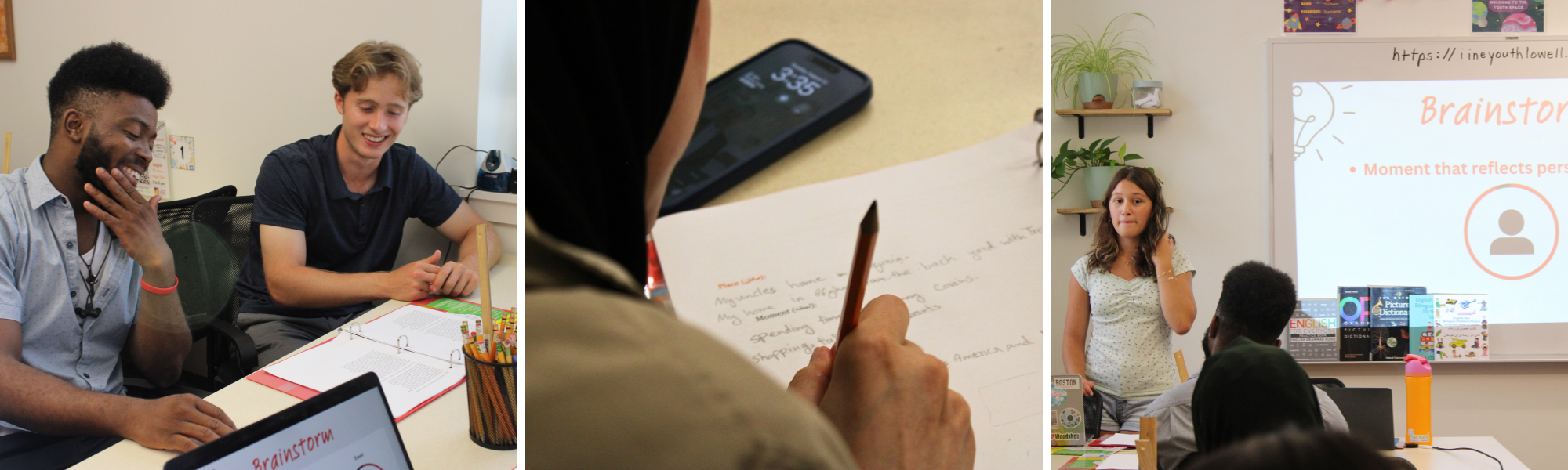
IINE ESOL Instructor Caroline Sutphin, who brought members of her advanced class, says that she saw the event as an incredible learning opportunity for her students: “I wanted our students to feel the support of the community and the power of showing up and telling their stories in person.” 
 
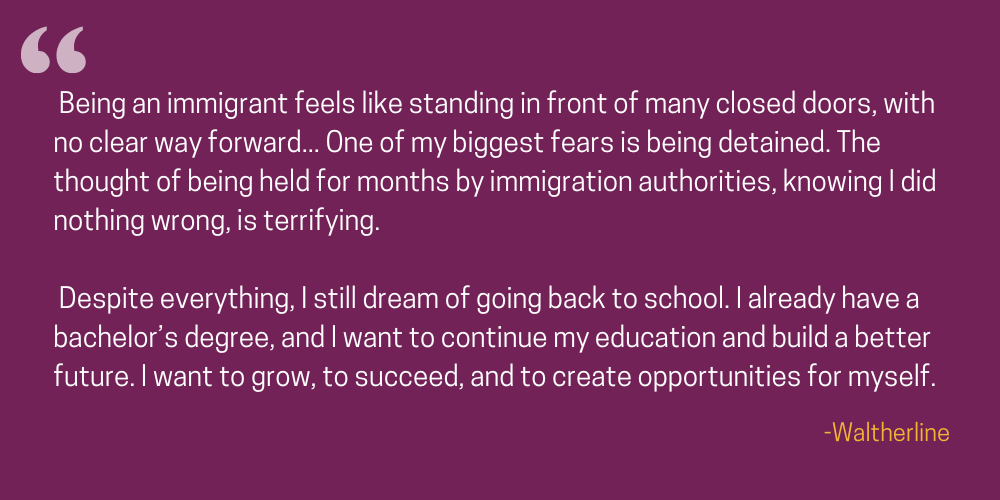
Leading up to the event, she dedicated class time to helping her students craft personal testimonies about their experiences as immigrants in Boston, the fears provoked by harmful legislation, and their hopes for the future. 

Caroline says that she invited her whole class to attend Immigrants Day at the Statehouse, but that because of the way immigrants are being targeted for detention and deportation without due process, many were afraid to participate. Others were excited by the opportunity.

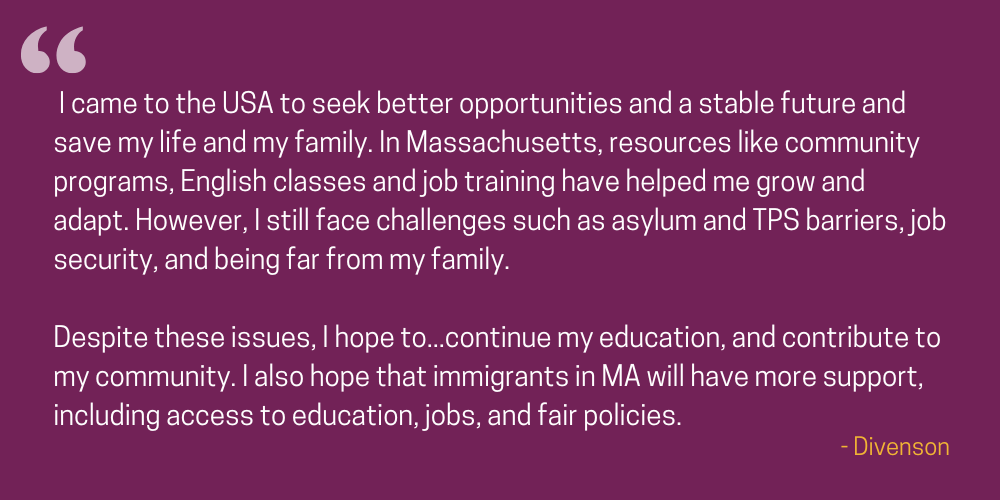
“The students who were eager to come became advocates for their classmates,” she explains. “They carried their written testimonies with them and prepared to share them.” 

A Wonderful Journey

Hicham, an ESOL student who had come to Boston from Morocco three months earlier to join his wife, was particularly excited. Even before understanding the whole context, he says he was just eager to practice his English conversation skills. 
 
I wanted to go because I’m very sociable. I took a class in real estate [and wanted] to have interaction with people, and so when she told me about the event, I said yes, I’ll do it!” 
 
Hicham was thrilled when he came to understand that he would be in the State House and have the chance to hear from fellow immigrants, community advocates, and state leaders. Finding himself under the golden dome, in a packed hearing room, joining sing-alongs led by the Be Vocal activist choir, and hearing speakers from various immigrant communities, and legislators, proved to be a moving experience.

 “It was a wonderful journey,” he says. “When I went to the State House, I felt something powerful.”  

Hicham (R) with his ESOL classmates at the State House

 He was inspired to hear directly from Governor Maura Healey, and from several representatives and senators. The message he came away with was that “immigrants have to be comfortable here. In Massachusetts, we are all the same, immigrants or not immigrants.” 

Hicham particularly appreciated being there with IINE—fellow classmates, members of the Education team, and IINE leadership. “I even got a picture with the big man!” he said with a smile, referring to President & CEO Jeffrey Thielman. “I want to thank IINE for this opportunity. It was not just a celebration; it was something very special.” 

Giving Testimony

MIRA provided participants with talking points about key immigration legislation being debated, and after the rally, they spread out to find the representatives from their districts. Among them were IINE volunteers who had been learning about issues specifically facing refugees through monthly meetings and an email newsletter.  

Hicham and his classmates joined Caroline and other members of IINE’s Education team on their office trips, helping to put some real faces to the populations whose safety was at the heart of the bills in discussion. Hicham also had the chance to record spoken testimony with a videographer from MIRA’s team. For Hicham, it was a meaningful opportunity to share his story. 

Honorable Representative, thank you for allowing me to address you today. 

My name is Hicham, and I stand before you as a proud resident of Massachusetts, a professional working to build a future in real estate and community development, and a husband whose life changed the day he met the woman who would become his wife. 

My journey to the United States began with love. I married my wife, and it was through our marriage that I came to this country. Leaving my home, my family, and everything familiar was not an easy decision, but love gives you courage. It gives you purpose. It gives you a reason to build a new life from the ground up. 

When I arrived in Massachusetts, I arrived not as someone looking for a shortcut, but as someone ready to work, to contribute, and to honor the commitment I made both to my wife and to this Commonwealth. Together, we built our life step by step. She supported me as I learned the systems, pursued my education, and worked toward my professional goals. Our relationship is a partnership built on respect, patience, and shared dreams. 

It is because of her that I stand here today. Her belief in me has been my foundation. Our story is a reminder that behind every resident of this state whether born here or newly arrived there is a human story, a family, a set of hopes that drive them forward. 

Massachusetts is a place where people can build a future through hard work and opportunity. It is a place where families like mine can grow, contribute, and feel at home. My commitment to this state is rooted not only in my professional ambitions, but in the life my wife and I are building together: a life grounded in love, responsibility, and the desire to give back. 

At the International Institute of New England, I have had the privilege of studying alongside classmates who inspire me every day. We come from different countries, cultures, and backgrounds, yet we share the same determination to learn, to grow, and to build a better future here in Massachusetts. My colleagues are hardworking, respectful, and committed to improving their English so they can contribute to their communities and support their families. In our classroom, we encourage one another, we celebrate each other’s progress, and we prove that when people are given opportunity and education, they rise. Their resilience reminds me that the strength of this Commonwealth comes from the diversity and dedication of its people. 

I want to express my sincere gratitude to the International Institute of New England for the support, guidance, and opportunity they have given us. IINE is more than a school, it is a community that welcomes people from every corner of the world and helps them rebuild their lives with dignity and hope. The teachers, staff, volunteers show patience and professionalism. 

Thank you for your time, your service, and your dedication to the people of this Commonwealth. 

Now that he has had the experience of testifying, Hicham says this is only the beginning. “I will do it again!” he says, “and other events with IINE—I am on it!” 

- - -

Les réfugiés et les immigrants entreprennent des voyages longs et difficiles pour échapper à la violence et reconstruire leur vie aux États-Unis. Vous pouvez leur apporter l'aide dont ils ont besoin. 
GDA 2026

The International Institute of New England Raises $1.7M at Golden Door Award Gala in Support of Refugees and Immigrants

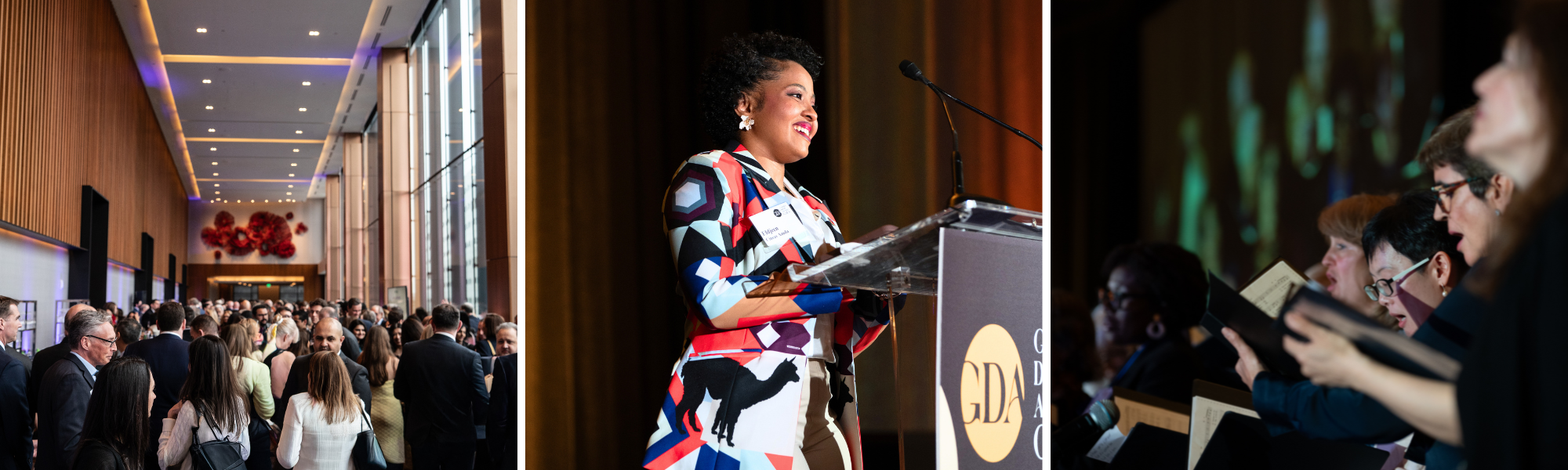
The International Institute of New England (IINE) raised over $1.7 million at its 44th annual Golden Door Award, held Wednesday night at the Omni Seaport Hotel in Boston, a figure highlighting the organization’s resilience and strong community support in the face of increasingly restrictive federal immigration policy.

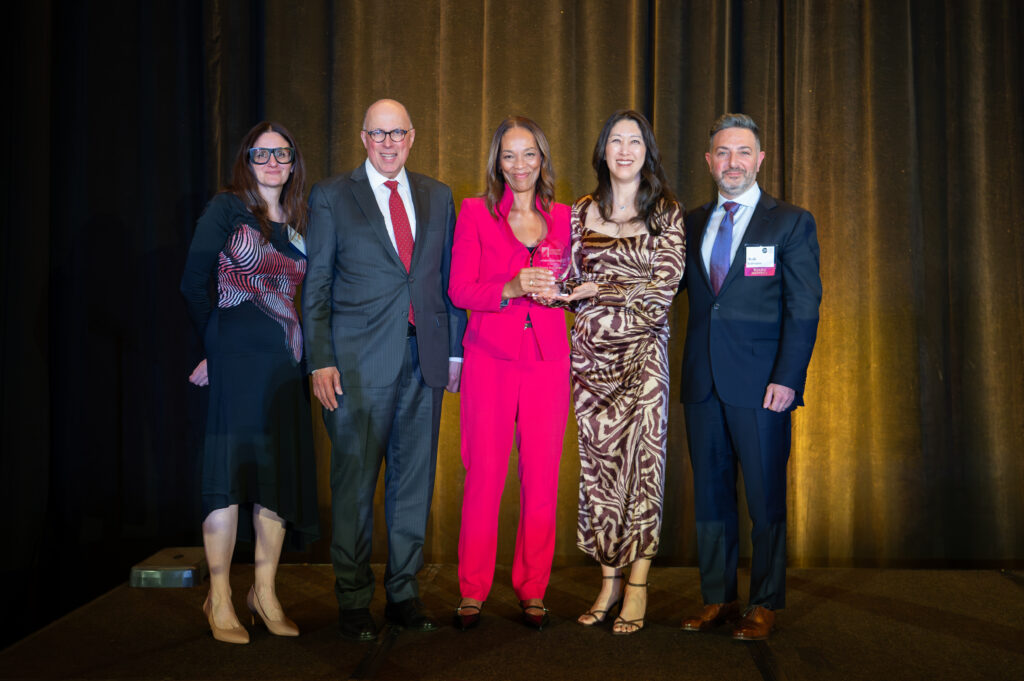
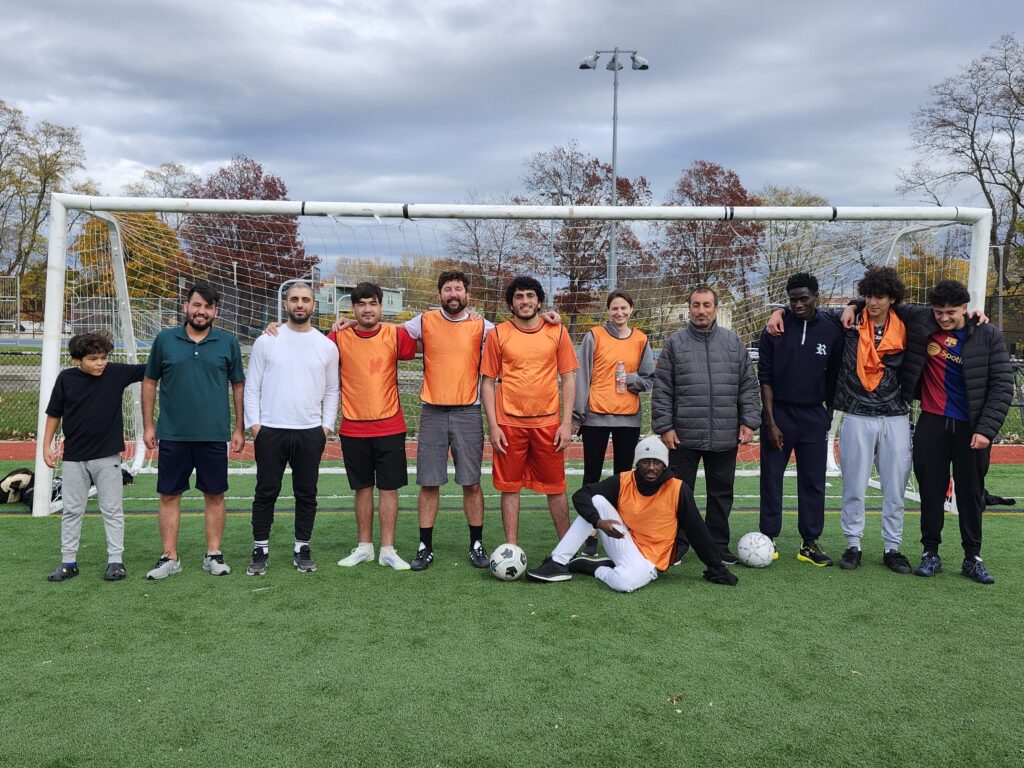
From L to R: IINE SVP & Chief Advancement Officer Xan Weber, IINE President & CEO Jeff Thielman, Alnylam Pharmaceuticals CEO Dr. Yvonne Greenstreet, Takeda CEO-Elect Julie Kim, IINE Board of Directors Chair Avak Kahvejian

The evening honored Dr. Yvonne Greenstreet, CEO of Alnylam Pharmaceuticals, with the Golden Door Award for her leadership in driving scientific breakthroughs that have led to life-saving medicines, now available in 70 countries worldwide. In accepting the award, Dr. Greenstreet reflected on how the promise of America is best realized when the skills, resilience, and determined spirit of immigrants are met with opportunity.

This gala took place amid a challenging period for refugee and immigrant communities, marked by ongoing humanitarian crises and shifting federal policies. During this time, organizations like IINE continue to play an essential role in providing direct services, guidance, and support to newcomers navigating complex systems. The funds raised will support IINE’s critical programs across Massachusetts and New Hampshire, including refugee resettlement, English language education, workforce training, and immigration legal services.

“Every year brings new challenges to the world of immigration: policies shift, conflicts emerge across the globe, and more and more individuals are forced out of their homes in the pursuit of safety. But one thing has never changed. Our region’s success will always depend on welcoming talent, energy, and innovation from around the world,” said Jeff Thielman, President and CEO of the International Institute of New England.

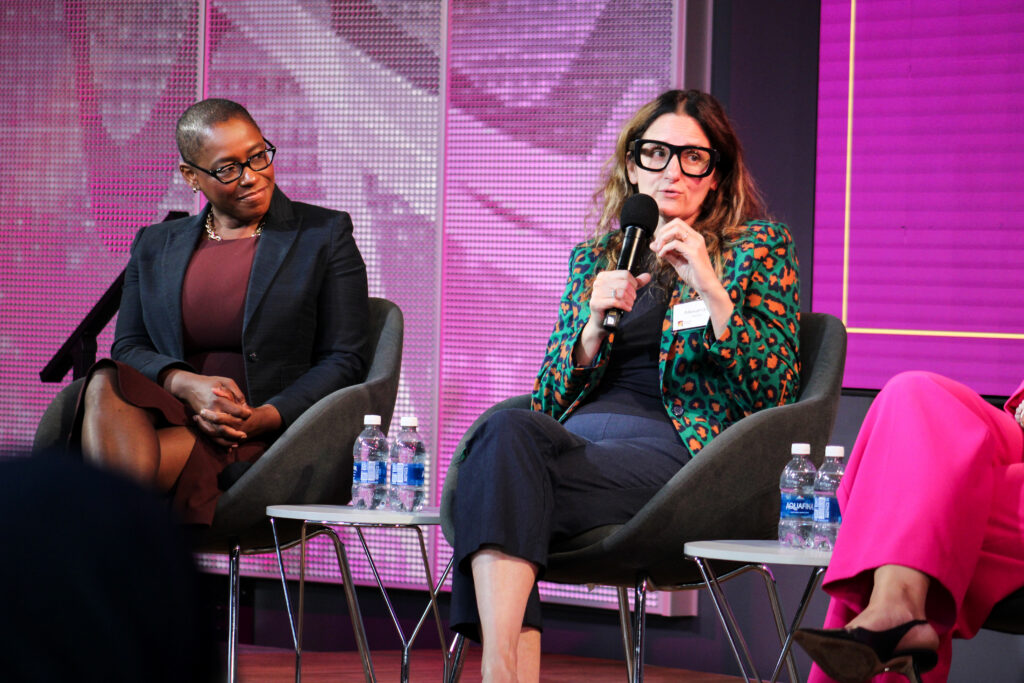
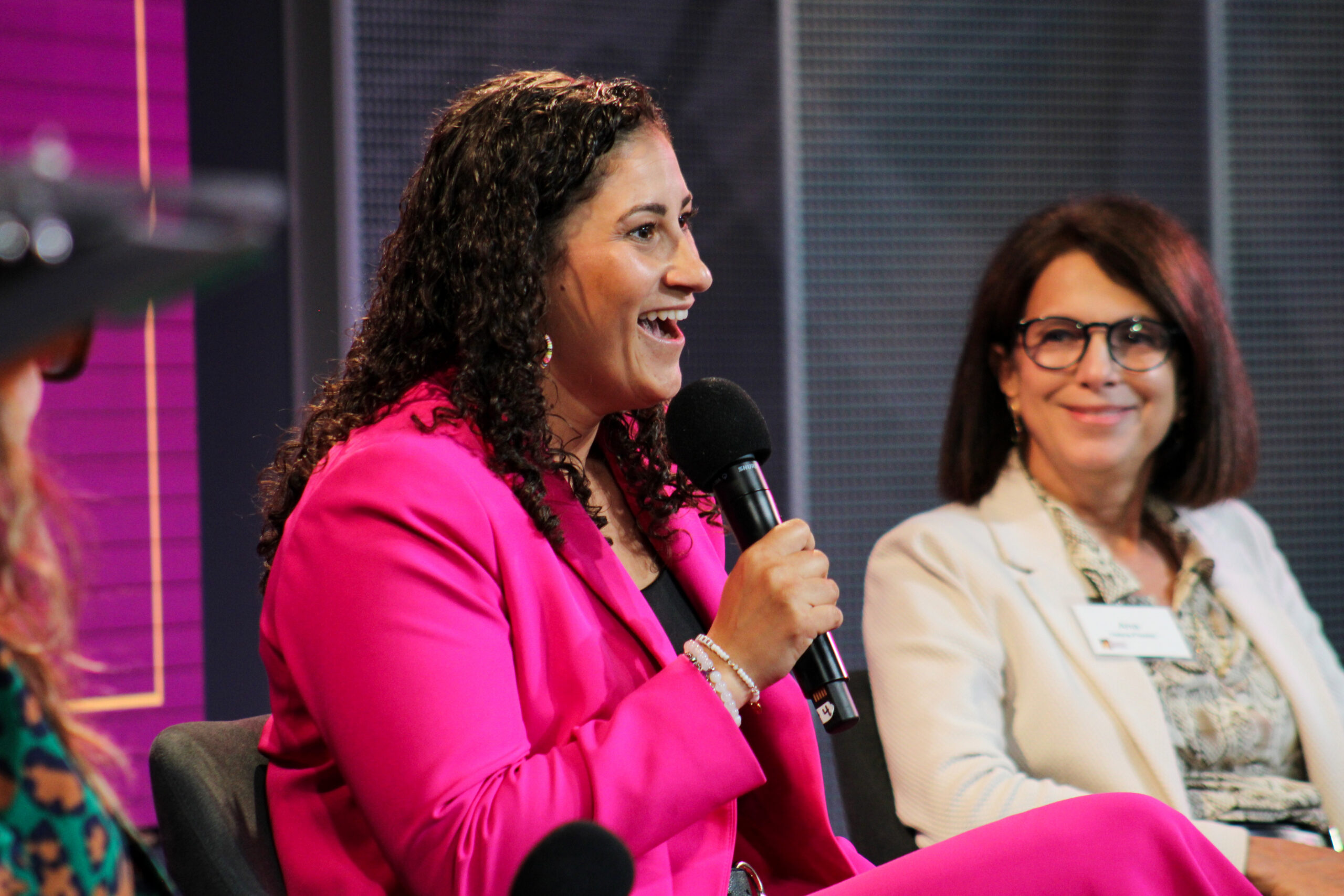
The gala was attended by over 600 guests, bringing together leaders from the business, biotech, philanthropy, healthcare, construction, and civic sectors in support of IINE’s work. GDA host committee co-chairs and past honorees, Julie Kim, Graham Robinson, Anthony Consigli, Dr. Victor Dzau, Dr. Noubar Afeyan, Dr. Srikant Datar, Stephane Bancel, and Belinda Termeer the wife of our 1999 honoree the late Henri Termeer joined IINE supporters, longtime partners, clients, volunteers, and staff to honor both Dr. Greenstreet and the collective impact of the organization’s community over the past 100 years.

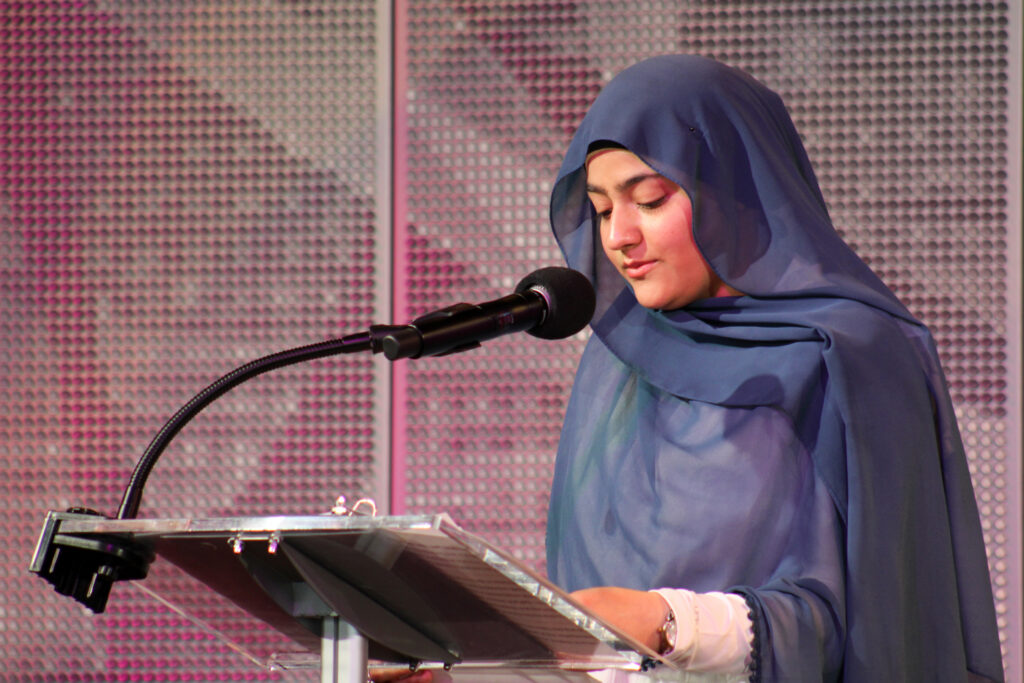
The evening program included a performance by Back Bay Chorale’s ESOL Chorus, and a Suitcase Stories® performance from an IINE client who reflected on her journey from Haiti to Massachusetts, and her unwavering commitment to pursuing a career in medicine—even when it meant starting over in the U.S. Guests were also invited to explore the Centennial Walk, an art exhibition that debuted last year and highlights IINE’s 100-year history in Boston and the city’s deep immigrant roots.

Since opening its doors more than a century ago, IINE has served more than 100,000 immigrants and refugees and currently supports thousands of individuals each year.

- - -

Learn more about our annual celebration of immigrant achievements and contributions at the Golden Door Award gala.

In Bridges, Refugee Youth Share Their Personal Stories

A new publication developed within IINE’s Refugee Youth Program brings young voices to the center stage. Bridges: Personal Narratives by Immigrant Youth features eight stories written by clients in the Lowell program, with the support of community volunteers. The young authors reflect on important moments in their lives, their challenges and dreams, and the gratitude they feel to be Americans.  

Building Bridges

The Bridges project was spearheaded by Lena Aloise, a sophomore at Groton High School, who had volunteered as an English tutor in the Refugee Youth Program. As explained in the book’s preface, she felt “the writing process fit the IINE Youth program’s focus on English Language Learning and affirmation of diverse experiences and wanted to help share the voices of young immigrants with their communities.” 
 
Lena secured grant funding for the project from her school and reached out to IINE Youth Program Manager Isabel Goes to collaborate. Together, they recruited students and volunteers and drafted a lesson plan for a six-session creative writing workshop, which launched in August of 2025.  

The Writers’ Workshop

Each student received a personalized binder containing vocabulary resources, materials on story structure, and activity handouts. In early workshop sessions, they studied the art of personal narratives through stories and poems, and brainstormed people, places, and events of importance to them that might inspire their own writing. They learned how to craft interesting hooks, expand their stories’ settings, and develop strong openings, conflicts, and endings. 

The participants received feedback from the IINE Youth Program team, as well as students at Groton.  Once they finalized their pieces, the participants celebrated with their peers over pizza and soft drinks, and their manuscript was sent to IINE’s Marketing team to be designed and published.  

Reflections

They were so excited and proud to get the actual books in their hands!” says Isabel. “I’m proud of them for their achievement and also love that they had the chance to express themselves. Some have already said they have more stories to tell! We’ll be launching another series of workshops for them this summer.” 

Lena is equally pleased with how the project turned out, “I was surprised by and incredibly grateful for the eagerness that many of the writers brought to each session of the workshop, especially after learning that many were joining after a full day of work at summer jobs!” she says. 

Key to success, Lena says, was the strength of the collaboration, “I was so happy to see the commitment of the volunteers and the team at IINE—they really worked hard to help make the workshop the best it could be. The volunteers were excited to contribute ideas and perspective while being respectful of the writers’ visions and our plan, and deserve a huge shout-out for all their support.” 
 
For Lena, this supportive relationship between new arrivals and the community they’ve found in Lowell is one of the major themes that shines through in the students’ stories: “I definitely feel as though the connecting thread among most was the people or experiences offering them support throughout emotionally challenging periods of change,” she says. “Whether it was a parent, a sport, or a friend, the stories focused on a source of comfort and inspiration, which I feel is a testament to all the writers’ resilience and optimism.”

The Broader Message

Isabel says she plans to get the book into school libraries in Lowell where she particularly hopes it will find its way into the hands of other immigrant youth.  

Lena hopes the authors’ words will have a positive effect on other readers, as well: “In a culture that can be dismissive of diverse experiences, I hope that Bridges can be a small part of affirming the unique outlook that immigrant and refugee youth contribute to their communities, and a reminder of the importance of celebrating stories of all kinds.” 

- - -

Les réfugiés et les immigrants entreprennent des voyages longs et difficiles pour échapper à la violence et reconstruire leur vie aux États-Unis. Vous pouvez leur apporter l'aide dont ils ont besoin. 
“Pro-Immigrant” Message Wins Fans and Raises Funds at New Hampshire Coffee Shop

“Pro-Immigrant” Message Wins Fans and Raises Funds at New Hampshire Coffee Shop

A Day of Protest

It was January 30, 2026, a day on which activists throughout the country had called for work stoppages, school walkouts, and shopping boycotts in protest of violence and rights violations by the Department of Homeland Security (DHS) and Immigration Customs and Enforcement (ICE).  

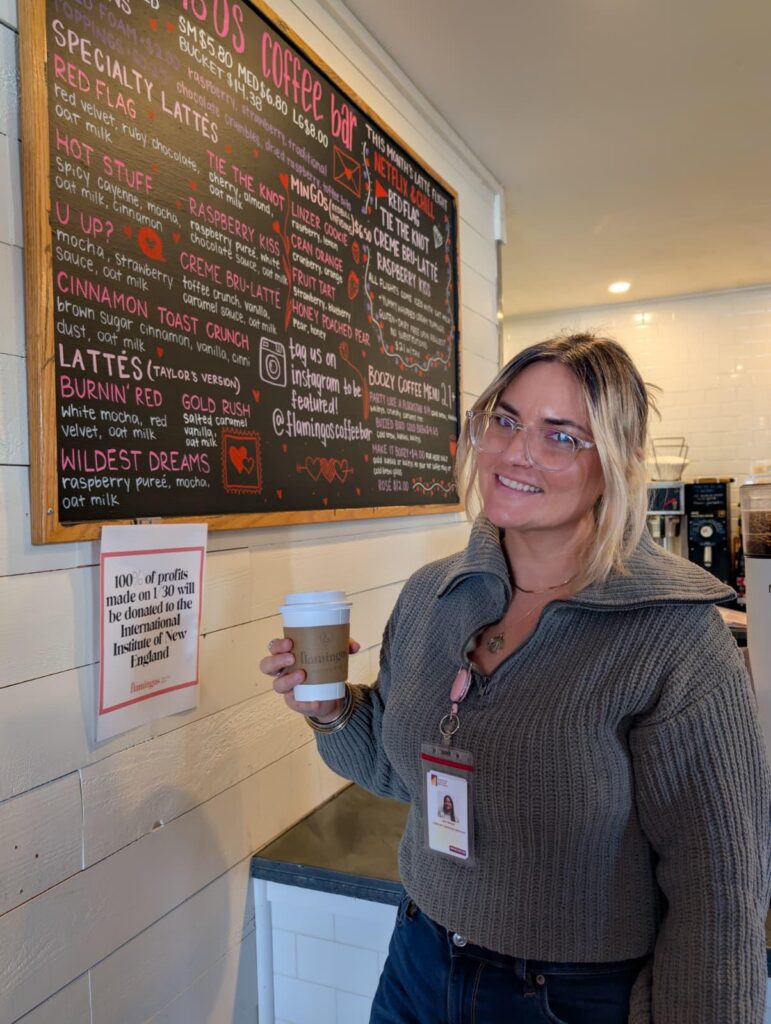
We felt like we wanted to do something, but at the same time—I think a lot of small businesses felt this way—we didn’t want to close our doors because we have a lot of hourly employees and a lot of customers who rely on them,” says MacKenzie Logan, a Manchester, New Hampshire native who founded Flamingos Coffee Bar five years ago. “An alternative was to find a local organization that helps immigrant communities.” 

On their social media accounts, under the phrase “Disgustingly Pro-Immigrant” across a flamingo-pink background, the café announced that all of its proceeds for the day at both of its locations in Exeter and Hampton would be donated to the International Institute of New England.

Coffee and a Cause

MacKenzie hadn’t been familiar with IINE, but when she found the organization through some internet research, she was impressed. “I thought it was a really worthy cause, and I thought supporting it could be a cool way to shift the narrative that day.” 

Why the phrase “Disgustingly Pro-Immigrant”? Turns out it was a riff on another slogan that had helped establish the café’s identity. 

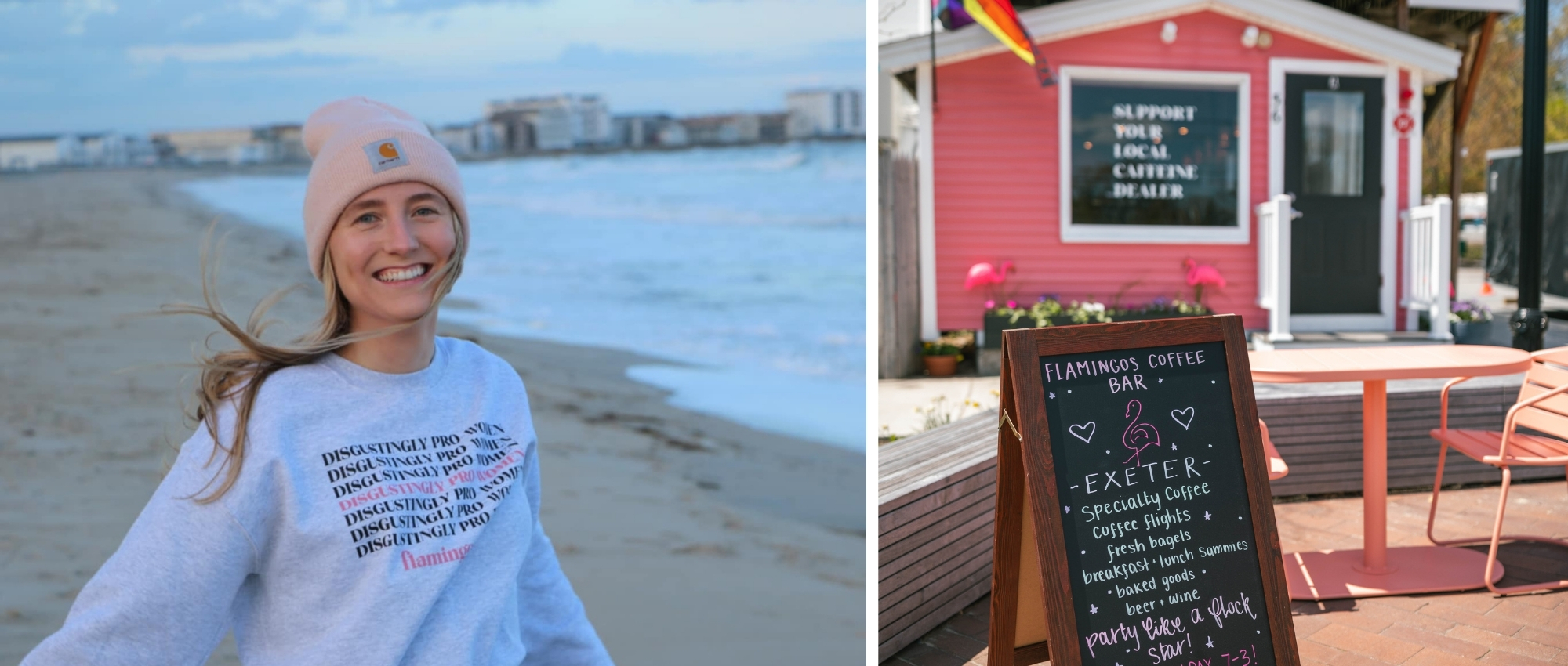
It started from a 2-star Yelp review someone left us one day, saying that our café made them feel ‘uncomfortable as a man,’ that we were ‘disgustingly pro-women,’ and it was a ‘terrible business model.’ We decided to make t-shirts out of that because we loved the phrase ‘disgustingly pro-women.’ Then it sort of snowballed into this, like, movement. It’s been really cool to watch that grow.” 

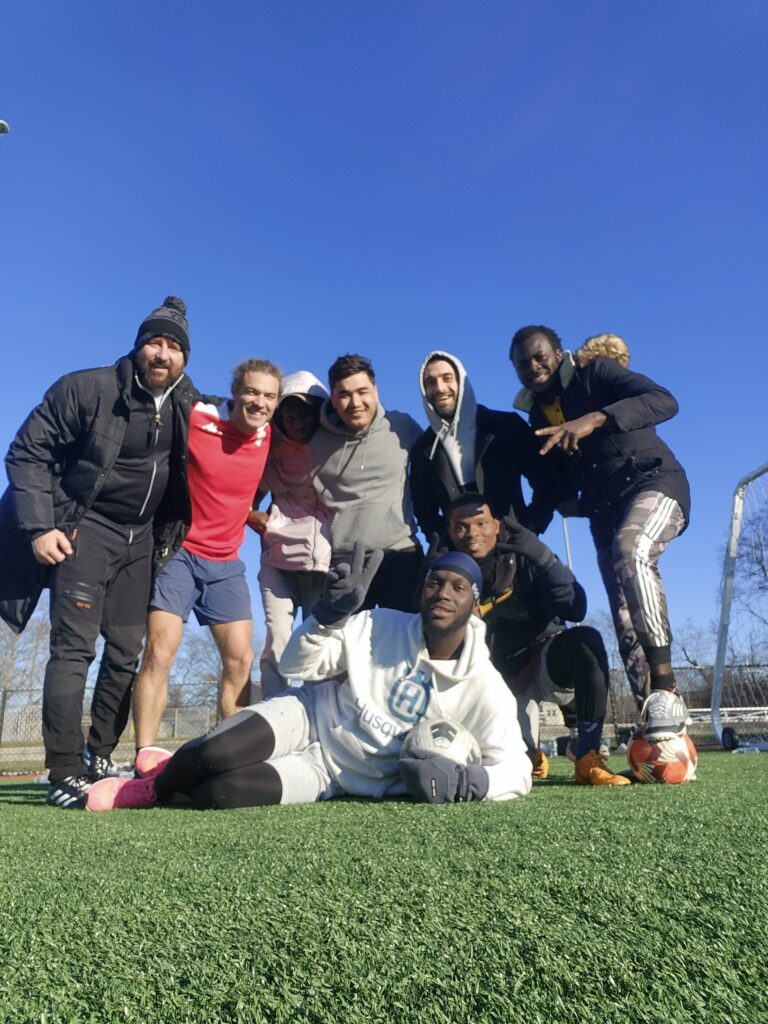
Mackenzie (L) has embraced the term “Disgustingly Pro-Women” at her café, Flamingos Coffee Bar

When she posted about the review on Instagram, she got a groundswell of support. The “disgustingly pro-women” shirts she had made sold well and seemed to attract new customers. She donated 20% of the proceeds from the t-shirts to a local charity that helps women in need in her community. This venture has become important to MacKenzie and to the identity of her business. When the January 30 day of action came around, she saw an opportunity to champion another cause about which she feels strongly.

“I think just seeing everything that’s happening in the country—it’s hard to watch, and then on a personal level, my husband is an immigrant, and I’ve seen the difficulties that he’s faced just getting a Green Card. He’s very fortunate to be sponsored by a local company and to have that opportunity. I’m aware of how hard it can be for some people to get access to a pathway to citizenship—especially for people who need it for their well-being or because they’re fleeing an atrocious situation at home. I love that your organization is able to help people like that.” 

The Benefits of Speaking Out

MacKenzie says that Flamingos’ stand for immigrants’ rights on January 30 fit into the pattern of their previous activism. 

“I’m always scared that we’re going to alienate people, but the response was overwhelmingly positive. When you do make a stand like that, I’ve seen a lot of people get behind it and support you rather than demonize you for it. It was really cool to see that happen again with the pro-immigrant post that we did. A lot of people were really happy that we did that and came into support, which was cool.” 

The café raised about $1,000 for IINE, and attracted some new customers, including IINE Community Services Manager Zazie Sawyer (pictured right) and other members of IINE’s staff who are definitely keeping an eye on Flamingo’s Instagram and eager to support the café, along with their coffee habits.  

- - -

IINE depends on community support to serve refugees and immigrants in New England. There are many ways to get involved as a donor, volunteer, or advocateincluding hosting your own fundraiser.

Welcome Kit

What’s In Your Welcome Kit?

IINE community members on the resources they would share with newly arriving refugee families to help them feel at home 

Being a refugee takes tremendous bravery. Refugees arrive in our communities while still processing recent trauma, often carrying little more than a single suitcase, and have to rebuild their lives in a place where they often don’t know the local language, culture, or customs.  

Welcoming them calls for both empathy and imagination—skills with which our IINE community members are rich. We asked staff, clients, board members, and volunteers about their own migration experiences and family stories, and how they would put together a “Welcome Kit” for newcomers.  

Andrea West, IINE Education Admissions Specialist

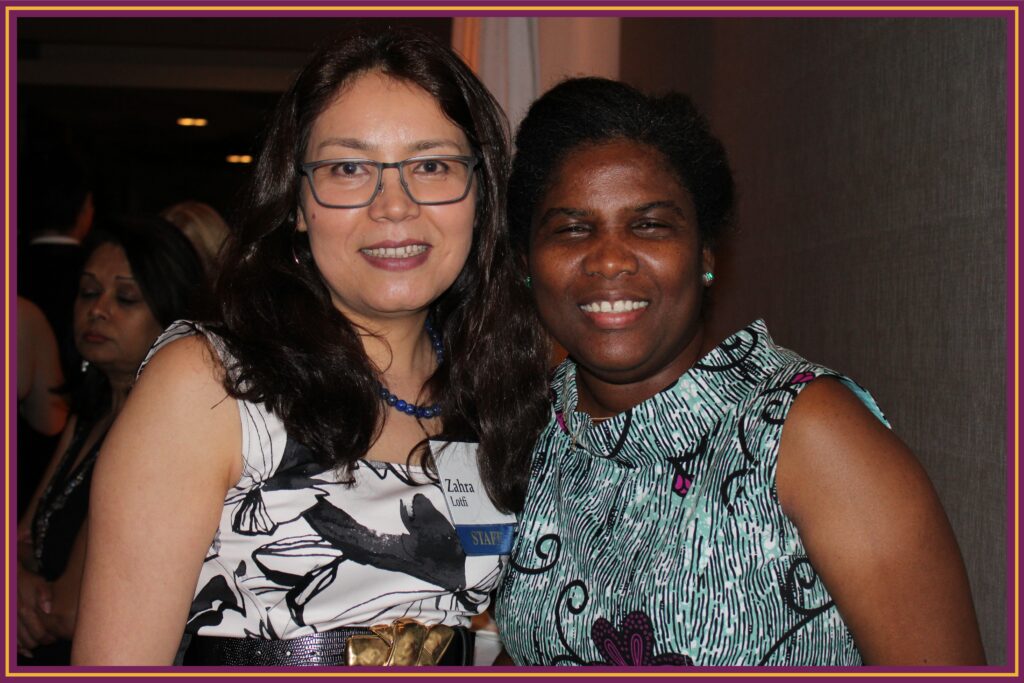
Andrea (R) with IINE Employment Specialist Zahra Lofti at our annual Golden Door Award gala

What resources would you include? 

  • Descriptions of and directions to places in the community where our new friends can meet other people from their home country or region. Whenever I move to a new place, I seek out people from my home country or region. Belizean and Caribbean immigrants help me, my Mexican husband, and American son feel connected to Belize. They are also a source of support for us as we settle into and learn to navigate our new community. They tell me where I can find the ingredients I need to make the local Belizean dishes I like, places to worship, and where their kids attend school. We celebrate and commiserate with each other.  
  • List of food pantries, meal programs, and places where you can get free or cheap clothing (especially winter clothing). Moving to a new place is expensive for any family, regardless of their race, ethnicity, or nationality.  
  • Information on how to get support with childcare and places where their kids can get a good education. Childcare is expensive and can be a major barrier to families achieving self-sufficiency.  
  • Stories! Plenty of stories! Children’s stories of historical figures, history of the State of Massachusetts, stories of other refugee families. I can’t overstate the importance of stories in educating our new friends on the amazing history of Massachusetts that will make them both proud to be a part of this community and inspired to contribute to it. As an immigrant, I find comfort in stories that remind me of what those who came before me endured and fought against to bring about changes that I benefit from today. They inspire me to pay it forward and make me hopeful for the future.   
  • Directions on how to use public transportation. Buying and maintaining a car in the U.S. and using ride shares is expensive.  
  • Information on how to maintain one’s immigration status. Federal regulations regarding maintaining legal status are complicated, and not doing so may jeopardize a refugee or immigrant’s ability to continue to live and work in the U.S.
  • Sources of support for finding and landing a job. We can’t pursue our American dream without a job. Hard work is one of the greatest American values.  

What would you want them to know about their new community and neighbors? 

I am originally from Belize, and I’ve lived in Cuba, Mexico, China, and several U.S. states. The personal and professional experiences I’ve had while living in these countries have taught me two very important lessons that I would share with a newly arrived refugee family.  

The first is that the foreign policy of a country is rarely ever a reflection of the attitudes and beliefs of that nation’s everyday citizens. In America, I often see many examples of the disconnect between U.S. governmental policies on issues such as immigration and the attitudes of American citizens towards immigrants. I’ve also learned that America is a very diverse country. There is not only a wide range of races and ethnicities represented in America but also a great diversity of beliefs, attitudes, and perspectives on any given issue.  

I’d let our new arrivals know that their lives in America will not only be defined by the anti-immigrant people we see on TV and on social media or by the governmental policies that are bound to adversely affect them but by the kind and caring people in their communities.  

My husband and I have both had people shout at us in the streets to go back where we came from, but we’ve had far more Americans kindly welcome us into their homes and treat us to unbelievable hospitality. 

Is there any part of your own family story you would share? 

While growing up in Belize, I watched the brutal beating of Rodney King, an African American man, by several Los Angeles police officers on TV. The riots that erupted in L.A. when the officers were acquitted of charges of police brutality were also aired on local TV. I viewed them with my family in our living room. When it was time for me to come to the U.S., replaying those images in my mind fueled my fear of being judged and discriminated against because of the color of my skin. My fear and apprehension kept me from having meaningful relationships with white people until a friend gave me some sage advice. My friend, Sharon, who was also a Black Caribbean immigrant, encouraged me to stop going around expecting hate and discrimination. By her example, she taught me how to enter rooms and relationships with an open mind and open heart. I still experience hate and recognize and acknowledge the people who give it. But being able to move beyond that hate and to be open to the love, kindness, and joy that others bring has made me a much happier person.  

What hopes would you share for them? 

We came to the U.S. to pursue our dreams. I’d hope that they are able to accomplish theirs. I’d wish them success, however they define it. 

The Capacho Family, former IINE clients

What resources would you include? 

We believe that community spaces for connection and dialogue are essential: places where migrants can meet, share experiences, learn from one another, and build friendships that strengthen the community. These spaces help people adapt together, regain trust, and reinforce hope, reminding us that even after trauma, there is always a path forward. 

What would you want them to know about their new community and neighbors? 

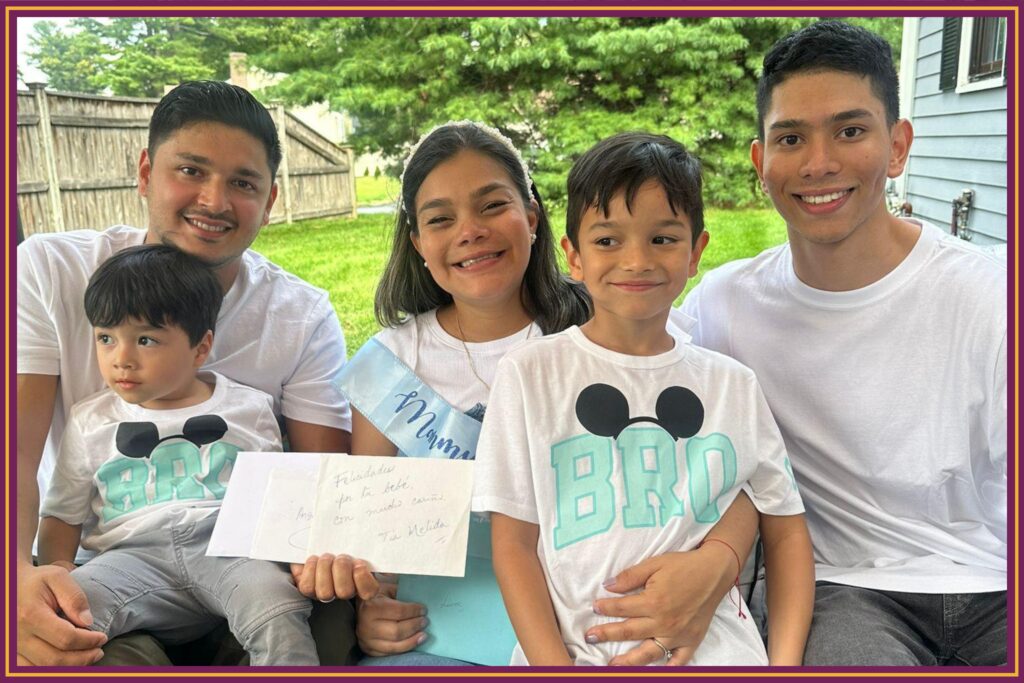
We are a multicultural family: my husband and I are Venezuelan, one of our children is also Venezuelan, two were born in Colombia, and our youngest was born here in the U.S. From the very first day, we have felt the love, solidarity, and support of our new community. We feel blessed to belong to a place where empathy, respect, and unity are lived every day, and where neighbors are kind, caring, and willing to help. 

Is there any part of your own family story you would share? 

Each stage of our journey—from Venezuela to Colombia and now to the United States—has taught us resilience, gratitude, and the value of community. Having support along the way allowed us to keep moving forward with faith and hope, and now we want to share that strength with others.  

What hopes would you share for them? 

Our hope for other families is that they find peace, stability, and a sense of belonging. Even after difficult experiences, we hope they can heal, rebuild their lives, and dream again. Especially in the hardest moments, staying united and hopeful makes all the difference. 

We also want to inspire everyone to find their passion and live freely. Look for a “why” that drives you, reinvent yourself, and pursue everything you have ever dreamed of being. Today we are in a free country: we are free, and it is time to free our minds. I have always lived by the motto “Live free, live happy,” and I believe that each of us has the power to design and create our own life. Even when challenges are hard, every step forward brings us closer to fulfilling our dreams, sharing hope, and living fully. 

It would include faith, hope, and love for humanity. This is as vital as water as oxygen and gives us the strength to continue. 

Fereshtah Thornberg, IINE Board Member

What resources would you include?  

My kit would include: 

  • A map of the city’s public transportation  
  • A list of common questions you can ask in English (example: how do I get to this address?) 
  • Some basic necessities like toothbrush and paste, shampoo, deodorant, etc.  
  • English learning tools  
  • Temp agency lists 
  • Grocery stores nearby  
  • Where to go if you or your family gets sick  
  • The closest place of worship (depending on their religious beliefs and faith) 

What would you want them to know about their new community and neighbors?  

That they care and don’t hesitate to get to know them. 

Is there any part of your own family story you would share? 

When I arrived in New York over 30 years ago, we came with very little money and a lot of anxiety for what was ahead, yet grateful that we were safe. The first two years were a journey, but looking back, it has helped shape who I am and how much compassion I have. I was looking for a job during one of the worst recorded snowstorms, but was excited for what was ahead. 

What hopes would you share for them?  

Our hopes for newly arrived refugees are that they feel safe and cared for and trust that their lives will look much different two years from now and will improve for the better as they settle into their new communities. 

Danielle Rabina, IINE Resettlement Volunteer, Boston Bound Community Sponsorship Team

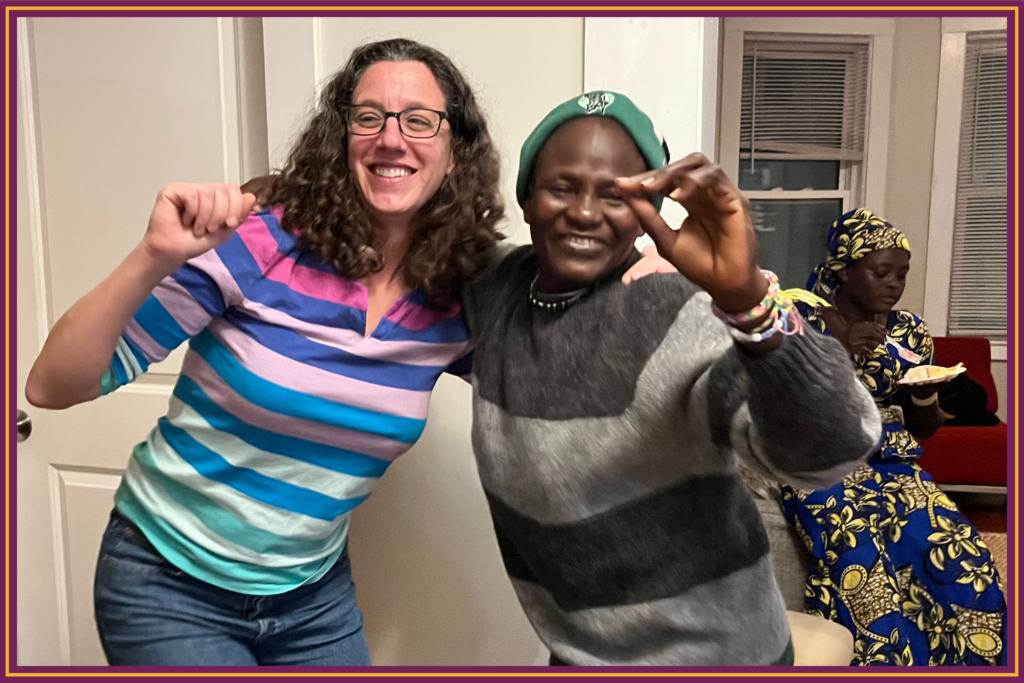
Danielle (L) with members of the refugee family from Nigeria, who the Boston Bound team helped resettle

What resources would you include? 

One item a member of our group thought of [when we did welcome a family] was a book of photos with names and phone numbers of each member of our group. New immigrants that IINE is helping to resettle are meeting so many new people in their first year, while also learning a new language, that it is easy to lose track of who is who. This book was referred to often in the first months.  

Here are some other items I think would be nice to include in a Welcome Kit. 

To help the family feel cared for: 

  • A toy or stuffed animal for any children 
  • A comforting soft blanket for adults 
  • Some tea and comfort foods  

To help with navigating a new area: 

  • A map of their local neighborhood highlighting important places like supermarkets, parks, and libraries 
  • A map of the public transportation system 
  • A pre-filled public transportation pass 

Although it’s unrealistic to include in a Welcome Kit, it would be so helpful to include a personal technology teacher to teach the family how to navigate all of the important online notifications they will be getting as they create a life here.  

What would you want them to know about their new community and neighbors? 

I would like to share the variety of cultures, languages, and countries of origin of their neighbors, so they can understand how America is a melting pot made up of people from all over the world. 

Is there any part of your own family story you would share? 

I would share my own family’s immigrant story, and over time, I would share how my family celebrates American holidays and pastimes. 

What hopes would you share for them? 

[I’d share] hope for them to gain a feeling of safety, security, and support so that they can have the freedom and confidence to pursue a meaningful life here in America.   

Geoff Birmingham, IINE ESOL Volunteer

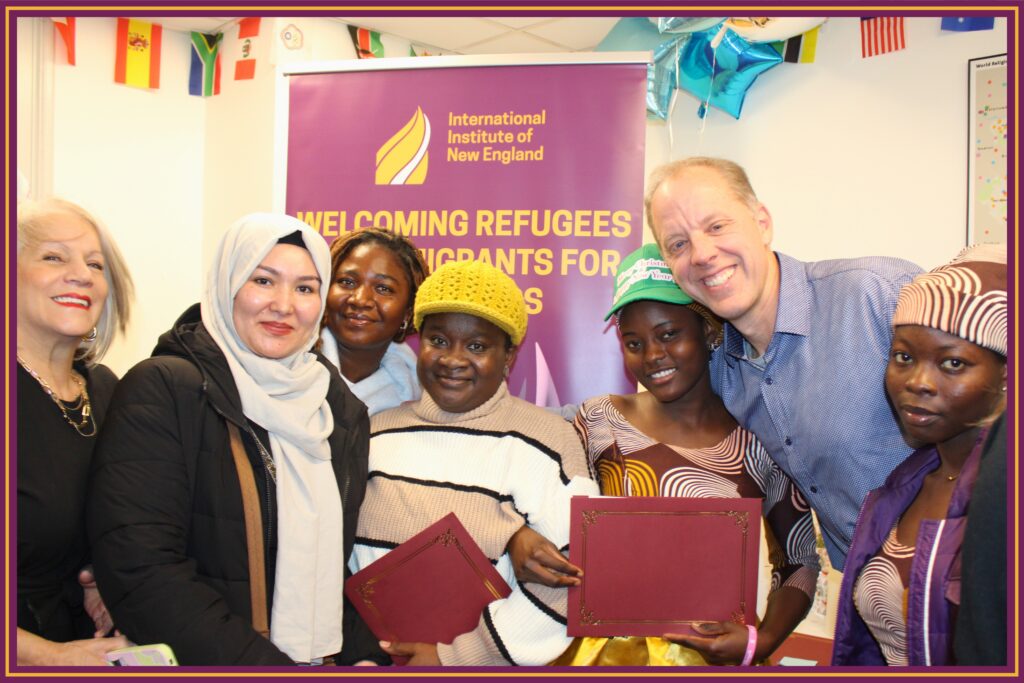
Geoff (second from R) with ESOL students at their class graduation

What resources would you include? 

I would include membership cards to three museums in Boston: the Museum of Fine Arts, the Museum of Science, and the Children’s Museum. I would give them a snowblower for winters like this year. I would offer them a Red Sox package, which includes free tickets for the family AND me as an escort, so I can explain what the heck baseball is. I would give them electric bikes with panniers to make moving around the city and doing errands easier (and urban biking lessons included, if needed). 

What would you want them to know about their new community and neighbors?  

I would say it’s important for new arrivals to know that our community is friendly—but most people won’t go out of their way to be helpful. People are busy. They don’t spend a lot of time wondering how to support others. So, it’s very important to  ask  for help if you need it. When you do that, just about everyone you approach will do whatever they can to lend a hand. 

What hopes would you share for them?  

1. That they never forget and always honor their home country. 

2. That they can remain true to their culture and traditions while also embracing ours. 
 
3. That they are able to eventually feel at home in the U.S. and feel that they belong. 

The Machado Family, former IINE clients

Our Welcome Kit would include basic household essentials, information about local services, and a welcome letter reminding them they are not alone. I would also add a list of community spaces and support networks, because feeling guided and accompanied is just as important as material help. 

- - -

Helping refugees and immigrants resettle, find safety and opportunity, and succeed in New England takes a community. Explore ways to get involved with this critical work.

“I Started Living When I Came Here”: A Senegalese Refugee Finds Freedom in Boston

Pride, For the First Time

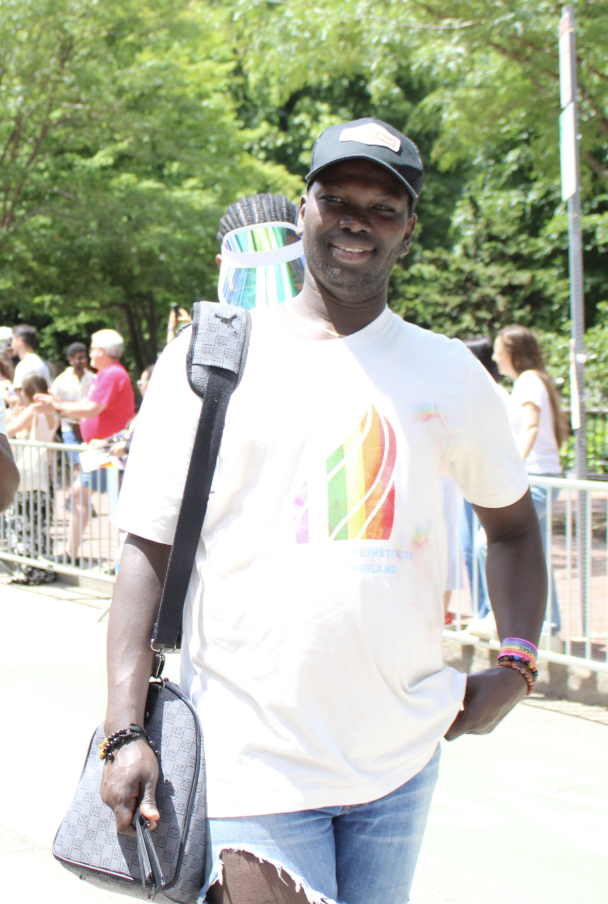
Ousmane marching at his first-ever Pride Parade in 2024

In the summer of 2024, Ousmane participated in his first-ever Pride Parade. Wearing a t-shirt with a rainbow-colored flame, he marched through Boston’s streets shoulder-to-shoulder with a boisterous group of IINE staff, volunteers, and clients waving mini-rainbow flags. Throngs of revelers lined their route and greeted them with cheers and smiles.

This was a very new experience for Ousmane. In 2015, he had been forced to flee his native Senegal as a refugee. “Anyone who knows Senegal knows that homosexuality isn’t allowed,” he explains. “It led to a very difficult moment with my family. Also with the population.”

A Difficult Moment

After escaping Senegal, Ousmane spent many years in a refugee camp in Mauritania. There he met another challenge. The country only abolished slavery in 1980, and Black Mauritanians and immigrants continue to experience racial discrimination and marginalization. Facing dual prejudices, Ousmane found he “couldn’t go out at certain times. I was not able to work some jobs. I struggled.”

Life got easier when Ousmane met Yaya.  

“Yaya is a great person. The thing is, I love him, and he loves me. I encountered a lot of pain there, but I could deal with that pain because of the love I had from him.” 

The bond they forged felt lifesaving. It also made the news for which Ousmane had been longing for years –that he had been approved to resettle in the U.S. as a refugee—feel bittersweet. 
 
“The separation was not easy. Yaya thought that when I left for the U.S., I was going to leave him, so it was a very difficult moment. But I couldn’t stay, because that time was too difficult for me.” 

Ousmane believed in his heart that their separation was temporary. He would work hard, establish himself, send Yaya money when he could, and wait for his partner to join him. So, he traveled to Boston alone; fortunately, he was not alone when he arrived.

First Days

“Coming into a place where you don’t understand the language and everything, that is not easy. But I had the [IINE] office that was also helping me.” 

IINE’s team was waiting for Ousmane when he arrived at Logan Airport and drove him to an apartment that had been furnished with donations from volunteers. As soon as he could, he enrolled in IINE English classes and began workforce orientation. Between classes and appointments, he remembers sitting on a bench in Boston’s Back Bay neighborhood and marveling at the variety of people he would see bustling around on their way to work or school.  

“That was my first impression, and even now, when I have time, I just sit there and do the same thing, remembering my first days.” 

Finding Work

As he set out to join the workforce himself, he had a strong advocate in Sara, his IINE Employment Case Specialist.  

“IINE helped me a lot, and Sara helped me in so many ways. Anything I need, she will talk with me and help me. There were times I couldn’t find a job, but she went with me everywhere, trying to get one. She’s a good person and I thank her.”

For her part, Sara says she has been inspired by Ousmane’s incredible drive and persistence. 
 
“Ousmane may have the most strength of character of anyone I’ve ever met,” she says. “He came to Boston with a laser-sharp vision of the life he wanted, and it’s been absolutely incredible watching him go after that life despite the innumerable obstacles that lay in his way. He wasn’t able to safely live with the person he loved, so he found a way to move across the world. His first employer didn’t allow him the day off to attend his first Pride parade, so he found a new employer and teammates who love and respect him.” 

The new employer, a Mediterranean restaurant in Boston, was also impressed enough with Ousmane to go to great lengths to help him succeed.  
 
“He never had the chance to learn to read,” Sara explains, “but his manager was so taken with his work ethic and sense of humor that she moved the entire work schedule around so he could attend nine hours of English classes with us per week. She also developed a special training system for him, and others who are just beginning in English. She decided to put him on a management track and found a more visual way for him to use the company’s management software as well.” 

Sara says that Ousmane’s success has paved the way for dozens of fellow IINE clients to join him at the restaurant in their first job in the U.S. and that he has proudly helped them with the process.  

Finding Happiness

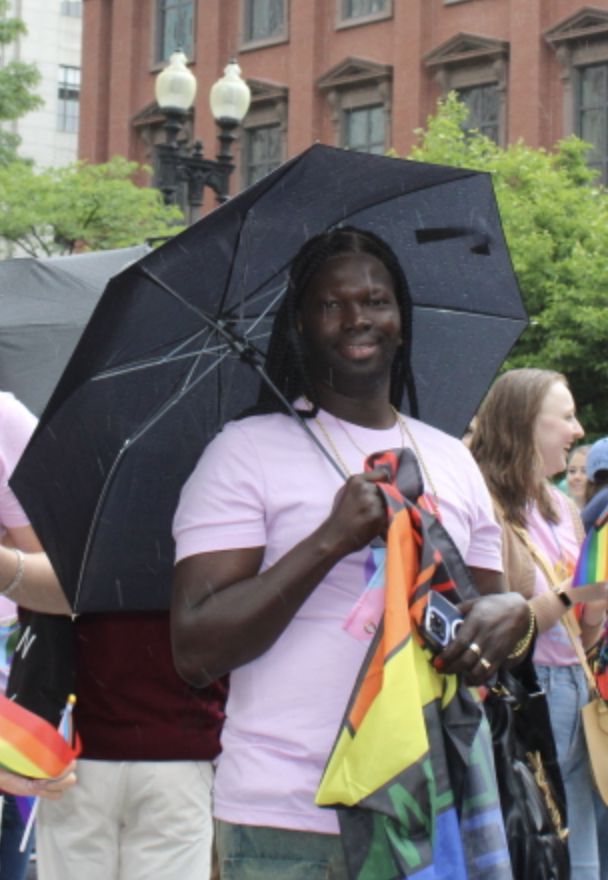
Ousmane joined the IINE community to march in the Pride Parade again this past summer

Three years into his time in Boston, Ousmane is in a good place. “I started being happy when I came here,” he says.  

People have been welcoming to him, and he finally feels freer to be himself. Now that he has some experience in the restaurant business, he has a new goal. 
 
“I’m dreaming of having an African restaurant here for Senegalese dinners,” he says, describing a favorite rice dish with onions and fish.

Best of all, Yaya has finally joined him in Boston and found a job he loves as a dressmaker. 

“I am so happy because besides the office, it’s only Yaya I have as a family member. I’m no longer lonely. Before, when I came, I was all alone, but now I have someone to keep me company, and we have real peace.” 

- - -

Les réfugiés et les immigrants entreprennent des voyages longs et difficiles pour échapper à la violence et reconstruire leur vie aux États-Unis. Vous pouvez leur apporter l'aide dont ils ont besoin. 
Driving Empowerment: Helping Afghan Refugees Learn Manchester’s Rules of the Road 

Driven to Serve

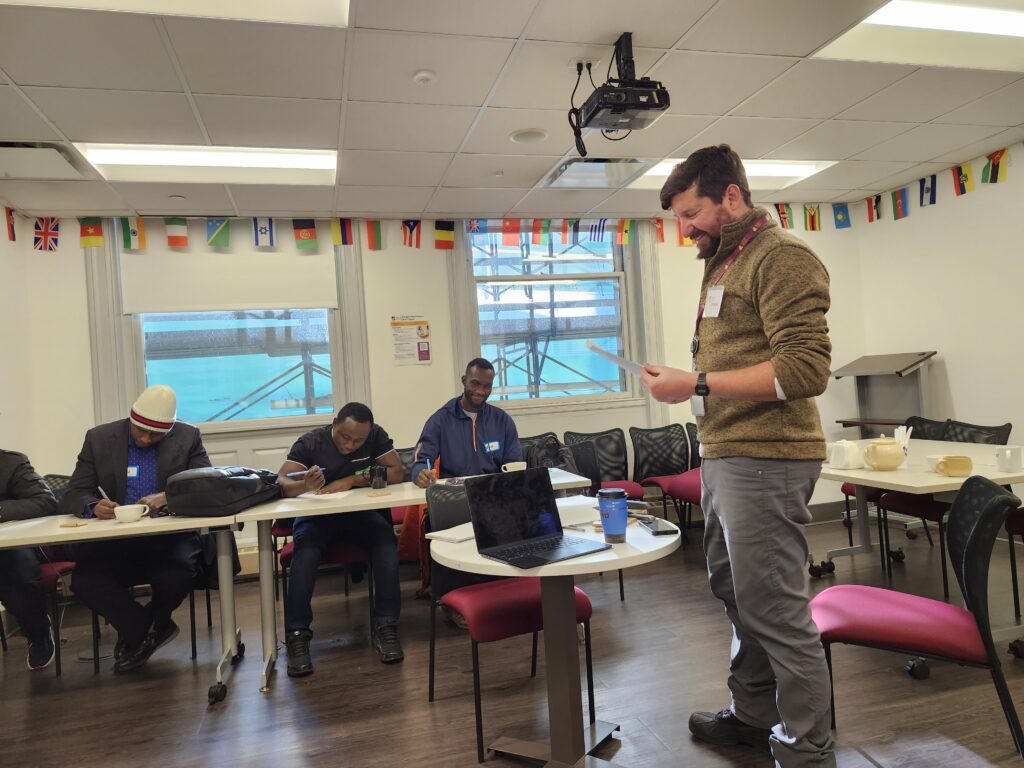
“Of all the things I’ve done with the Afghan community over the last few years, the driver’s education has been the most empowering, for them, and for me,” says IINE volunteer, Ken G.  

Ken’s done quite a bit. He started volunteering with IINE in 2021 when the Taliban retook control of Afghanistan and hundreds of Afghan evacuees began resettling in Manchester, New Hampshire. Ken learned about the situation through his church and felt compelled to respond. He helped to form a community group called the New Hampshire Afghan Support Network and won a grant to fund its programming.  
 
Working with IINE, he led fellow community volunteers in helping Afghans to integrate into their new community. Efforts included a men’s social group that offers both recreation and service opportunities, like helping to set-up apartments for fellow refugees, and Sewing Seeds for Hope, an initiative to bring Afghan women together in sewing circles and help them sell their work both in-person and online. 

“Ken’s done so much,” says Mike Mailloux, the Volunteer Coordinator at IINE’s Manchester office. “He’s been a personal English tutor for four of our clients. He regularly drives women in our Sewing Seeds for Hope group to markets and craft fairs. He actually drove Roya, one of our clients, all the way to North Carolina, where she was starting college, and so much more. Whatever he does, he gives 150%.” 

Logging Miles

Transportation has long been one of the most daunting challenges facing new arrivals to the Manchester area. Housing tends to be far away from amenities, like grocery stores and shops, and from employers. Meanwhile, public transport services are limited, which means IINE’s clients often have to rely on carpooling with volunteers and fellow refugees. Recently, IINE launched a driver’s education class to help as many clients as possible get licenses. Mike tapped Ken to help students prepare for their road tests.  

“Over the past few months, my humble 2019 Toyota Yaris and I have spent almost thirty hours with twenty-eight Afghans,” says Ken, “so far, evenly divided between fourteen men and fourteen women. The car has a few small bruises to prove it! I am in fine shape.” 

The Word on the Street

Ken has enjoyed working with each of them and says that they faced different challenges. 

“Most of the men have needed mainly a few hours of practice and a tour or two around the Manchester DMV test route, and then they are golden. After all, they did virtually all the driving back in Afghanistan. I did have an amusing moment with two of the men who had studied and driven in Japan, where they drive on the left side of the road. Those two needed a little more than the usual adjustment for U.S. roads.” 

Because of the repression they faced under the Taliban, most of the women Ken drives with have had less experience, but some have spent some time in the driver’s seat. 

“The wives often have begun learning at the wheel with their husbands, but the word on the street is that ‘now you need to practice with Ken.’ As many of us know, teaching your own family member can be more than a little tense. These ladies have come along well, though, with many proudly succeeding.” 
 
Ken has helped foster a tight-knit community and says his students help to motivate each other.  

“There seems to be a little bit of competition going on between those who pass the first time and those who need multiple times to succeed. To be fair, the advantage of having time with me at this point is that I am patient and know the test route very well. I can even tell individuals to be careful not to make a certain mistake, because ‘this is how a certain friend of yours failed the test!’” 

 Some of Ken’s students have taken the wheel for the first time with Ken by their side. 

“The most challenging group is the young women who have never driven. They need a lot of time, beginning with driving circles around a parking lot at about five miles per hour. Then we go out on the street, then out in the country, then on the highway. Some are a little afraid at first of high-speed driving, as a highway in Afghanistan is probably like Union Street in Manchester. After a while, they learn that driving on a U.S. interstate is probably the easiest kind of driving. As with any group of students, some need a lot of practice, while others get the hang of it really quickly.” 

Going the Distance

A keychain of the Afghan flag, gifted by Ken to one of his students

Ken says, “The bottom line is that twenty-five of twenty-eight now have their licenses. The freedom and empowerment that this gives is huge, and I am always humbled by the gratitude they express. This has sometimes resulted in my wife and me being given gifts of food and even being invited into homes for some first-class Afghan meals.” 

Ken likes to give his students gifts as well.  
 
Karen, one of my stellar volunteer friends, came up with the idea of ordering some key chains with Afghan flags on them. I always have one in my pocket on the day of a road test. When the person passes, and after the DMV gives them their temporary license, I hand them their keychain ‘on behalf of the volunteer group.’ It means a lot to them and warms my heart knowing that they have a better chance at starting a new life in our strange culture where driving is a necessity.” 

- - -

Les réfugiés et les immigrants entreprennent des voyages longs et difficiles pour échapper à la violence et reconstruire leur vie aux États-Unis. Vous pouvez leur apporter l'aide dont ils ont besoin. 
Salman Blog Post

Salman’s Story: A Young Pakistani Refugee Finds His Calling in Healthcare

Life in Malaysia as Refugees

Born in Karachi, Pakistan, Salman and his family were forced to flee to Malaysia when he was just seven years old. “I never went back to Pakistan,” he says.

Life in Kuala Lumpur was challenging: “As refugees, you are not allowed to work, so my family had many financial issues.” Thankfully, Salman’s family found a supportive community, who helped make sure he could complete his schooling and enroll in college.

The Long, Uncertain Road to the U.S.

For years, Salman and his family hoped for resettlement in the United States, but after multiple medical exams, little communication, and fourteen years of waiting, they doubted the chance would ever come. “I had given up,” Salman reflects. “Then one day, we received a call. I was shocked.” With just two weeks to prepare, Salman, his parents, and his two younger brothers said goodbye to friends, teachers, and neighbors and boarded a flight from Kuala Lumpur to Dubai, then another to New York, before finally driving to their new home: Lowell, Massachusetts.

Coming to the U.S. was an incredible opportunity, but those early days were still tough: “When we came here, we didn’t have a car, and it was snowing. I was so down. I was not the same Salman.” He missed his community and the familiarity of his previous life. Thankfully, he didn’t have to navigate this transition on his own.

Discovering a New Career Interest

IINE was there to support Salman and his family from day one. Case workers helped them secure housing and get settled in their new home, and then introduced Salman to IINE’s Refugee Youth Program. The program provides case management and educational and career support for youth ages 16-21, ensuring young refugees succeed in school, build job skills, and connect with their peers and community.

Salman dove headfirst into every opportunity available to him. He became a regular at IINE’s youth workshops and yoga sessions, always a smiling face and active participant.

He was also eager to continue his college education, but as a refugee, he had to wait a year before becoming eligible for tuition assistance. During this period, IINE’s Youth team learned of Salman’s growing interest in healthcare. Last fall, they encouraged him to enroll in IINE’s free Certified Nursing Assistant training program. When he sought to gain more hands-on experience, IINE’s Employment team helped him find a job at a skilled nursing and rehabilitation facility as a personal caregiver. By spring, Salman’s hard work had paid off. He passed the licensing exam to become a registered Certified Nursing Assistant.

Finding Sunnier Days

Salman says that if he were to take away one lesson from the obstacles and opportunities he’s encountered, it’s that “the dark clouds are not going to always be there.” These days, he finds there’s more sunshine.

With IINE’s support, Salman has secured a scholarship, enrolled at a local college, and is now pursuing a degree in biology. “I count my blessings every day. Going to school and attending lectures is a blessing to me. Working as a Certified Nursing Assistant and helping my residents is a blessing.”

Salman hopes to work in medicine one day, potentially as a general practitioner or civil surgeon. Whatever role he lands on, he knows it will be in service of others: “Serving, volunteering, and helping people—that’s my hope for the future. I wouldn’t be here, I wouldn’t even be able to speak English, if other people hadn’t helped me when I needed it the most.”

- - -

Les réfugiés et les immigrants entreprennent des voyages longs et difficiles pour échapper à la violence et reconstruire leur vie aux États-Unis. Vous pouvez leur apporter l'aide dont ils ont besoin. 

Meet Our 2025 Interns

Every spring, summer, and fall brings a new group of bright, passionate interns to our team. In this post, hear from four of this year’s interns, who made an impact across the organization.

Elias Rodriguez, Advocacy Intern
Tufts University

What are you studying, and what drew you to those studies?
I am currently finishing my degree in Race, Colonialism, and Diaspora Studies and Civic Studies. When I knew I wanted to engage in work supporting immigrants, I saw two paths of study to be paramount for providing a good context for my work. I wanted to study why refugees are coming to the United States and understand in greater depth how colonialism has shaped paths of migration through displacement, and I have focused specifically on studying displacement in Latin America. I also wanted Civic Studies so my major would be based on both studies and practice. Civic Studies is geared towards studying how to make social change, and I have been able to participate in experiences that have informed how I understand my role in social change and have allowed me to gain skills through both study and direct practice.  
What led you to an internship at IINE?
I had heard about IINE both through friends who worked there and from some family members. My friend was an intern at IINE this past summer and really enjoyed it. As I entered my capstone internship for my Civics Studies major, I wanted to continue my work in supporting immigrants in the area, both at the Center to Support Immigrant Organizing and Enroot Education. The advocacy branch at IINE felt like a good fit, both because of my prior experience and the growing need for advocacy on all levels for pro-refugee policy after the suspension of the refugee program.  

What did you do as an IINE intern, and how did it help prepare you for future work?
I had a few main tasks. One was helping to facilitate meetings with our volunteers. Another was attending meetings for related advocacy organizations to take notes, which I shared with the advocacy team as we coordinated calls to action and policy updates for the week.  

My biggest project was a policy-tracking sheet that shows legislation co-sponsored by Massachusetts and New Hampshire representatives that affects refugees. I focused on representatives from the areas that IINE volunteers live in so that they’ll have an easy tool for understanding how their representatives are acting and which politicians they must put pressure on to make meaningful changes in policy. This specific project enriched my understanding of local politics and attitudes towards refugees. I also feel that it has prepared me for more long-term research work that can help spur action for my colleagues now and in the future.  

What was the work environment like at IINE?
IINE provides a vast amount of services and has a large variety of departments. I did not understand the full extent of this until I started working at the office. From the moment you walk in, folks in the resettlement branch are sitting and speaking with clients. Meetings are happening around policy and advancement in conference rooms. People are typing away at their desks and making signs for future IINE events. The office is clearly filled with highly mobilized individuals who are passionate about making refugees feel at home in our shared community, and the determination and passion are infectious to work alongside.   

Would you recommend this internship to other students?
100%! IINE is an organization doing incredibly important work to resettle refugees, and the opportunities to collaborate with people to support the mission are diverse and plentiful. There is so much to learn from everyone, and the work environment is friendly and productive.  

---

Zhuo (Claire) Pang, Lowell Community Services Intern
University of Sheffield (UK)

What are you studying, and what drew you to those studies?
I am currently a Ph.D. student in Urban Studies and Planning. My research focuses on how newly arrived immigrants experience and navigate urban spaces. I have a background in architecture and urban design, and I previously studied and worked in the Boston area. 

Outside of academia, I’ve volunteered in different roles that exposed me to the everyday experiences of refugees and immigrants in general, which deeply shaped my interests. This Ph.D. brings together my academic training in urban space with my passion for working with immigrant communities. It is also personal for me, as I am an immigrant from China myself. 

What led you to an internship at IINE?
My research led me to seek out organizations that support immigrants in the Greater Boston area, and IINE stood out as one of the refugee resettlement agencies in New England.  

I initially planned to volunteer, but then I discovered IINE’s internship program, which aligned well with my fieldwork schedule. I applied and was very happy to be accepted. Through this internship, I hoped to gain hands-on insight into how newly arrived immigrants are welcomed and supported, and to better understand the everyday challenges they face as they navigate life in a new city. 

What did you do as an IINE intern, and how did it help prepare you for future work?
As an intern, I worked closely with the Community Services team, primarily supporting resettlement and placement work. My responsibilities included welcoming new families, assisting with intakes and cultural orientation sessions, organizing case binders, and helping with case notes. I also worked with the volunteer team, joining bus tours and walking tours with clients. The work was varied, and I often stepped in as a helping hand wherever support was needed. 

This internship gave me a rare, first-hand window into the refugee resettlement process and the support needed by newly arrived immigrants. For someone with a background in urban design and an interest in welcoming and inclusive cities, this perspective is quite unique. It deepened my understanding of this specific population group and their everyday needs. 

Beyond that, the experience strengthened my ability to work across cultural and language differences and to collaborate with people from very different backgrounds than my own. These experiences have been valuable for my future research and practice. 

Any highlights?
One of the highlights for me was working in-person with clients—whether on bus tours, walking tours, or accompanying people to everyday places like laundromats and grocery stores. As someone who is deeply interested in how people relate to urban spaces, it felt like a real privilege to help introduce newcomers to the city. 

At the same time, because I was also new to Lowell, many clients showed me which places mattered most to them. In those moments, they became the guides. Walking through the city together and learning from each other made these experiences especially meaningful. 

What was the work environment like at IINE?
IINE has an inclusive and friendly work environment. I am happy to see former clients now working at IINE and actively championing efforts to support newly arrived immigrants. Their lived experiences bring a strong sense of empathy and commitment to the work. 

Like many social service organizations, the work often involves navigating uncertainty—whether due to funding cycles, policy changes, or shifting waves of migration. Even so, I found the team to be very supportive and kind toward one another, with a strong ethic of care that helps prevent burnout. 

Would you recommend this internship to other students?
I would recommend this internship to students who are interested in working with immigrant communities or who have projects or career goals related to this field. It is also a great opportunity for those who are curious and want to explore whether this kind of work is something they want to commit to in the long run. 

Through my outreach work, I’ve met people at other organizations who were once interns at IINE and have since continued along similar career paths, which speaks to the lasting impact of the program. A three-month internship offers experience and can be a valuable way to clarify interests and shape future professional directions. 

---

Lilly Medeiros, Lowell Benefits Administration Intern
William & Mary Law School

What are you studying, and what drew you to those studies?
I’m studying international law. I was drawn to this field because of the potential of working with clients from across the globe, expanding my worldview, and creating diverse opportunities to advance justice both in the United States and worldwide. 

What led you to an internship at IINE?
I was excited to get early opportunities to work in immigration and with a diverse client base even before starting law school. I didn’t know exactly what I wanted to do at IINE, I just knew I wanted to work in immigration. So, I applied to nearly every internship IINE offered and was fortunate enough to be offered one! 

What did you do as an IINE intern, and how did it help prepare you for future work?
Much of my time was spent working directly with clients’ government benefits, such as the Refugee Cash Assistance Program and Temporary Assistance for Needy Families received through IINE. I was able to get a view into the everyday lives of the clients we served and see how agencies like IINE make a positive difference in the lives of immigrants. Plus, I gained office and database administration experience that is transferable to many different careers. 

Any highlights?
I loved sitting in on biweekly “dispo” meetings and hearing my fellow staff members share updates on the progress they had made with various clients and operational goals throughout the summer. It was so engaging to hear them problem-solve and come up with solutions for specific client goals, working around unexpected hurdles as a team. It was clear how well the staff knew each client and family, and how many were willing to take on challenges even outside their specific line of work to ensure their clients were successful.  

What was the work environment like at IINE?
Collaborative and supportive. Most people work with their office doors open and are super responsive to Teams messages if you need help. I was never afraid to ask my coworkers questions or to ask for translation help. Also, they train you well—I was always walked through with a demo before being assigned a task to complete. 

Would you recommend this internship to other students?
I would! I had great opportunities to work with a diverse and collaborative client base and staff, coming away with excellent cross-cultural communication skills and administration and organization skills. I was given great opportunities to take on real responsibility, even as an intern. If you’ve never worked in a professional office or nonprofit setting, this is a great way to gain exposure and experience in a supportive environment. 

---

Emily Bisson, Manchester Employment Intern
Mount Holyoke College

What are you studying, and what drew you to those studies?
I am currently a junior double-majoring in International Relations and Economics. I also have a specialized minor in Law, Public Policy, and Human Rights. I have always known that I want to pursue a career where I can work with people and help those in need. I was drawn to these studies because of my interest in politics and learning about the world around me. After choosing my international relations major, I took a few economics courses and really enjoyed how these classes were able to explain how our current system has created a world full of so many inequalities. I hope to use my education to eventually pursue a career in law, specifically immigration law.  

What led you to an internship at IINE?
I am a lifelong resident of Manchester, and I was really excited about the opportunity to work with my own local community and make a positive impact. Additionally, I wanted to learn more about immigration law, and I also wanted the chance to work directly with clients rather than just in the office. IINE gave me the opportunity to learn more about my interests, engage directly with clients, and become more involved in my local community.  

What did you do as an IINE intern, and how did it help prepare you for future work?
I worked with the team of career specialists on tasks like meeting with clients to complete intakes, searching and applying for jobs, and helping out at various IINE events.  

My main project for the summer was designing and teaching a driver’s education course for clients who are working towards earning their driver’s license in New Hampshire. I worked with Career Services Manager Andrew Cullen to outline what content needed to be included in the course. I made slideshows for each class, along with quizzes and homework assignments for clients. I then worked with the Career Services team to conduct outreach and find interested clients, and then I had the amazing opportunity to teach the class to the first cohort of students!  

This entire process helped prepare me for future work, as it gave me an opportunity to build confidence in working independently. While the Career Services team was always there to support me and check in, I had a lot of autonomy in coming up with the structure of the course materials. I gained a lot of confidence in being able to figure things out on my own, as well as teaching the course and being able to work with clients individually.  

Any highlights?
A highlight for me was the graduation of the first cohort of driver’s education students. One client came over and asked if I would take a photo with her and her diploma. It made me feel really good about the work I had done to see how proud and excited the clients were after completing the course. Another highlight for me was attending the ESOL graduation ceremony.  I really enjoyed getting to hear client stories and celebrate their achievements in learning English.  

Another experience I really enjoyed was getting to do a client home visit with one of the career specialists. It was nice to get to talk with the clients at a more personal level and see how much of a positive impact the work of the amazing people at IINE has on clients and their families.  

What was the work environment like at IINE?
The work environment at IINE was welcoming and exciting. Everyone in the office was so friendly and was always willing to lend a helping hand. I enjoyed that no day was exactly the same, and there were always new things to learn and take part in around the office. I completed office tasks, helped out at community events, visited clients, and met with clients in the office. I really enjoyed the fast-paced and exciting environment!  

Would you recommend this internship to other students?
I would highly recommend this internship to other students. I felt extremely welcome during my time at IINE, and I really appreciated that all my thoughts and ideas were valued even as an intern. I also appreciated the opportunity to have a project to work on throughout the summer, and it made me feel like I had a specific goal and purpose throughout my entire experience, culminating in my final two weeks teaching the driver’s education program. Even though I was an intern for the Employment Services team, I also loved that other departments would always invite me to join events or complete tasks with their interns, so we all had an opportunity to learn about all the different facets of IINE.  

Aimez ce que vous faites. À chaque étape. Explorez les possibilités de stage à l'IINE pour acquérir une expérience pratique de l'aide aux réfugiés et aux immigrants en Nouvelle-Angleterre. 

Digital Literacy Blog Post

For Refugees, Digital Literacy is Key to Success in the Workforce

When COVID-19 began, IINE had no choice but to close its classroom doors—but with the pandemic hitting immigrant communities the hardest of anyone, it was critical that the IINE team found a way to continue to support, educate, and prepare clients for success in the U.S 

So, if IINE could not welcome clients into its offices, it would have to bring its offices to its clients. Staff began delivering laptops to clients’ homes and learning how to offer all services and classes remotely. As if this were not challenging enough, many clients had little to no experience with computers or smartphones. Before they could learn how to access services remotely, they would have to learn basic digital literacy. 

Five years later, almost all IINE services and classes include hybrid options or components, and all education programs make digital literacy instruction available to those who need it. This is not only a revolution in accessibility, but also key to preparing clients for the workforce. It’s estimated that while roughly 92% of jobs now require some degree of digital literacy, 40% of workers with limited English skills have low digital literacy. 

Lowell’s Approach: Bridging ESOL and Technology

IINE’s Lowell Education team has addressed the challenge by supplementing each of its in-person English for Speakers of Other Languages (ESOL) classes with an additional hour of instruction each week, and monthly in-person drop-in hours for remote students. In 2025, 80 students received free Chromebooks and instruction on how to use them.  
 
“The classes are helping students with typing. They’re learning about the parts of a keyboard and computer icons, relevant vocabulary, and how to use Zoom features like chat, emojis, and breakout rooms,” says ESOL & Job Readiness Instructor Dedra Carpenter. “These skills are valuable to their ability to fully engage in education, employment, and everyday life. We’re seeing students build confidence and autonomy.” 

Manchester’s Approach: Workforce Training Goes Digital

In IINE’s Manchester office, digital literacy is not only incorporated into ESOL instruction, but has also been introduced into workforce orientation trainings. At a new office computer lab, clients learn how to navigate the internet, use GPS and Google Translate, set up and use email accounts, and search and apply for jobs. 

“Historically speaking, learning English has been the major form of literacy that has empowered our clients to move beyond surviving to thriving,” says Career Services Manager Andrew Cullen.  

"The world we live in today means that digital literacy is becoming as important as English literacy."

“However, the world we live in today means that digital literacy is becoming as important as English literacy. Many employers conduct their hiring process virtually, from application through interviews, and job offer letters and onboarding paperwork are often completed digitally. They need to learn a suite of programs to get through the job application process, and there are often further digital literacy requirements to complete the job.” 

Boston’s Approach: New Digital Programs Open New Doors

IINE’s Boston Skills Training Department recently launched two new digital initiatives. 

Funded by a grant from the City of Boston, Bridge to IT Proficiency is a three-month digital literacy course that includes lectures, self-study, and group work. Students receive individual tutoring from IINE volunteers who help them to understand instructions and review their mistakes—and sometimes provide on-site childcare. All graduates of the program receive follow-up support, whether it’s additional literacy training, help with job applications, or, in the case of those pursuing work in the growing IT field, advanced training.  

Bridge to IT Class

“One of our Afghan clients, Samima, has a background in computer science and wants to continue her career in the field,” says Lead Career Navigator Gordon Parris. “We purchased her an online self-study course and have been providing tutoring while she completes the course.” 

Gordon says that this approach can help address many clients’ particular challenges. “Samima has a one-year-old, and with her husband working full-time, she wouldn’t be able to attend an in-person class given her child-care responsibilities. She’s now received a certificate in Web Development, including certification in CSS and JavaScript!” 

After the success of the first cohort of Bridge to IT Proficiency, with support from Congresswoman Ayanna Pressley’s Dig.Lit 2.0 initiative, IINE’s Boston Skills training team launched their latest digital literacy effort—a drop-in class, created in collaboration with the Volunteer, ESOL, and Employment teams. 

“To date, we have served 55 unique clients, and at least 38 have received course completion certificates. Clients who otherwise hadn’t been able to open and check their own email accounts are now able to do so – thereby removing a significant hurdle in the job application and interviewing procedure.” 

Like Bridge to IT, the drop-in class relies on volunteer tutors to help students through the material. IINE Career Navigator Luqman Alkhaneqeeni, who helps teach the class, says that one volunteer in particular brought him particular joy this past cohort. 

“Yvener came to the U.S. from Haiti with his family under a humanitarian parole program. He showed interest in the IT industry and got an IT tuition-based scholarship while receiving services from our Refugee Career Pathways program. He successfully graduated from Bridge to IT and was top in the class in terms of performance, attendance, and score, and even assisted his classmates. After he graduated, he began volunteering in multiple computer skills classes at IINE to help anyone he could.” 

Gordon and Luqman say that their volunteer tutors are not only helpful but also tend to have great experiences in the classes. Gordon adds that one volunteer recently told him, “It’s a really gratifying opportunity because I know how much fear and uncertainty these folks are experiencing, I see how hard they work to move forward, and I know that the skills I’ve just helped them acquire will serve them no matter what happens next. Knowledge and skills are always an incredible gift. No one can take them away from you.” 

Knowledge and skills are always an incredible gift. No one can take them away from you.

IINE recently hosted a celebration for graduates of both programs in the Boston office. Several graduates made speeches to thank their classmates, instructors, and everyone who supported them in pursuing their certificates.  

One student, Wilben, who had been a house painter in Haiti and now seeks an office administrative role in Boston, recruited several friends he made while living in an emergency shelter to join him in the Dig.Lit 2.0 class. He spoke to them in his graduation speech, “Today is our graduation day, and it is a very special moment for all of us. We have worked hard for many months to reach this point. We faced many challenges, but we never gave up. Our teachers supported us and helped us learn new things every day. Our families stood by us and encouraged us to keep going. Today, we feel proud because we can see how much we have grown. This is not the end, but the beginning of a new journey for our future. Let us thank everyone who helped us come this far and step into the next chapter with hope and confidence.” 

- - -

Refugees and immigrants make long, dangerous journeys to the U.S. You can give them the help they need to find safety and opportunity in our communities. 

Meet David: A Young Venezuelan Refugee Building Computers and a Brighter Future in New Hampshire

Mirasol arrived in New Hampshire with her family last January, just days before the U.S. refugee program was suspended. Joanna, one of her case specialists at IINE, remembers asking Mirasol what made her want to come here during such a politically fraught time. 

“We did it for David,” Mirasol said. 

David, her son, was fourteen when they arrived. In a meeting with the family last fall, Joanna asked him, “So, are you getting ready for high school?” He responded that he had spent the summer building a computer in his bedroom. She was a little bit stunned.  

A Passion for Computers 

Computers have always been David’s passion. He speaks excellent English, often translating for his parents, and says that while English was a required course in elementary school, what really motivated him to study the language was how useful he found it to be when working with computers.  

Growing up in Colombia, where his family first lived after being forced to flee Venezuela, David didn’t have a computer at home. This was hard because a computer would have meant connection to the wider world—including baseball. David had played first base in Venezuela, but found that his favorite sport was not as popular in Bogotá.  

David particularly wished he had access to a computer when 2020 rolled around.  

“COVID-19 put me into a situation in which I was alone in my bedroom without doing anything and with only a cell phone, mostly just to call my parents,” he says. But as much as he would have loved to play games and watch sports on those long days alone, he feared a computer would be too extravagant a purchase, so he never asked for one. 

“Natural For Me”

David’s first impression of Manchester, New Hampshire was the cold. 

“It was a shock! I never saw snow before that, so it was funny—the first five days I was so impatient to grab the snow that I would literally grab it without any protections and come back to the house with frozen hands!” 

Another pleasant surprise was the welcome he received from his new community: “There are many friendly people here.”  

David was also grateful to have the support of IINE. “From the start, from the transport from the airport to here, and then the appointments for each document that we need, it was very helpful.” 

IINE helped David’s parents find work. His father got his U.S. driver’s license, and the family was able to get a car. That meant David could get to Best Buy and pore over consumer electronics.  

His family now had a laptop, but it was an older model, and David quickly discovered that it would not accommodate too many upgrades. He knew he still couldn’t afford a top-of-line computer, but after watching hours of YouTube videos, he thought of a different solution: perhaps he could make one himself. 

“I started learning about the market, Nvidia, Intel, the different sizes of monitors, how the technology works, the transistor, the vehicle, the parts that make the motherboard consumption bigger or lower. I saw so many videos about building PCs that when I did it for the first time, it was natural for me.” 

He was proud of his success and documented the process on video. It was a thrill every time he was able to run a new application or play a new computer game. He wasn’t the only one who was proud. 
 
“My parents didn’t have the knowledge of how advanced I am in the matter, so, it was impressive to them to build a computer from zero.” 

“He’s Really Smart”

Joanna says that when David told her that he’d built a personal computer in his bedroom, she “asked him if his school had a robotics club or anything like that. He said he didn’t know. Then I remembered that Tram’s daughter goes to a public charter school that has a 3D printer. When I told her about him, she was like, We’ve got to get David into this school!” 

Tram is the Senior Program Manager of IINE Language Services and works with Joanna at IINE’s offices in Manchester. It was easy for her to relate to David. Tram’s parents were refugees from Vietnam, and she attended public school in Manchester when she was David’s age.  

“Joanna came to me and said, Hey, this kid’s building a computer, and I said, Wow, that’s pretty amazing. Is this legit? He’s really building a computer—or is this kid like taking apart a toaster oven? But she said, He’s actually really building a computer. He’s really smart. He’s won awards. I have the certificates.” 

Tram was excited. 

“My children go to the Spark Academy for Science and Design, and the school has relationships with advanced manufacturers in our area,” Tram explains. “We have a lot of tech-related industries, but New Hampshire also has a rapidly aging workforce that’s going to see a lot of retirements in the next few years. So, the school is trying to quickly prepare people for those careers.”  

Tram knew enrolling at Spark Academy could be a life-changing opportunity for David. 

“During freshman year, students can learn Computer Aided Design. They have a 3D printer, a robotic dog, and they’re in the VEX robotics program. It’s actually part of Manchester Community College, and in your third and fourth years, you can take enough credits to graduate with an associate’s degree. That meant we could really help David find a career that could be life-sustaining.” 

Tram asked Joanna if she could meet with David to get a sense of his English proficiency. When she did, she was thoroughly impressed. Her next step was to reach out to the school’s headmaster. 

A Foot in the Door

The news wasn’t good: enrollment for the year was closed. But Tram was undeterred. To get David in the door, she asked if her daughter could give him a tour. When the headmaster agreed, Tram met with David’s parents to explain the situation and asked if she could try to arrange a meeting for them with the headmaster on the day David took the tour.  

“The idea was just for them to be able to ask questions. To learn how they could best prepare David to enroll in the future,” she says.  

Everyone agreed to meet. Before they did, Tram asked for her own one-on-one with the headmaster.  

“He kind of knew what I do already. But I sat down and I gave him IINE’s mission statement, told him what the world looks like that our clients live in, and suggested that if we could just give one student a shot, and if he was successful, imagine what that could do for our whole community.” 

Then it was David’s turn. 

“I showed him the videos [of building the computer] and I showed him my grades, because they were good. A’s in all [classes].” 

David says the headmaster asked how hard he’d had to work to get those grades, and he had to admit that the success had come easily to him. 

“He said, Now you know, here I would make you suffer to get them.” 

This only made David more excited. “I love a challenge,” he says with a smile.  

A High-Tech Future

David says that when his mom learned he would be attending Spark, she became “so excited about that she started crying in the room. That was beautiful for me.” 

As he begins to explore, he has lots of ideas for where the future might take him. 

“I don’t have a very specific goal—maybe aerospace engineering, or maybe computer engineering, because one of my dreams is to work for Advanced Micro Devices—one of the biggest companies that makes PC parts like the microprocessors and graphics cards.” 

There is one goal that he’s clear on. 

“To make my parents happy. Because they’ve helped me out so much in every way. One of my goals is to make them proud of me.” 

- - -

Les réfugiés et les immigrants entreprennent des voyages longs et difficiles pour échapper à la violence et reconstruire leur vie aux États-Unis. Vous pouvez leur apporter l'aide dont ils ont besoin.