metapixel
Перейти до основного змісту

Бостон
2 Boylston Street, 3rd Floor
Boston, MA 02116
617.695.9990

Лоуелл
101 Jackson Street, Suite 2
Lowell, MA 01852
978.459.9031

Манчестер
470 Pine Street, Lower Level
Manchester, NH 03104
603.647.1500

Звертайтеся
info@iine.org
iine.org

Контакти для ЗМІ
comms@iine.org

Слідуйте за нами


Пожертвувати

Our offices will be closed on Friday, June 19 in observance of Juneteenth.

Автор: Джефф Тільман

Подяка волонтерам

Національний тиждень вдячності волонтерам в IINE
Щороку Міжнародний інститут обслуговує тисячі сімей біженців, притулків та іммігрантів через наші численні допоміжні служби. Майже кожна програма IINE залежить від волонтерів, які надають якісну підтримку, на яку заслуговують наші студенти та клієнти. Співробітники IINE часто зазначають, що "ми не змогли б цього зробити" без дивовижного корпусу відданих волонтерів.

Волонтери IINE постійно роблять більше, ніж ми від них вимагаємо. Під час Національного тижня волонтерів (19-25 квітня) ми хочемо відзначити внесок цих людей у життя наших клієнтів. Особливо в цей час підвищеної нестабільності, відстані та невизначеності, наші волонтери взяли на себе зобов'язання підтримувати наших клієнтів і допомагати IINE виконувати наші основні програми. Ось лише кілька прикладів надзвичайної волонтерської діяльності:

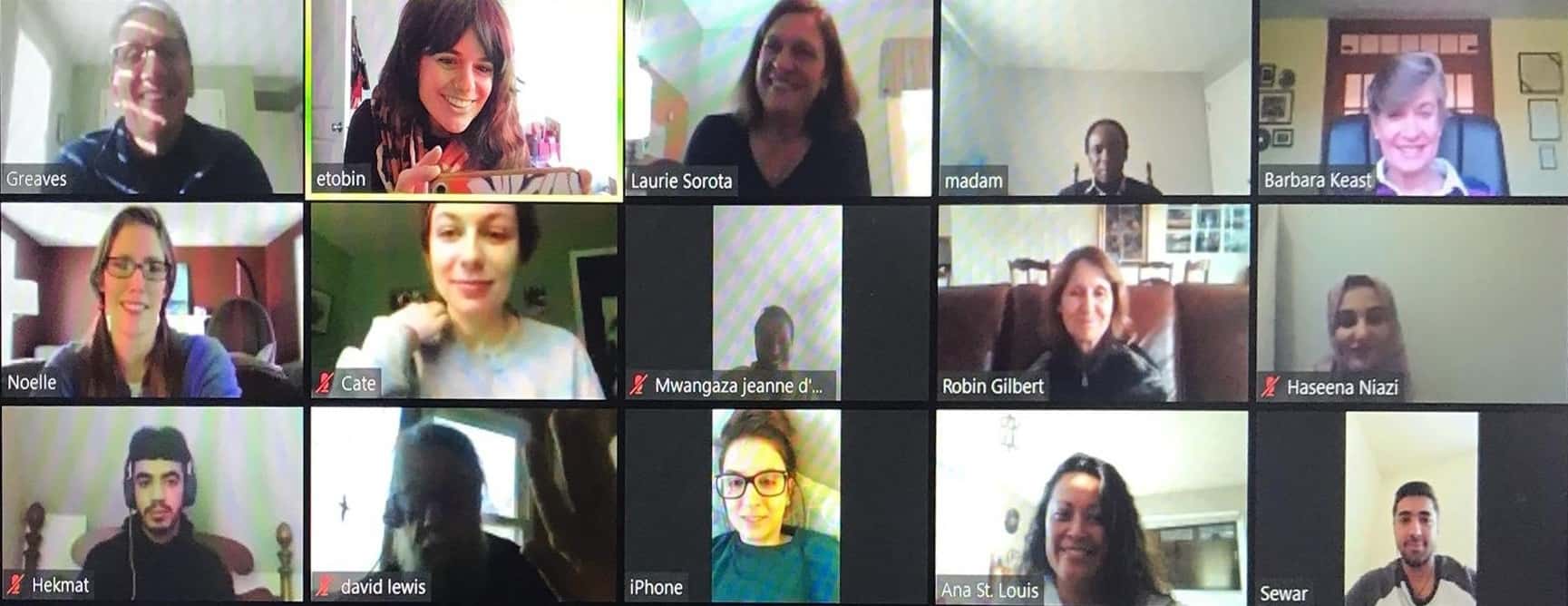
Молодіжні наставники Лоуелла роблять все можливе, щоб підтримати своїх підопічних дистанційно в цей непевний час. Минулого тижня вони разом з працівниками IINE організували групову "зустріч", яка об'єднала багатьох наставників та підопічних за допомогою Zoom. Сесія була в рівній мірі підбадьорливою та інформативною і забезпечила важливий вихід для всіх, хто хотів поспілкуватися.

Переходячи на дистанційні заняття з англійської мови для носіїв інших мов (ESOL), керівники програми знали, що вони можуть покластися на корпус волонтерів-ветеранів для підтримки клієнтів під час їхнього дистанційного навчання. У тому, що стало "новою нормою", освітній менеджер Шеррі Сполдінг зв'язує кожного студента з окремим волонтером через WhatsApp, а потім волонтер і студент проходять через його/її індивідуальні матеріали та плани уроків. Багато учнів Лоуелла знаходяться на початковому рівні грамотності і мають обмежені технологічні навички, що робить перехід до дистанційного навчання особливо складним, але волонтери IINE прагнуть підтримувати їхнє подальше навчання протягом цього часу.

Протягом останніх трьох років ротаційна група зі 150 волонтерів надавала щоквартальні обіди та щомісячні перекуси 120 студентам IINE в Бостоні. Оскільки криза у сфері охорони здоров'я унеможливила проведення цих заходів, лідери волонтерських програм "Обіди та бесіди" та "Студентські перекуси" шукали спосіб підтримати студентів на відстані. Команда волонтерів вирішила звернутися до своєї великої волонтерської бази і закликати до грошових пожертв замість пожертвування часу та продуктів харчування, які зазвичай надаються в березні, квітні та травні. Разом вони зібрали понад $1,000 для безпосередньої допомоги іммігрантам і біженцям, які намагаються оплатити їжу і предмети першої необхідності. Ці кошти були переведені на подарункові картки продуктових магазинів для студентів і клієнтів.

У нашому офісі в Манчестері, штат Нью-Гемпшир, волонтери підтримують дорослих студентів на заняттях з англійської мови професійного спрямування та поза ними, надають меблі для дому та вітальні набори новоприбулим сім'ям біженців, а також дарують одяг нашим клієнтам в умовах холодної нью-гемпширської зими. Манчестерський офіс IINE часто приймає багатодітні сім'ї біженців з Африки та Азії; сім'ї, які легко адаптуються в Нью-Гемпширі, значною мірою завдяки відданості та підтримці наших волонтерів.

Хоча вони щодня беруть участь у майже всіх програмах IINE, ми навіть уявити собі не могли, як ці надзвичайні часи будуть зустрінуті з ентузіазмом і щедрістю наших волонтерів. Як доречно, що Тиждень вдячності волонтерам прийшов саме тоді, коли ми хочемо сказати "ДЯКУЮ" людям, від яких ми продовжуємо залежати.

Вдячне оновлення від IINE

Вдячне оновлення від IINE

In these challenging times it is remarkable to me how communities across the country are coming together.

People are taking social distancing seriously, school districts are doing their best to provide remote learning, companies are manufacturing ventilators and other equipment as quickly as they can, neighbors are checking in on one another, and Congress even passed bipartisan stimulus legislation.

The IINE community is rallying as well.

The immigrants and refugees we serve continue to inspire us. Many of those we trained to work in hospitals and medical centers are among the 1.7 million foreign-born healthcare workers on the front lines of the COVID-19 crisis.

One of our refugee clients who arrived in the past year to Manchester, New Hampshire has a car, and volunteered to pick up and deliver food to neighbors in the local refugee community who typically rely on public transportation.

Ever resilient, refugee and immigrant clients who worked in the hospitality industry are taking jobs at grocery stores, food warehouses, and medical manufacturing facilities.

Our management team quickly set up systems that enable us to deliver services remotely. IINE employees, who just three weeks ago worked to find people jobs, are now on the phone helping clients file for unemployment insurance. Our legal team is working by phone and video to process immigration forms. IINE staff are dropping off food and donated emergency funds to people who are unable to buy food or pay rent and utility bills.

At our Boston site, we launched distance learning English for Speakers of Other Languages (ESOL) classes. In Lowell, a group of volunteers is providing one-on-one remote video tutoring to adult English students, and our Refugee Youth Mentoring program continues with an online hangout for mentors and young people.

We quickly expanded our highly popular Suitcase Stories® program to an online platform, and launched a membership program called “Suitcase Stories Circle” for those who want access to additional resources and content.

Our donors are coming together as well. A group of volunteers who provide lunches and snacks to IINE students appealed for donations from their circle of friends, and hundreds of you have donated and sent words of encouragement in recent weeks.

Rather than bemoan our common fate, this Sunday morning seems like the right time to give thanks for all the good things taking place within our community.

We thank you for supporting our work and hope you and your family are staying safe and healthy.

Gratefully,
Jeff Thielman
President & CEO

Оновлення програм IINE під час COVID19

Оновлення програм IINE під час COVID19

Dear friend of IINE:

I want to update you on all the International Institute program team has been doing during the COVID-19 emergency. I have served alongside IINE colleagues and led program teams for over a decade, and know IINE’s dedication to immigrant families and communities on a normal day is stellar— these past weeks it’s been breathtaking.

We have not let the health crisis, or the temporary suspension of our on-site services, deter us from continuing to support to our immigrant and refugee neighbors . Our team has been working hard – and creatively – to keep connections alive, while adhering to physical distancing guidelines.

Outreach and Communications : In the past two weeks, we have stayed in touch with our clients. In addition to mass communiques via emails and text, our teams have sent 175 individual emails and text messages to our clients; we have provided 65 in-person case management and legal services to clients; and we have conducted 1,199 appointments by video and phone conference .

Critical Case Management : During this unprecedented time, IINE is responding to the specific needs of our clients. We are continuing to provide many of our program activities remotely, and have developed enhanced programming to better respond to the evolving situation. Since March 13, we have delivered:

  • 344 instances of emergency education support, provided to both adults and children;
  • 41 instances of emergency employment support;
  • 35 instances of emergency support in accessing food and other basic needs;
  • 27 instances of emergency housing support;
  • 17 instances of emergency medical support;
  • 55 instances of accessing emergency public benefits;
  • 25 instances of remote youth mentoring; and
  • 435 “wellness checks” conducted because of the pandemic.

But the numbers don’t tell you the whole story.

  • Our education team has moved our English Language courses on-line, and has made sure that our clients have access to technology by lending computers where needed, and by connecting our clients to tech resources (through school districts and like-minded community partners);
  • Our caseworkers in Lowell connected with each of our families to make sure kids could keep learning; they tracked down learning packets and classwork by grade, and have been sending out individualized texts to each household with links to assignments and other educational resources;
  • Our Suitcase Stories® program expanded into a robust online platform featuring a range of interactive experiences aimed at bringing diverse voices into meaningful conversations;
  • Our CEO, Jeff Thielman, went to Logan airport last week to greet Massachusetts’ last refugee family to arrive before the temporary suspension of the U.S. refugee resettlement program. If you’d like to hear more about this emotional arrival, click here to listen to the story that appeared on WBUR.

I am so proud of everything the IINE team has done these two last weeks, and I am heartened to see how our community continues to provide us with all manner of generous support.

In the days ahead, I hope the International Institute, and its new American clients, can continue to count on you to stand with us .

In solidarity and with my warmest regards,

Alexandra Weber
Chief Program Officer

Заява IINE щодо розширеної заборони на в'їзд

Заява IINE щодо розширеної заборони на в'їзд

Last week, President Trump announced the expansion of the unjust and xenophobic Travel Ban policy. Effective February 22, new restrictions will apply to immigrants from Myanmar (also known as Burma), Eritrea, Kyrgyzstan, Nigeria, Sudan and Tanzania. This expanded policy will forever impact families within the IINE community.

The International Institute is privileged to be part of the American side of immigrants’ and refugees’ journeys. Every day, people in our programs gain skills, establish roots in New England, and contribute to the economic and cultural vitality of our communities. During the past five years, the International Institute has provided resettlement, education, employment, and legal services to more than 10,000 people — 677 of whom are from countries now affected by the travel ban.

We would venture to say we understand the people of these nations a little better than President Trump does.

People like Yayha, from Sudan, whose compelling story was featured by The Weather Channel for an in-depth article about how climate change is contributing to global migration.

People like Suleka, from Somalia, (a country included in the administration’s previous Travel Ban) who saw her siblings perish in war, but who survived and persevered. Today, she is a nurse who helps others in need.

And people like Muhammed and Hussein, from Myanmar, who escaped violence in their homeland and journeyed alone to the U.S. to establish a life in safety with the aim of reuniting with those they were forced to leave behind.

Like Muhammed and Hussein, the vast majority of refugees and immigrants arrive in the U.S. with the expectation that, someday, their family members will join them here. The consequence of this expanded Travel Ban policy means that many of these families may never reunite on U.S. soil.

The 677 people we know from these countries have endured persecution, war, violence, and famine. Today, they fill critical roles in education, healthcare, hospitality, and numerous other industries. They are parents, co-workers, neighbors, and friends. We admire their courage and optimism and we celebrate their contributions to their neighborhoods, offices, and classrooms. We know they play a significant part in driving our thriving New England economy and we think they deserve to be reunited with the family members they left behind.

Each day we work with individuals from nations affected by the Travel Ban whose families remain in their home countries or in refugee camps on the other side of the world. The expanded Travel Ban is a devastating blow to those who journeyed to America with the promise that, if they played by the rules, they could reunite with their loved ones. Through this cruel and unjust policy, President Trump is dividing families and breaking America’s promise of humanitarian assistance to the world’s most vulnerable people.

To support our mission and the critical programs we provide, please donate online, here.

Лукреція Аріас бере інтерв'ю у свого викладача англійської мови

Лукреція Аріас бере інтерв'ю у свого викладача англійської мови

Lucrecia Arias is a level five ESOL student. She recently received the opportunity to interview her teacher, Natalie Patalano. Lucrecia came from El Salvador and has been resettled into the United States by IINE. In 2017, she joined IINE as a student and worked her way up to a more advanced level of English.

As the date of her class graduation nears, Lucrecia took the chance to learn more about her teacher, and to practice her English. Here is their interview!

L: Hello Natalie, I have 5 questions for you. Do you believe that everything happens for a reason?

N: I do believe in fate, in my own experience, I took a language class when I was in college, kind of by accident, and I really fell in love with it and it turned into my career.

L: What is your favorite element; land, air, fire, or water?

N: Water. Because water makes me think of the ocean and I like being by the ocean and I think it’s very peaceful and really powerful and scary and without water we wouldn’t be able to survive.

L: Which country would you move to if you could live anywhere in the world?

N: Realistically, I would probably live here, because my family is here. But, if I could pick any place in the world, I think I would live in Tuscany in Italy, because it’s very beautiful and my family immigrated from there a long time ago.

L: Did you ever have a dream in another language?

N: Yes, actually a few times where I had dreams where I was speaking in Italian and other people were speaking in Italian. And do you know what they say if you dream in another language, that means you’re thinking in that language, right? So, it’s like another level of proficiency.

L: What do you recommend to fulfill your professional dreams? One or two things, the most important thing on how to practice.

N: Well there is an expression in English that says “do what you love and you’ll never work another day in your life”. So if you do something that you’re very passionate about, it doesn’t matter if you make a lot of money, it matters that you’re happy and you feel fulfilled. So, I do definitely believe in that. I think you have to work really hard and not be afraid to reach out to people, even strangers, and make professional connections. Because if someone helps you advance in your career, as you advance, you can help other people and you’re always paying it forward.

Свідок справжнього "плавильного котла": IINE з точки зору новачка

Свідок справжнього "плавильного котла": IINE з точки зору новачка

by Sarra Briki, Marketing & Communications Intern

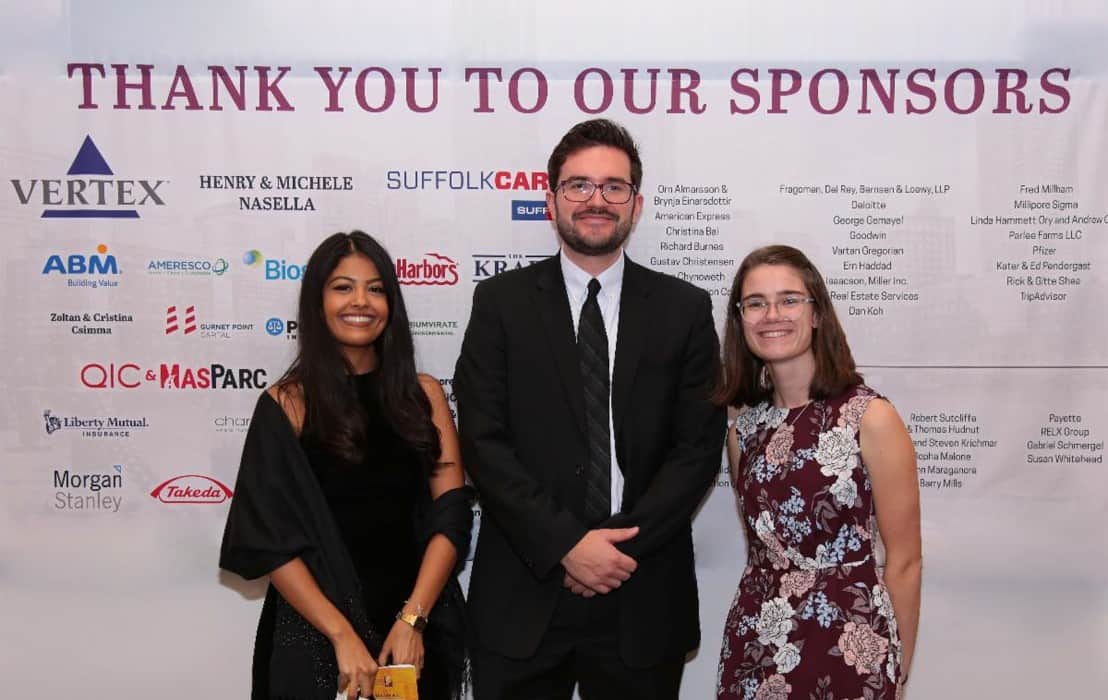
This past week, I had the honor of attending the International Institute of New England’s (IINE) 38th Golden Door Award Gala honoring Dr. Joseph E. Aoun, President of Northeastern University. I never expected to find myself surrounded by such an influential and diverse audience. I also never expected to feel a sense of familiarity in a completely unfamiliar setting.  


Growing up, my perception of America was mainly built on TV series like Friends and That 70s Show. A perception of a faraway land where everything is possible, where you can become whoever you want to be, where dreams come true, and where people dress up in scary costumes to get free candy from their neighbors!


I vividly remember the expression “Melting Pot” being used to describe America. When I was seventeen, I was fortunate enough to participate in a cultural exchange program where I was able to spend a year living with an American host family and attend high school in Virginia. The experience was so memorable that I returned six years later to obtain my master’s degree. I came to Boston with a curiosity to explore what the city has to offer. I also came with a major fear of the northeastern winters and extremely cold weather. In fact, I wore two coats the evening of the Golden Door Award event, just to be prepared!


I arrived at Matthews Arena a few hours before the ceremony began. Having observed the tremendous work, continuous coordination, and unforeseen challenges that IINE’s team underwent in preparation for the event, I was impressed by the results. I witnessed the arena transform into an elegant venue embellished with fresh flowers that filled the space with a heavenly aroma and twinkling lights highlighting IINE’s gold and purple colors. Once guests started arriving and over the course of the event, I heard Arabic, Spanish, and Chinese, I saw people dressed in traditional clothing sharing stories, laughter, and anecdotes, and I felt a sense of joy, connectedness, and belonging. The scene was a strange one, yet the feelings were very familiar: I was experiencing the “Melting Pot”.

Attending the Golden Door Award made me realize that organizations like IINE play a crucial role in bridging gaps and building strong and connected communities. Dr. Joseph Aoun is the perfect example and living proof that immigrants and refugees not only thrive and succeed once welcomed and resettled, but also give back to their communities.

Known as an innovation hub and often synonymous with cultural diversity, the city of Boston demonstrates how vital refugees and immigrants are to the economy and community and how critical the work of IINE is in supporting them.

Fifteen-year old me would never have thought I would find myself living in Boston and working for a nonprofit that paves the way of success for immigrants and refugees. I never thought I would have the chance to deeply experience the country I once knew through pop culture and TV series. I am grateful to be part of such an influential organization as the marketing and communications intern, I am thankful to share my Tunisian culture with a city that welcomes it, and I look forward to sharing these experiences and what I learned from them with my own country.    

Hundreds Gather to Honor Dr. Joseph E. Aoun With Golden Door Award

“Every immigrant needs the support of a community…” – Dr. Joseph Aoun, Golden Door Award Honoree

Seven hundred people gathered at Matthews Arena last night to honor Dr. Joseph E. Aoun, the president of Northeastern University, as he received the Golden Door award from the International Institute of New England (IINE).

Dr. Aoun, a highly respected scholar, teacher, and academic innovator, spoke of his early days as a lonely and struggling graduate student at MIT. He recounted “wrestling” with English and having serious concerns about whether coming to America to study was the right choice.

“My teachers liberated me from self-doubt,” he said.

The welcome he received from his professors at MIT – including a number of memorable Thanksgiving dinner invitations – helped him feel more at home in Boston, then in California, when he took a teaching position at USC.

He said the ongoing welcome he received at every turn of his American journey taught him that the people around us have the greatest impact on our success.

“Every immigrant needs the support of a community,” Dr. Aoun said.

President Aoun’s remarks resonated with an audience of refugees and immigrants enrolled in IINE’s legal services, education, career, and resettlement programs as well as Northeastern students, business leaders and supporters.

Dr. Aoun praised the work of the International Institute and concluded his speech by inviting IINE clients to join him on stage. “I am proud and humbled to share this journey with you,” Aoun said.

Vertex Pharmaceuticals Chairman, President and CEO, Jeff Leiden, who served as the Gala co-chair, praised IINE, President Aoun, and spoke about how Vertex embraces innovative ideas from people of all backgrounds.

“Vertex would not be the company it is today without immigrants,” he said.

Massachusetts House Speaker Robert DeLeo, an alumnus of Northeastern raised in an immigrant neighborhood, said he was brought up to respect and value people from all over the world. He praised Dr. Aoun for infusing Northeastern with a multicultural spirit.

The evening included inspiring musical performances from the Northeastern University Choral Society singing “The Immigrant Experience” by composer John Kramer, and the university’s award winning a capella group.

More than 100 corporate and individual sponsors provided support to the event, which raised $800,000 for the International Institute of New England.

Спільна заява IINE та Ascentria Care Alliance

Спільна заява IINE та Ascentria Care Alliance

“In countless ways, America depends on new Americans.”
Agencies oppose Trump administration plans to slash refugee resettlement and legal immigration to the U.S.
 By: Ascentria Care Alliance and the International Institute of New England

Ascentria Care Alliance, one of the largest human service nonprofits in New England, and the International Institute of New England, the region’s oldest provider of immigrant and refugee services, issue this joint statement in opposition to federal policies announced that would slash the number of refugees admitted to the US:

“The Trump administration announced new policies that, in effect, declare that the Statue of Liberty no longer symbolizes our nation’s welcoming spirit.

“The administration plans to set the new yearly refugee admissions goal at 18,000, a record low. And a new executive order would allow state and local officials to stop resettlement in their communities. They seemingly want to dismantle our nation’s resettlement programs.

“Destroying the U.S. Refugee Administration Program would mean that we abandon thousands of refugees who have already cleared strict U.S. screening and vetting processes.  They include families with small children and survivors of genocide, as well as thousands who have been persecuted for their political or religious beliefs. Nearly 40,000 refugees are already approved and at various stages in the process. To reject them, after they have already waited for years to resettle here, would be a betrayal of our values and our humanitarian tradition.

“We don’t believe the policies enacted this week represent majority opinion in the U.S. because they do not reflect our values. Most Americans don’t want to extinguish our legacy as a safe haven. They realize, gratefully, that their own ancestors once immigrated or fled to the U.S.

“In countless ways, America depends on new Americans. We need refugees and immigrants in greater numbers if our economy is going to continue to grow and generate the wealth needed to finance defense, the national debt, Social Security, and other commitments. So not only would it be un-American to stop being ‘a nation of immigrants,’ it would be anti-American because it would be contrary to our national interests.

“Especially in New England, new Americans help drive the economy, enhance the culture, and become part of the fabric of our local communities. In this region – with the highest rate of college-educated adult workers in the nation – employers are struggling to fill jobs that require high skills and low skills. Industries vital to this region’s growth – such as construction, healthcare, hospitality — cannot meet their workforce needs with only native-born Americans.

“Because Ascentria Care Alliance and the International Institute of New England help immigrants and refugees resettle and obtain good jobs, we know firsthand how quickly they start to achieve independence after arriving in the U.S.  It isn’t long before newcomers become valued employees in US companies, manufacturers of US goods, founders of US  businesses, and creators of jobs in the US.  Refugees rent and then purchase US homes, learn in US schools, join the US armed forces, all while paying municipal, state, and federal taxes.

“The truth is, our country needs refugees as much as they need us.

“We will continue to work with other organizations and individuals to educate and advocate for a return to the policy of the U.S. welcoming new Americans – a policy reflected in our national motto, E pluribus unum, ‘out of many, one.’ In the great tradition of American optimism, we believe that a more humane and welcoming policy will yet again prevail.”

Про Альянс допомоги "Асцентрія

As one of the largest nonprofit, human service organizations in New England, Ascentria Care Alliance empowers people of all backgrounds to rise together and reach beyond life’s challenges. We use an innovative human-centered care model to help individuals and families move forward and thrive – physically, intellectually, socially, spiritually and economically. With many locations throughout the region, Ascentria serves children, youth and families; persons with developmental disabilities and mental illness; refugees, including unaccompanied minors; and older adults.

Завдяки продуктивній співпраці та партнерству ми створюємо вимірюваний позитивний вплив, який збагачує наші громади. Надихаючись нашою релігійною спадщиною та керуючись співчуттям, відвагою та чесністю, ми бачимо світ, у якому кожен може повністю реалізувати свій потенціал та ділитися з іншими, хто цього потребує.

About The International Institute of New England

Founded in 1918, the International Institute of New England (IINE) is one of the oldest and largest social service organizations for new Americans in the region. Our mission is to create opportunities for refugees and immigrants to succeed through resettlement, education, career advancement, and pathways to citizenship. Across IINE’s three service sites (Boston, Lowell, and Manchester, NH), IINE programs support 2,500 newcomers, including refugees and asylees, unaccompanied minor children from Central America, victims of human trafficking, and other immigrants.

IINE programs are critical to preserving the nation’s tradition of welcoming people of all backgrounds who cherish freedom, equality, and hard work.  IINE’s programs are particularly important to New England, which depends on immigrant labor to sustain and grow its economy.

Заява IINE щодо ліміту біженців на 20 фінансовий рік

Заява IINE щодо ліміту біженців на 20 фінансовий рік

Вчора Білий дім оголосив про плани прийняти лише 18 000 біженців у наступному фінансовому році, що є найнижчим лімітом в історії США. 

Кількість вимушених переселенців у світі досягла історичного максимуму. 26 мільйонів біженців у світі живуть у таборах, тимчасовому житлі та на вулицях міст. Більшість з них чекали доленосного шансу жити в безпечній країні протягом 20 років. Кожен біженець є жертвою невимовних переслідувань, і багато хто сподівається приєднатися до своїх братів, сестер, батьків, дітей і подружжя в США.

До 2016 року Сполучені Штати очолювали світову гуманітарну відповідь на кризу біженців. План президента відкидає 40-річний двопартійний прецедент і національну традицію прийняття переслідуваних людей, що передує заснуванню нашої держави.

Міжнародний інститут Нової Англії був заснований 101 рік тому волонтерами з Лоуелла, які відреагували на зростання антиіммігрантських настроїв, зробивши свою громаду більш гостинною. Той самий дух все ще керує нашою місією.

Це наш щоденний привілей - підтримувати 2 500 біженців та іммігрантів щороку в штатах Массачусетс і Нью-Гемпшир. У 20-му фінансовому році IINE надаватиме найважливіші послуги 7000 біженцям, яких ми переселили за останнє десятиліття, а також багатьом іншим іммігрантам, з якими ми стикаємося щодня. Ми також готові прийняти новоприбулих біженців.

Ми виступаємо проти плану Білого дому різко скоротити прийом біженців, тому що він прирікає багатьох на нескінченні страждання, і це морально неправильно для найбагатшої країни світу відвертатися від найбільш нужденних у світі.

У найближчі тижні Президент проконсультується з Конгресом перед тим, як прийняти остаточне рішення про граничну кількість біженців. Ми будемо лобіювати повернення наших лідерів до традиційних рівнів прийому біженців, і з вашою допомогою IINE продовжуватиме інформувати політиків і громадськість про економічний, моральний і культурний внесок, який ми отримуємо завдяки вічному дару - знаходженню місця за нашим столом для інших.

Ти можеш допомогти!

  • Пожертвувати на підтримку біженців, які нещодавно прибули до регіону.
  • Виступати за зміну свідомості політиків.
Третій наратив про іммігрантів: Чому ми потребуємо їх так само, як вони потребують нас

Третій наратив про іммігрантів: Чому ми потребуємо їх так само, як вони потребують нас

“Give me your tired, your poor, your huddled masses yearning to breathe free, the wretched refuse of your teeming shore.”

For some, the words of poet Emma Lazarus, which have adorned the Statue of Liberty for over 100 years, are a call to help those who are suffering. For others, like Ken Cuccinelli, the acting director of the U.S. Citizenship and Immigration Services, the poem conjures fear that those who come to our shores, borders, and airports may drain our resources. In supporting a new public charge rule that will curtail legal immigration and harm immigrants, Cuccinelli suggested changing those words to: “Give me your tired and your poor who can stand on their own two feet and who will not become a public charge.”

While refugees and asylum seekers are exempt from the public charge rule, there are important facts to relay and stories to tell as President Trump makes it increasingly difficult for asylum seekers to pursue protection in the U.S. and considers shutting down refugee admissions in FY 2020. Both of the above narratives ignore a more important third narrative about immigrants: they are not just victims who need our help; they are peers who aid in our country’s well-being. We see this daily in our work helping refugees and asylum seekers while running the International Institute of New England (IINE) and directing Northeastern University’s Immigrant Justice Clinic (IJC). Statistics show that immigrants strengthen, rather than harm, our economy. According to the Small Business Administration, 18% of all small business owners are immigrants. In fact, immigrants are 30% more likely to start a business than non-immigrants, and according to the Pew Research Center, as our population ages and fewer people have children, the U.S. workforce would be shrinking, if not for immigrants, instead of expanding. As this report from the National Immigration Forum details, refugees are an “overwhelming positive fiscal contributors,” because they “extend the solvency of important programs like Social Security and Medicare while countering the aging of the U.S. workforce.”

The story of Kabagambe Bamunoba is illustrative of these statistics. Kabagambe arrived in Lowell, Massachusetts in 2009 from a refugee camp in Uganda. IINE, a federally monitored refugee resettlement agency, welcomed him, his wife, and children at the airport, placed them in housing, enrolled the family in a healthcare plan and English classes, and helped Kabagambe find his first job. In the summer of 2012, he landed a job at a Brooks Brothers-owned manufacturing plant where he continues to work alongside hundreds of other people who were born outside of the U.S. Kabagambe receives exemplary performance ratings at work and is the kind of employee any company would love to hire. He is a homeowner and taxpayer, two of his children are college graduates, two are attending public schools, and his family are proud members of the Lowell community, a city whose population growth has been fueled almost entirely by immigrants.

Another story, like so many we see, is that of Maria Lopez, whose name has been changed to protect her identity. Maria and her three children fled violence and persecution in Mexico and sought asylum in the U.S. The IJC, which is a pro bono legal clinic within Northeastern University’s School of Law, provided her legal representation on her asylum case. Law students and professors prepared her application materials, linked her with resources for her and her children, and represented her at the asylum interview. The case was successful; she and her children were ultimately granted asylum. Within two months of being granted asylum, Maria had applied for and accepted a teaching position in a low-income neighborhood, found a place to live permanently, and enrolled her children in local schools where they are thriving. Like so many immigrants, after receiving some modest help, Maria quickly became financially independent—or, as Cuccinelli would have it, she stood on her own two feet.

Refugees and asylees, and their children and grandchildren, become active, thriving citizens of U.S. communities. They run businesses, play important roles in companies, teach in our schools, serve on our police and fire departments, help companies grow, and are involved in churches and civic groups. They stand on their own two feet, very quickly in fact, after arriving on U.S. shores.

The truth is our country needs them as much, if not more, than they need us.

Jeff Thielman is President and CEO of the International Institute of New England, and Hemanth C. Gundavaram is a law professor and co-director of the Immigrant Justice Clinic at Northeastern University School of Law.

Вигравши візову лотерею, цей студент ESOL прагне досягти успіху

Вигравши візову лотерею, цей студент ESOL прагне досягти успіху

by Mariah Dennis, Volunteer and Contributing Writer

Many people live in hope of winning a lottery, but Boston ESOL student Yawo Detse Vouti has already won the most important lottery of his life. In fact, he describes the day he won the lottery as “like a dream.”
In 2007, he was living in his home country of Togo, where there is an annual program that randomly picks a select few to receive visas to live in the United States.

“You cannot imagine how the people feel about the U.S. visa lottery in our country,” Yawo said.

Having applied for the visa for the first time, he was astonished to open an email at his local internet cafe and receive the news that he had won. For Yawo, the visa was a ticket to a life in the United States and the chance for more opportunities.

He said his dreams of life in American slowly became a reality as he proceeded through the many complicated stages of the visa process. He arrived in the United States in the fall of 2018 with borrowed money in his pocket and the promise of a distant cousin’s connection in the Boston area.

Today, Yawo is working as hard as he can to make his life in the United States live up to his dreams. A typical working day for Yawo means leaving his home at 8 p.m. so he can walk forty minutes to the nearest bus stop. Next, he rides the bus to the MBTA’s blue line. From there, he commutes on the T to his shift at an airport catering facility at 11 p.m.

Yawo spends all night on his feet loading the carts that will be used to provide beverages and meals on flights the next morning. By the time his shift ends at 7 a.m., he is exhausted and aching from the physical work.

But, Yawo smiles even as he explains the long commute and demanding overnight shift. When he began his job, he specifically requested the night shift so he could spend his days in the classrooms at IINE learning English.

“My first step is to learn English,” he said. “If I can do that, I can change all my options. If I do that, I can do anything.”

He has already worked his way to the level 2B English class, and his goal is to one day continue his formal studies in the US. Yawo’s belief in the transformative power of education fuels his work every day, and he is certain his hard work will pay off soon.

“I know after one year, two year, three years, everything will change. I don’t want to run away from this moment. I will do it.”

After his English class ends at 1 p.m., Yawo heads home to rest up before he gets ready to do it all over again.

Висвітлення історій іммігрантів через фотографії: Знайомтеся, Беккі.

Inspired by a desire to make world cultures more accessible to New Hampshirites, photographer Becky Field has made it her life’s work to capture, celebrate, and Becky Fielraise up images of cultural diversity in the Granite State. While highlighting cultural differences, her work illustrates the human themes of family, faith, work, and community that are common to all residents of New Hampshire – whether born here, or not.

Becky has been taking photos of the IINE community for more than ten years. In her capacity as a volunteer photographer, she has donated hundreds of hours of her time to capture some of the organization’s most special people and special moments.

Part of Becky’s unique approach to photography is the way she respects and promotes the experiences of those from other places. In 2018, she worked with adult learners at IINE Manchester, teaching them how to identify photo subjects, compose an image, and create an artist statement. The students displayed their work at an exhibit wall in the IINE Manchester site.

“Every time I have the opportunity to interact with newcomers to New Hampshire, I find it thrilling and I learn so much,” she said. “Whether I am taking their photos, or helping them create their own, I always feel grateful to have had a little glimpse into their perspectives.”

Becky’s scope of work has been recognized by the New Hampshire State Council on the Arts, the Bhutanese Community of New Hampshire, and the Turkish Cultural Center of New Hampshire. In 2015, her photographs were published in a book she called, “Different Roots, Common Dreams: New Hampshire’s Cultural Diversity.” The book received two national awards, and launched an exhibit and lecture tour that brought hundreds to see her work.

Recently, Becky partnered with the NH Charitable Foundation to start the Different Roots, Common Dreams Scholarship Fund to help refugees and other immigrants complete a four-year undergraduate degree.

“It is really important to me that refugees and immigrants feel welcomed in New Hampshire,” she said. “This is one small way I can help make this one opportunity available to them.”

Becky holds a Certificate in Photography from the NH Institute of Art, and has studied photography throughout the Northeast.  Before she became a full-time photographer, Becky was a research ecologist and university professor. She holds masters and doctoral degrees in wildlife ecology. Her work can be seen online at: FieldWorkPhotos.com and DifferentRootsNH.com