metapixel
Ir al contenido principal

Our offices will be closed on Friday, June 19 in observance of Juneteenth.

Autor: Jeff Thielman

Agradecimiento a los voluntarios

Semana Nacional del Voluntariado en el IINE
Cada año, el Instituto Internacional atiende a miles de familias de refugiados, asilados e inmigrantes a través de nuestros numerosos servicios de apoyo. Casi todos los programas del IINE dependen de los voluntarios para ofrecer el apoyo de calidad que merecen nuestros estudiantes y clientes. El personal del IINE comenta a menudo que "no podríamos hacerlo" sin el increíble cuerpo de dedicados voluntarios.

Los voluntarios del IINE van constantemente más allá de lo que les pedimos. Durante la Semana Nacional del Voluntariado (del 19 al 25 de abril), queremos reconocer las contribuciones que estas personas han hecho en las vidas de nuestros clientes. Especialmente durante esta época de mayor inestabilidad, distancia e incertidumbre, nuestros voluntarios se han comprometido a apoyar a nuestros clientes y ayudar a IINE a llevar a cabo nuestra programación básica. He aquí algunos ejemplos de las extraordinarias actividades de los voluntarios:

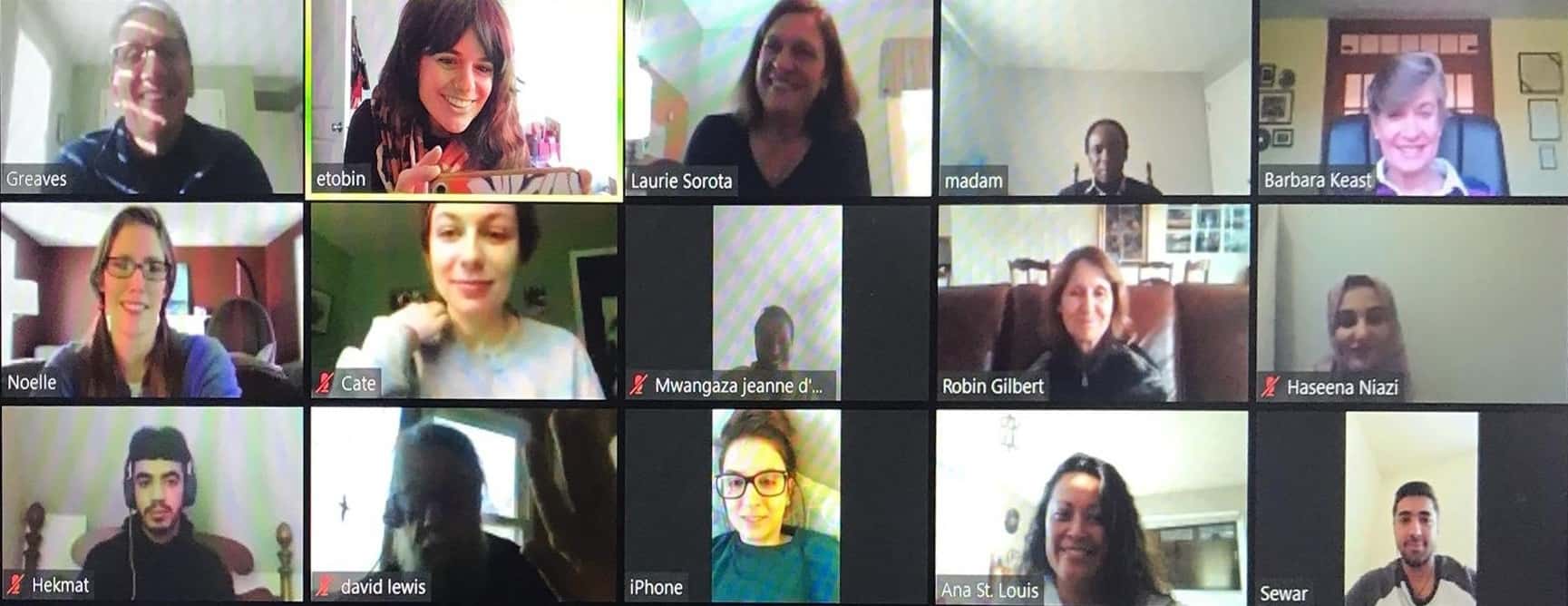
Los mentores de Lowell Youth están haciendo todo lo que pueden para apoyar a sus alumnos a distancia durante este tiempo incierto. La semana pasada, trabajaron con el personal de IINE para organizar una "reunión" de grupo que reunió a muchos de los mentores y alumnos a través de Zoom. La sesión fue edificante e informativa a partes iguales y supuso una importante vía de conexión para todos.

En la transición a las clases a distancia de inglés para hablantes de otras lenguas (ESOL), los gestores del programa sabían que podían apoyarse en un cuerpo de voluntarios veteranos para ayudar a los clientes en su aprendizaje a distancia. En lo que se ha convertido en la "nueva normalidad", la Directora de Educación, Sherry Spaulding, conecta a cada estudiante con un voluntario individual a través de WhatsApp, y luego voluntario y estudiante repasan sus materiales y planes de lecciones individuales. Muchos estudiantes de Lowell están en un nivel de alfabetización inicial y tienen habilidades tecnológicas limitadas, lo que hace que la transición al aprendizaje a distancia sea particularmente difícil, pero los voluntarios de IINE se han comprometido a apoyar su educación continua durante este tiempo.

Durante los últimos tres años, un grupo rotatorio de 150 voluntarios ha proporcionado almuerzos trimestrales y meriendas mensuales a 120 estudiantes del IINE en Boston. Con la crisis de salud pública impidiendo la realización de cualquiera de esas actividades, los líderes voluntarios de los programas Meals & Conversation y Student Snack buscaban una manera de apoyar a los estudiantes desde lejos. El equipo de voluntarios decidió dirigirse a su amplia base de voluntarios y solicitar donaciones en metálico en lugar de las donaciones de tiempo y alimentos que normalmente se hacían en marzo, abril y mayo. Juntos recaudaron más de 1.000 dólares para ayudar directamente a los inmigrantes y refugiados que tienen dificultades para pagar alimentos y artículos de primera necesidad. Desde entonces, esos fondos se han transferido a tarjetas regalo de supermercados para que las utilicen los estudiantes y los clientes.

En nuestra oficina de Manchester, NH, los voluntarios apoyan a los estudiantes adultos dentro y fuera del aula de ESOL, proporcionan muebles para el hogar y kits de bienvenida a las familias de refugiados recién llegados, y donan ropa a nuestros clientes en los fríos inviernos de New Hampshire. La oficina de IINE en Manchester acoge a menudo a grandes familias de refugiados procedentes de África y Asia; familias que han tenido una transición sin problemas a New Hampshire en gran parte gracias al compromiso y el apoyo de nuestros voluntarios.

Aunque se cuenta con ellos todos los días en casi todos los programas que lleva a cabo el IINE, nunca podríamos imaginar cómo se afrontarían estos tiempos extraordinarios con la entusiasta generosidad de nuestros voluntarios. Qué apropiado que la Semana de Agradecimiento a los Voluntarios haya llegado justo cuando queremos dar las GRACIAS a las personas de las que seguimos dependiendo.

Una actualización agradecida del IINE

Una actualización agradecida del IINE

En estos tiempos difíciles, me parece extraordinario cómo las comunidades de todo el país se están uniendo.

La gente se toma en serio el distanciamiento social, los distritos escolares hacen todo lo posible por ofrecer enseñanza a distancia, las empresas fabrican ventiladores y otros equipos tan rápido como pueden, los vecinos se controlan unos a otros y el Congreso incluso aprobó una ley bipartidista de estímulo.

La comunidad IINE también se está uniendo.

Los inmigrantes y refugiados a los que atendemos siguen inspirándonos. Muchos de los que formamos para trabajar en hospitales y centros médicos se encuentran entre los 1,7 millones de trabajadores sanitarios nacidos en el extranjero que están en primera línea de la crisis COVID-19.

Uno de nuestros clientes refugiados que llegó el año pasado a Manchester (New Hampshire) tiene coche y se ofreció voluntario para recoger y entregar alimentos a los vecinos de la comunidad local de refugiados que suelen depender del transporte público.

Cada vez más, los refugiados e inmigrantes que trabajaban en el sector de la hostelería aceptan empleos en tiendas de comestibles, almacenes de alimentos e instalaciones de fabricación de productos médicos.

Nuestro equipo directivo estableció rápidamente sistemas que nos permiten prestar servicios a distancia. Los empleados de IINE, que hace apenas tres semanas trabajaban para encontrar trabajo, ahora están al teléfono ayudando a los clientes a solicitar el seguro de desempleo. Nuestro equipo jurídico trabaja por teléfono y vídeo para tramitar los formularios de inmigración. El personal del I INE entrega alimentos y dona fondos de emergencia a personas que no pueden comprar comida ni pagar el alquiler o las facturas de los servicios públicos.

En nuestra sede de Boston, hemos puesto en marcha clases a distancia de inglés para hablantes de otras lenguas (ESOL). En Lowell, un grupo de voluntarios ofrece clases particulares de inglés a distancia por vídeo a estudiantes adultos, y nuestro programa de tutoría a jóvenes refugiados continúa con un encuentro en línea entre mentores y jóvenes.

Rápidamente ampliamos nuestro popular programa Suitcase Stories® a una plataforma en línea y lanzamos un programa de afiliación llamado "Suitcase Stories Circle" para quienes desean acceder a recursos y contenidos adicionales.

Nuestros donantes también se están uniendo. Un grupo de voluntarios que proporciona almuerzos y meriendas a los alumnos del IINE hizo un llamamiento a su círculo de amigos para que hicieran donaciones, y cientos de ellos han hecho donaciones y enviado palabras de ánimo en las últimas semanas.

En lugar de lamentar nuestro destino común, esta mañana de domingo parece el momento adecuado para dar las gracias por todas las cosas buenas que ocurren en nuestra comunidad.

Le damos las gracias por apoyar nuestro trabajo y esperamos que usted y su familia se mantengan sanos y salvos.

Con gratitud,
Jeff Thielman
Presidente y Consejero Delegado

Actualización de los programas del IINE durante COVID19

Actualización de los programas del IINE durante COVID19

Querido amigo del IINE:

Quiero ponerles al día sobre todo lo que el equipo del programa del Instituto Internacional ha estado haciendo durante la emergencia COVID-19. He trabajado junto a colegas del IINE y he dirigido equipos de programas durante más de una década, y sé que la dedicación del IINE a las familias y comunidades inmigrantes en un día normal es estelar; estas últimas semanas ha sido impresionante.

No hemos dejado que la crisis sanitaria o la suspensión temporal de nuestros servicios in situ nos impidan seguir apoyando a nuestros vecinos inmigrantes y refugiados. Nuestro equipo ha trabajado duro -y de forma creativa- para mantener vivas las conexiones, respetando al mismo tiempo las directrices de distanciamiento físico.

Divulgación y comunicación En las dos últimas semanas hemos mantenido el contacto con nuestros clientes. Además de los comunicados masivos a través de correos electrónicos y mensajes de texto, nuestros equipos han enviado 175 correos electrónicos y mensajes de texto individuales a nuestros clientes; hemos proporcionado 65 servicios de gestión de casos y jurídicos en persona a clientes; y hemos realizado 1.199 citas por videoconferencia y conferencia telefónica.

Gestión de casos críticos En estos momentos sin precedentes, el IINE está respondiendo a las necesidades específicas de nuestros clientes. Seguimos ofreciendo muchas de las actividades de nuestro programa a distancia, y hemos desarrollado una programación mejorada para responder mejor a la evolución de la situación. Desde el 13 de marzo, hemos prestado

  • 344 casos de apoyo educativo de emergencia, prestados tanto a adultos como a niños;
  • 41 casos de ayuda urgente al empleo;
  • 35 casos de ayuda de emergencia para acceder a alimentos y otras necesidades básicas;
  • 27 casos de ayuda de emergencia a la vivienda;
  • 17 casos de asistencia médica de urgencia;
  • 55 casos de acceso a prestaciones públicas de urgencia;
  • 25 casos de tutoría de jóvenes a distancia; y
  • 435 "controles de bienestar" realizados a causa de la pandemia.

Pero las cifras no lo dicen todo.

  • Nuestro equipo educativo ha puesto en línea nuestros cursos de inglés y se ha asegurado de que nuestros clientes tengan acceso a la tecnología prestándoles ordenadores cuando los necesitan y poniéndoles en contacto con recursos tecnológicos (a través de distritos escolares y socios comunitarios afines);
  • Nuestros asistentes sociales de Lowell se pusieron en contacto con cada una de nuestras familias para asegurarse de que los niños pudieran seguir aprendiendo; rastrearon los paquetes de aprendizaje y las tareas de clase por curso, y han estado enviando textos individualizados a cada hogar con enlaces a las tareas y otros recursos educativos;
  • Nuestro programa Suitcase Stories® se amplió hasta convertirse en una sólida plataforma en línea con una serie de experiencias interactivas destinadas a hacer oír voces diversas en conversaciones significativas;
  • Nuestro director general, Jeff Thielman, acudió la semana pasada al aeropuerto de Logan para saludar a la última familia de refugiados de Massachusetts que llegaba antes de la suspensión temporal del programa estadounidense de reasentamiento de refugiados. Si desea saber más sobre esta emotiva llegada, haga clic aquí para escuchar el reportaje aparecido en WBUR.

Estoy muy orgullosa de todo lo que el equipo del IINE ha hecho estas dos últimas semanas, y me alienta ver cómo nuestra comunidad sigue brindándonos todo tipo de generoso apoyo.

En los próximos días, espero que el Instituto Internacional y sus nuevos clientes estadounidenses puedan seguir contando con su apoyo.

En solidaridad y con mis más cordiales saludos,

Alexandra Weber
Directora de Programas

Declaración del IINE sobre la ampliación de la prohibición de viajar

Declaración del IINE sobre la ampliación de la prohibición de viajar

La semana pasada, el presidente Trump anunció la ampliación de la injusta y xenófoba política de prohibición de viajar. A partir del 22 de febrero, se aplicarán nuevas restricciones a los inmigrantes de Myanmar (también conocida como Birmania), Eritrea, Kirguistán, Nigeria, Sudán y Tanzania. Esta política ampliada afectará para siempre a las familias de la comunidad del IINE.

El Instituto Internacional tiene el privilegio de formar parte del lado estadounidense de los viajes de inmigrantes y refugiados. Cada día, las personas que participan en nuestros programas adquieren conocimientos, echan raíces en Nueva Inglaterra y contribuyen a la vitalidad económica y cultural de nuestras comunidades. Durante los últimos cinco años, el Instituto Internacional ha prestado servicios de reasentamiento, educación, empleo y jurídicos a más de 10.000 personas, 677 de las cuales proceden de países afectados ahora por la prohibición de viajar.

Nos atreveríamos a decir que entendemos a la gente de estas naciones un poco mejor que el presidente Trump.

Personas como Yayha, de Sudán, cuya conmovedora historia fue publicada por The Weather Channel en un artículo sobre cómo el cambio climático contribuye a la migración mundial.

Personas como Suleka, de Somalia (país incluido en la anterior prohibición de viajar de la administración), que vio perecer a sus hermanos en la guerra, pero que sobrevivió y perseveró. Hoy es una enfermera que ayuda a otros necesitados.

Y personas como Muhammed y Hussein, de Myanmar, que escaparon de la violencia en su país y viajaron solos a Estados Unidos para establecer una vida segura con el objetivo de reunirse con quienes se vieron obligados a dejar atrás.

Como Muhammad y Hussein, la inmensa mayoría de los refugiados e inmigrantes llegan a Estados Unidos con la esperanza de que, algún día, sus familiares se reúnan con ellos aquí. La consecuencia de esta política ampliada de prohibición de viajar es que muchas de estas familias nunca podrán reunirse en suelo estadounidense.

Las 677 personas que conocemos de estos países han sufrido persecución, guerra, violencia y hambruna. Hoy desempeñan funciones esenciales en la educación, la sanidad, la hostelería y muchos otros sectores. Son padres, compañeros de trabajo, vecinos y amigos. Admiramos su valentía y optimismo y celebramos sus contribuciones a sus barrios, oficinas y aulas. Sabemos que desempeñan un papel importante en el impulso de nuestra próspera economía de Nueva Inglaterra y creemos que merecen reunirse con los miembros de la familia que dejaron atrás.

Cada día trabajamos con personas de países afectados por la prohibición de viajar, cuyas familias permanecen en sus países de origen o en campos de refugiados al otro lado del mundo. La ampliación de la prohibición de viajar es un golpe devastador para quienes viajaron a Estados Unidos con la promesa de que, si cumplían las normas, podrían reunirse con sus seres queridos. Con esta política cruel e injusta, el presidente Trump está dividiendo a las familias y rompiendo la promesa estadounidense de ayuda humanitaria a las personas más vulnerables del mundo.

Para apoyar nuestra misión y los programas críticos que ofrecemos, por favor donar en línea, aquí.

Lucrecia Arias entrevista a su profesor de ESOL

Lucrecia Arias entrevista a su profesor de ESOL

Lucrecia Arias is a level five ESOL student. She recently received the opportunity to interview her teacher, Natalie Patalano. Lucrecia came from El Salvador and has been resettled into the United States by IINE. In 2017, she joined IINE as a student and worked her way up to a more advanced level of English.

As the date of her class graduation nears, Lucrecia took the chance to learn more about her teacher, and to practice her English. Here is their interview!

L: Hello Natalie, I have 5 questions for you. Do you believe that everything happens for a reason?

N: I do believe in fate, in my own experience, I took a language class when I was in college, kind of by accident, and I really fell in love with it and it turned into my career.

L: What is your favorite element; land, air, fire, or water?

N: Water. Because water makes me think of the ocean and I like being by the ocean and I think it’s very peaceful and really powerful and scary and without water we wouldn’t be able to survive.

L: Which country would you move to if you could live anywhere in the world?

N: Realistically, I would probably live here, because my family is here. But, if I could pick any place in the world, I think I would live in Tuscany in Italy, because it’s very beautiful and my family immigrated from there a long time ago.

L: Did you ever have a dream in another language?

N: Yes, actually a few times where I had dreams where I was speaking in Italian and other people were speaking in Italian. And do you know what they say if you dream in another language, that means you’re thinking in that language, right? So, it’s like another level of proficiency.

L: What do you recommend to fulfill your professional dreams? One or two things, the most important thing on how to practice.

N: Well there is an expression in English that says “do what you love and you’ll never work another day in your life”. So if you do something that you’re very passionate about, it doesn’t matter if you make a lot of money, it matters that you’re happy and you feel fulfilled. So, I do definitely believe in that. I think you have to work really hard and not be afraid to reach out to people, even strangers, and make professional connections. Because if someone helps you advance in your career, as you advance, you can help other people and you’re always paying it forward.

Testigos de un verdadero "crisol de culturas": El IINE desde la perspectiva de un recién llegado

Testigos de un verdadero "crisol de culturas": El IINE desde la perspectiva de un recién llegado

by Sarra Briki, Marketing & Communications Intern

This past week, I had the honor of attending the International Institute of New England’s (IINE) 38th Golden Door Award Gala honoring Dr. Joseph E. Aoun, President of Northeastern University. I never expected to find myself surrounded by such an influential and diverse audience. I also never expected to feel a sense of familiarity in a completely unfamiliar setting.  


Growing up, my perception of America was mainly built on TV series like Friends and That 70s Show. A perception of a faraway land where everything is possible, where you can become whoever you want to be, where dreams come true, and where people dress up in scary costumes to get free candy from their neighbors!


I vividly remember the expression “Melting Pot” being used to describe America. When I was seventeen, I was fortunate enough to participate in a cultural exchange program where I was able to spend a year living with an American host family and attend high school in Virginia. The experience was so memorable that I returned six years later to obtain my master’s degree. I came to Boston with a curiosity to explore what the city has to offer. I also came with a major fear of the northeastern winters and extremely cold weather. In fact, I wore two coats the evening of the Golden Door Award event, just to be prepared!


I arrived at Matthews Arena a few hours before the ceremony began. Having observed the tremendous work, continuous coordination, and unforeseen challenges that IINE’s team underwent in preparation for the event, I was impressed by the results. I witnessed the arena transform into an elegant venue embellished with fresh flowers that filled the space with a heavenly aroma and twinkling lights highlighting IINE’s gold and purple colors. Once guests started arriving and over the course of the event, I heard Arabic, Spanish, and Chinese, I saw people dressed in traditional clothing sharing stories, laughter, and anecdotes, and I felt a sense of joy, connectedness, and belonging. The scene was a strange one, yet the feelings were very familiar: I was experiencing the “Melting Pot”.

Attending the Golden Door Award made me realize that organizations like IINE play a crucial role in bridging gaps and building strong and connected communities. Dr. Joseph Aoun is the perfect example and living proof that immigrants and refugees not only thrive and succeed once welcomed and resettled, but also give back to their communities.

Known as an innovation hub and often synonymous with cultural diversity, the city of Boston demonstrates how vital refugees and immigrants are to the economy and community and how critical the work of IINE is in supporting them.

Fifteen-year old me would never have thought I would find myself living in Boston and working for a nonprofit that paves the way of success for immigrants and refugees. I never thought I would have the chance to deeply experience the country I once knew through pop culture and TV series. I am grateful to be part of such an influential organization as the marketing and communications intern, I am thankful to share my Tunisian culture with a city that welcomes it, and I look forward to sharing these experiences and what I learned from them with my own country.    

Hundreds Gather to Honor Dr. Joseph E. Aoun With Golden Door Award

“Every immigrant needs the support of a community…” – Dr. Joseph Aoun, Golden Door Award Honoree

Seven hundred people gathered at Matthews Arena last night to honor Dr. Joseph E. Aoun, the president of Northeastern University, as he received the Golden Door award from the International Institute of New England (IINE).

Dr. Aoun, a highly respected scholar, teacher, and academic innovator, spoke of his early days as a lonely and struggling graduate student at MIT. He recounted “wrestling” with English and having serious concerns about whether coming to America to study was the right choice.

“My teachers liberated me from self-doubt,” he said.

The welcome he received from his professors at MIT – including a number of memorable Thanksgiving dinner invitations – helped him feel more at home in Boston, then in California, when he took a teaching position at USC.

He said the ongoing welcome he received at every turn of his American journey taught him that the people around us have the greatest impact on our success.

“Every immigrant needs the support of a community,” Dr. Aoun said.

President Aoun’s remarks resonated with an audience of refugees and immigrants enrolled in IINE’s legal services, education, career, and resettlement programs as well as Northeastern students, business leaders and supporters.

Dr. Aoun praised the work of the International Institute and concluded his speech by inviting IINE clients to join him on stage. “I am proud and humbled to share this journey with you,” Aoun said.

Vertex Pharmaceuticals Chairman, President and CEO, Jeff Leiden, who served as the Gala co-chair, praised IINE, President Aoun, and spoke about how Vertex embraces innovative ideas from people of all backgrounds.

“Vertex would not be the company it is today without immigrants,” he said.

Massachusetts House Speaker Robert DeLeo, an alumnus of Northeastern raised in an immigrant neighborhood, said he was brought up to respect and value people from all over the world. He praised Dr. Aoun for infusing Northeastern with a multicultural spirit.

The evening included inspiring musical performances from the Northeastern University Choral Society singing “The Immigrant Experience” by composer John Kramer, and the university’s award winning a capella group.

More than 100 corporate and individual sponsors provided support to the event, which raised $800,000 for the International Institute of New England.

Declaración conjunta del IINE y Ascentria Care Alliance

Declaración conjunta del IINE y Ascentria Care Alliance

“In countless ways, America depends on new Americans.”
Agencies oppose Trump administration plans to slash refugee resettlement and legal immigration to the U.S.
 By: Ascentria Care Alliance and the International Institute of New England

Ascentria Care Alliance, one of the largest human service nonprofits in New England, and the International Institute of New England, the region’s oldest provider of immigrant and refugee services, issue this joint statement in opposition to federal policies announced that would slash the number of refugees admitted to the US:

“The Trump administration announced new policies that, in effect, declare that the Statue of Liberty no longer symbolizes our nation’s welcoming spirit.

“The administration plans to set the new yearly refugee admissions goal at 18,000, a record low. And a new executive order would allow state and local officials to stop resettlement in their communities. They seemingly want to dismantle our nation’s resettlement programs.

“Destroying the U.S. Refugee Administration Program would mean that we abandon thousands of refugees who have already cleared strict U.S. screening and vetting processes.  They include families with small children and survivors of genocide, as well as thousands who have been persecuted for their political or religious beliefs. Nearly 40,000 refugees are already approved and at various stages in the process. To reject them, after they have already waited for years to resettle here, would be a betrayal of our values and our humanitarian tradition.

“We don’t believe the policies enacted this week represent majority opinion in the U.S. because they do not reflect our values. Most Americans don’t want to extinguish our legacy as a safe haven. They realize, gratefully, that their own ancestors once immigrated or fled to the U.S.

“In countless ways, America depends on new Americans. We need refugees and immigrants in greater numbers if our economy is going to continue to grow and generate the wealth needed to finance defense, the national debt, Social Security, and other commitments. So not only would it be un-American to stop being ‘a nation of immigrants,’ it would be anti-American because it would be contrary to our national interests.

“Especially in New England, new Americans help drive the economy, enhance the culture, and become part of the fabric of our local communities. In this region – with the highest rate of college-educated adult workers in the nation – employers are struggling to fill jobs that require high skills and low skills. Industries vital to this region’s growth – such as construction, healthcare, hospitality — cannot meet their workforce needs with only native-born Americans.

“Because Ascentria Care Alliance and the International Institute of New England help immigrants and refugees resettle and obtain good jobs, we know firsthand how quickly they start to achieve independence after arriving in the U.S.  It isn’t long before newcomers become valued employees in US companies, manufacturers of US goods, founders of US  businesses, and creators of jobs in the US.  Refugees rent and then purchase US homes, learn in US schools, join the US armed forces, all while paying municipal, state, and federal taxes.

“The truth is, our country needs refugees as much as they need us.

“We will continue to work with other organizations and individuals to educate and advocate for a return to the policy of the U.S. welcoming new Americans – a policy reflected in our national motto, E pluribus unum, ‘out of many, one.’ In the great tradition of American optimism, we believe that a more humane and welcoming policy will yet again prevail.”

Acerca de Ascentria Care Alliance

As one of the largest nonprofit, human service organizations in New England, Ascentria Care Alliance empowers people of all backgrounds to rise together and reach beyond life’s challenges. We use an innovative human-centered care model to help individuals and families move forward and thrive – physically, intellectually, socially, spiritually and economically. With many locations throughout the region, Ascentria serves children, youth and families; persons with developmental disabilities and mental illness; refugees, including unaccompanied minors; and older adults.

A través de colaboraciones y asociaciones productivas, creamos un impacto positivo y mensurable que enriquece a nuestras comunidades. Inspirados por nuestra herencia religiosa y guiados por la compasión, la valentía y la integridad, imaginamos un mundo en el que todos puedan desarrollar todo su potencial y compartirlo con los necesitados.

About The International Institute of New England

Founded in 1918, the International Institute of New England (IINE) is one of the oldest and largest social service organizations for new Americans in the region. Our mission is to create opportunities for refugees and immigrants to succeed through resettlement, education, career advancement, and pathways to citizenship. Across IINE’s three service sites (Boston, Lowell, and Manchester, NH), IINE programs support 2,500 newcomers, including refugees and asylees, unaccompanied minor children from Central America, victims of human trafficking, and other immigrants.

IINE programs are critical to preserving the nation’s tradition of welcoming people of all backgrounds who cherish freedom, equality, and hard work.  IINE’s programs are particularly important to New England, which depends on immigrant labor to sustain and grow its economy.

Declaración del IINE sobre el límite máximo de refugiados para el ejercicio 2020

Declaración del IINE sobre el límite máximo de refugiados para el ejercicio 2020

Ayer, la Casa Blanca anunció planes para admitir sólo 18.000 refugiados en el próximo año fiscal, el techo más bajo de la historia de Estados Unidos. 

En todo el mundo, los desplazamientos forzosos están en su punto más alto. Los 26 millones de refugiados que hay en el mundo se refugian en campos, viviendas provisionales y en las calles de las ciudades. La mayoría lleva hasta 20 años esperando la oportunidad de vivir en un país seguro. Cada refugiado es víctima de una persecución indescriptible, y muchos esperan reunirse con sus hermanos, padres, hijos y cónyuges en Estados Unidos.

Antes de 2016, Estados Unidos lideraba la respuesta humanitaria mundial a la crisis de los refugiados. El plan del presidente rechaza 40 años de precedentes bipartidistas y una tradición nacional de acogida de personas perseguidas anterior a nuestra fundación.

El Instituto Internacional de Nueva Inglaterra fue fundado hace 101 años por voluntarios de Lowell que respondieron al creciente sentimiento antiinmigrante haciendo su comunidad más acogedora. Ese mismo espíritu sigue guiando nuestra misión.

Tenemos el privilegio diario de ayudar a 2.500 refugiados e inmigrantes cada año en Massachusetts y New Hampshire. En el año fiscal 20, el IINE ofrecerá servicios esenciales a los 7.000 refugiados que hemos reasentado en la última década y a los muchos más inmigrantes que encontramos cada día. También estamos preparados para recibir a refugiados recién llegados.

Nos oponemos al plan de la Casa Blanca de reducir drásticamente las admisiones de refugiados porque condena a tantas personas a un sufrimiento sin fin, y es moralmente incorrecto que el país más rico del mundo dé la espalda a los más desamparados.

En las próximas semanas, el Presidente consultará al Congreso antes de tomar una decisión definitiva sobre el límite máximo de refugiados. Presionaremos a nuestros líderes para que vuelvan a los niveles tradicionales de admisión de refugiados y, con su ayuda, el IINE seguirá educando a los responsables políticos y al público sobre la contribución económica, moral y cultural que obtenemos por el don eterno de encontrar un lugar en nuestra mesa para los demás.

Usted puede ayudar.

  • Haga un donativo a para apoyar a los refugiados recién llegados a la región.
  • Abogar por cambiar la mentalidad de los responsables políticos.
La tercera narrativa sobre los inmigrantes: Por qué los necesitamos tanto como ellos a nosotros

La tercera narrativa sobre los inmigrantes: Por qué los necesitamos tanto como ellos a nosotros

“Give me your tired, your poor, your huddled masses yearning to breathe free, the wretched refuse of your teeming shore.”

For some, the words of poet Emma Lazarus, which have adorned the Statue of Liberty for over 100 years, are a call to help those who are suffering. For others, like Ken Cuccinelli, the acting director of the U.S. Citizenship and Immigration Services, the poem conjures fear that those who come to our shores, borders, and airports may drain our resources. In supporting a new public charge rule that will curtail legal immigration and harm immigrants, Cuccinelli suggested changing those words to: “Give me your tired and your poor who can stand on their own two feet and who will not become a public charge.”

While refugees and asylum seekers are exempt from the public charge rule, there are important facts to relay and stories to tell as President Trump makes it increasingly difficult for asylum seekers to pursue protection in the U.S. and considers shutting down refugee admissions in FY 2020. Both of the above narratives ignore a more important third narrative about immigrants: they are not just victims who need our help; they are peers who aid in our country’s well-being. We see this daily in our work helping refugees and asylum seekers while running the International Institute of New England (IINE) and directing Northeastern University’s Immigrant Justice Clinic (IJC). Statistics show that immigrants strengthen, rather than harm, our economy. According to the Small Business Administration, 18% of all small business owners are immigrants. In fact, immigrants are 30% more likely to start a business than non-immigrants, and according to the Pew Research Center, as our population ages and fewer people have children, the U.S. workforce would be shrinking, if not for immigrants, instead of expanding. As this report from the National Immigration Forum details, refugees are an “overwhelming positive fiscal contributors,” because they “extend the solvency of important programs like Social Security and Medicare while countering the aging of the U.S. workforce.”

The story of Kabagambe Bamunoba is illustrative of these statistics. Kabagambe arrived in Lowell, Massachusetts in 2009 from a refugee camp in Uganda. IINE, a federally monitored refugee resettlement agency, welcomed him, his wife, and children at the airport, placed them in housing, enrolled the family in a healthcare plan and English classes, and helped Kabagambe find his first job. In the summer of 2012, he landed a job at a Brooks Brothers-owned manufacturing plant where he continues to work alongside hundreds of other people who were born outside of the U.S. Kabagambe receives exemplary performance ratings at work and is the kind of employee any company would love to hire. He is a homeowner and taxpayer, two of his children are college graduates, two are attending public schools, and his family are proud members of the Lowell community, a city whose population growth has been fueled almost entirely by immigrants.

Another story, like so many we see, is that of Maria Lopez, whose name has been changed to protect her identity. Maria and her three children fled violence and persecution in Mexico and sought asylum in the U.S. The IJC, which is a pro bono legal clinic within Northeastern University’s School of Law, provided her legal representation on her asylum case. Law students and professors prepared her application materials, linked her with resources for her and her children, and represented her at the asylum interview. The case was successful; she and her children were ultimately granted asylum. Within two months of being granted asylum, Maria had applied for and accepted a teaching position in a low-income neighborhood, found a place to live permanently, and enrolled her children in local schools where they are thriving. Like so many immigrants, after receiving some modest help, Maria quickly became financially independent—or, as Cuccinelli would have it, she stood on her own two feet.

Refugees and asylees, and their children and grandchildren, become active, thriving citizens of U.S. communities. They run businesses, play important roles in companies, teach in our schools, serve on our police and fire departments, help companies grow, and are involved in churches and civic groups. They stand on their own two feet, very quickly in fact, after arriving on U.S. shores.

The truth is our country needs them as much, if not more, than they need us.

Jeff Thielman is President and CEO of the International Institute of New England, and Hemanth C. Gundavaram is a law professor and co-director of the Immigrant Justice Clinic at Northeastern University School of Law.

Tras ganar la lotería de visados, esta estudiante de ESOL se esfuerza por triunfar

Tras ganar la lotería de visados, esta estudiante de ESOL se esfuerza por triunfar

by Mariah Dennis, Volunteer and Contributing Writer

Many people live in hope of winning a lottery, but Boston ESOL student Yawo Detse Vouti has already won the most important lottery of his life. In fact, he describes the day he won the lottery as “like a dream.”
In 2007, he was living in his home country of Togo, where there is an annual program that randomly picks a select few to receive visas to live in the United States.

“You cannot imagine how the people feel about the U.S. visa lottery in our country,” Yawo said.

Having applied for the visa for the first time, he was astonished to open an email at his local internet cafe and receive the news that he had won. For Yawo, the visa was a ticket to a life in the United States and the chance for more opportunities.

He said his dreams of life in American slowly became a reality as he proceeded through the many complicated stages of the visa process. He arrived in the United States in the fall of 2018 with borrowed money in his pocket and the promise of a distant cousin’s connection in the Boston area.

Today, Yawo is working as hard as he can to make his life in the United States live up to his dreams. A typical working day for Yawo means leaving his home at 8 p.m. so he can walk forty minutes to the nearest bus stop. Next, he rides the bus to the MBTA’s blue line. From there, he commutes on the T to his shift at an airport catering facility at 11 p.m.

Yawo spends all night on his feet loading the carts that will be used to provide beverages and meals on flights the next morning. By the time his shift ends at 7 a.m., he is exhausted and aching from the physical work.

But, Yawo smiles even as he explains the long commute and demanding overnight shift. When he began his job, he specifically requested the night shift so he could spend his days in the classrooms at IINE learning English.

“My first step is to learn English,” he said. “If I can do that, I can change all my options. If I do that, I can do anything.”

He has already worked his way to the level 2B English class, and his goal is to one day continue his formal studies in the US. Yawo’s belief in the transformative power of education fuels his work every day, and he is certain his hard work will pay off soon.

“I know after one year, two year, three years, everything will change. I don’t want to run away from this moment. I will do it.”

After his English class ends at 1 p.m., Yawo heads home to rest up before he gets ready to do it all over again.

Levantar historias de inmigrantes a través de fotografías: Conoce a Becky

Inspired by a desire to make world cultures more accessible to New Hampshirites, photographer Becky Field has made it her life’s work to capture, celebrate, and Becky Fielraise up images of cultural diversity in the Granite State. While highlighting cultural differences, her work illustrates the human themes of family, faith, work, and community that are common to all residents of New Hampshire – whether born here, or not.

Becky has been taking photos of the IINE community for more than ten years. In her capacity as a volunteer photographer, she has donated hundreds of hours of her time to capture some of the organization’s most special people and special moments.

Part of Becky’s unique approach to photography is the way she respects and promotes the experiences of those from other places. In 2018, she worked with adult learners at IINE Manchester, teaching them how to identify photo subjects, compose an image, and create an artist statement. The students displayed their work at an exhibit wall in the IINE Manchester site.

“Every time I have the opportunity to interact with newcomers to New Hampshire, I find it thrilling and I learn so much,” she said. “Whether I am taking their photos, or helping them create their own, I always feel grateful to have had a little glimpse into their perspectives.”

Becky’s scope of work has been recognized by the New Hampshire State Council on the Arts, the Bhutanese Community of New Hampshire, and the Turkish Cultural Center of New Hampshire. In 2015, her photographs were published in a book she called, “Different Roots, Common Dreams: New Hampshire’s Cultural Diversity.” The book received two national awards, and launched an exhibit and lecture tour that brought hundreds to see her work.

Recently, Becky partnered with the NH Charitable Foundation to start the Different Roots, Common Dreams Scholarship Fund to help refugees and other immigrants complete a four-year undergraduate degree.

“It is really important to me that refugees and immigrants feel welcomed in New Hampshire,” she said. “This is one small way I can help make this one opportunity available to them.”

Becky holds a Certificate in Photography from the NH Institute of Art, and has studied photography throughout the Northeast.  Before she became a full-time photographer, Becky was a research ecologist and university professor. She holds masters and doctoral degrees in wildlife ecology. Her work can be seen online at: FieldWorkPhotos.com and DifferentRootsNH.com