metapixel
Skip to main content

Author: Jeff Thielman

Volunteer Appreciation

National Volunteer Appreciation Week at IINE
Each year, the International Institute serves thousands of refugee, asylee, and immigrant families through our many supportive services. Nearly every IINE program depends on volunteers to deliver the quality support our students and clients deserve. IINE staff often remark that “we couldn’t do it” without the amazing corps of dedicated volunteers.

IINE volunteers consistently go above and beyond what we ask of them. During National Volunteer Week (April 19-25), we want to recognize the contributions these individuals have made in the lives of our clients. Especially during this time of increased instability, distance, and uncertainty, our volunteers have committed to supporting our clients and helping IINE carry out our core programming. Here are just a few examples of extraordinary volunteer activities:

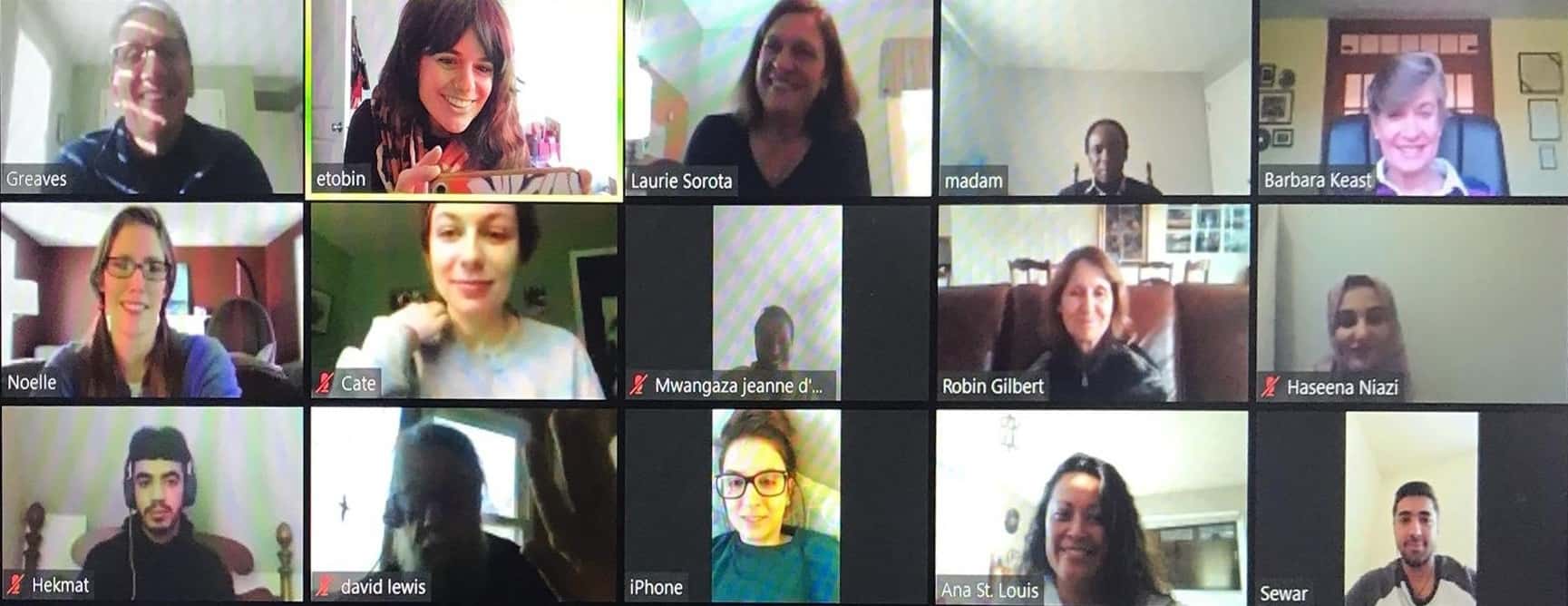
Lowell Youth Mentors are doing everything that they can to support their mentees remotely during this uncertain time. This past week, they worked with IINE staff to organize a group “gathering” which brought together many of the mentors and mentees via Zoom. The session was equal parts uplifting and informative and provided an important outlet for everyone to connect.

In the transition to remote English for Speakers of Other Languages (ESOL) classes, program managers knew they could lean on a corps of veteran volunteers to support clients through their distance learning.  In what has become the “new normal,” Education Manager, Sherry Spaulding connects each student with an individual volunteer via WhatsApp,  and then volunteer and student go through his/her individual materials and lesson plans. Many Lowell students are at beginning literacy level, and have limited technology skills, which makes the transition to remote learning particularly challenging, but IINE volunteers are committed to supporting their continued education during this time.

For the past three years, a rotating group of 150 volunteers have provided quarterly lunches and monthly snacks to 120 IINE students in Boston. With the public health crisis preventing any of those activities from taking place, the volunteer leaders of the Meals & Conversation and Student Snack programs were searching for a way to support students from afar. The team of volunteers decided to reach out to their large volunteer base, and appeal for cash donations in lieu of the donations of time and food supplies that would normally be given in March, April, and May.  Together they raised more than $1,000 to directly help immigrants and refugees who are struggling to pay for food and necessities. Those funds have since been transferred into grocery store gift cards for students and clients to use.

In our Manchester, NH office, volunteers support adult students in and out of the ESOL classroom, provide home furnishings and welcome kits to newly arriving refugee families, and donate clothing to our clients in the frigid New Hampshire winters.  IINE’s Manchester office often welcomes large refugee families from Africa and Asia; families who have smooth transitions to New Hampshire in a large part due to the commitment and support of our volunteers.

Although they are counted upon every day in nearly every program IINE operates, we couldn’t ever imagine how these extraordinary times would be met with the enthusiastic generosity of our volunteers. How very appropriate that Volunteer Appreciate Week has arrived just when we want to say, THANK YOU, to the people on whom we continue to depend.

A Grateful Update From IINE

A Grateful Update From IINE

In these challenging times it is remarkable to me how communities across the country are coming together.

People are taking social distancing seriously, school districts are doing their best to provide remote learning, companies are manufacturing ventilators and other equipment as quickly as they can, neighbors are checking in on one another, and Congress even passed bipartisan stimulus legislation.

The IINE community is rallying as well.

The immigrants and refugees we serve continue to inspire us. Many of those we trained to work in hospitals and medical centers are among the 1.7 million foreign-born healthcare workers on the front lines of the COVID-19 crisis.

One of our refugee clients who arrived in the past year to Manchester, New Hampshire has a car, and volunteered to pick up and deliver food to neighbors in the local refugee community who typically rely on public transportation.

Ever resilient, refugee and immigrant clients who worked in the hospitality industry are taking jobs at grocery stores, food warehouses, and medical manufacturing facilities.

Our management team quickly set up systems that enable us to deliver services remotely. IINE employees, who just three weeks ago worked to find people jobs, are now on the phone helping clients file for unemployment insurance. Our legal team is working by phone and video to process immigration forms. IINE staff are dropping off food and donated emergency funds to people who are unable to buy food or pay rent and utility bills.

At our Boston site, we launched distance learning English for Speakers of Other Languages (ESOL) classes. In Lowell, a group of volunteers is providing one-on-one remote video tutoring to adult English students, and our Refugee Youth Mentoring program continues with an online hangout for mentors and young people.

We quickly expanded our highly popular Suitcase Stories® program to an online platform, and launched a membership program called “Suitcase Stories Circle” for those who want access to additional resources and content.

Our donors are coming together as well. A group of volunteers who provide lunches and snacks to IINE students appealed for donations from their circle of friends, and hundreds of you have donated and sent words of encouragement in recent weeks.

Rather than bemoan our common fate, this Sunday morning seems like the right time to give thanks for all the good things taking place within our community.

We thank you for supporting our work and hope you and your family are staying safe and healthy.

Gratefully,
Jeff Thielman
President & CEO

An Update on IINE Programs During COVID19

An Update on IINE Programs During COVID19

Dear friend of IINE:

I want to update you on all the International Institute program team has been doing during the COVID-19 emergency. I have served alongside IINE colleagues and led program teams for over a decade, and know IINE’s dedication to immigrant families and communities on a normal day is stellar— these past weeks it’s been breathtaking.

We have not let the health crisis, or the temporary suspension of our on-site services, deter us from continuing to support to our immigrant and refugee neighbors . Our team has been working hard – and creatively – to keep connections alive, while adhering to physical distancing guidelines.

Outreach and Communications : In the past two weeks, we have stayed in touch with our clients. In addition to mass communiques via emails and text, our teams have sent 175 individual emails and text messages to our clients; we have provided 65 in-person case management and legal services to clients; and we have conducted 1,199 appointments by video and phone conference .

Critical Case Management : During this unprecedented time, IINE is responding to the specific needs of our clients. We are continuing to provide many of our program activities remotely, and have developed enhanced programming to better respond to the evolving situation. Since March 13, we have delivered:

  • 344 instances of emergency education support, provided to both adults and children;
  • 41 instances of emergency employment support;
  • 35 instances of emergency support in accessing food and other basic needs;
  • 27 instances of emergency housing support;
  • 17 instances of emergency medical support;
  • 55 instances of accessing emergency public benefits;
  • 25 instances of remote youth mentoring; and
  • 435 “wellness checks” conducted because of the pandemic.

But the numbers don’t tell you the whole story.

  • Our education team has moved our English Language courses on-line, and has made sure that our clients have access to technology by lending computers where needed, and by connecting our clients to tech resources (through school districts and like-minded community partners);
  • Our caseworkers in Lowell connected with each of our families to make sure kids could keep learning; they tracked down learning packets and classwork by grade, and have been sending out individualized texts to each household with links to assignments and other educational resources;
  • Our Suitcase Stories® program expanded into a robust online platform featuring a range of interactive experiences aimed at bringing diverse voices into meaningful conversations;
  • Our CEO, Jeff Thielman, went to Logan airport last week to greet Massachusetts’ last refugee family to arrive before the temporary suspension of the U.S. refugee resettlement program. If you’d like to hear more about this emotional arrival, click here to listen to the story that appeared on WBUR.

I am so proud of everything the IINE team has done these two last weeks, and I am heartened to see how our community continues to provide us with all manner of generous support.

In the days ahead, I hope the International Institute, and its new American clients, can continue to count on you to stand with us .

In solidarity and with my warmest regards,

Alexandra Weber
Chief Program Officer

IINE Statement on the Expanded Travel Ban

IINE Statement on the Expanded Travel Ban

Last week, President Trump announced the expansion of the unjust and xenophobic Travel Ban policy. Effective February 22, new restrictions will apply to immigrants from Myanmar (also known as Burma), Eritrea, Kyrgyzstan, Nigeria, Sudan and Tanzania. This expanded policy will forever impact families within the IINE community.

The International Institute is privileged to be part of the American side of immigrants’ and refugees’ journeys. Every day, people in our programs gain skills, establish roots in New England, and contribute to the economic and cultural vitality of our communities. During the past five years, the International Institute has provided resettlement, education, employment, and legal services to more than 10,000 people — 677 of whom are from countries now affected by the travel ban.

We would venture to say we understand the people of these nations a little better than President Trump does.

People like Yayha, from Sudan, whose compelling story was featured by The Weather Channel for an in-depth article about how climate change is contributing to global migration.

People like Suleka, from Somalia, (a country included in the administration’s previous Travel Ban) who saw her siblings perish in war, but who survived and persevered. Today, she is a nurse who helps others in need.

And people like Muhammed and Hussein, from Myanmar, who escaped violence in their homeland and journeyed alone to the U.S. to establish a life in safety with the aim of reuniting with those they were forced to leave behind.

Like Muhammed and Hussein, the vast majority of refugees and immigrants arrive in the U.S. with the expectation that, someday, their family members will join them here. The consequence of this expanded Travel Ban policy means that many of these families may never reunite on U.S. soil.

The 677 people we know from these countries have endured persecution, war, violence, and famine. Today, they fill critical roles in education, healthcare, hospitality, and numerous other industries. They are parents, co-workers, neighbors, and friends. We admire their courage and optimism and we celebrate their contributions to their neighborhoods, offices, and classrooms. We know they play a significant part in driving our thriving New England economy and we think they deserve to be reunited with the family members they left behind.

Each day we work with individuals from nations affected by the Travel Ban whose families remain in their home countries or in refugee camps on the other side of the world. The expanded Travel Ban is a devastating blow to those who journeyed to America with the promise that, if they played by the rules, they could reunite with their loved ones. Through this cruel and unjust policy, President Trump is dividing families and breaking America’s promise of humanitarian assistance to the world’s most vulnerable people.

To support our mission and the critical programs we provide, please donate online, here.

Lucrecia Arias Interviews her ESOL Teacher

Lucrecia Arias Interviews her ESOL Teacher

Lucrecia Arias is a level five ESOL student. She recently received the opportunity to interview her teacher, Natalie Patalano. Lucrecia came from El Salvador and has been resettled into the United States by IINE. In 2017, she joined IINE as a student and worked her way up to a more advanced level of English.

As the date of her class graduation nears, Lucrecia took the chance to learn more about her teacher, and to practice her English. Here is their interview!

L: Hello Natalie, I have 5 questions for you. Do you believe that everything happens for a reason?

N: I do believe in fate, in my own experience, I took a language class when I was in college, kind of by accident, and I really fell in love with it and it turned into my career.

L: What is your favorite element; land, air, fire, or water?

N: Water. Because water makes me think of the ocean and I like being by the ocean and I think it’s very peaceful and really powerful and scary and without water we wouldn’t be able to survive.

L: Which country would you move to if you could live anywhere in the world?

N: Realistically, I would probably live here, because my family is here. But, if I could pick any place in the world, I think I would live in Tuscany in Italy, because it’s very beautiful and my family immigrated from there a long time ago.

L: Did you ever have a dream in another language?

N: Yes, actually a few times where I had dreams where I was speaking in Italian and other people were speaking in Italian. And do you know what they say if you dream in another language, that means you’re thinking in that language, right? So, it’s like another level of proficiency.

L: What do you recommend to fulfill your professional dreams? One or two things, the most important thing on how to practice.

N: Well there is an expression in English that says “do what you love and you’ll never work another day in your life”. So if you do something that you’re very passionate about, it doesn’t matter if you make a lot of money, it matters that you’re happy and you feel fulfilled. So, I do definitely believe in that. I think you have to work really hard and not be afraid to reach out to people, even strangers, and make professional connections. Because if someone helps you advance in your career, as you advance, you can help other people and you’re always paying it forward.

Witness to a True "Melting Pot": IINE From a Newcomer's Perspective

Witness to a True “Melting Pot”: IINE From a Newcomer’s Perspective

by Sarra Briki, Marketing & Communications Intern

This past week, I had the honor of attending the International Institute of New England’s (IINE) 38th Golden Door Award Gala honoring Dr. Joseph E. Aoun, President of Northeastern University. I never expected to find myself surrounded by such an influential and diverse audience. I also never expected to feel a sense of familiarity in a completely unfamiliar setting.  


Growing up, my perception of America was mainly built on TV series like Friends and That 70s Show. A perception of a faraway land where everything is possible, where you can become whoever you want to be, where dreams come true, and where people dress up in scary costumes to get free candy from their neighbors!


I vividly remember the expression “Melting Pot” being used to describe America. When I was seventeen, I was fortunate enough to participate in a cultural exchange program where I was able to spend a year living with an American host family and attend high school in Virginia. The experience was so memorable that I returned six years later to obtain my master’s degree. I came to Boston with a curiosity to explore what the city has to offer. I also came with a major fear of the northeastern winters and extremely cold weather. In fact, I wore two coats the evening of the Golden Door Award event, just to be prepared!


I arrived at Matthews Arena a few hours before the ceremony began. Having observed the tremendous work, continuous coordination, and unforeseen challenges that IINE’s team underwent in preparation for the event, I was impressed by the results. I witnessed the arena transform into an elegant venue embellished with fresh flowers that filled the space with a heavenly aroma and twinkling lights highlighting IINE’s gold and purple colors. Once guests started arriving and over the course of the event, I heard Arabic, Spanish, and Chinese, I saw people dressed in traditional clothing sharing stories, laughter, and anecdotes, and I felt a sense of joy, connectedness, and belonging. The scene was a strange one, yet the feelings were very familiar: I was experiencing the “Melting Pot”.

Attending the Golden Door Award made me realize that organizations like IINE play a crucial role in bridging gaps and building strong and connected communities. Dr. Joseph Aoun is the perfect example and living proof that immigrants and refugees not only thrive and succeed once welcomed and resettled, but also give back to their communities.

Known as an innovation hub and often synonymous with cultural diversity, the city of Boston demonstrates how vital refugees and immigrants are to the economy and community and how critical the work of IINE is in supporting them.

Fifteen-year old me would never have thought I would find myself living in Boston and working for a nonprofit that paves the way of success for immigrants and refugees. I never thought I would have the chance to deeply experience the country I once knew through pop culture and TV series. I am grateful to be part of such an influential organization as the marketing and communications intern, I am thankful to share my Tunisian culture with a city that welcomes it, and I look forward to sharing these experiences and what I learned from them with my own country.    

Hundreds Gather to Honor Dr. Joseph E. Aoun With Golden Door Award

“Every immigrant needs the support of a community…” – Dr. Joseph Aoun, Golden Door Award Honoree

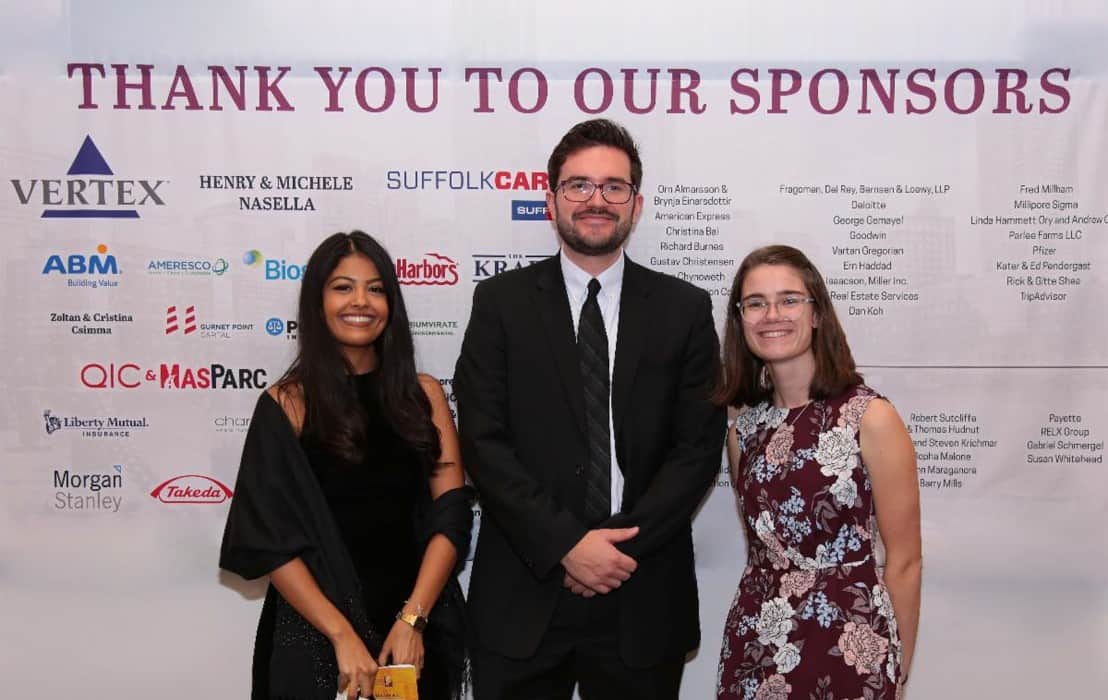
Seven hundred people gathered at Matthews Arena last night to honor Dr. Joseph E. Aoun, the president of Northeastern University, as he received the Golden Door award from the International Institute of New England (IINE).

Dr. Aoun, a highly respected scholar, teacher, and academic innovator, spoke of his early days as a lonely and struggling graduate student at MIT. He recounted “wrestling” with English and having serious concerns about whether coming to America to study was the right choice.

“My teachers liberated me from self-doubt,” he said.

The welcome he received from his professors at MIT – including a number of memorable Thanksgiving dinner invitations – helped him feel more at home in Boston, then in California, when he took a teaching position at USC.

He said the ongoing welcome he received at every turn of his American journey taught him that the people around us have the greatest impact on our success.

“Every immigrant needs the support of a community,” Dr. Aoun said.

President Aoun’s remarks resonated with an audience of refugees and immigrants enrolled in IINE’s legal services, education, career, and resettlement programs as well as Northeastern students, business leaders and supporters.

Dr. Aoun praised the work of the International Institute and concluded his speech by inviting IINE clients to join him on stage. “I am proud and humbled to share this journey with you,” Aoun said.

Vertex Pharmaceuticals Chairman, President and CEO, Jeff Leiden, who served as the Gala co-chair, praised IINE, President Aoun, and spoke about how Vertex embraces innovative ideas from people of all backgrounds.

“Vertex would not be the company it is today without immigrants,” he said.

Massachusetts House Speaker Robert DeLeo, an alumnus of Northeastern raised in an immigrant neighborhood, said he was brought up to respect and value people from all over the world. He praised Dr. Aoun for infusing Northeastern with a multicultural spirit.

The evening included inspiring musical performances from the Northeastern University Choral Society singing “The Immigrant Experience” by composer John Kramer, and the university’s award winning a capella group.

More than 100 corporate and individual sponsors provided support to the event, which raised $800,000 for the International Institute of New England.

Joint Statement from IINE and Ascentria Care Alliance

Joint Statement from IINE and Ascentria Care Alliance

“In countless ways, America depends on new Americans.”
Agencies oppose Trump administration plans to slash refugee resettlement and legal immigration to the U.S.
 By: Ascentria Care Alliance and the International Institute of New England

Ascentria Care Alliance, one of the largest human service nonprofits in New England, and the International Institute of New England, the region’s oldest provider of immigrant and refugee services, issue this joint statement in opposition to federal policies announced that would slash the number of refugees admitted to the US:

“The Trump administration announced new policies that, in effect, declare that the Statue of Liberty no longer symbolizes our nation’s welcoming spirit.

“The administration plans to set the new yearly refugee admissions goal at 18,000, a record low. And a new executive order would allow state and local officials to stop resettlement in their communities. They seemingly want to dismantle our nation’s resettlement programs.

“Destroying the U.S. Refugee Administration Program would mean that we abandon thousands of refugees who have already cleared strict U.S. screening and vetting processes.  They include families with small children and survivors of genocide, as well as thousands who have been persecuted for their political or religious beliefs. Nearly 40,000 refugees are already approved and at various stages in the process. To reject them, after they have already waited for years to resettle here, would be a betrayal of our values and our humanitarian tradition.

“We don’t believe the policies enacted this week represent majority opinion in the U.S. because they do not reflect our values. Most Americans don’t want to extinguish our legacy as a safe haven. They realize, gratefully, that their own ancestors once immigrated or fled to the U.S.

“In countless ways, America depends on new Americans. We need refugees and immigrants in greater numbers if our economy is going to continue to grow and generate the wealth needed to finance defense, the national debt, Social Security, and other commitments. So not only would it be un-American to stop being ‘a nation of immigrants,’ it would be anti-American because it would be contrary to our national interests.

“Especially in New England, new Americans help drive the economy, enhance the culture, and become part of the fabric of our local communities. In this region – with the highest rate of college-educated adult workers in the nation – employers are struggling to fill jobs that require high skills and low skills. Industries vital to this region’s growth – such as construction, healthcare, hospitality — cannot meet their workforce needs with only native-born Americans.

“Because Ascentria Care Alliance and the International Institute of New England help immigrants and refugees resettle and obtain good jobs, we know firsthand how quickly they start to achieve independence after arriving in the U.S.  It isn’t long before newcomers become valued employees in US companies, manufacturers of US goods, founders of US  businesses, and creators of jobs in the US.  Refugees rent and then purchase US homes, learn in US schools, join the US armed forces, all while paying municipal, state, and federal taxes.

“The truth is, our country needs refugees as much as they need us.

“We will continue to work with other organizations and individuals to educate and advocate for a return to the policy of the U.S. welcoming new Americans – a policy reflected in our national motto, E pluribus unum, ‘out of many, one.’ In the great tradition of American optimism, we believe that a more humane and welcoming policy will yet again prevail.”

About Ascentria Care Alliance

As one of the largest nonprofit, human service organizations in New England, Ascentria Care Alliance empowers people of all backgrounds to rise together and reach beyond life’s challenges. We use an innovative human-centered care model to help individuals and families move forward and thrive – physically, intellectually, socially, spiritually and economically. With many locations throughout the region, Ascentria serves children, youth and families; persons with developmental disabilities and mental illness; refugees, including unaccompanied minors; and older adults.

Through productive collaborations and partnerships, we create measurable, positive impact that enriches our communities. Inspired by our faith-based heritage and guided by compassion, courage and integrity, we envision a world in which everyone can realize their fullest potential and share with others in need.

About The International Institute of New England

Founded in 1918, the International Institute of New England (IINE) is one of the oldest and largest social service organizations for new Americans in the region. Our mission is to create opportunities for refugees and immigrants to succeed through resettlement, education, career advancement, and pathways to citizenship. Across IINE’s three service sites (Boston, Lowell, and Manchester, NH), IINE programs support 2,500 newcomers, including refugees and asylees, unaccompanied minor children from Central America, victims of human trafficking, and other immigrants.

IINE programs are critical to preserving the nation’s tradition of welcoming people of all backgrounds who cherish freedom, equality, and hard work.  IINE’s programs are particularly important to New England, which depends on immigrant labor to sustain and grow its economy.

IINE Statement on the Refugee Cap For FY20

IINE Statement on the Refugee Cap For FY20

Yesterday, the White House announced plans to admit only 18,000 refugees in the coming fiscal year, the lowest ceiling in U.S. history. 

Globally, forced displacement is at an all-time high. The world’s 26 million refugees are sheltered in camps, temporary housing, and on city streets. Most have been waiting for as long as 20 years for the life-changing chance to live in a safe country. Every refugee is a victim of unspeakable persecution, and many hope to join siblings, parents, children, and spouses in the U.S.

Before 2016, the United States led the world’s humanitarian response to the refugee crisis. The President’s plan rejects 40-years of bipartisan precedent and a national tradition of welcoming persecuted people that predates our founding.

The International Institute of New England was founded 101 years ago by volunteers in Lowell who responded to rising anti-immigrant sentiment by making their community more welcoming. That same spirit still guides our mission.

It is our daily privilege to support 2,500 refugees and immigrants each year in Massachusetts and New Hampshire. In FY20, IINE will offer critical services to the 7,000 refugees we resettled over the past decade and the many more immigrants we encounter every day. We stand ready to receive newly arrived refugees as well.

We oppose the White House’s plan to drastically lower refugee admissions because it condemns so many to endless suffering, and it is morally wrong for the wealthiest country in the world to turn away from the world’s most destitute.

In the coming weeks, the President will consult Congress before making a final determination of the refugee ceiling. We will lobby our leaders to return to traditional refugee admissions levels, and with your help, IINE will continue to educate policymakers and the public about the economic, moral, and cultural contribution we gain by the everlasting gift of finding a place at our table for others.

You can help!

  • Donate to support refugees who recently arrived to the region.
  • Advocate to change the minds of policymakers.
The Third Narrative about Immigrants: Why We Need Them As Much As They Need Us

The Third Narrative About Immigrants: Why We Need Them as Much as They Need Us

“Give me your tired, your poor, your huddled masses yearning to breathe free, the wretched refuse of your teeming shore.”

For some, the words of poet Emma Lazarus, which have adorned the Statue of Liberty for over 100 years, are a call to help those who are suffering. For others, like Ken Cuccinelli, the acting director of the U.S. Citizenship and Immigration Services, the poem conjures fear that those who come to our shores, borders, and airports may drain our resources. In supporting a new public charge rule that will curtail legal immigration and harm immigrants, Cuccinelli suggested changing those words to: “Give me your tired and your poor who can stand on their own two feet and who will not become a public charge.”

While refugees and asylum seekers are exempt from the public charge rule, there are important facts to relay and stories to tell as President Trump makes it increasingly difficult for asylum seekers to pursue protection in the U.S. and considers shutting down refugee admissions in FY 2020. Both of the above narratives ignore a more important third narrative about immigrants: they are not just victims who need our help; they are peers who aid in our country’s well-being. We see this daily in our work helping refugees and asylum seekers while running the International Institute of New England (IINE) and directing Northeastern University’s Immigrant Justice Clinic (IJC). Statistics show that immigrants strengthen, rather than harm, our economy. According to the Small Business Administration, 18% of all small business owners are immigrants. In fact, immigrants are 30% more likely to start a business than non-immigrants, and according to the Pew Research Center, as our population ages and fewer people have children, the U.S. workforce would be shrinking, if not for immigrants, instead of expanding. As this report from the National Immigration Forum details, refugees are an “overwhelming positive fiscal contributors,” because they “extend the solvency of important programs like Social Security and Medicare while countering the aging of the U.S. workforce.”

The story of Kabagambe Bamunoba is illustrative of these statistics. Kabagambe arrived in Lowell, Massachusetts in 2009 from a refugee camp in Uganda. IINE, a federally monitored refugee resettlement agency, welcomed him, his wife, and children at the airport, placed them in housing, enrolled the family in a healthcare plan and English classes, and helped Kabagambe find his first job. In the summer of 2012, he landed a job at a Brooks Brothers-owned manufacturing plant where he continues to work alongside hundreds of other people who were born outside of the U.S. Kabagambe receives exemplary performance ratings at work and is the kind of employee any company would love to hire. He is a homeowner and taxpayer, two of his children are college graduates, two are attending public schools, and his family are proud members of the Lowell community, a city whose population growth has been fueled almost entirely by immigrants.

Another story, like so many we see, is that of Maria Lopez, whose name has been changed to protect her identity. Maria and her three children fled violence and persecution in Mexico and sought asylum in the U.S. The IJC, which is a pro bono legal clinic within Northeastern University’s School of Law, provided her legal representation on her asylum case. Law students and professors prepared her application materials, linked her with resources for her and her children, and represented her at the asylum interview. The case was successful; she and her children were ultimately granted asylum. Within two months of being granted asylum, Maria had applied for and accepted a teaching position in a low-income neighborhood, found a place to live permanently, and enrolled her children in local schools where they are thriving. Like so many immigrants, after receiving some modest help, Maria quickly became financially independent—or, as Cuccinelli would have it, she stood on her own two feet.

Refugees and asylees, and their children and grandchildren, become active, thriving citizens of U.S. communities. They run businesses, play important roles in companies, teach in our schools, serve on our police and fire departments, help companies grow, and are involved in churches and civic groups. They stand on their own two feet, very quickly in fact, after arriving on U.S. shores.

The truth is our country needs them as much, if not more, than they need us.

Jeff Thielman is President and CEO of the International Institute of New England, and Hemanth C. Gundavaram is a law professor and co-director of the Immigrant Justice Clinic at Northeastern University School of Law.

Having Won a Visa Lottery, This ESOL Student Strives to Succeed

Having Won a Visa Lottery, This ESOL Student Strives to Succeed

by Mariah Dennis, Volunteer and Contributing Writer

Many people live in hope of winning a lottery, but Boston ESOL student Yawo Detse Vouti has already won the most important lottery of his life. In fact, he describes the day he won the lottery as “like a dream.”

In 2007, he was living in his home country of Togo, where there is an annual program that randomly picks a select few to receive visas to live in the United States.

“You cannot imagine how the people feel about the U.S. visa lottery in our country,” Yawo said.

Having applied for the visa for the first time, he was astonished to open an email at his local internet cafe and receive the news that he had won. For Yawo, the visa was a ticket to a life in the United States and the chance for more opportunities.

He said his dreams of life in American slowly became a reality as he proceeded through the many complicated stages of the visa process. He arrived in the United States in the fall of 2018 with borrowed money in his pocket and the promise of a distant cousin’s connection in the Boston area.

Today, Yawo is working as hard as he can to make his life in the United States live up to his dreams. A typical working day for Yawo means leaving his home at 8 p.m. so he can walk forty minutes to the nearest bus stop. Next, he rides the bus to the MBTA’s blue line. From there, he commutes on the T to his shift at an airport catering facility at 11 p.m.

Yawo spends all night on his feet loading the carts that will be used to provide beverages and meals on flights the next morning. By the time his shift ends at 7 a.m., he is exhausted and aching from the physical work.

But, Yawo smiles even as he explains the long commute and demanding overnight shift. When he began his job, he specifically requested the night shift so he could spend his days in the classrooms at IINE learning English.

“My first step is to learn English,” he said. “If I can do that, I can change all my options. If I do that, I can do anything.”

He has already worked his way to the level 2B English class, and his goal is to one day continue his formal studies in the US. Yawo’s belief in the transformative power of education fuels his work every day, and he is certain his hard work will pay off soon.

“I know after one year, two year, three years, everything will change. I don’t want to run away from this moment. I will do it.”

After his English class ends at 1 p.m., Yawo heads home to rest up before he gets ready to do it all over again.

Raising Up Immigrant Stories Through Photographs: Meet Becky

Inspired by a desire to make world cultures more accessible to New Hampshirites, photographer Becky Field has made it her life’s work to capture, celebrate, and Becky Fielraise up images of cultural diversity in the Granite State. While highlighting cultural differences, her work illustrates the human themes of family, faith, work, and community that are common to all residents of New Hampshire – whether born here, or not.

Becky has been taking photos of the IINE community for more than ten years. In her capacity as a volunteer photographer, she has donated hundreds of hours of her time to capture some of the organization’s most special people and special moments.

Part of Becky’s unique approach to photography is the way she respects and promotes the experiences of those from other places. In 2018, she worked with adult learners at IINE Manchester, teaching them how to identify photo subjects, compose an image, and create an artist statement. The students displayed their work at an exhibit wall in the IINE Manchester site.

“Every time I have the opportunity to interact with newcomers to New Hampshire, I find it thrilling and I learn so much,” she said. “Whether I am taking their photos, or helping them create their own, I always feel grateful to have had a little glimpse into their perspectives.”

Becky’s scope of work has been recognized by the New Hampshire State Council on the Arts, the Bhutanese Community of New Hampshire, and the Turkish Cultural Center of New Hampshire. In 2015, her photographs were published in a book she called, “Different Roots, Common Dreams: New Hampshire’s Cultural Diversity.” The book received two national awards, and launched an exhibit and lecture tour that brought hundreds to see her work.

Recently, Becky partnered with the NH Charitable Foundation to start the Different Roots, Common Dreams Scholarship Fund to help refugees and other immigrants complete a four-year undergraduate degree.

“It is really important to me that refugees and immigrants feel welcomed in New Hampshire,” she said. “This is one small way I can help make this one opportunity available to them.”

Becky holds a Certificate in Photography from the NH Institute of Art, and has studied photography throughout the Northeast.  Before she became a full-time photographer, Becky was a research ecologist and university professor. She holds masters and doctoral degrees in wildlife ecology. Her work can be seen online at: FieldWorkPhotos.com and DifferentRootsNH.com