metapixel
تخطي إلى المحتوى الرئيسي

بوسطن
2 شارع بويلستون، الطابق الثالث
بوسطن، ماساتشوستس 02116
617.695.9990

Lowell
585 Middlesex St.
Lowell, MA 01851
978.459.9031

مانشستر
470 شارع باين 470، الطابق السفلي
مانشستر، NH 03104
603.647.1500

اتصل بنا
info@iine.org info@iine.org
iine.org

للتواصل مع وسائل الإعلام
comms@iine.org

تابعنا


تبرع

Our Boston office will be closed on Monday, 8/24 for a staff meeting.

المؤلف: دانييل غوتييه

"مثل حلم يتحقق": رحلة فاريشتا من لاجئة أفغانية إلى مواطنة أمريكية

“It is like a dream come true. It is the biggest day of my life. After all the problems and long journey, finally I achieved what I wished for. I am also so glad that I am working in such wonderful environments and supporting refugees to achieve the goals of their life.” 

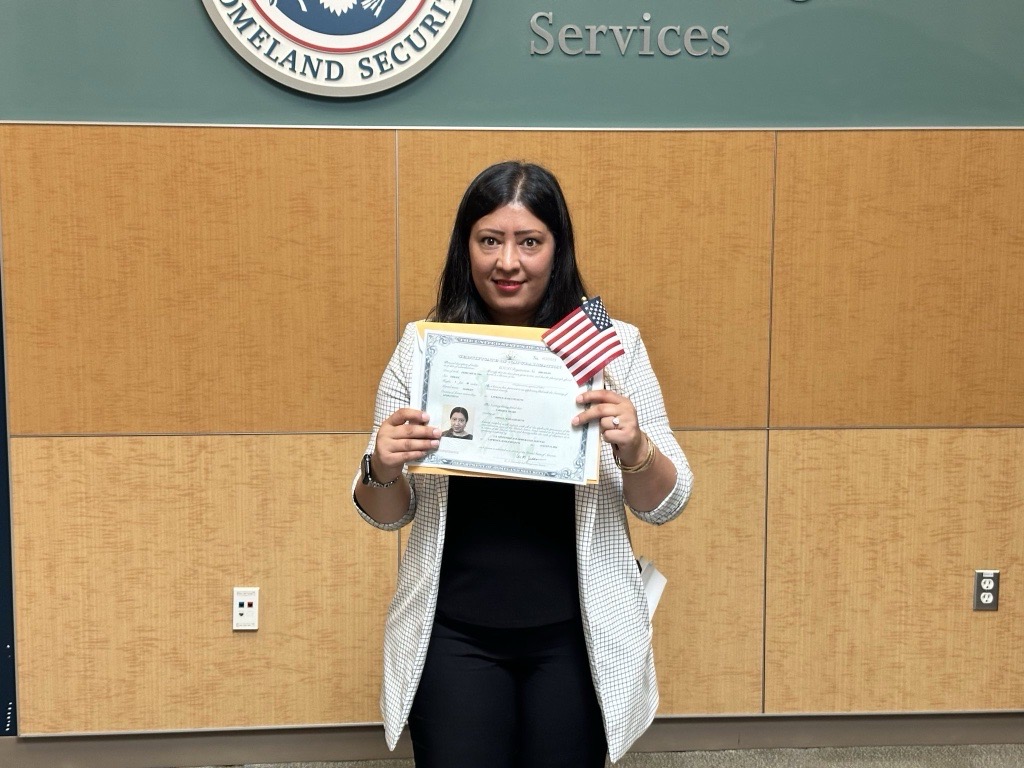
On August 14, 2024, Farishta Shams, a former Afghan refugee and current IINE Resettlement Services Manager, was sworn in as a U.S. citizen along with her husband. Farishta was an IINE client when she first arrived in the U.S. in 2019. She became an IINE client once again this past February when she began working with the Immigration Legal Services team to apply for her citizenship. 

Helping Women Meant Life as a Target 

When asked about the “problems and long journey” she was thinking about on her day of celebration, Farishta smiles and says, “Oh, this will be a story.”   

Back in Kandahar, Afghanistan, Farishta worked for the United States Agency for International Development (USAID).  

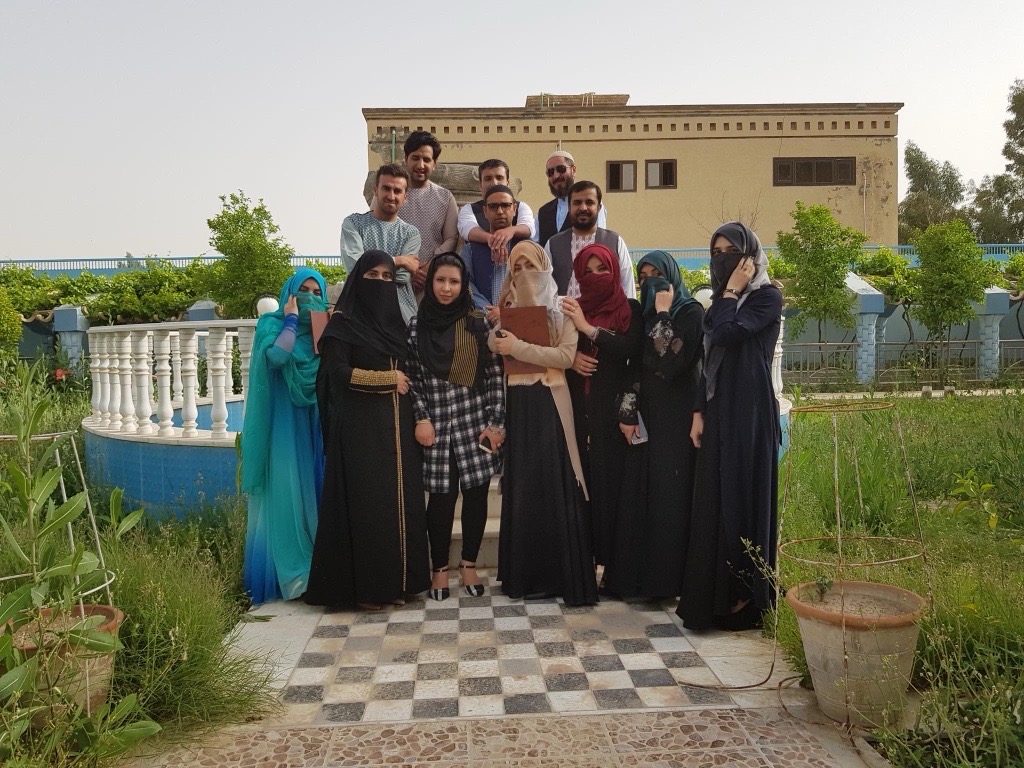
Farishta in Afghanistan
Farishta and her USAID colleagues in Afghanistan

“It was a bit of problem working with the U.S,” she says. “You had to hide your identity and home address and everything. While I was working for the USAID project, I had been attacked by the Taliban twice in the car while going to or from work.” 

The Taliban was not the only threat.  

“We were providing trainings for woman to know how to start up small businesses, and there were some husbands who didn’t like women to work, and so there were times when these husbands or their relations were also trying to create a problems for us.” 

In order to help fellow Afghan women, Farishta frequently felt like a fugitive and essentially had to live a double life. 

“During the whole journey, my nine-year experience, I changed my home multiple times. I even had to hide myself for months because they found everything. I spread the word to everyone that I had resigned my job, that I was just a teacher. I was leaving my house at 6:00 a.m. and coming home at 5:00 p.m., acting as a teacher, but really I was working for the government. It was not only my problem, it was entire family’s problem—the Taliban could target my entire family.” 

After Farishta was attacked in her car for the second time, she told the head of her project at USAID. He began the process of helping her apply for a Special Immigrant Visa so she could flee to safety. Farishta says it typically takes three to five years to get a Special Immigrant Visa approved to come the U.S., but because she had been attacked while working for them, USAID helped her get her visa within two.  

“A New Life” 

“The day I reached Kabul airport, and then arrived at Dubai, I felt like I found a new life,” Farishta remembers. “I never had felt that happy—that nobody is following me, nobody’s calling. I felt that I had caused problems but that now my family would no longer be at risk because I had left.”  

When she arrived in the U.S., IINE helped Farishta and her husband resettle in Lowell, Massachusetts. “They really helped me with housing, with applying for benefits, finding me a job and showing me how to complete my bachelor’s degree. I also took classes to improve my English.” 

Farishta was deeply impressed with IINE’s staff and the support she received, and recognized the work as similar to what she had been able to do with USAID. She felt that working at IINE would now be her dream job. She was thrilled when, in 2021, she was able to join the organization as an IINE Case Specialist. 

“The experience of helping people, it’s really another dream come true working here,” she says. After a year, she was promoted to her current role as a Resettlement Services Manager. 

“Now It’s My Own Country” 

Farishta at her naturalization ceremony

Last February, Farishta reached out to IINE’s Immigration Legal Services team about she and her husband applying for citizenship. Staff Attorney Pooja Salve was assigned to their case.  

“Pooja did a really good job!” Farishta says.” It was very smooth and easy process. She helped fill and check the paperwork. She had a mock interview with us that really helped us get an idea of what is expected of you. She updated us on every application status.” 

Farishta went into her citizenship interview prepared. “I was practicing for the questions every ten minutes, every night!” she remembers.  

“Every exam has some anxiety. I thought a huge officer with a big heavy voice would come in and take my interview—you know officers can be scary—but then when a lady came in and called me, she was so sweet! I was shocked! When she asked the questions, my anxiety went away, and the process ran smoothly.” 

As soon as she learned she had passed, Farishta pulled out her phone. “First of all I reached out to the team at IINE to tell them that I had passed!” Then she went on to her swearing-in ceremony.

“That was really exciting for me! I feel like now it’s like I’m originally from this country! We just registered to vote. It’s like our own country!”  

Farishta is also excited to finally have the freedom to travel. Because her father worked with the Canadian government, much of her family resettled there. She also has a sister in Germany whom she’s been longing to visit. Her new Green Card and passport will make many joyous reunions possible in her future.

“It really is a dream come true,” she says.  

---

Refugees and immigrants make long, difficult journeys to escape violence and rebuild their lives in the U.S. You can give them the help they need to start fresh today. 

قصص الحقيبة ®Suitcase Stories: عشتار، مهاجرة من هاييتي، تشاركنا سبب مجيئها وسبب بقائها

عشتاروهي مهاجرة حديثة من هايتي، تعمل في Cأخصائية في شركة IINE في لويلماساتشوستس ماساتشوستس. شاركت عشتار قصص الحقيبة® أدائها مع العديد من الجماهير, تؤرخ لها أدائهاd رحلة والدها رحلتها إلى الولايات المتحدة سعياً وراء الرعاية الطبية، و وتطور علاقتهاs كل من به و wمع البلد التي هي الآن تقيم فيه الآن. هذا هو هذه القصة بكلماتها الخاصة.

منذ حوالي عامين، خطر ببالي أنني يجب أن أكون والد والدي. كنت في هايتي وكان والدي مريضاً جداً. 

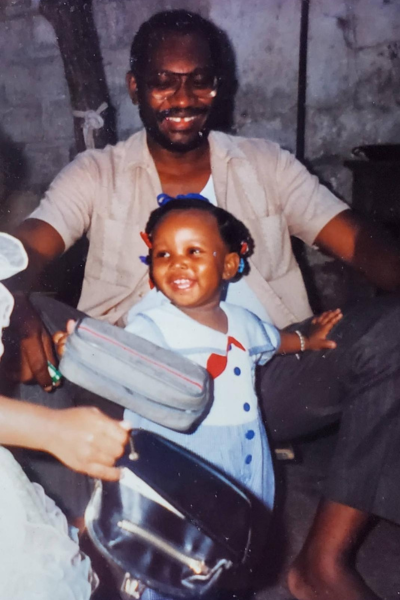
عشتار مع والدها في هايتي

كعائلة (لأن صوتًا واحدًا لم يكن كافيًا)، كان علينا إقناعه بالذهاب إلى المستشفى. لم يكن يريد ذلك، ولم يكن يراجع أي طبيب في ذلك الوقت. كان "طبيب الرعاية الأولية"، كما تسمونه هنا، هو شقيقه الأصغر، الذي كان طبيبي أيضًا، لكنه قُتل في العام السابق خلال محاولة اختطاف بشعة. ومنذ ذلك الحين، لم يكن لوالدي طبيب مقيم ولم يكن يثق في الكثير من الأطباء. لقد كان عنيدًا حقًا؛ لقد سمعت أنها سمة عائلية، لكن لا تقلقوا، لقد تخطى جيلي (لا يمكنكم إثبات خطئي)!

على أي حال، بعد يومين، أقنعنا والدي، ووافق على الذهاب إلى المستشفى. عندما وصلنا إلى هناك، أخبروني أنه قبل أن يتمكن من رؤية الطبيب، يجب أن أذهب إلى مكتب الاستقبال. سألني الموظف عن تأمين والدي. على الرغم من أن والدي كان يعمل لدى الحكومة لمدة 50 عامًا تقريبًا، إلا أنه لم يكن لديه تأمينًا جيدًا، لذلك كان على خطة والدتي - أو هكذا اعتقدنا. عندما قدمت بطاقتها، راجعوا مزود التأمين ثم أخبروني أن والدي لم يعد مؤهلاً للتغطية لأنه تجاوز السبعين. وعندها أدركت أنه على ما يبدو، في هايتي، عندما تتجاوز السبعين من العمر وتكون عادةً في أشد الحاجة إلى التأمين، أعتقد أنك لم تعد مؤهلاً للحصول على حماية الرعاية. لذا، كان عليّ أن أعطي بطاقتي الائتمانية على الفور فقط لتأمين الرعاية الطبية الأساسية.

في ذلك الوقت، كنت أعمل منذ حوالي ست سنوات، لذلك لم يكن لديّ الكثير من المدخرات؛ أنت تعرف ماذا يفعل الشباب بالمال! لا يحتفلون... يتسوقون. أعطيت بطاقتي على أي حال لأنه لم يكن لدي خيار آخر. احتاج والدي إلى رعاية طبية عاجلة. أمضى حوالي أسبوع في المستشفى وتحسنت حالته قليلاً، لكن أصبح من الواضح أنه كان علينا أن نفعل المزيد لأنه لم يتم حل أي شيء.

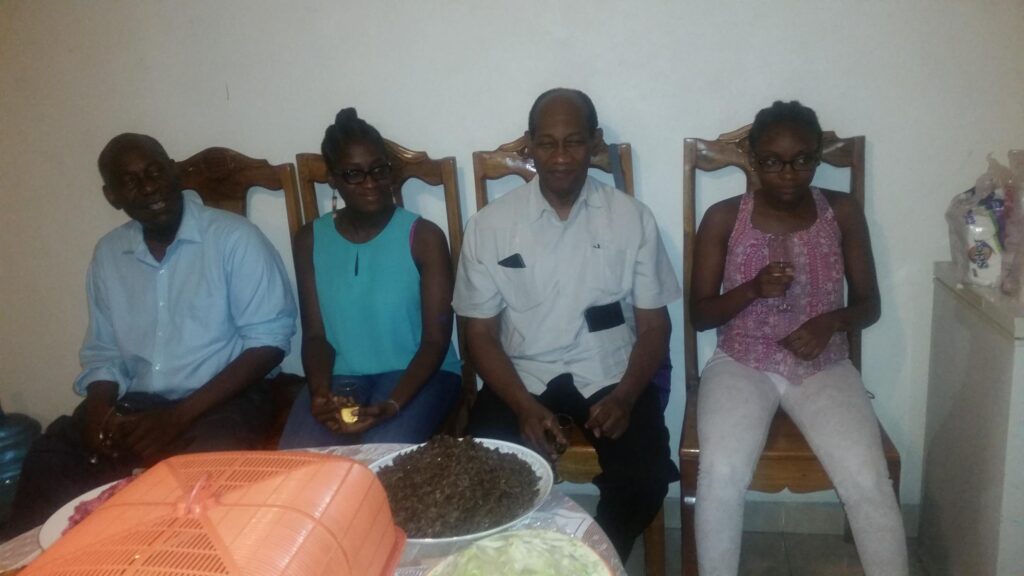
عم عشتار إرنست، وأختها كريستينا، ووالدها، وأختها آريان

كانت آخر مرة زار فيها والدي الطبيب قبل حوالي 6 أشهر. وكان ذلك الطبيب قد شخّص إصابته بالسرطان في المرحلة الرابعة وذكر بحزم أنه لا يوجد علاج متاح في هايتي. كانت توصيته هي السفر إلى جمهورية الدومينيكان أو كوبا أو الولايات المتحدة الأمريكية للحصول على فرصة للنجاة. بحثنا في جميع الخيارات. في تلك المرحلة، كان لدى والدي تأشيرة دخول إلى الولايات المتحدة الأمريكية، ولكن بدلاً من البحث عن الرعاية في مكان آخر، تركها تنتهي صلاحيتها. كان عنيدًا.

ومع ذلك، لم يعد بإمكاننا الآن أن نلجأ إلى التقاعس والأمل في الأفضل حيث كان والدي يعاني دون أن نجد ملاذًا حتى لألمه الشديد. لذا، حثثت أعمامي وعماتي على التحدث إليه، وتمكنا أخيرًا من إقناع والدي بالانتقال. سافرنا أنا وهو إلى الولايات المتحدة وعندما وصلنا، توجهنا مباشرة من المطار إلى مركز بوسطن الطبي. كانت رحلة طويلة، وكان والدي متعبًا ومتألمًا للغاية.

ها أنا ذا مرة أخرى في ردهة المستشفى، متوترة للغاية لأنني لم يكن لدي بطاقة ائتمان صالحة في هذا البلد الجديد ولم يكن لدى والدي تأمين صحي. لكن المفاجأة! لم يطلبوا ذلك. تم إدخاله بعد فترة وجيزة وقضى حوالي أسبوع هناك. بعد ذلك، عدنا إلى منزل عمي الذي رحب بنا بكرم الضيافة. لديّ العديد من الأعمام والعمات في هذه الولاية، وهذا هو السبب الرئيسي الذي جعلنا نختار المجيء إلى ماساتشوستس، إلى جانب حقيقة أنني سمعت أنها واحدة من أفضل الولايات فيما يتعلق بالرعاية الصحية. وأستطيع أن أشهد على ذلك؛ فقد كان لدى والدي فريق عمل رائع في مركز BMC.

عشتار ووالدها في حفل زفاف شقيقتها

في الوقت الذي كنت أقوم فيه برعاية والدي في المنزل، كنت لا أزال أعمل لدى صاحب العمل في هايتي. كانوا متفهمين جداً وسمحوا لي بالعمل عن بُعد. كنت منسقة برنامج الكفالة، حيث كنت أدعم المدارس في المجتمعات النائية وأساعد الأطفال الضعفاء في الحصول على تعليم جيد. كنت أعمل بجد، و بالكاد العمل لأنني أحببت ذلك! كنت أسافر دائمًا إلى أماكن جديدة، ولا أبتعد كثيرًا عن الشاطئ، وألتقي بأشخاص جدد، وأبدأ مبادرات التمكين، وأعمل على تمكينهم. أحببت ذلك، ولكن بعد فترة وجيزة تم تسريحي من العمل. كانت المنظمة التي كنت أعمل معها، وهي منظمة غير حكومية مقرها الولايات المتحدة، قد أوقفت جميع عملياتها في هايتي. لم يعد بإمكانهم ببساطة الحفاظ على أنشطتهم في البلاد لأن الوضع المتدهور جعل الوضع خطيرًا للغاية.

ولحسن الحظ، أتيحت لي الفرصة للتقدم بطلب للحصول على تصريح عمل، فبدأت العملية. عندما ذكرت ذلك لوالدي (لأننا تحدثنا عن كل شيء تقريبًا)، طلب مني أن أتقدم بطلب من أجله أيضًا. حسناً، لم أستطع الرفض استناداً إلى حقيقة أنه كان مريضاً بمرض عضال، فقلت له: "أبي، أعتقد أن سن التقاعد هنا هو 65 عاماً لذا فأنت لست بحاجة إلى تصريح عمل". فأجابني: "هل تعرف كم عمر ترامب وبايدن؟ يجب أن أعترف أنه أقنعني بذلك ولم يكن لدي أي حجة، لذلك تركته وشأنه. كان والدي في الواقع لا يزال يأمل في أن يتعافى تمامًا ويتمكن من العمل. حتى أنه ظل يجادلني بأنه يريد العودة إلى هايتي. لكن أنا وعائلتي كنا نعلم أن ذلك غير واقعي.

وبعد فترة وجيزة، توفي بالفعل، بعد شهرين فقط من وجوده هنا. لقد جئنا متأخرين جدًا للعلاج؛ حيث لم يتلقَّ سوى الرعاية التلطيفية. ومع ذلك، كنت لا أزال سعيدًا لأن التعامل مع رعاية والدي في هايتي كان أمرًا معقدًا. لقد كان الأمر معقداً بين ثلاثتنا نحن الثلاثة وأختي الصغرى وابن عمي. لكن هنا، كان لوالدي تسعة أشقاء، وقد أمضى أشهره الأخيرة محاطاً بعائلته. كان أقارب والدي وأبناؤه الأكبر سنًا يأتون جميعًا لقضاء بعض الوقت معه. كانوا يحضرون الطعام يوميًا في المستشفى (لأن والدي بالطبع لم يكن يحب طعام المستشفى). كنت سعيدًا أيضًا لأنني كنت في مكان أرتاح فيه من العبء والضغط اليومي الذي كنت أشعر به لأنني لم أكن قادرًا على رعاية والدي لأنه كان يتلقى الدعم اللازم. كنت ممتنة لأنه استطاع أن يموت بأكبر قدر ممكن من الإنسانية.

من اليسار إلى اليمين شقيقتا عشتار كريستينا وآريان وعشتار وأختها نامي ووالدها برايس 

كان ذلك أحد الأسباب الرئيسية التي دفعتني لاختيار البقاء في الولايات المتحدة والرغبة في المساهمة في هذا المجتمع. وشعرت أنه من الصواب أن أخصص ضرائبي لأمور مهمة مثل صحة والدي. فسنواته الخمسون التي قضاها في هايتي وهو يعمل بفخر ويدفع الضرائب في هايتي لم تخدمه كثيرًا في النهاية. شعرت بالإحباط، ورغم حبي لبلدي، إلا أنني لم أكن أريد أن يكون مصيري مثل مصير عمي - مقتولاً ومتروكاً في الشوارع، أو مثل مصير والدي - يموت ببطء بسبب عدم تلقي العلاج. لذلك على الرغم من حزني الشديد، بدأت التركيز على العمل.

لقد سعدت عندما حصلت قريباً على وظيفة في المعهد الدولي في نيو إنجلاند الجديدة. أشعر بالرضا لأنني أستطيع دعم المهاجرين مثلي ومثل والدي. ويسعدني أن أتمكن من ربطهم بالموارد المتاحة. وتتيح لي هذه الوظيفة أن أساهم بعملي وضرائبي.

ومع ذلك، عندما استلمت أول راتب لي، ورأيت ما ترجمت إليه تلك الضرائب... تفاجأت كثيرًا! اشتكيت للجميع. أتذكر أنني ناقشت الأمر مع أخت أكبر مني كانت تعيش في الولايات المتحدة طوال حياتها، فقالت لي وهي تنظر إليّ وفي عينيها شفقة ولكن ابتسامة على شفتيها: "يا فتاة، ألم تعرفي؟ إنهم يسمونها تاكسشوستس!".

إنه أمر مؤلم حتى يومنا هذا (أقل تسوقًا)، لكنني ممتنة أنني هنا في هذا المجتمع، أساهم وأنمو وأساعد الآخرين على النمو أيضًا. كانت مغادرة هايتي تتعلق بحبّي أنا وعائلتي أولاً، بعد أن عانيت من الضغط المستمر بسبب العنف والتهديدات والأمراض التي تهدد حياتي وما إلى ذلك. بالنسبة لي، لم يكن القدوم إلى الولايات المتحدة اختيارًا للعيش بكرامة فحسب، بل كان بالنسبة لوالدي اختيارًا للموت بكرامة. وهذا شيء أتمناه بشدة للناس في هايتي كل يوم.

تدعو"قصص الحقيبة" ®Suitcase Stories رواة القصص إلى تطوير ومشاركة تجارب شخصية ذات مغزى عن الهجرة والتبادل الثقافي مع الآخرين - من الجماهير الكبيرة إلى المجموعات الصغيرة من جميع الأعمار. اعرف المزيد عن قصص الحقيبة®.

سؤال وجواب مع عضو مجلس الإدارة الجديد ريتشارد جولوب

Richard Golob brings broad experience at the international level, from global environmental issues to outsourcing in numerous countries, to his new role on the International Institute of New England’s Board of Directors. In addition to leading Quantori, Inc., one of the world’s leading data sciences and digital transformation services companies in the life sciences and healthcare sectors, Richard serves on the Leadership Board of Beth Israel Deaconess Medical Center, is a Board Member of the United Nations Association of Greater Boston and the Anti-Defamation League – New England, and serves as President of the Puchovichi Memorial Park Project. Richard received his A.B. degree in Biochemical Sciences from Harvard College.  

We spoke with Richard to learn more about his career path, his personal connection to IINE’s mission, and what he’s looking forward to most in joining the board.  

هل يمكنك مشاركة القليل عن نفسك؟

I am the grandson of immigrants who came through Ellis Island. Two of my grandparents emigrated from Russia, one from Belarus, and one from Austria. So, I was raised on the concept that America is a great nation – because it is multi-racial, multi-ethnic, multi-lingual, and multi-religious – and that it’s a place where people from around the world can come to find a new life and to prosper.  

Because of my upbringing, I have been involved with international activities for most of my life – whether it was raising humanitarian relief funds for the victims of the Nigerian Civil War as a high school student in New York, or communicating with scientific correspondents from around the world about major environmental events in one of my first jobs at the Smithsonian Institution’s Center for Short-Lived Phenomena.  

In 2001, my career shifted from the environment field to global outsourcing, and I co-founded a scientific informatics outsourcing company, GGA Software Systems. At GGA, we hired software engineers, mathematicians, and scientists almost exclusively in Russia, and they worked with clients in the United States and Europe. This international collaboration appealed to me because it was a chance to bring together thousands of people who were historically at odds with one another and have them work in partnership to develop effective, innovative solutions.  

Today, I oversee Quantori, a data science and digital services company for the life sciences and healthcare sectors. We founded the company five years ago, again hiring professionals primarily in Russia. When Russia invaded Ukraine, we had to work quickly to move our colleagues out of Russia and provide comprehensive support to find them and their families housing, healthcare, and education in Armenia, Georgia, Kazakhstan, and other countries. At Quantori, we were undertaking the type of work that the International Institute of New England does every day and were fortunate to be able to help our colleagues find safety in a new home.  

Speaking of, tell us about your journey to IINE.  

I have been involved with nonprofits, including organizations in the international arena, for a long time and have been on the board of the United Nations Association of Greater Boston since the early 2000s, during which I spent many years as the President. Through this work, I met Christina Bai, who was on IINE’s board. She introduced me to the organization’s work, and I attended a few events. I became very impressed with IINE’s impact. I knew I wanted to contribute to the mission of helping refugees, asylees, and unaccompanied children to build new lives and enrich our country.  

Is there someone you honor by supporting IINE?  

I honor my grandparents and the voyage they embarked on in the late 1890s/early 1900s to come to the Unites States. That was certainly a difficult voyage, and building a new life in the United States was difficult too. They persevered, while instilling in their children an excellent work ethic and moral code.  

I think of my Belarusian grandfather, in particular. Because of the Iron Curtain, our family never had a chance to visit his hometown of Puchovichi. When I began traveling to Russia for work after 2001, I decided to visit Puchovichi, and I became the first member of my family to return to my grandfather’s hometown. A local history teacher gave me a tour of the area, and then, because he knew of my Jewish heritage, he brought me to a remote area outside of the town. We walked across a large agricultural field and climbed up a hill covered in vines and bushes. At the top, my guide told me that, on September 22, 1941, the Nazis had gathered 1,260 Jews from the area, brought them to the top of the hill, murdered them, and buried them in two large pits there. I remember standing on the hilltop, deeply saddened by this tragedy that I had just learned about, and thinking how grateful I was that my grandfather had left Belarus when he did. If he had stayed in Puchovichi, he would have been one of the victims in the pits, and my family would never have survived to enjoy a new life in the United States.  

The refugees and immigrants that IINE serves – they, too, are escaping conflict zones to give themselves and their families a chance at a better life. Because of their bravery, their future generations will live here in the United States safely – just as I do because of my grandfather’s decision to leave Belarus. 

ما هي في رأيك أهم مسؤوليات عضو مجلس الإدارة؟

First and foremost, it’s to provide oversight – to ensure that the organization has sound financial footing and an effective program for the future.  

As a board member, I like to think creatively about an organization and its programs – not just where it is today, but where it might be in five or ten years, and not just the programs it has now, but the programs it might consider for the future or how to innovate the existing programs in a way that’s more effective and still in keeping with its mission.  

What excites you most about IINE’s future? 

We know the need for IINE’s services will only grow, and right now, IINE’s work is front and center. I look forward to helping ensure we are able to provide the same and enhanced services to current clients and to the many more refugees and immigrants that will come to IINE seeking support – no matter who wins the November election for President 

يضم مجلس إدارة IINE قادة الشركات والمجتمع من جميع أنحاء نيو إنجلاند. اطلع على أعضائنا وفريق القيادة هنا.

1975-1984: إعادة تعريف إعادة توطين اللاجئين

مرحباً بكم في الدفعة السابعة من سلسلتنا "100 عام من الترحيب:إحياءً للذكرى المئوية لتأسيس المعهد الدولي لتكنولوجيا المعلومات والاتصالات في بوسطن." الجزءالسابق "1965-1974:الترحيب بالعالم"، وصف كيف سمحتالإصلاحات التي تم إدخالهابشق الأنفس على نظام الهجرة الأمريكي لمعهد بوسطن الدولي (IIB)بالترحيب بمجموعة أكثر تنوعًا من المهاجرين واللاجئين من جميع أنحاء العالم.

إعادة تعريف "اللاجئ"

شهد عام 1975 النهاية الرسمية لحرب فيتنام التي استمرت لثلاثين عامًا. وقد دفعت آثارها الطويلة مئات الآلاف من اللاجئين إلى الفرار من فيتنام والبلدان المحيطة بها. أدى هذا النزوح الجماعي الناجم عن الحرب التي شاركت فيها الولايات المتحدة بشكل مركزي إلى تغييرات كبيرة في السياسات الفيدرالية تجاه اللاجئين - واستجابة لذلك، تغييرات كبيرة في نطاق ونموذج معهد بوسطن الدولي.  

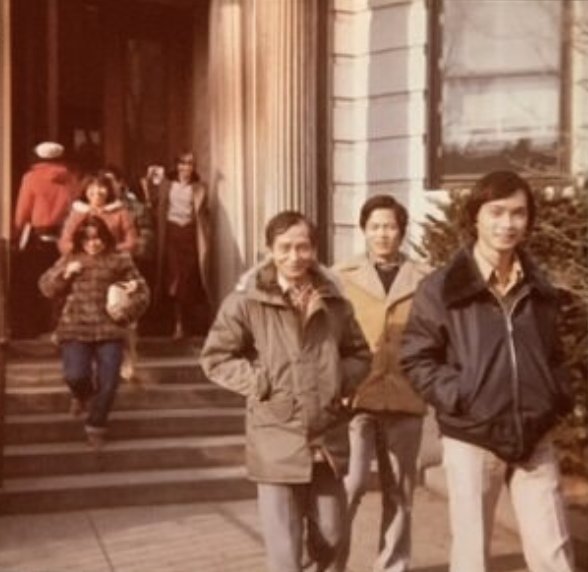
رحب المعهد باللاجئين من جنوب شرق آسيا في الثمانينات من القرن الماضي

رحبت الولايات المتحدة بما يقرب من مليون لاجئ على مدار عشر سنوات بعد حرب فيتنام، وكانت منطقة بوسطن وجهة رئيسية. وساعد معهد بوسطن الدولي للخدمات الدولية الوافدين الفيتناميين الجدد على إعادة توطينهم في الحي الصيني وألستون/برايتون وشرق بوسطن وقسم فيلدز كورنر في دورشيستر، ولاحقاً في ضواحي كوينسي وراندولف ومالدن.

كانت المجموعة الأولى من اللاجئين في الأساس من المسؤولين في الحكومة الفيتنامية الجنوبية المهزومة. بدأت موجة أكبر بكثير في الوصول إلى بوسطن الكبرى بين عام 1978 ومنتصف الثمانينيات، بعد غزو فيتنام لكمبوتشيا (كمبوديا) في عام 1979 و"حقول القتل" التي أعقبت ذلك. وفي الوقت نفسه، أدت الحرب الحدودية بين الصين وفيتنام إلى نزوح جماعي للسكان الفيتناميين من أصل صيني، الذين فر معظمهم في قوارب صغيرة تتسرب منها المياه في ظروف مرعبة.  

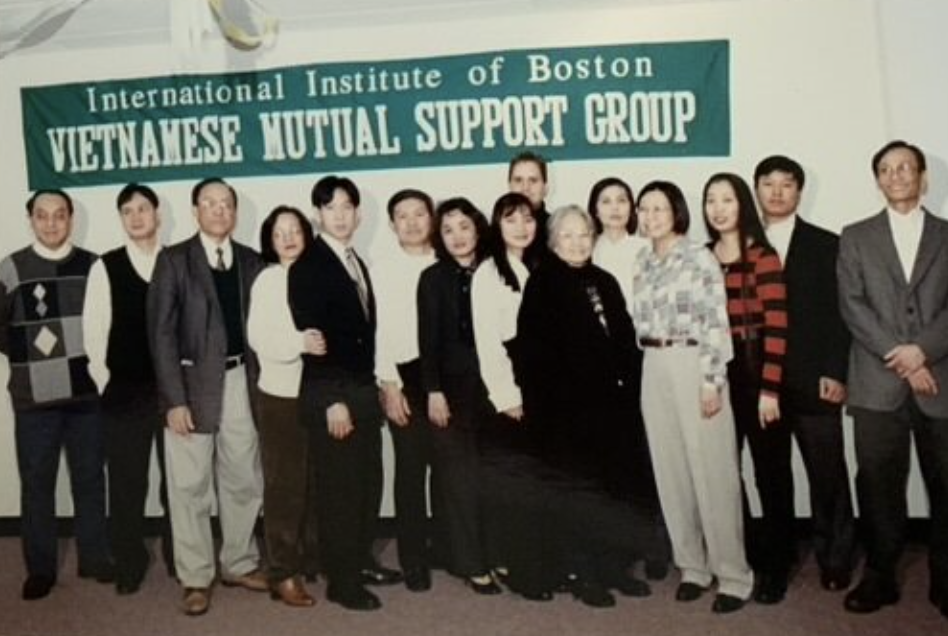
مجموعة الدعم المتبادل الفيتنامية IIB الفيتنامية
دعم البنك الدولي لتجمعات مجموعة الدعم المتبادل الفيتنامية

وقد سمحت سلسلة من القوانين الفيدرالية الجديدة بزيادة قبول اللاجئين، لكن أكثر القوانين التي أحدثت تحولاً كان قانون اللاجئين لعام 1980. وقد تبنى هذا القانون تعريف الأمم المتحدة للاجئ بأنه أي شخص موجود خارج بلد جنسيته أو بلد إقامته المعتادة وغير قادر أو غير راغب في العودة بسبب "خوف له ما يبرره من الاضطهاد بسبب العرق أو الدين أو الجنسية أو الانتماء إلى فئة اجتماعية معينة أو الرأي السياسي".

وقد رفع قانون اللاجئين السقف السنوي لقبول اللاجئين إلى 50,000 لاجئ، ومنح المكتب التنفيذي للولايات المتحدة سلطة قبول لاجئين إضافيين استجابة لحالات الطوارئ. كما أنشأ مكتب إعادة توطين اللاجئين الممول فيدرالياً للعمل مع الولايات لتمويل وإدارة خدمات ما بعد إعادة التوطين من خلال شبكة من المنظمات المحلية، بما في ذلك المعاهد الدولية. ولا تزال هذه العلاقة تقود الكثير من عمل المعهد الدولي لتوطين اللاجئين حتى اليوم.

توسيع نطاق الخدمات

الشباب في برنامج البنك الدولي للأمريكتين

مع زيادة الدعم المالي الفيدرالي والولائي المتزايد، توسعت برامج المعهد الدولي لإعادة التوطين والتعليم والتوظيف والخدمات الأخرى بشكل كبير. وظف المعهد العديد من الموظفين الفيتناميين وأصبح وكالة راعية لإعادة توطين اللاجئين من فيتنام وكمبوديا ولاوس. وقدمت خدمات مناسبة ثقافيًا، بما في ذلك برامج خاصة للغة الإنجليزية للشباب الأمريكي الآسيوي، وفصول محو الأمية الأساسية للبالغين. كانت الغرف في مكتب المعهد في 287 جادة الكومنولث مشغولة طوال النهار والليل، وتم تقسيمها لاستيعاب المزيد من الفصول الدراسية. ازداد عدد الموظفين والمتطوعين بشكل كبير. تولى أعضاء مجلس إدارة IIB دورًا نشطًا في دعم الخدمات، وشكلوا فيلقًا من السيارات لمقابلة الطائرات القادمة من اللاجئين الوافدين، وتزويد اللاجئين الجدد بوسائل النقل للوصول إلى منازلهم الجديدة، والتسوق لشراء الملابس ومحلات البقالة، وحضور مقابلات العمل. في حين أصبح التعليم والخدمات المباشرة أولوية بالنسبة ل IIB, تم تشكيل رابطة اللاجئين الهنود الصينيين في نيو إنجلاند لاستضافة حفلات الزفاف البوذية وغيرها من الاحتفالات والمناسبات الأخرى لعملاء المعهد المتزايدين من عملاء جنوب شرق آسيا.

استعراض العضلات القانونية الجديدة

While IIB had always provided clients with guidance on navigating complicated and ever-changing immigration laws, in the mid-1970s, IIB began hiring staff attorneys to head its Legal Services department. One of the first of these was Deborah Anker, a second generation American whose parents had escaped the Holocaust. Anker would later go on to teach the first immigration law course at Harvard University, where she founded the Harvard Immigration and Refugee Clinical Program, and still teaches law today.

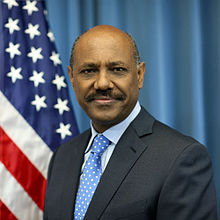
دانيال يوهانيس

بدأت أنكر فترة عملها في الوقت الذي كان فيه المعهد، بالإضافة إلى عمله مع النازحين من حرب فيتنام، يعمل على استقبال اللاجئين من إثيوبيا كان يعمل على الترحيب باللاجئين من إثيوبيا الذين كانوا يفرون من a من العنف و وقمعي النظام القمعي الذي أدى صعوده في نهاية المطاف أدى إلى حرب أهلية التي أدت إلى انتشار المجاعة, والفقر و والمزيد من الاضطهاد. أحد أحد الإثيوبيين الذي ساعده أنكر في في إحضار إلى بوسطن كان دانيال يوهانسوهو أمريكيأمريكي جديد سيتم تعيينه يومًا ما من قبل الرئيس باراك أوباما سفيرًا للولايات المتحدة الأمريكية لدى منظمة التعاون الاقتصادي والتنمية.

الاستفادة من الدعم الجديد 

في الثمانينات، ومع توفر المزيد من التمويل على مستوى الولاية والمزيد من الموظفين لمتابعة المنح وتنفيذ البرامج، تمكن المعهد من إطلاق سلسلة من المبادرات لمساعدة اللاجئين الوافدين حديثاً على إعادة بناء حياتهم على المدى المتوسط إلى الطويل.

عندما فرّ الآلاف من كوبا في هجرة "مارييل بوتليفت"، حصل المعهد على منحة من إدارة الخدمات الاجتماعية في ماساتشوستس لإنشاء مركز جديد متعدد الخدمات لهم في حي جامايكا بلين في بوسطن. وقد ساعد المركز في عامه الأول أكثر من 200 لاجئ كوبي، ووفر فرص عمل ل 110 منهم.

وبتمويلات فيدرالية وحكومية جديدة أخرى، أنشأ المعهد برامج تدريبية وموارد لمعلمي اللغة الإنجليزية للناطقين باللغات في جميع أنحاء بوسطن الكبرى، وبدأ أول فصل لمحو أمية الكبار، وأنشأ برامج خاصة لمساعدة الأطفال الأمريكيين الآسيويين وأمهاتهم، وبدأ برنامجًا جديدًا للخدمات الاجتماعية يركز على تقديم المشورة ثنائية اللغة وثنائية الثقافة للمساعدة في معالجة الصدمات التي يعاني منها اللاجئون نتيجة لرحلات هجرتهم وبعدها.

- - - 

واليوم، يواصل المعهد الدولي يواصل ابتكار وتوسيع البرامج بناءً على احتياجات الوافدين الجدد. نحن نحن نعمل مع المكتب الفيدرالي لإعادة توطين اللاجئين ومع مع كومنولث ماساتشوستس في ماساتشوستس تنفيذ أكثر من 80 برنامجًا متعاقدًا مع الحكومة الفيدرالية والولاية. A يرأس محامي الموظفينقسم الخدمات القانونية للهجرة لدينا، والذي يقدم الدعم المجاني أو دعمًا مجانيًا منخفضًا لأكثر من 1,000 لاجئ ومهاجر كل عام. البرنامج يتم تدريب موظفي البرنامج على تقديم الخدمات الواعية بالصدمات النفسية، و ونعقد بانتظام نعقد بانتظام مجموعات دعم الأقران ونعمل مع الشركاء المجتمعيين لتلبية احتياجات الصحة النفسية للاجئين والمهاجرين والمهاجرين الذين نخدمهم الذين نخدمهم - ضمان أن يجدوا الأمان والرفاهية والقوة في مواجهة مستقبلهم الجديد.

خلال عامنا المئوي، نحتفل بمرور 100 عام من الدعم الذي غيّر حياة اللاجئين والمهاجرين في بوسطن الكبرى ونستعد للقرن الثاني من خدمتنا. اعرف المزيد هنا: الذكرى المئوية لـ IINE بوسطن.

سؤال وجواب مع عضو مجلس الإدارة الجديد ويد روبنشتاين

سؤال وجواب مع عضو مجلس الإدارة الجديد ويد روبنشتاين

A long-time volunteer, community partner, and Leadership Council member, Wade Rubinstein recently joined IINE’s Board of Directors. As Founder and President of The Bike Connector, Inc. in Lowell, Massachusetts, Wade spends his days making bikes accessible and safe for everyone, including many IINE clients who bike to work, school, shopping and appointments. The son of immigrants to the United States, Wade has devoted many hours to supporting refugees, including helping to find housing for a family who fled Afghanistan and settled in Eastern Massachusetts. He brings deep experience in information technology, education, and entrepreneurship to his new role.   

We spoke with Wade to learn more about his family’s history, how his involvement with IINE has grown over the years, and what gives him hope as he thinks about the organization’s future. 

هل يمكنك مشاركة القليل عن نفسك؟

وايد روبنشتاينI am the son of immigrants. My mother’s family came to Boston in the 1920s after fleeing pogroms in Russia. My father, who grew up in a town that’s now part of Ukraine, was a Holocaust survivor. During the war, he was in hiding for 3 years. The Soviets liberated him in the spring of 1944. An orphan after the war, my dad lived in Displaced Persons camps in Czechoslovakia and Germany. He was smuggled into Palestine in 1946 and came to the U.S. as a refugee in the early 1950s to join family members who were already here. 

لقد شكلتني رحلة والديّ بطريقة أساسية. وبفضل مرونتهما وعملهما الدؤوب، أتيحت لي الفرصة لأصبح خريجاً جامعياً من الجيل الأول.

I studied computer science at Boston College (in the same class as IINE CEO and President Jeff Thielman!). After college, I worked at a Digital Equipment Corporation for 10 years, before going on to work at several telecommunications start-ups. In 2003, I left the field and pursued a degree in elementary education. I taught in West Newton for a couple of years. Then, I decided to open up an ice cream shop, Reasons to Be Cheerful, which I ran for eight years. I sold the shop in 2018 and founded The Bike Academy, which was an after-school bike riding program in Lowell and morphed into the nonprofit I run today – The Bike Connector  

I’ve always felt life is too short to not pursue your interests; it keeps things interesting! And for me, it’s felt like my opportunity to live the American Dream – which I can only do because of the choices and sacrifices my parents made.  

أخبرنا عن رحلتك إلى المعهد الدولي في نيو إنجلاند. 

From L to R: Lowell Education Manager Sherry Spaulding, Wade, Ungaye, and Lowell Managing Director Caroline Rowe at IINE’s World Refugee Day celebration, where Wade was inducted into the Lowell 100 in honor of his exceptional contributions to refugees and immigrants in the Lowell community

In 2017, I attended a Suitcase Stories® event in my community. Hearing the speakers share their migration stories piqued my interest, and I decided to get involved. I began volunteering with the ESOL team in Lowell. It was awesome. I met so many amazing people, including Ungaye – a refugee youth whom I remain close to today and who now works at The Bike Connector. I loved being in a classroom with immigrants from all over the world—a room filled with different languages and customs—as they learned English and about the U.S. The experience opened up my eyes and my heart.  

After establishing The Bike Connector, I noticed that many of IINE’s clients rode bikes. There was a clear need: bikes are an inexpensive means of transportation, don’t require a license, and are faster than walking. But often, the bikes the immigrants were riding were unsafe; they were broken, mis-sized, and at times, literally pulled out of the city’s canals.  

I began donating bikes to the ESOL students, and over time, the relationship between our organization and IINE grew. We’ve given bikes to Haitian and Central and South American immigrants, Ukrainian refugees, and Afghan refugees. IINE’s Case Managers bring their clients to us, and we get to be some of the first folks they meet in this country. In addition to providing bikes, we provide maintenance support so people can stay on their bikes. We also work closely with IINE’s refugee youth clients to teach them bike safety and the rules of the road.  

What motivates you to give to IINE? Is there someone you honor by doing so?  

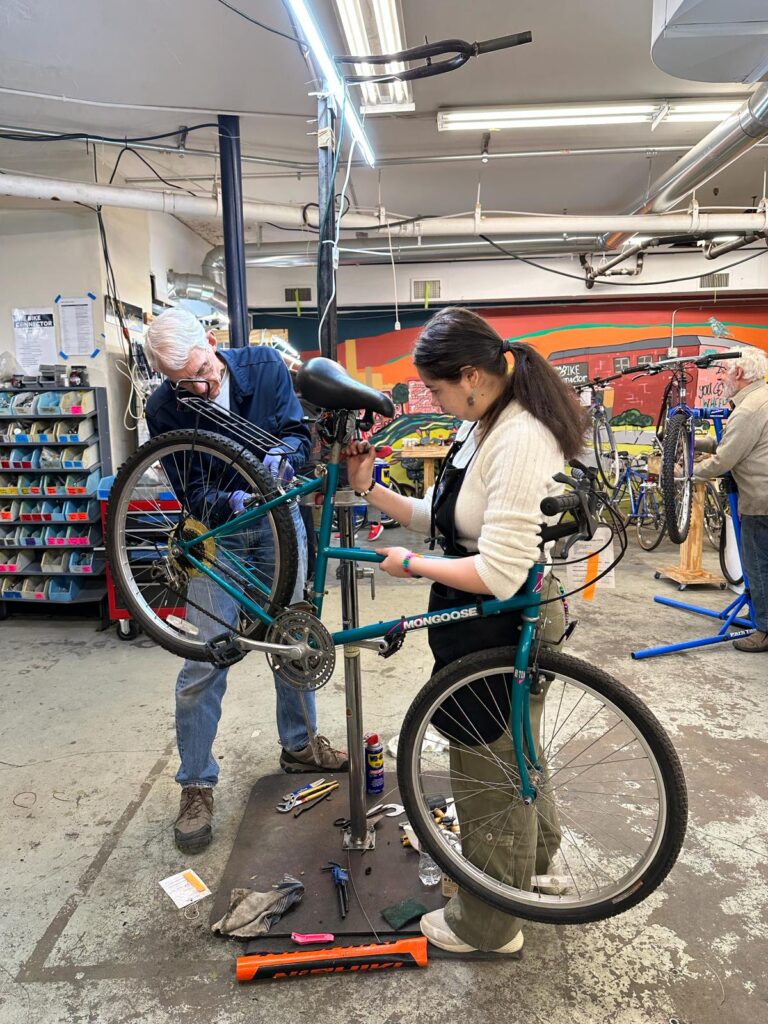
Wade’s non-profit, The Bike Connector, provides refugees and immigrants with bikes and ongoing maintenance

My mother and father have passed, but at IINE, I see them in the eyes of the people we serve. These are people who have taken huge risks and are working really hard to provide their children with better lives, people who want to honor their cultures and traditions and also integrate and become American. I feel a real emotional connection to their stories.  

I also think about the help my father received when he first came to the U.S. HIAS, a Jewish American nonprofit, was instrumental in helping him navigate his new home, where everything felt complex and foreign, and find success. I see IINE providing that same life-changing support.   

I find it so upsetting how immigration has become such a divisive issue. I want to make sure immigrants feel welcome and supported here – that they find opportunity, just like my parents did. Their journeys aren’t easy, and they deserve our help.  

ما هي في رأيك أهم مسؤوليات عضو مجلس الإدارة؟

The primary responsibility is the fiscal sustainability of the organization. The board has to ensure the organization can adapt to where the winds are blowing – and IINE has proven it can do this. I’ve been so impressed with IINE’s board, executive team, and all of the staff. I’ve watched in recent years as the organization has navigated changing political winds, the fall of Afghanistan, the Russian invasion of Ukraine, and the humanitarian crisis in Haiti. IINE was able to scale and respond to crisis after crisis, and to do it all with such dedication and a big heart. That tremendous adaptability is only possible with exceptional staff and strong leadership.  

I’m looking forward to building on this work as a board member so that the organization, its staff, and the clients can all thrive.  

What excites you most about IINE’s future? 

There are over 100 million people who have been forcibly displaced around the world and who need a safe haven. That IINE is able to provide that safe haven and touch as many lives as we do – that makes me very happy. By providing support to find housing and jobs, learn English, and access legal services, IINE makes the transition to a new country a little easier. I’m excited for IINE’s impact to continue to grow.  

I’m also excited to see how IINE’s clients will give back, as I know they will. Whenever I’m hiring for an open position at The Bike Connector, the first place I look for candidates is IINE’s clients. If you can negotiate fleeing your home and coming to the U.S.—which for many people can take years or decades—you are clearly resilient. Those are the people I want to work with. They are highly motivated and make a positive contribution to their new country.

Welcoming immigrants truly benefits us all – it’s our nation’s diversity that makes it so awesome. I see people every day, coming from all kinds of backgrounds, making connections. Where else in the world can you see that? It gives me a lot of hope.  

يضم مجلس إدارة IINE قادة الشركات والمجتمع من جميع أنحاء نيو إنجلاند. اطلع على أعضائنا وفريق القيادة هنا.

سؤال وجواب مع عضو مجلس الإدارة الجديد كارولينا سان مارتن

سؤال وجواب مع عضو مجلس الإدارة الجديد كارولينا سان مارتن

Carolina San Martin joined the International Institute of New England’s Board of Directors in 2024, bringing over 20 years of experience in financial services, and significant expertise in audit, risk management, product and business management, and international development. A native Spanish speaker originally from Argentina, Carolina has a Master of Arts in International Finance and Economics from the Johns Hopkins University School for Advanced International Studies and a Bachelor of Arts in International Relations with Honors, magna cum laude, from Brown University.  

We spoke with Carolina to learn more about how she became involved with IINE, what she considers the most important responsibilities of a Board member, and what excites her about the organization’s future.  

هل يمكنك مشاركة القليل عن نفسك؟

كارولينا سان مارتنI’m originally from Argentina. My mom and I came to the U.S. just before I turned five, and I grew up in Atlanta, Georgia. After attending college in New England, I decided to go abroad. I began my career in the international development field in Russia before pursuing my master’s in Italy. It was an amazing opportunity. Living in different countries both as a child and later as an adult really helped me develop a global perspective. Eventually, I decided to return to the U.S. and settle down in Massachusetts. I’ve been in Cambridge, where I live with my husband and our two kids, for over 20 years.  

Professionally, I have spent most of my career in financial services and asset management. For the last eight years, I focused on sustainable investing. I launched and led the environmental, social, and governance (ESG) research and stewardship practice at Wellington Management before moving on earlier this year.  

أخبرنا عن رحلتك إلى المعهد الدولي في نيو إنجلاند. 

Growing up, I never felt like I had roots in one place. I’m Argentinian, but my family moved to Brazil a month before I was born, and then I spent my youth in Atlanta. New England is where I finally established roots; raising my family here has made it home.   

I reached a point in my career where I was ready to use my skills and experience to give back to my local community, and I wanted to help others find a home here, too. That led me to IINE. As an immigrant, the mission resonated with me. The more I learned about IINE’s work, the more impressed I became by its scale and longevity. IINE is celebrating 100 years of service in Boston this year; that speaks to the organization’s enduring impact.  

Is there someone you honor by supporting refugees and immigrants?

My mom and I had a lot of support in coming to the U.S., but it still wasn’t easy. My mom was in her mid-20s and a single parent. She had always dreamed of coming to the U.S., so she didn’t hesitate, but it took a lot of courage, too. It was the late 70s, a time before there was much immigration in the south, and no one around us spoke Spanish.  

Some of my earliest memories here are of starting kindergarten and not speaking any English. It made me a very shy kid, but with time and hindsight, I overcame my shyness and realized what a gift it was to have experienced this. It taught me how to be resilient and observant, to learn from and connect with others.  

Our experience was different from that of IINE’s clients today, but there are commonalities, too. In supporting them, I honor my mother’s bravery and strength.  

What do you consider the most important contributions of a board member?

One of my goals is to amplify the work. Before I became involved, I didn’t know about this amazing organization in my own backyard! I want to help make sure that others discover IINE, too. 

One of the most important responsibilities we have as board members is providing oversight. With my role at Wellington, I spent years studying how boards operate, speaking with board directors, and seeing firsthand how the people and structures at the top can make or break an organization. Strong oversight builds trust – among employees, among clients, and among supporters.  

I’m looking forward to supporting the important work the board is already doing to help ensure IINE’s growth, to provide a local response to a global issue, and to set the organization up for success for the next 100 years.  

What excites you most about IINE’s future? 

Immigration has become such a politicized topic – that’s challenging, but it’s also such an opportunity. It’s a chance for us to communicate how much immigrants contribute to our communities. The bottom line, as so much of the data shows, is that more immigration leads to more economic growth. Immigrants fill labor gaps, and they are 80% more likely to start new businesses, which then creates more jobs. At IINE, we see proof every day that investing in immigrants is an investment in our country and our prosperity. That’s what I’m excited about – IINE is in a unique position to bring these positive impacts to life and address one of the big concerns in public discourse right now. 

يضم مجلس إدارة IINE قادة الشركات والمجتمع من جميع أنحاء نيو إنجلاند. اطلع على أعضائنا وفريق القيادة هنا.

المعهد الدولي لنيو إنجلاند ينتخب ريتشارد غولوب وويد روبنشتاين وكارولينا سان مارتن في مجلس إدارته

BOSTON – August 5, 2024 – The International Institute of New England (IINE), one of the region’s longest-established nonprofits serving refugees and immigrants, has announced the election of three new members to its Board of Directors: Richard Golob, Cofounder and CEO of Quantori, Wade Rubinstein, Founder and President of The Bike Connector, and Carolina San Martin, retired Director of Environmental, Social, and Governance Research of Wellington Management, to its Board of Directors.

“Carolina, Wade, and Richard’s deep experience and humanitarian commitment will be invaluable in helping us ensure that refugees and immigrants find safety and strong early support in our New England communities,” said Jeffrey Thielman, President and CEO of IINE. “As we embark on our second century of service, we remain committed to providing opportunities for newcomers to our nation to put down roots, succeed, and contribute to our region’s growth and prosperity.”

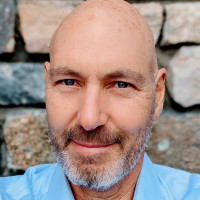
ريتشارد جولوب

ريتشارد جولوبRichard Golob has broad experience at the international level, from global environmental issues to outsourcing in numerous countries. He is Cofounder and CEO of Quantori, Inc., one of the world’s leading data sciences and digital transformation services companies for the life sciences and healthcare sectors. Previously, he served as Global Head of Life Sciences at EPAM Systems, a publicly traded firm with more than 60,000 professionals worldwide. Richard joined EPAM through its acquisition of GGA Software Systems, a scientific informatics outsourcing company that Richard cofounded and where he served as CEO.

Earlier in his career, Richard was actively involved in the environmental and energy fields, serving as an adviser to government agencies worldwide and to the United Nations Environment Programme, as well as a publisher of respected environmental newsletters. He also served as an environmental industry adviser to the venture capital firm Charles River Ventures and as Chairman of the Harvard Environmental Health Council at the Harvard T.H. Chan School of Public Health. Currently, in addition to his role as a member of the IINE Board of Directors, he serves on the Leadership Board of Beth Israel Deaconess Medical Center and is a Board Member of the United Nations Association of Greater Boston and the Anti-Defamation League – New England, and the President of the Puchovichi Memorial Park Project. Richard received his A.B. degree in Biochemical Sciences from Harvard College.

“With deep experience serving on nonprofit boards, I am thrilled to join IINE in its effort to continuously rise to the challenge and meet the needs of an ever-growing population of forcibly displaced families and individuals,” said Golob. “With innovation and dedication, IINE will provide more than 18,000 refugees and immigrants from 70 countries with critical, life-changing services this year, and I look forward to being a part of this necessary work.”

وايد روبنشتاين

وايد روبنشتاينWade Rubinstein is the Founder and President of The Bike Connector, Inc. in Lowell, Massachusetts, which he launched to make bikes accessible and safe for all Lowell community members, including many IINE clients who bike to work and school. The son of immigrants to the United States, Wade has personally devoted many hours to supporting refugees, including directly supporting a family last year who fled Afghanistan and settled in Eastern Massachusetts.

Wade received his Bachelor of Science in Computer Science from Boston College and spent twenty years working in information technology. Specializing in data network design and optical technology, Wade helped architect multiple private and public telecommunications networks. In 2003, he left his career in high technology to pursue a Master’s in Education and teach in public schools. Since then, he has pursued several entrepreneurial projects, including a highly successful café in Concord, Massachusetts called “Reasons to be Cheerful” which specializes in homemade ice cream, crepes, and gourmet coffee. He now devotes most of his time to The Bike Connector, volunteering with IINE, and supporting other non-profit causes.

“I have had the pleasure of volunteering in IINE’s ESOL classroom, partnering to provide refugee youth with bikes and riding lessons as the President of my organization, The Bike Connector, and previously serving on the IINE Leadership Council,” said Rubinstein. “Through each of these engagements, I have seen IINE’s dedication to providing refugees and immigrants with a promising future in New England – and the great courage and resilience of our newest neighbors. I am honored to deepen my engagement and join the Board of Directors.”

كارولينا سان مارتن

كارولينا سان مارتنCarolina San Martin is a strategic leader with experience at the forefront of finance and sustainability. Her board expertise includes finance, sustainability, energy transition, talent management, DE&I, and governance. Carolina started out in the field of international development and took an unconventional route into a career in investment management. She joined Wellington Management in 2005 and retired in 2024 after serving as its first Director of Environmental, Social, and Governance Research, managing $1T in assets.

Carolina is a native Spanish speaker with experience living in Latin America and Europe. She is a CFA Charterholder, has a Master of Arts in International Finance and Economics and European Studies from the Johns Hopkins University School for Advanced International Studies (SAIS), and has a Bachelor of Arts in International Relations with Honors, magna cum laude, from Brown University.

“As an immigrant myself, it is an honor to join an organization dedicated to providing new arrivals with the support, educational resources, training, and legal services they need to thrive,” said San Martin. “As a Board Member, I look forward to drawing on my significant experience in governance, talent management, and DEI to help ensure IINE’s long-term sustainability and impact.”

نبذة عن المعهد الدولي لنيو إنجلاند

The International Institute of New England (IINE) creates opportunities for refugees and immigrants to succeed through resettlement, education, career advancement and pathways to citizenship. With locations in Boston and Lowell, Massachusetts and Manchester, New Hampshire, IINE serves more than 18,000 individuals annually, including people displaced by political instability, violence, and climate crises, child and adult survivors of human trafficking, and unaccompanied children joining family members in New England. IINE offers a comprehensive range of programs and services to help newcomers feel welcome; achieve stability and security; access resources in their new communities; advance their education and employment goals; and integrate into their communities. IINE’s expertise builds on more than a century of service and accomplishes its mission in partnership with community groups, stakeholders, and supporters throughout New England.

Our Board of Directors include corporate and community leaders from across New England. Meet the Board.

1965-1974: الترحيب بالعالم

مرحبًا بكم في الجزء السادس من سلسلتنا "100 عام من الترحيب: إحياءً للذكرى المئوية لتأسيس المعهد الدولي لتكنولوجيا المعلومات والاتصالات في بوسطن." الجزء الجزء السابق السابق، "1954-1964: إغاثة اللاجئين على الحصص," وصف كيف أن المعهد الدولي في بوسطن (IIB) وجد طرقًا للتحايل والضغط ضد التمييز الفيدرالي "نظام الحصص" الفيدرالي التمييزي الذي تم تقديمه في 1924, والذي وضع حدًا أقصى لعدد المهاجرين المقبولين إلى الولايات المتحدة من دول معينة.

الإصلاح الذي تم تحقيقه بشق الأنفس يصل أخيرًا

لطالما عارض المعهد الدولي في بوسطن (IIB) نظام الحصص وضغط علنًا ضده منذ الخمسينيات عندما أدلت المديرة التنفيذية للمعهد الدولي في بوسطن (IIB) بولين غارديسكو بشهادتها أمام الكونغرس للدعوة إلى إلغائه، وواصلت هي ورئيس مجلس إدارة المعهد الدولي روبرت نيلي الدعوة إلى الإصلاح في أوائل الستينيات. وبحلول منتصف العقد، كانت المرحلة قد تهيأت أخيرًا. كانت آثار الحرب العالمية الثانية قد بدأت في تحريك الرأي العام نحو تقدير متجدد للحلفاء الأجانب والتعاطف مع الباحثين عن الحرية، وزيادة الوعي بأزمات اللاجئين، ودعم الوافدين الجدد الذين وصلوا كزوجات لقدامى المحاربين. بالإضافة إلى ذلك، أدى ظهور حقبة الحقوق المدنية إلى زيادة الحساسية تجاه التمييز العنصري.

في عام 1965، حقق المعهد الدولي للهجرة وحلفاؤه النصر أخيرًا عندما تم التوقيع على قانون الهجرة والجنسية (المعروف أيضًا باسم قانون هارت سيلر) ليصبح قانونًا. وتكرارًا للسياسات التي أوجزها معهد الهجرة الدولي في رسالة عام 1961 إلى الرئيس كينيدي، تخلى القانون عن الحصص التمييزية القديمة في البلدان، ورفع عدد المهاجرين المقبولين سنويًا، وأنشأ تفضيلات للم شمل الأسر والعمال المهرة واللاجئين. سيأتي القانون ليغير أنماط الهجرة في البلاد. في بوسطن وفي جميع أنحاء الولايات المتحدة على نطاق أوسع، أفسح المهاجرون الذين يغلب عليهم الأوروبيون المجال تدريجياً إلى مهاجرين أكثر عالمية وتزايد أعداد القادمين الجدد من آسيا وأمريكا اللاتينية ومنطقة البحر الكاريبي.

عملية اللطف

Fوفقًا لاتجاه Cالقديم Wع, tأول موجة جديدة من المهاجرين نحنلاجئون من أمة حاصرتها الدبابات السوفيتية فجأة. عندما عندما الإصلاحي الجديد الإصلاحي الجديد ألكسندر دوبيك أنشأ fحرية التعبير والصحافة, والسفر في بلده الشيوعي, تشيكوسلوفاكيا تم غزو تشيكوسلوفاكيا من قبلالاتحاد السوفيتي وحلفائه سعياً لقمع "سبر براغiنغ" عن طريق ذبح المتظاهرين. Tالآلاف من من التشيكوسلوفاكيين فروا. في بوسطن، فإن الجهود المبذولة نحنlcomهـ وإعادة توطين اللاجئين من النزاع, أطلق عليها اسم "عملية اللطف," قادها tالمعهد المعهد الدولي بدعم من لجنة بوسطن الصندوق الأمريكي ل التشيكوسلوفاكي للاجئين التشيكوسلوفاكيين, الذي كان أسسها عضو مجلس إدارة المعهد ومقره في مكاتبه. وبينما كان الصندوق يقدم الدعم في مجال النقل، ركز المعهد ركز على العملعلى العمل مع شبكاته لإيجاد الوافدين الجدد السكن للوافدين الجدد و والتوظيف.

الترحيب بالعالم

ومع وصول المزيد من الوافدين الجدد، زاد عدد موظفي المعهد من 10 موظفين في عام 1965 إلى 70 موظفًا بعد عقد من الزمن. ومن أجل الترحيب بهذه المجموعة الأكثر تنوعًا من الوافدين الجدد وخدمتهم بشكل أفضل، قدم المعهد مجموعة من البرامج ذات التوجه العالمي. وقاد هذه الجهود غاسبار جاكو وهو مهاجر مجري كان أول مدير تنفيذي للمعهد من خارج الولايات المتحدة.  

احتفال العالم كله
نشرة إعلانية لاحتفال العالم بأسره الذي ينظمه المعهد الدولي للمعارض الدولية

في عام 1970، أطلق جاكو احتفال العالم كله، وهو معرض دولي سنوي يضم الفنون والحرف اليدوية متعددة الثقافات والطعام والعروض التي تقام في مستودع أسلحة الكومنولث. مثل الفعاليات الثقافية السابقة للمعهد الدولي، عرض احتفال العالم كله ثقافات المهاجرين من المجتمع الأوسع. وانضمت إلى المجموعات العرقية الأوروبية الآن مجموعات عرقية من الهند واليابان والصين وإندونيسيا ومصر وكينيا. 

أسس المعهد برنامج سفراء من أجل الصداقة، وهو برنامج تبادل لطلاب المدارس الثانوية أرسل 750 من طلاب المدارس الثانوية والمعلمين إلى الخارج خلال عطلة الربيع، بينما كان يجلب الطلاب الأجانب إلى الولايات المتحدة. توسع برنامج السفراء فيما بعد في جميع أنحاء البلاد، حيث أرسل أكثر من 9000 طالب أمريكي إلى الخارج في عام 1973.

دعم الأمم الأولى

وتجدر الإشارة إلى أنه في نفس الوقت الذي كان يعمل فيه مكتب الهجرة الدولي على تقديم خدمة أفضل للوافدين الجدد الأكثر تنوعًا نحنيدعمون أيضًا الأمريكيين من الميكماك الأصليين بينوبسكوت، باساماكودي، باساماكوودي، أروستوك، موهوك، موهوك، نافاجو, وقبائل سيوكس الذين الذينالذين يهاجرون بشكل متزايد إلى بوسطن من كنداونيويورك و الولايات المتحدةالولايات المتحدة الأمريكية. استضاف المعهد عدة اجتماعات لمجلس الهنود في بوسطن حيث سعوا إلى إنشاء مركز ثقافي خاص بهم وتقديم منح دراسية للشباب.

توسيع نطاق الوصول إلى اللغة

بحلول عام 1973 في الوقت الذي استمر سكان بوسطن في أن يصبحوا أكثر تنوعاً, Iتوسع معهد البكالوريا الدولية بشكل كبير في عروض تعليم اللغة. دروس اللغة الإسبانية نحنلمساعدة العاملين في المجال الطبي والمعلمين والأخصائيين الاجتماعيين المحليين على خدمة a الأخصائيين الاجتماعيين عدد السكان المتزايد من بورتوريكو وأمريكا اللاتينية.

الإضافية دروس اللغات الأجنبية نحنالإضافية التي نقدمها في الفرنسية والإيطالية, والبرتغالية. بينما استمر المعهد في استضافة فصول اللغة الإنجليزية للناطقين بلغات أخرى (ESOL) في مكاتبه في كومونفيالمشترك، شراكات جديدة جديدةتم تشكيل شراكات جديدة لجلب دروس اللغة الإنجليزية للناطقين بلغات أخرى في-في الشركات المحلية لمساعدة الموظفين المهاجرين على النجاح في مكان العمل.

جوائز الباب الذهبي

دعوة إلى حفل توزيع جوائز الباب الذهبي لعام 1971 لتكريم قائد الأوركسترا النمساوي آرثر فيلدر

التقليد الأكثر ديمومة الذي IIB بدأ في هذا الوقت كان إطلاق جوائز الباب الذهبي. وقد أخذت اسمها من بيت في قصيدة إيما لازاروس عن تمثال الحرية- "أرفع مصباحي بجانب الباب الذهبي" - مُنحت الجائزة لأول مرة في عام 1970 لتكريم مساهمات أحد المواطنين الأمريكيين البارزين الذين هاجروا إلى البلاد. وكان المهندس المعماري الصيني آي إم بيه أول من حصل على الجائزة، وتبعهبيهقائد فرقة بوسطن بوبس الموسيقية آرثر فيدلر (نمساوي)، وصاحب المطعم أنتوني أثاناس (ألباني)، ومؤسس سوق ستار ماركت ستيفن موغار (أرميني). تكريم المكرمين السابقين من 25 دولة مختلفة، تستمر جائزة الباب الذهبي اليوم, تكريم إسهامات المهاجرين في الحياة في الولايات المتحدة وتوفير مصدر تمويل مهم للمعهد الدولي للمهاجرين في الولايات المتحدة.الدولي.

اليوم يشعر المعهد الدولي بالامتنان لتمكنه من نحنlcomه ودعم اللاجئين والمهاجرين من أكثر من 75 دولة في جميع أنحاء العالم. نحن نواصل إقامة شراكات جديدةبينبرامج ESOL والشركات المحلية للمساعدة في إعداد اللاجئين والمهاجرين اليوم للعمل في الصناعات التي تحتاج بشدة إلى مهاراتهم وخدماتهم. نحن كما أننا نواصل أيضًا تقليد جائزة الباب الذهبي لجمع مجتمعنا معًا لتكريم و ونرفع من شأن قصص قصص المهاجرين التي التي تعزز وتثري منطقتنا.

خلال عامنا المئوي، نحتفل بمرور 100 عام من الدعم الذي غيّر حياة اللاجئين والمهاجرين في بوسطن الكبرى ونستعد للقرن الثاني من خدمتنا. اعرف المزيد هنا: الذكرى المئوية لـ IINE بوسطن.
الواقع على الحدود بين الولايات المتحدة والمكسيك

من مكتب الرئيس التنفيذي: الواقع على الحدود بين الولايات المتحدة والمكسيك

بقلم جيف ثيلمان، الرئيس والمدير التنفيذي للمعهد الدولي في نيو إنجلاند

In mid-July, I visited the border communities of El Paso, Texas and Ciudad Juárez, Mexico. The visit was an opportunity to learn first-hand about the challenges that asylum seekers, including the many who become IINE clients, experience when they attempt to enter the U.S.  

I was joined by IINE SVP and Chief Advancement Officer Xan Weber (second from right), IINE Marketing Coordinator Christina Duran (far right), who herself grew up in a border community, and Aaron Nodjomian-Escajeda (far left), Senior Policy Analyst for the U.S. Committee for Refugees and Immigrants (USCRI), the national resettlement network of which IINE is a regional partner.  

In Mexico, we met asylum seekers from Central and South America who were completing immigration applications on the Customs and Border Protection One (CBP-1) mobile app, with the help of staff from a human and legal services agency. Like many of our clients, they were hoping to join their family and members of their community here.  

We saw for ourselves that the U.S.-Mexico border—the most frequently crossed in the world—is far from chaotic, as it is so often depicted in the U.S. media. With shelters in Ciudad Juárez now at half their capacity, multiple advocates explained that the decrease in people traveling to the border to seek asylum is not due to better conditions in their home countries, but rather because of U.S. Executive Orders restricting crossings, and efforts by cooperative Mexican authorities to keep migrants in southern Mexico.   

Ciudad Juárez and El Paso have vibrant and beautiful cultures. Many families have members in both cities, many work in one community and live in another, and we learned that there is an ethos of faith and community support on both sides for migrants making the journey north. Our group had a chance encounter with a woman from Mexico who was returning from a trip to see family in Denver. She shared that she and her husband had helped a Colombian family of eight to get to the border and eventually cross.  

In Ciudad Juárez, we met with the leadership of an agency run by the Mexican state of Chihuahua to support migrants. After our meeting, we were able to sit with three migrants completing a CBP-1 application with help from the staff of a local NGO. One of them told us he had been forced to flee his home country after a criminal syndicate targeted his business. All of them told us they were fleeing difficult situations, had friends and family in the U.S., and were hoping to find any job they could to make ends meet. 

We also met with the International Office of Migration, operated by the United Nations, and a field office of the International Rescue Committee. It was reassuring to see that, as with providers in New England, these groups talk with one another frequently, share ideas, and work collaboratively to help “people on the move,” who are seeking asylum. We also saw a tent city that houses migrants awaiting appointments to enter the U.S. and paused in silence when we walked to the site of a former Mexican detention facility where a deadly fire killed more than 40 migrants in 2023.   

In El Paso, we encountered a network of organizations that help people after they cross the border, including Annunciation House, a faith-based emergency housing and service provider where some of our colleagues volunteered prior to joining IINE. Border patrol officers bring asylum seekers—usually those with a notice to appear before an immigration court—to “A House” for safety.  

We learned about Border Servant Corps, a non-profit organization that works with CBP-1 applicants after they have been approved for admission to the U.S., and our group spoke with the Director of Advocacy and Legal Services of Las Americas Immigrant Advocacy Center, which serves hundreds of migrants each year. The staff we met were passionate and committed, just like our team at IINE. We also spent some time with the Director of the Center for Inter-American and Border Studies at the University of Texas at El Paso, who gave us an overview of the decades-long growth of a bureaucratic border protection system that has made it more dangerous and difficult for people to come to the U.S.  

Finally, in El Paso, we met with the leadership of a shelter facility for Unaccompanied Children. We learned about the service social workers and educators do to support the children before they reunite with family and transition to IINE’s Home Study and Post Release Services program.   

It was inspiring and humbling to see so many people stepping up to provide these different types of support—and how much need there is for their services.   

The border is a place where deadlines and rules change frequently. Asylum seekers told us that they face more danger in Mexico, including kidnappings and the need to pay bribes, than they did crossing the Darien Gap—the infamously treacherous border territory between Colombia and Panama. Beyond danger and extortion, the U.S. CBP-1 mobile app is on its 26th version and continues to have technical glitches that can disrupt and delay an already complicated process.  

It is jarring and confusing to see fences and walls between the U.S. and Mexico, especially after hearing advocates on both sides explain that the border security system has led to an increase in exploitation of migrants by bad actors in Mexico and a sometimes-deadly journey for legitimate asylum seekers hoping to receive protection in the U.S. What gives us hope, however small, is that asylum seekers and unaccompanied children are supported by a passionate network of NGOs, faith communities, and community groups.   

Our field visit to the southern border reinforces our understanding of the critical role IINE plays in offering a warm, kind, and humane welcome to people who have fled terrible conditions and are fighting for their right to safety and basic derechos humanos—human rights.  

This was IINE’s first of several planned field visits to better understand the experiences of our clients. Our findings will be captured in a publication to be released this fall, co-sponsored with USCRI, entitled, “Las Mariposas de la Frontera: Uplifting the Stories of Asylum Seekers at the U.S.-Mexico Border.” 

الصورة المصغرة لمدونة كاتي برونو

لماذا يتبرعون: مقابلة مع المتبرعة كاتي برونو من المعهد الدولي للتطبيقات الإلكترونية 

Our donors play a critical role in ensuring that every refugee and immigrant who comes to our doors finds the safety and support they need to start fresh in our communities. In our Why They Give series, we talk with our donors to learn more about their connection to our mission and commitment to philanthropy.

For our first installment, we spoke with Katie Bruno. Katie and her husband Mike have been donating to IINE monthly since 2017 as part of our Sustainer program. Katie shares what compelled her to get involved and how donating helps her make an impact on a cause about which she cares deeply.

Mike and Katie Bruno

Tell us a bit about you.

I live in Andover, Massachusetts with my husband, Mike, and our two young kids—a 6-year-old and a 3-year-old. Mike grew up in Providence, Rhode Island, and I grew up west of Boston, so we have spent all our lives in New England.  

I’m an elementary school teacher, and a big part of my job is teaching my students the importance of helping others, having empathy, and being mindful of how we impact each other. It’s something I think about a lot in the classroom and at home.  

ما أهمية العمل الخيري بالنسبة لك؟

Mike and I have been incredibly fortunate to have our parents support us through major financial milestones. Because of them, we don’t have any college loans, and they helped us purchase our house. We have been lucky financially, and we know that’s not the case for everyone. It’s important to us to give back to others who don’t have as much, simply because of how the world works. We feel we have more than we need, and so we have to help.  

Also, this might sound cheesy, but I grew up as a big fan of Mr. Rogers, and his philosophy always stuck with me: in any disaster, look for the helpers. I want to have helpers if I’m ever in a scary situation, and I want to be a helper for others.  

How did you first learn about the International Institute of New England?

After the 2016 presidential election, I lost a lot of faith. I wanted to figure out how I could help people whose safety would be impacted by the new president.  

Mike and I had recently moved to Andover, and I started looking for organizations supporting vulnerable communities. One of my close friends told me about IINE. Mike and I immediately knew it was a cause we wanted to support.  

What connection do you feel to IINE’s mission of creating opportunities for refugees and immigrants?

My maternal grandfather escaped France during World War II and immigrated to New York. So, with my family history, and as someone who is half-Jewish, I’ve always had an awareness of the horrible circumstances that might cause people to flee their homes.  

I also think that, as I’ve become more aware of humanitarian crises across the world, my desire to help has grown, too. There are so many people in dangerous situations who are seeking to leave to find opportunity and safety elsewhere, and they need support.  

At this moment in my life, I spend all my time either with my students or at home with my family, so my time is limited. I am grateful that I can make a difference by donating. That’s how I can be a helper.  

لا يستطيع معهد IINE تقديم الخدمات التي تشتد الحاجة إليها للاجئين والمهاجرين إلا بفضل دعم المتبرعين الأسخياء. هناك العديد من الطرق المختلفة للتبرع. اعرف المزيد هنا: تبرع بالأموال

الصورة المصغرة WRD 2024

الشبكة الدولية للمعلوماتية الدولية للطاقة المتجددة تحتفل باليوم العالمي للاجئين 2024

Marked each year on June 20, World Refugee Day (WRD) is an international observance honoring the strength, courage, and cultural contributions of those who have been forced to flee their home countries to escape conflict and persecution. It was officially launched as a global celebration by the United Nations in 2001 to commemorate the 50th anniversary of the 1951 Convention relating to the Status of Refugees. 

For IINE, World Refugee Day is an opportunity to recognize the achievements of the refugees we serve and thank those who support them. This year we celebrated all week long with multiple events across our three offices in Boston and Lowell, Massachusetts and Manchester, New Hampshire.  

Manchester marks client achievements with a ceremony, food, and prizes

Blog Collage - WRD Manchester

Outside of our offices at Brookside Church, 94 students in our English for Speakers of Other Languages (ESOL) program were presented with certificates recognizing their total learning hours for the year, and our instructors recognized their students with special awards for perseverance, engagement, mentorship, and other distinctions. Certificates were also presented to participants in the Connections literacy and book distribution program by our partner, NH Humanities; to our community volunteers for their tutoring support; and to the recent graduates of our LNA (Licensed Nursing Assistant) for Success program by a representative from Manchester Community College. Meanwhile, our clients’ children got some quality play time in an inflatable “bouncy castle.” Families got to spin a prize wheel put together by our AmeriCorps volunteers to win transportation passes and gift cards, and a raffle resulted in two children of clients leaving with their own bicycles! 

Lowell community gathers for a bike ride, picnic, and special honoree induction 

34 youth clients and accompanying staff marked the occasion with a WRD bike ride from Bruce Freeman Trail to Heart Pond, where they stopped to enjoy a picnic and take pictures. Bicycles were provided for those who needed them by our community partner, The Bike Connector, a non-profit community bike shop operated by new IINE Board Member Wade Rubenstein, which has provided free bikes, cycling instruction, and recently, employment, to our current and former clients. 

---

More than 50 clients and 20 staff gathered for a festive art project: coloring in the flags of their home countries. They also played games, and enjoyed pizza, fruit, and drinks. Staff shared the official theme of this year’s World Refugee Day in multiple languages: “Our Home”—from the places we gather to share meals to our collective home, planet earth: everyone is invited to celebrate what Our Home means to them. Home can be a place of refuge, a feeling, or a state of mind.  

---

Community members gathered at Middlesex Community College’s Cowan Center to celebrate our clients and honor those who have made tremendous efforts to welcome them to Greater Lowell. We inducted five new members into the Lowell 100, a group of leaders who have made significant contributions to the city’s immigrant communities: 

  • Majid Abdulhussien and Suad Mansour (top left), former IINE clients who serve as drivers and interpreters to newly arriving refugees. Abudulhussien and Mansour are famous in our Lowell office for answering the call at a moment’s notice to meet refugees at the airport, welcome them to the U.S., and bring them to the furnished apartments secured by our housing coordinators—their first homes in the U.S. “I want people to help me, so now it’s my turn to help the people that need it,” said Mansour. “For me, I enjoy it … You have to see it on their faces when you tell them you are coming to help and that everybody knows they are coming.”
  • Sidney L. Liang (top right), Senior Director of Metta Health Center, Lowell Community Health Center with whom IINE shares an office building and collaborates closely. Liang is a former refugee who fled the Khmer Rouge in Cambodia. Praising the many other former refugees who now provide services to new arrivals at both Metta and IINE, Liang said, “They lived through similar experiences, but they have bandaged these wounds. They have wrapped their wounds and now they are ready to give back.”
  • Wade Rubenstein (bottom left), President and Founder of the Bike Connector, new member of IINE’s Board of Directors, and the son of former refugees from Ukraine. Wade was inducted by Ungaye Izaki, a former IINE client whose story of retrieving a bicycle from a canal in order to get to his new job inspired Wade to found the Bike Connector where Izaki now also works. “Ungaye was the first bike I awarded to someone here in Lowell,” Rubinstein said. “Last week we just gave away our 5,000th bike.” 
  • Kelle Doyle, Area Manager of the WeStaff employment agency that has connected thousands of IINE clients with their first employment opportunities in the U.S. Doyle has said of her experience with IINE clients, “they end up being the best employees…The nice thing is, we’re a steppingstone for them to grow their language skills, make some money, establish themselves, get licenses, and just start a life here.” 

Following the moving induction ceremony, eventgoers enjoyed food from around the world as well as a coffee tasting courtesy of Starbucks, who generously sponsored the event and our Manchester celebration. Thank you, Starbucks, for your ongoing support!

City representatives join Boston ESOL graduation to speak with immigrants and IINE staff

On June 20 in Boston, the Mayor’s Office for Immigrant Advancement Director Monique Nguyen joined a celebration of our ESOL graduates to read a proclamation from Mayor Wu declaring June 20th World Refugee Day in Boston. Boston City Council President Ruthzee Louijeune and City Council members Benjamin Weber and Edward Flynn attended to share their support for immigrant learners. Louijeune addressed students in English and Haitian Creole, underscoring the importance of education and playing an active role in supporting their children’s learning. More than 200 students, family members, and staff attended the celebration. 

---

Throughout the week and across our sites, IINE’s community came together with joy and pride, and left feeling truly inspired by the stories and achievements of the people we serve and work alongside, who have persevered through incredible hardships, and are now equally driven to succeed and give back. 

إحداث التغيير في القمة - الدفاع عن اللاجئين والمهاجرين

من مكتب الرئيس التنفيذي إحداث التغيير في القمة - الدفاع عن اللاجئين والمهاجرين

بقلم جيف ثيلمان، الرئيس والمدير التنفيذي للمعهد الدولي في نيو إنجلاند

Advocating for local, state, and federal government funding, and for policies that welcome refugees and immigrants to New England, has been a critical part of IINE’s work since our founding in 1918. Our clients look to us to speak to decision-makers on their behalf, and with our knowledge of policy, the work on the ground, and our clients’ unique needs and strengths, our voice and community leadership can create real and needed change. 

Learn about our advocacy throughout history in our Boston Centennial blog series.

We have already had some big successes this year, and we know we’re looking at some battles ahead. To manage our growing efforts, we have recently welcomed Bill Gillett as our Director of Public Policy and Advocacy. An attorney, former dean of two business schools, and former Chair of our Board of Directors, Bill brings a great passion for our work, deep expertise in immigration policy, and broad reach particularly within New Hampshire’s service community and political sphere.  

During this critical year for advocacy before the presidential election, here’s an overview of IINE’s recent successes and continuing efforts. 

Massachusetts: Securing resources to address an affordable housing crisis

WRD Boston 2024
Boston City Council President Ruthzee Louijeune, City Council Members Ed Flynn and Ben Weber, and Mayor’s Office of Immigrant Advancement Director Monique Nguyen recently met with IINE staff to learn more about our programming and impact

IINE regularly meets with members of Massachusetts Governor Maura Healey’s administration and with leaders in the state legislature. Our recent efforts have focused on allocating adequate funding to address the housing crisis affecting new arrivals.  

IINE leads a statewide coalition of eight refugee resettlement providers, which secured $10.5 million from the state legislature in late 2023 to prevent refugee and parolee families from entering the emergency shelter system, and to help immigrant families who are currently in emergency shelters to exit quickly, safely, and permanently.  

Highlighting the need for efficient shelter exiting, we successfully advocated for an additional $7 million in the Massachusetts supplemental budget adopted in April of 2024 to enable refugee and immigrant service providers to give families in shelters access to English classes, and housing and employment support.  

Within the $10.5 million allocation, IINE received:  

  • $1,000,000 from the Massachusetts Resettlement Rehousing Program to move 50 families out from emergency shelter and into permanent housing, while providing 12 months of case management including employment support. 
  • $391,631 from the Massachusetts Resettlement Support Program (MRSP) to provide rental assistance and other direct support for refugees. 

We are currently advocating for a $300,000 allocation in the 2025 state budget to support case management staff who refer clients to mental health providers. 

IINE is also a founding member of the Massachusetts Immigrant and Refugee Advocacy Coalition (MIRA) (and IINE’s Chief Advancement Officer Xan Weber is a member of MIRA’s Advisory Council), and a contributor to many of its campaigns, including #CourageToWelcome, a social media effort sharing people’s personal reasons for welcoming refugees and immigrants to the Commonwealth.

New Hampshire: Battling anti-immigrant legislation that hurts us all

A member of U.S. Senator Jeanne Shaheen’s Office congratulates our clients on their dedication and hard work during our annual World Refugee Day celebration in Manchester, New Hampshire

This campaign season, immigration is a hot button issue in New Hampshire and we’re seeing an increase in anti-immigrant legislation boosted by misinformation and fearmongering. IINE is working closely with local refugee and immigrant service providers and political officeholders and candidates to counter negative messaging and defeat hostile and divisive bills.  

Last month IINE helped advocate for the defeat of HB 1118, which would have required “non-resident aliens” (people who don’t have a Green Card or who haven’t been in the country for 183 or more consecutive days) from securing a driver’s license. The bill would have created confusion among our clients, made it difficult for them to get to work in a state that lacks sufficient public transportation, and hindered their ability to contribute to the New Hampshire economy. It has now been “relegated for further study,” which essentially tables it indefinitely.  

We’re now working against Senate Bill 358, which would make it illegal for undocumented immigrants with valid licenses in other states to drive in New Hampshire. Such legislation is discriminatory and would be devastating to many families in our care, including clients in IINE’s Unaccompanied Children’s Program

Contact your senators to speak out against Senate Bill 358.

Federal Advocacy: Pushing to expand resources and streamline processes

Our clients get much-needed support from the federal government, but we’re also feeling the strain of a federal immigration system that is under-resourced, lacks inter-agency coordination, and is often gridlocked by politics. We’re seeing laws enacted that curtail the right to apply for asylum, clients who braved impossible journeys here to escape persecution threatened with visa expirations, and the storm clouds of many proposed anti-refugee and anti-immigrant policies looming ahead. We will continue to speak out. 

IINE often advocates through the national network of which we are an affiliated member, the U.S. Committee for Refugees and Immigrants (USCRI). Among other efforts, IINE has recently signed letters put forth by USCRI calling on our federal government to extend Temporary Protected Status for Haitian immigrants and other clients in our services and to create pathways to citizenship for Afghan evacuees and Ukrainians nationals. 

Members of IINE’s leadership also recently traveled to Washington, D.C., meeting with a White House official, staffers of all four U.S. Senators representing Massachusetts and New Hampshire, and the senior leaders from the federal Office of Refugee Resettlement (ORR), the primary source of much of our federal funding. In eight substantive policy meetings, we had the chance to explain the challenges we’re facing and the support we need as we serve the highest number of refugees, humanitarian parolees, and unaccompanied children in our recent history.  

DC Trip
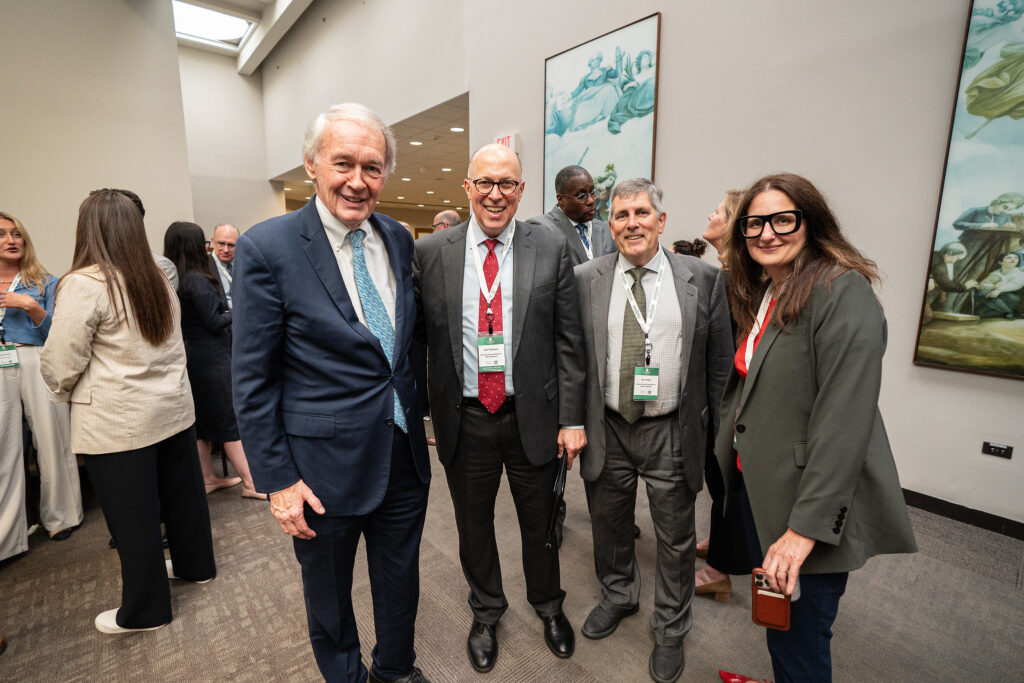
U.S. Senator Ed Markey speaks with IINE President and CEO Jeff Thielman, Director of Public Policy and Advocacy Bill Gillett, and Chief Advancement Officer and Senior Vice President Xan Weber during a New England Council event

We were gratified to see our input incorporated when, shortly after our visit, Massachusetts Senators Elizabeth Warren and Ed Markey sent a letter to the Senate Appropriations Committee’s Homeland Security Subcommittee asking for a new $500 million Destination Reception Fund to provide federal support for housing, health care, workforce development, and legal assistance as new arrivals work to transition out of emergency shelters. 

Advocating Together

As a supporter of IINE who shares a belief in our mission, we also need your help advocating for refugees and immigrants. Through our blog, newsletters, and social media, we will continue to help keep you informed about the perspectives of our clients, the misinformation that targets them, and policies that affect them. We need your help to spread the word in your own networks. When you support IINE you are helping to amplify immigrant voices at all levels. Thank you for all that you do.