1995–2004: Dreams of Freedom
Welcome to the ninth installment of our series “100 Years of Welcome: Commemorating IINE’s Boston Centennial.” The previous installment, “1985–1994: Protecting New Bostonians,” described the International Institute of Boston’s continuing efforts to resettle refugees of displacement crises in Southeast Asia, Northern Africa, and the former Soviet Union; the organization’s growing legal and advocacy work; and how it assisted thousands of immigrants granted amnesty by the 1986 Immigration Reform and Control Act.
Facilitating Mutual Aid
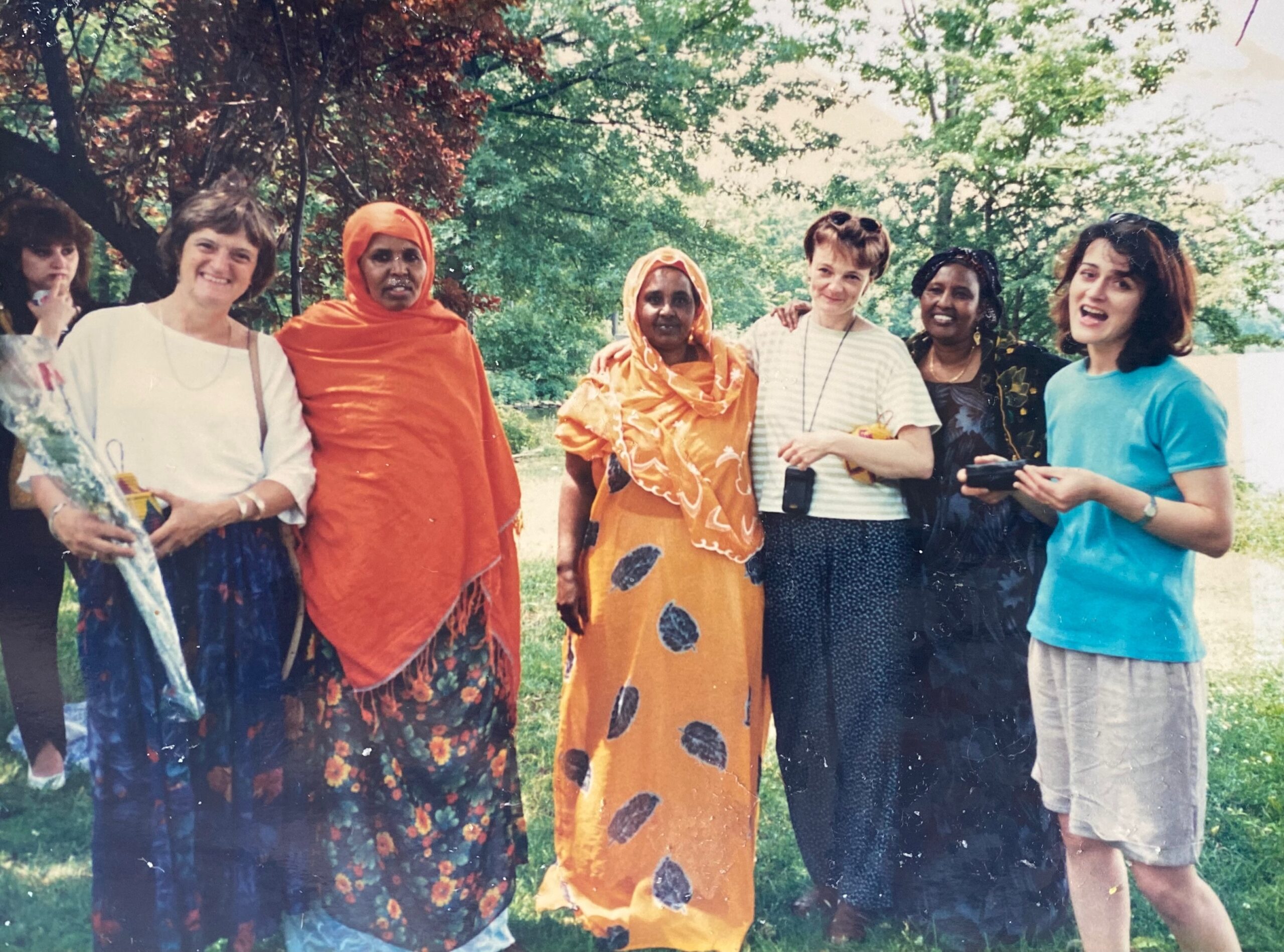
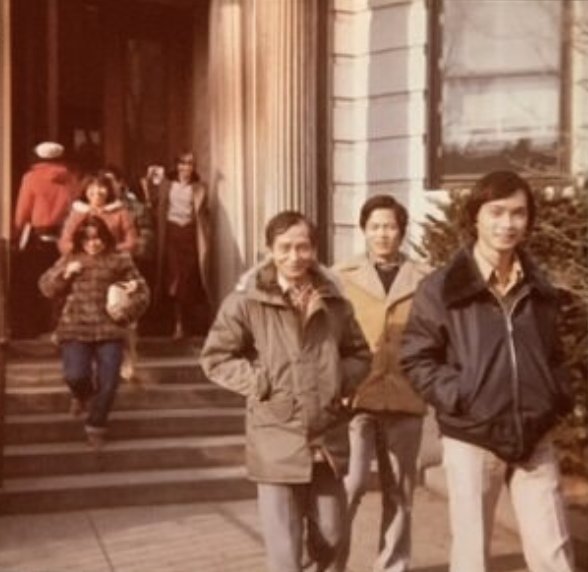
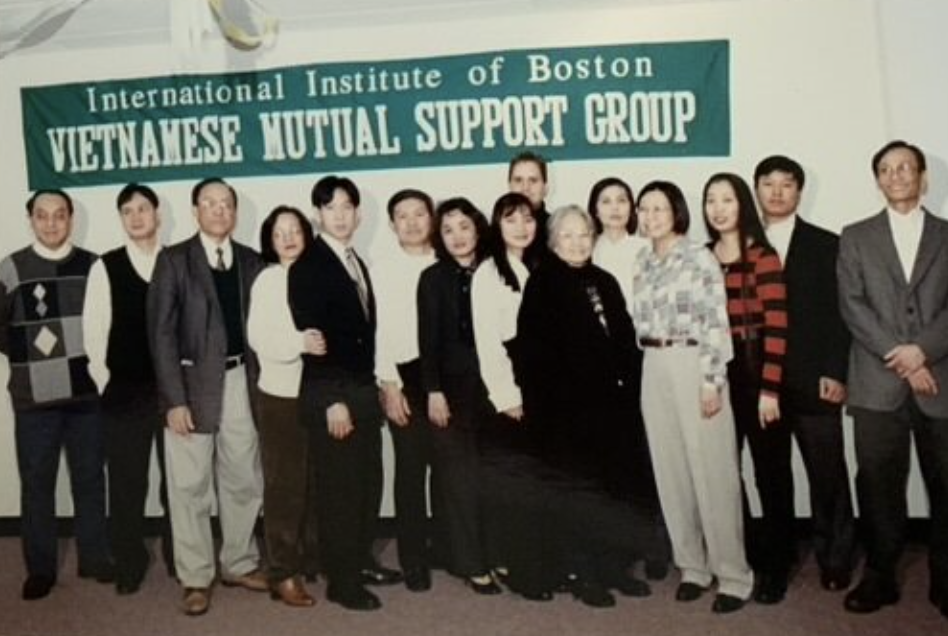
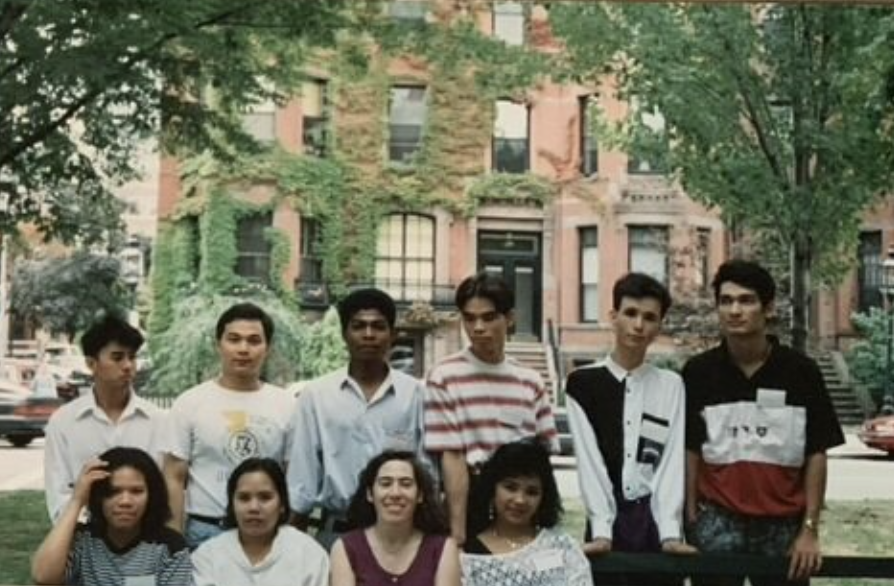
In the mid-1990s, the International Institute of Boston (IIB) remained an important source of support for the communities it had helped to build through refugee resettlement over the past two decades by working with their mutual aid organizations. It hosted the formation of a Vietnamese Mutual Support Group, began working with Boston’s Ethiopian Community Mutual Assistance Association, and hosted meetings for several similar groups from growing immigrant populations.
Hosting “Dreams of Freedom”
In 1998, IIB moved its offices from Commonwealth Ave, where it had been since the mid-1960s, to a larger space at One Milk Street in Boston’s Financial District, with room for more classrooms, a new computer lab, and more.
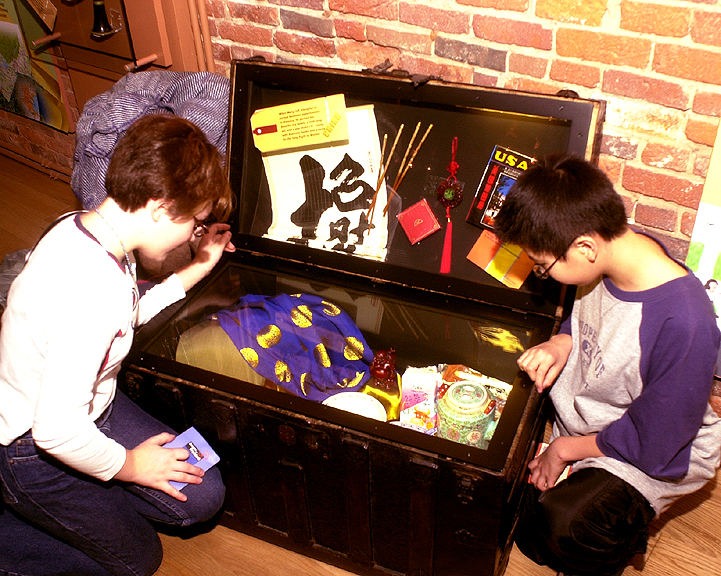
This new space would be uniquely open to the public. In its basement, IIB created Dreams of Freedom: Boston’s Immigration Museum.
Building on the legacy of the New England Folk Festival, which IIB helped organize to share the rich cultural traditions of new immigrants, Dreams of Freedom offered interactive exhibits showcasing photographs, artifacts, and personal stories that offered glimpses into the lives of the immigrants and refugees who resettled in Boston over the decades. The museum also hosted lectures, workshops, and community discussions on issues such as immigration laws, community integration, and the challenge of cultural and racial discrimination. In the early 2000s, the museum sponsored and hosted screenings by the Human Rights Watch Film Festival.
Pursuing Dreams
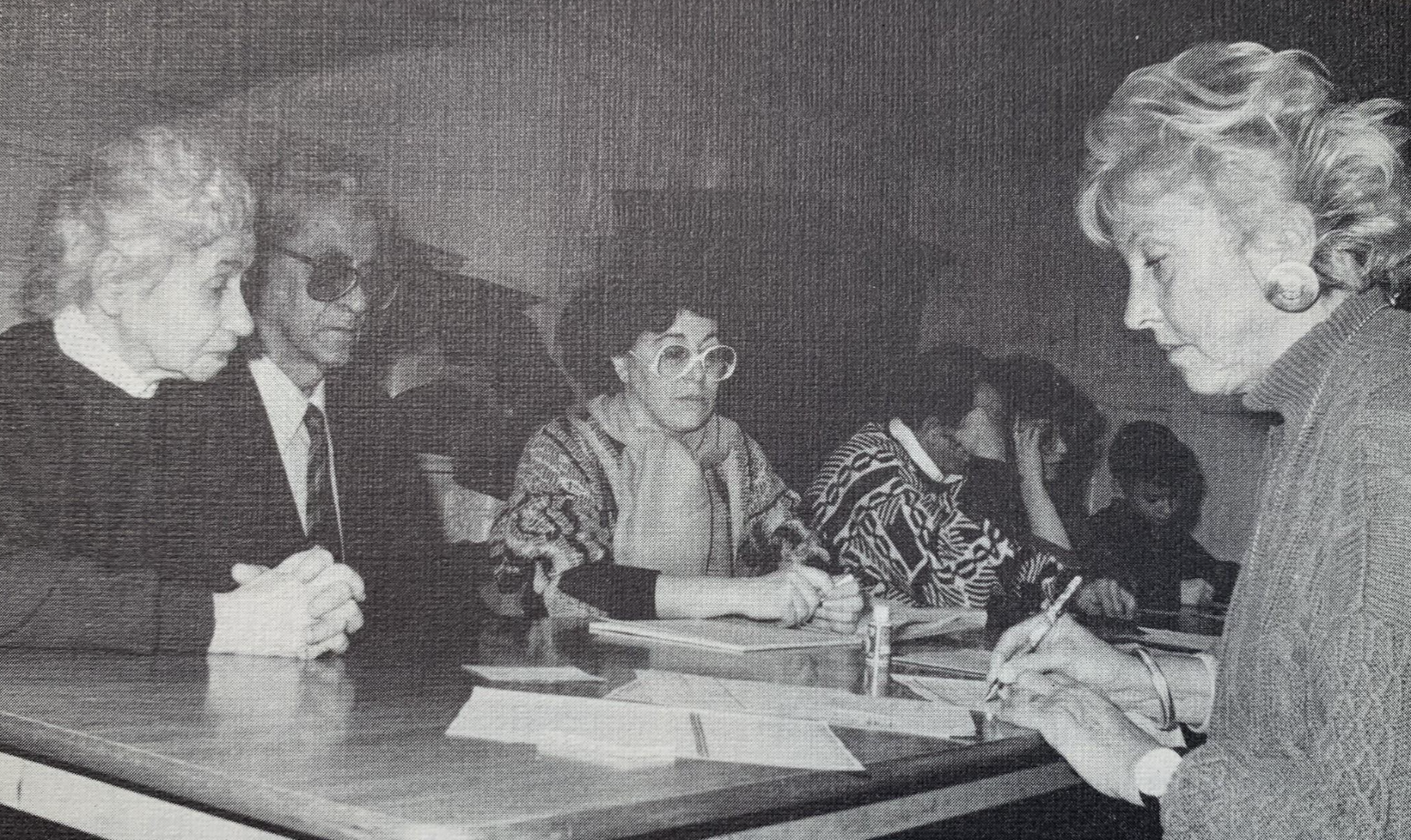
One Milk Street quickly became the home of several new integration programs that helped IIB clients pursue goals from getting a first job in the U.S., to buying a car and a home, to achieving citizenship—their own “dreams of freedom.” A one million dollar grant from the Boston Foundation and a partnership with Hilton Hotels helped launch a skills training program to place more than 260 newcomers into jobs at Boston hotels. A federally funded Saving for Success program not only offered newcomers financial literacy, banking, and money management skills, but also helped them set up a savings accounts and set savings goals for a major purchase, and then provided matching funds once the goals had been achieved. A new class in “Homebuying 101” was offered first in Vietnamese and Haitian Creole, and then later in Chinese and Cape Verdean Creole. A new Citizenship Center provided refugees and immigrants with citizenship examination preparation and other naturalization services.
Defending the Most Vulnerable
Other new and important IIB programs served immigrant populations who needed special care in order to recover from past persecution and begin to thrive. IIB launched the International Survivors Center to provide case management and counseling services to survivors of torture and other war-related traumas, and also secured its first contract from the U.S. Department of Justice to serve victims of human trafficking, providing mental health services, housing, and legal assistance. IIB also became a regional resource in combating human trafficking, convening and training a network of law enforcement officers to better identify and serve trafficking survivors.
Kosovo Kids and Lost Boys
IIB continued to welcome new groups of refugees to Boston and to help them recover and integrate. At the end of the 1990s, a crisis erupted in Eastern Europe’s Balkan Peninsula. Ethnic conflict had been violently tearing apart the country formerly known as Yugoslavia for several years, and in 1999, NATO intervened, bombing government forces and temporarily seizing control of the flashpoint region of Kosovo to try and end the large-scale ethnic slaughter. In the mass displacement that followed, refugees from regions on multiple sides of the conflict were resettled in Boston. Many were ethnic Albanians from Kosovo eager to join an already sizable community of Albanian Bostonians whom IIB had served over the years. As they welcomed these new refugees, IIB was particularly mindful of the many children arriving and organized a “Kosovo Kids” summer program in the Boston suburb of Lynn to help them prepare for attending local public schools in the fall.

In the same period, IIB also welcomed to Boston 75 of the so-called “Lost Boys of Sudan,” a group of teenage refugees from the Dinka tribe of South Sudan who had been captured as young children and forced to serve as soldiers in the Northern Sudanese army. Many had fled first to Ethiopia, and then to Kenya, where they endured brutal treatment and extended confinement in the Kakuma refugee camp. In the early 2000s, escalation of violence in the Sudan Civil War had brought renewed attention to the plight of the “Lost Boys” and thousands were welcomed into the U.S. In Boston, IIB provided arrivals with English language classes and case management services. Some used the new computer lab in IIB’s Milk Street office to search for their lost family members.
With Us or Against Us
Public sentiment towards refugees shifted dramatically in the wake of the events of September 11, 2001. Soon after members of the international terrorist group Al-Qaeda hijacked four airplanes and flew them into the Twin Towers of New York’s World Trade Center, and the Pentagon in Washington, D.C., killing nearly 3,000 civilians, President George W. Bush announced a U.S.-led “War on Terror.” For this new kind of war only one rule was made clear: all the nations of the world were “either with us, or you are with the terrorists.”
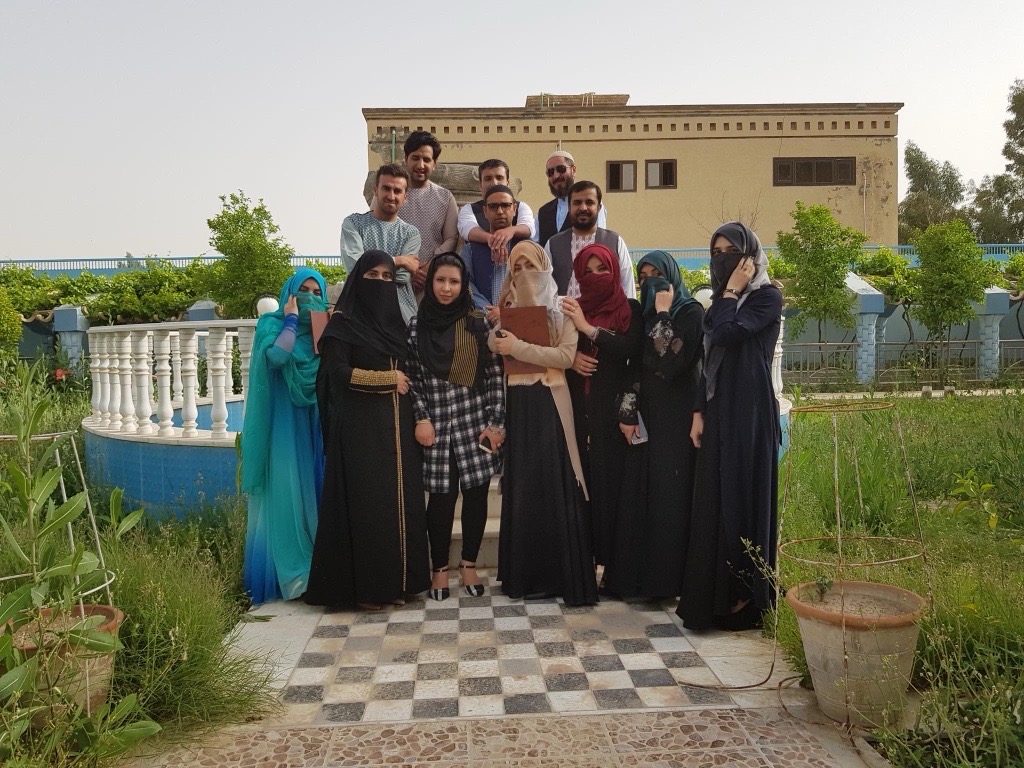
As the U.S. military mobilized for “Operation Enduring Freedom,” an attack on the repressive Taliban regime who ruled Afghanistan and had harbored Al Qaeda’s terrorists, a mood of fear, division and prejudice reverberated across the U.S., including in Boston, from which two of the hijacked flights had originated. Many Muslim and Arab Americans became the targets of violence, threats, and prejudice. IIB sprang into action to mobilize a local response, organizing a meeting of leaders from Boston’s Afghan community to issue a press release about the crisis, arranging a meeting between Boston’s Arab American leaders and the Hate Crime unit of the Boston Police Department, and developing a community resource guide for Boston’s Muslim community. IIB also partnered with the organization Muslim Community Support Services of Massachusetts to provide counseling to immigrants confronting trauma and feeling unsafe in their communities.
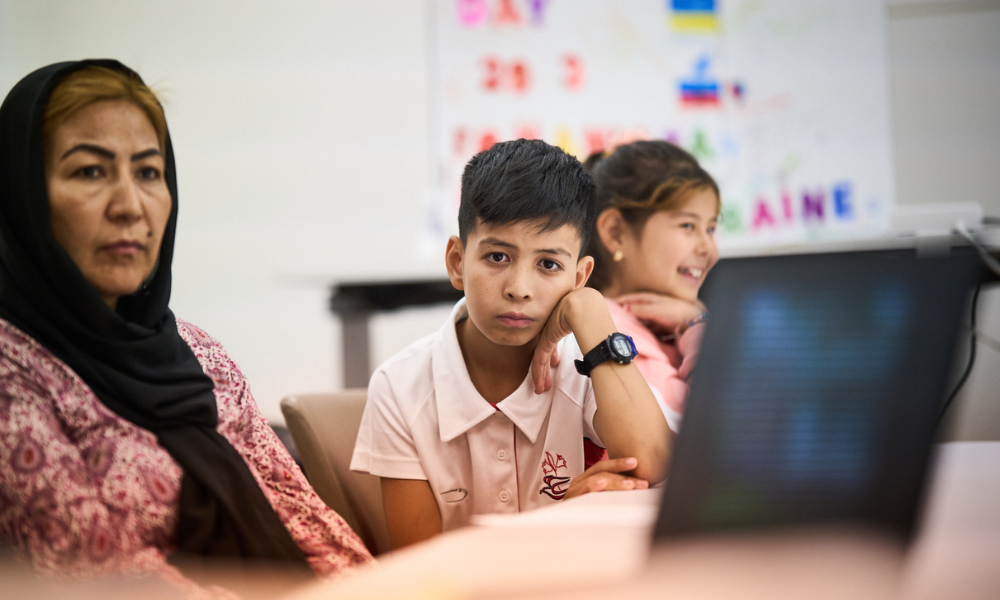
As the war in Afghanistan continued, in 2003, the War on Terror expanded with the advent of “Operation Iraqi Freedom.” Both conflicts created massive displacement, but in response to the 9/11 attacks the U.S. curtailed the refugee admissions program from 70,000 in 2001 to about 27,000 in 2002 and vetting of refugees from Arab and Muslim countries became increasingly restrictive. But as the first admitted Afghan and Iraqi refugees from these wars began to arrive in Boston, IIB was there to welcome them into services and proudly help them to become Bostonians.
· · ·
Many of the programs first established at the International Institute of Boston in the 1990s and early 2000s continue to thrive and evolve at the International Institute of New England today. Our “Ready, Set, Service!” program helps new arrivals to Boston train and find work in today’s local hospitality industry. A savings program is still offered today and continues to help refugees and immigrants to purchase their first cars and homes here. IINE continues to provide programs specifically for victims of torture and our Trafficking Victims Assistance Program (TVAP) helps hundreds each year to recover and rebuild their lives.
IINE continues to stand with all victims of discrimination and to connect them to the community resources they need to feel welcome, safe, and supported.
During our centennial year, we celebrate 100 years of life-changing support to refugees and immigrants in Greater Boston and prepare for our second century of service. Learn more here: IINE Boston Centennial.









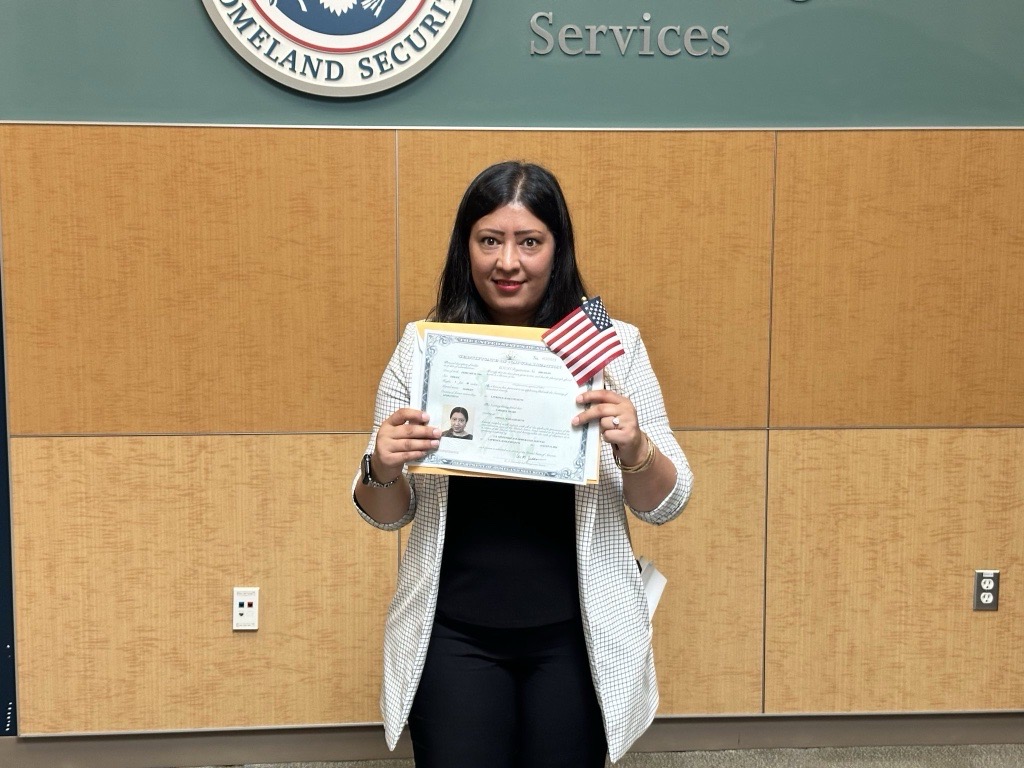



 I am the grandson of immigrants who came through Ellis Island. Two of my grandparents emigrated from Russia, one from Belarus, and one from Austria. So, I was raised on the concept that America is a great nation – because it is multi-racial, multi-ethnic, multi-lingual, and multi-religious – and that it’s a place where people from around the world can come to find a new life and to prosper.

 I am the son of immigrants. My mother’s family came to Boston in the 1920s after fleeing pogroms in Russia. My father, who grew up in a town that’s now part of Ukraine, was a Holocaust survivor. During the war, he was in hiding for 3 years. The Soviets liberated him in the spring of 1944. An orphan after the war, my dad lived in Displaced Persons camps in Czechoslovakia and Germany. He was smuggled into Palestine in 1946 and came to the U.S. as a refugee in the early 1950s to join family members who were already here.