Our donors help ensure that refugees and immigrants receive the support they need to rebuild their lives in New England, and in turn, strengthen our culture, economy, and community. In our Why They Give series, we talk with them to learn more about their connection to our mission and what inspires their support.
In our latest installment, Ellen Sullivan shares how a career in philanthropy, her admiration for IINE’s mission, and a serendipitous raffle win led to her becoming a dedicated monthly donor.
Can you share a bit about yourself?
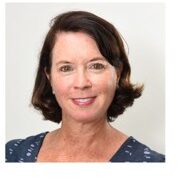
I grew up in Connecticut, and came to Boston to attend Boston College in the 1980s. After a couple of years as a volunteer teacher in Central America, I settled in Boston in the early 1990s and began a career in educational administration, first at Harvard University, then Boston College, and now Phillips Academy Andover.
As I was just starting my career, I had the opportunity to volunteer for Habitat for Humanity in Boston, where I served as the chair of the grantwriting committee. I actually did not know a thing about grantwriting at the time, but that was what was needed, so I took a course at the Harvard Summer School and learned how to make a compelling case for support. Within a couple of years, my little committee of volunteer grantwriters raised $250,000 from modest grants of $5,000 and $10,000. It was incredibly satisfying to be able to make such a significant contribution to an organization that was poised to be of such great service to our community.
Why is philanthropy important to you?
Philanthropy matters to me because it can make a profound difference in a community. There are examples on a global scale, like GAVI, the Global Vaccine Alliance, that came out of the World Economic Forum gathering at Davos in 2000. Over the last twenty-five years, GAVI has helped to vaccinate more than 1.2 billion children in 78 lower-income countries, preventing more than 20.6 million future deaths.
And of course, there are more modest efforts, like my own early forays into grantwriting for Habitat for Humanity Boston, which enabled the organization to move from constructing one home a year in the early 1990s to constructing several homes each year by the mid-1990s. Philanthropy is a way to convey one’s investment in the local community, one’s belief in the value of human connection.
How did you first learn about IINE?
I have known about IINE for many years, having followed with admiration the organization’s success in supporting immigrants and immigrant communities in New England. But IINE came most viscerally to mind in the summer of 2024, as we read in the Boston Globe of Haitian families sleeping on the floor of Logan Airport, as there were no shelter beds available to them. IINE was on the front lines of providing support and assistance, and I felt called to help in these efforts.
It actually started with my winning a raffle at the Cape Cod Senior Softball League banquet – my husband is a regular player, and I remember turning to him at the banquet in the summer of 2024 and saying, “If we win this raffle, we are giving the winnings to IINE to support their work.”
To our astonishment, we won the raffle, and I promptly donated our winnings, about $1,000, to IINE. And I should hasten to add that, as a fundraiser, I fully expected someone from IINE to contact me, not only to thank me for the donation but to ask if I would be willing to get involved further. I am delighted to say that the ace team at IINE did just that, and I immediately became a monthly donor.
What connection do you feel to IINE’s mission of creating opportunities for refugees and immigrants in New England?
IINE has such a proud and admired history of supporting immigrants and immigrant communities in New England for over a century, and fully deserves the support of all of us in New England who believe in the power of opportunity.
Economists have been reporting for generations that immigrants benefit the US economy by driving GDP growth, contributing billions in taxes, filling critical labor shortages in healthcare and agriculture—among other fields—fostering innovation, and creating jobs.
Anyone involved in the medical system as a patient or advocate for a patient knows that more than 25% of doctors in America are immigrants, and about 40% of home health aides are immigrants. Without these dedicated and hardworking professionals, who would be caring for America’s seniors?
The Catholic faith tradition that I grew up in calls us to “works of mercy” that include feeding the hungry, clothing the naked, welcoming the stranger. These are inherently Christian—as in Christ-like—things to do.
What do you wish more people understood about refugees and immigrants?
I wish more people stopped to consider the important contributions that refugees and immigrants make every day in American communities.
In Vermont, 94% of dairy farms hire migrant workers to jobs that are otherwise difficult to fill, and roughly half of the farm labor force in that state is Mexican and Guatemalan immigrants. Without their contributions, Vermont’s $3.6 billion dairy industry would be in grave jeopardy.
My mother lives in a senior living community on Cape Cod, and over 70% of the health aides in her community are immigrants. Every time I take her to a medical appointment or to the hospital, we are received and cared for by medical professionals from every corner of the earth. I shudder to think who would care for the health needs of the elders in our society without these dedicated immigrants.
IINE can only provide much-needed services to refugees and immigrants thanks to the support of our generous donors. There are many different ways to give. Learn more here: Donate funds.
Related Articles

Cultural Orientation: Helping Refugees and Immigrants Adapt to the U.S. While Maintaining Their Identity

The International Institute of New England Welcomes the African Community Center of Lowell to 585 Middlesex St.

How A Weekly Soccer Game Helps Immigrants Advance Towards Their Career Goals