Jezabel Aponte joined IINE’s Shelter Services team in 2025. Through case management, English classes, employment support, and legal services, this team helps newly arrived immigrant families who have entered the Massachusetts emergency shelter system to find permanent housing and progress towards self-sufficiency.
What drew you to IINE?
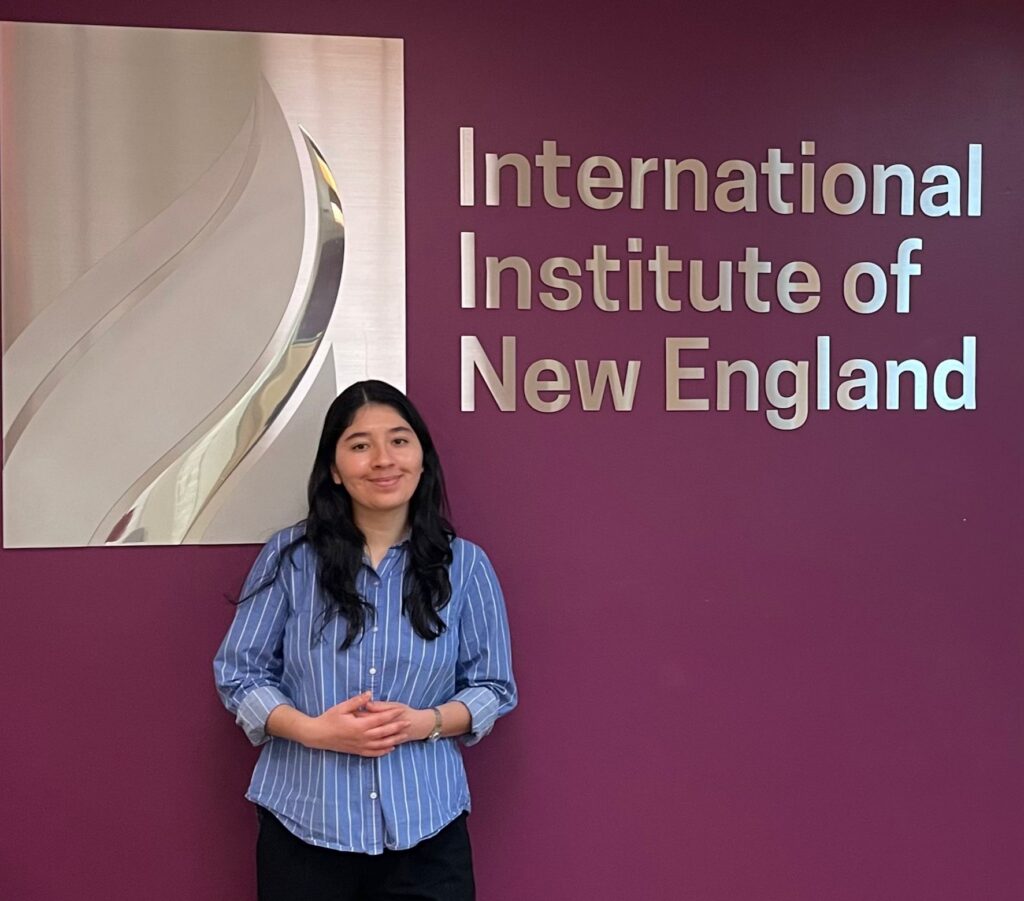
I first came to IINE as a food packing volunteer at the Lowell office back in 2023 when I was completing a master’s degree in innovation and global development at WPI in Worcester—it’s a program that teaches how to use technology to deliver humanitarian services. The opportunity to serve others was what drew me to IINE. In the past, while I was an undergraduate at UCA, a Jesuit University in Nicaragua, where I’m from, I had volunteered with organizations like World Vision, TECHO, Raleigh International, and the Red Cross, so I was happy to continue volunteering here in the United States. UCA truly influenced my values of serving and care for others. Unfortunately, my alma mater was seized by the Nicaraguan government in 2023.
I was also driven by a great interest in a career in humanitarian services and international development. In Nicaragua, I worked with German and Japanese cooperation agencies. I felt particularly fortunate that I get to do this work here, as sadly, in Nicaragua, more than 5,000 NGOs have been shut down. Additionally, for international students like me, opportunities to join the U.S. workforce are becoming increasingly limited, so I am truly grateful to develop professionally at IINE.
What does your role as a Program Assistant on the Shelter Services team entail?
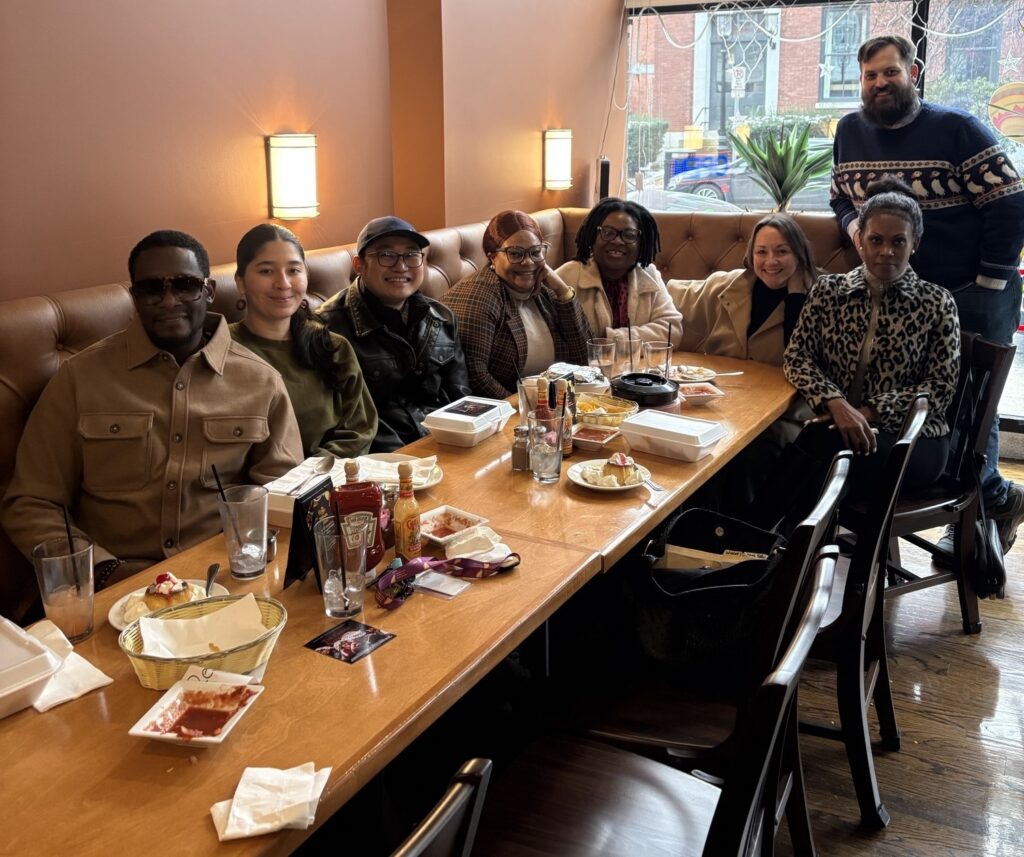
My role mainly entails data entry in both internal and external reporting systems; I also assist with client outreach and educating our clients on how to use online services and digital tools that allow them to remotely handle certain aspects of their immigration cases, like checking court dates; checking their asylum clock (which tracks where they are on their waiting period for work authorizations and can be stopped and started by judges); filing changes of address, and monitoring the status of applications for work benefits. I recently started supporting my coworkers in connecting our clients with stable, affordable housing. I have enjoyed the opportunity to learn about shelter services given my background in civil engineering.
I also work on the Legal Helpdesk, which offers remote legal consultations to clients living in northeast Massachusetts. I am not an attorney, but I assist our Shelter Services Managing Attorney with making sure our clients, who have different digital literacy levels, make it to their online consultations, and I continue assisting them after.
As much as possible, we try to offer client assistance over WhatsApp—which we know most of our clients use—for speedy contact and a low-tech experience that doesn’t stop them from accessing our services at a distance. One of the advantages is that it reduces the exposure our clients would face in traveling for in-person appointments or going to the post office.
You have won some praise for your work on this recently, from the Massachusetts Office of Refugees and Immigrants—particularly for how well you prepare our clients for their legal services appointments.
Getting key identifying information ahead of time really helps us understand a client’s immigration history and background before we actually meet with them. It saves a lot of time. We also help clients with obtaining digital records that are crucial for those who may have lost documentation, or for clients trying to show proof of immigration status to access assistance.
Another important thing we help clients with is joining remote online court hearings. This option is allowed at the court’s discretion, but when granted, it can relieve our clients of the anxiety and stress that in-person hearings can cause.
We also get all sorts of questions. You know, some people want to know what happened with their Temporary Protected Status application that they filed maybe one year ago, so we try to dig online and search for receipt numbers. Or they want to know when their next hearing is, or to talk about their options. Recently, the federal government has required people to start paying $100 for their “asylum annual maintenance fee”—$100 for every year their asylum case remains pending. So, a lot of people have had questions about that.
What makes this role challenging and rewarding?
It is challenging to help our clients navigate constantly changing rules, but there are certainly more rewarding aspects. It is rewarding to see the youngest of our clients thriving thanks to all the efforts their parents make to stay together and stay safe in this country. It is also especially rewarding to work alongside colleagues from other departments. This work requires a holistic approach, and I am glad there are people at IINE who are incredibly effective and expert in employment services, community services, and language services, so clients can get all the help they need right here—and I think once you’ve gained a client’s trust in one department, they are more comfortable accessing another.
It has also been wonderful to learn about IINE’s digital landscape—the many ways in which IINE uses technology like case management software and other tools to streamline services (10+ for programs alone!). NGOs are generally limited in this aspect, but IINE has certainly made great efforts to serve clients efficiently.
What are some things you’ve learned from working with asylum seekers that you’d like more people to understand?
1) Asylum seekers can be and are often denied asylum; they are highly vulnerable. The overall national grant rate for asylum cases decided by Immigration Judges was approximately 14% in FY 2023. Filing an asylum application and obtaining a work permit under pending asylum application is not the end of our client’s story. There is so much they must navigate; asylum applications can take years to resolve, and being able to pay for legal representation is one of the biggest barriers our clients face.
2) Sometimes we use the terms “asylum seekers” and ”refugees” interchangeably, but asylum seekers are different from refugees. Asylum seekers live in a sort of legal gray area because they are authorized to remain in the country while their claims are pending, yet they do not hold a permanent status. This has implications for their eligibility for certain services and assistance.
3) While many asylum seekers flee their countries for political and/or religious reasons, increasingly we see people fleeing poly-crises—multiple interlocking factors that drive displacement but do not always meet the standard for asylum protection, like the effects of climate change, widespread disease, and economic and political instability. Women who have fled these poly-crises and additionally have experienced domestic violence in their home countries are at particularly high risk. With programs like Temporary Protected Status (TPS) ending, some of these people have extremely limited options for protection.
Shifting gear a bit, what do you most like to do outside of work?
I enjoy gardening and reading. I love historical fiction and biographies.
Any favorite books or authors you’d recommend?
Yes, there’s a Turkish author that I really love. Her name is Elif Shafak. She writes really beautiful books, mostly stories of immigrants and women. One that I enjoyed is the Island of Missing Trees. Also, a Spanish author who writes historical novels, named Julia Navarro. I’ve learned a lot of interesting history from her.
Interested in joining our team? Our collaborative, team-oriented environment offers opportunities to serve refugees and immigrants, while learning from other staff and departments. View career opportunities here.
Related Articles

Maryam and Mauret: A Volunteer Helps a Young Afghan Refugee Pursue Her Dreams in New Hampshire

Restrictive and Unjust: IINE Statement on Presidential Determination on 2027 Refugee Admissions

Spotlight Report Excerpt: On Connecting Immigrant Talent to Healthcare Careers