metapixel
Skip to main content

Our offices will close early at 2:30 p.m. on Wednesday, April 15.

Tag: refugees

Ride 2025

“I Do This in Their Honor”: Cyclists Raise Awareness and Funds at Sixth Annual Ride for Refugees and Immigrants

The Mission

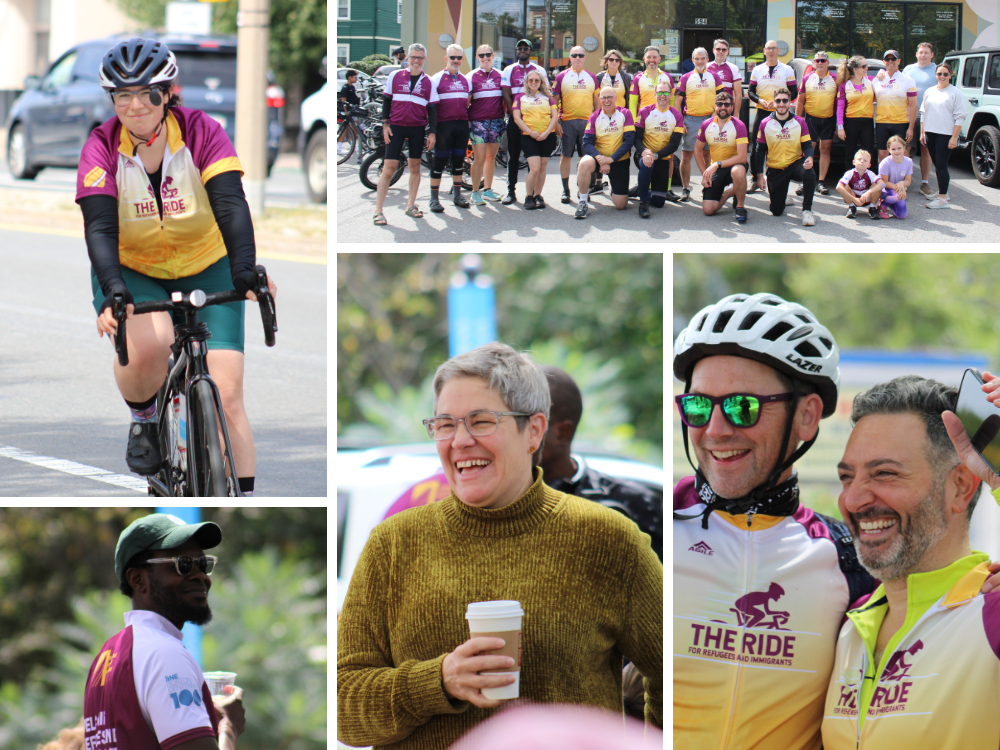
On September 21, thirty members of the IINE community, including staff, board members, volunteers, and their families, donned custom jerseys, mounted their bikes, and set off for a morning of pedaling their hearts out to raise awareness and funds in support of IINE’s mission. 

The annual Ride for Refugees and Immigrants, which was created by IINE Leadership Council member Will Krause, brings together seasoned and novice riders, united by their desire to support our newest neighbors. For weeks leading up to this year’s big day, riders gathered donations from their personal networks, spreading the word about IINE’s work and raising critical funds to help refugees and immigrants access food, shelter, and healthcare, English language and job skills training, and immigration legal support.  
 
For many, this year’s Ride felt particularly urgent as dramatic changes in federal immigration policy have dealt new challenges to refugees and immigrants in our communities—but on the day, while engaged together in action and celebration, the riders were all smiles. 
 

The Routes

Riders chose between two routes: a 12-mile route that started at the Bike Source in Bedford, Massachusetts and ended at the Kickstand Café in Arlington, and a 50-mile loop that began and ended at the café with stops in Lowell to tour IINE’s office and in Bedford to link up with the 12-milers for the home stretch.  

Participants rode at their own paces with designated team leaders guiding the way. Riders’ branded jerseys provided an important visual reminder for everyone they passed that our communities support our refugee and immigrant neighbors.  

The Finish Line

In the early afternoon, the Kickstand Café buzzed with bike-riders as one wave after another reached the finish line. IINE staff members were there to cheer on each finisher, and snacks and refreshments awaited to help them recover and celebrate. Many riders lingered long after the dismount to cheer on fellow finishers and socialize.   

One common theme heard from first-time 50-milers, as they mopped their brows, was that it felt easy to push through any of the day’s physical challenges when they thought about the cause. The challenges refugees and immigrants face are incomparable—surviving crises in their countries of origin, leaving their homes and loved ones behind, starting over in an unfamiliar place with little more than a suitcase, navigating complicated and ever-changing immigration laws, and so much more. This is not only a story shared by IINE’s clients, but also a story that can be found in each rider’s family history, and one that made their own lives as Americans possible.  

This year’s Ride for Refugees and Immigrants raised more than $50,000 in much-needed support for IINE’s mission. A huge thank you to everyone who participated!   

IINE’s annual events raise critical funds for our refugee and immigrant community members. Learn more and join us for an upcoming event.

“I Always Want to Give Back”: Suraj Budathoki’s Journey from a Refugee Camp to the NH Statehouse 

In November of 2024, Suraj Budathoki was elected to represent Hillsborough County District 40 in the New Hampshire State House, becoming the first Bhutanese-American State Representative in U.S. history. In his acceptance speech, Suraj said his victory was “the culmination of 16 years of dedication, resilience, and commitment to this community.” 

 In a recent interview, Suraj spoke to IINE about this journey. 

Learning Resilience 

Suraj became a refugee at the age of nine when the Bhutanese government suddenly stripped members of the Nepalese-speaking Lhotshampa minority of their citizenship and drove them from their homes. He spent the next nearly twenty years of his life in a refugee camp in Nepal.  

Suraj says his time there “taught me a lot; the resilience, the continuity to do things and not give up.”  

When he finally arrived in the U.S. after decades of waiting, he landed in Atlanta, Georgia. He recalls seeing a group of people at the airport handing out gifts to arriving children. “There is compassion for immigrants and refugees here,” he remembers thinking.   

Still, life was far from easy. Suraj arrived with a bachelor’s degree and a nearly-completed master’s degree but soon found himself working two full-time jobs for minimum wage—a day shift at a fast-food restaurant followed by an overnight shift stocking grocery shelves. It was difficult to save or build a social life.  

Work and Welcome in Manchester 

Suraj was excited when a friend from home told him about his life up north in Manchester, New Hampshire, where he had been resettled by the International Institute of New England. Manchester was smaller and easier to navigate. Jobs there offered better starting pay, and through IINE, Suraj could train to become a Licensed Nursing Assistant within a month.  
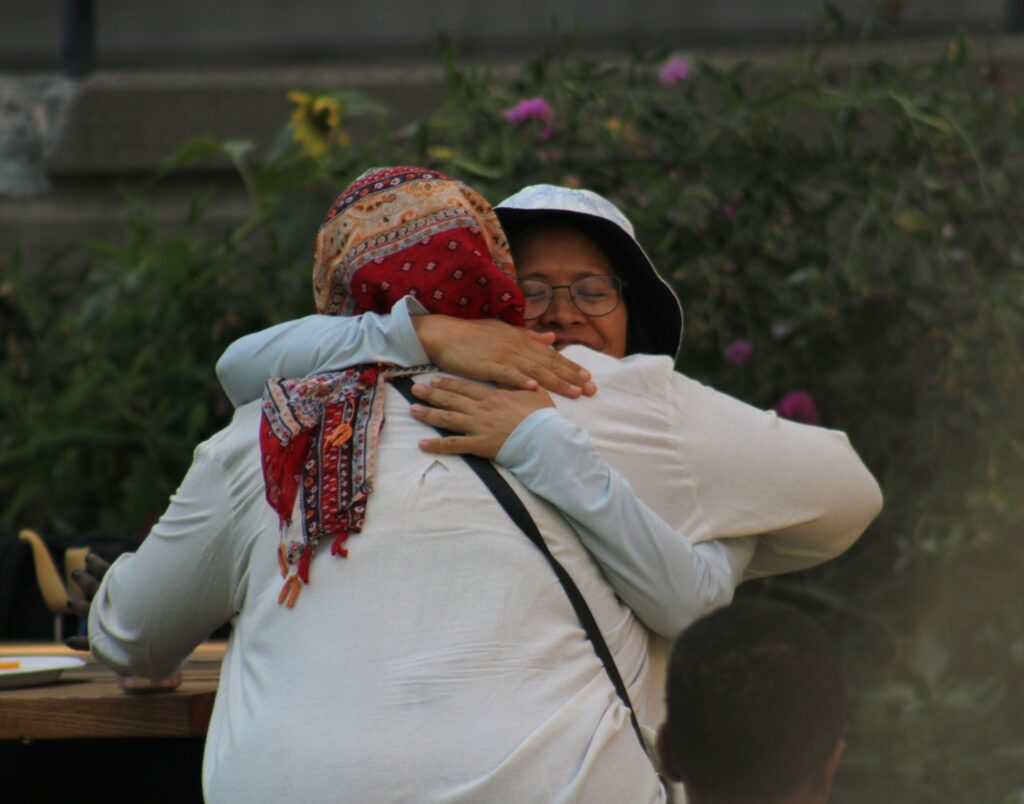
He was sold. In 2009, Suraj moved to Manchester, “and that’s what I did! I finished the Licensed Nursing Assistant program and then within two months, I got my license! The Employment team helped me get a job and after that I’ve been working with IINE for many, many years.” 

Suraj took to New Hampshire right away. “The mountains and the green vegetation resemble my small town in Bhutan,” he says, and compared to the sprawl of Atlanta, the compactness of Manchester was closer to the life he knew in Nepal. As in Atlanta, he took on two full-time jobs, but these he found more meaningful and in line with his goals. One was at a rehabilitation center for adults with traumatic brain injuries. The second one was to train adults who hadn’t completed high school to create resumes and help them find jobs.  

These early jobs helped Suraj build up his English skills. He soon went back to school at Manchester Community College and then transferred to Southern New Hampshire University to study Political Science.  

“Then life took off.” 

Building Community 

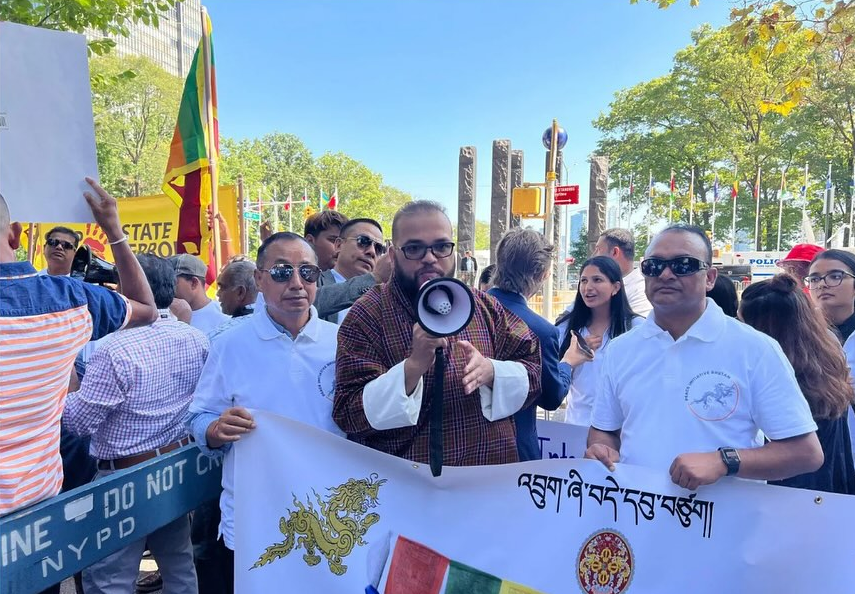
Suraj (center) has advocated for peace in Bhutan throughout his career

With his newfound confidence and vision, Suraj co-founded Bhutanese Community New Hampshire (BCNH), a non-profit dedicated to helping fellow Bhutanese refugees to integrate and thrive. He served briefly as the organization’s first executive director and then joined its board.  

“My first focus was learning to get grants,” Suraj says, and he still vividly remembers the story of his first submission, trudging through the rain to hand off his big envelope in-person, and then waiting months for a response. Finally, he heard back that he had won $6,000 for his mission. He was thrilled.  

With practice, he became more and more adept at grant writing, securing grants as large as $1 million.  

“I was able to hire 23 staff! Can you believe it?” 

Even more exciting was turning the funding into medical care, mental health services, and employment support for his community. BCNH formed a close partnership with IINE, who referred newly resettled Bhutanese clients for additional support. As it grew, BCNH expanded its mission to accept clients from additional countries and changed to its current name: Building Community New Hampshire.  

Feeling the Bern 

In 2016, Suraj was able to exercise his political science muscles when the presidential campaign of Vermont Senator Bernie Sanders opened a field office in New Hampshire.  

“It was my first time working on a campaign and I got the second-highest post for New Hampshire! That was my first opportunity to get to know Bernie, his team, and the people of New Hampshire. I was so privileged to work on his campaign and travel a lot across the state.” 
 
Suraj says that talking to people throughout the state had a profound effect on him. “I heard a lot of people’s often painful stories, and I could relate from when I was in a refugee camp…It’s not having money to pay rent; the cold; not enough food for the elderly who invested their life making America better, supported their kids growing up, when they were young and then paid taxes, and at the end of the life they have nothing to enjoy.” 

Suraj decided to tackle these issues head-on at the community level. His founded Bloom and Shine, LLC, a human services agency that provides in-home behavioral and physical healthcare to New Hampshire seniors. 
 
“I felt I needed to do something, and Bloom and Shine is something. Providing caregiver services to the elderly and disabled, it’s something I feel proud of.” 

Pursuing Peace 

While deepening his roots in his new community, Suraj was also studying international development, completing a master’s degree from Norwich University, and beginning a Ph.D. program at Saybrook University with a focus on conflict resolution. His research revealed clear historical patterns of opposing sides in ethnic conflicts becoming increasingly entrenched in their mutual opposition as suffering increased. 

“I saw that happen in Bhutan in the ‘90s. My Ph.D. is on how to find a solution. How can we transform that adversarial relationship into a conducive, friendly relationship? As I did more research on conflict resolution and negotiations, I found that there are peacebuilding and reconciliation methods that can bring two conflicting parties together.” 

Inspired by his research, he launched the Peace Initiative for Bhutan (PIB). 

“I talked to many young Bhutanese-Americans, college students, and other like-minded individuals, and they also had the same kind of idea. We came together to form this peace initiative. The approach is distinct from what our leaders did in the past. We are not doing this to win—to defeat the other side. We’re doing this to find common ground—to resolve through dialogue.” 

The goal of the initiative is to heal relations between the nation of Bhutan and its refugee diaspora. This reconciliation would allow Bhutanese refugees to return home in peace to reunite their loved ones.  

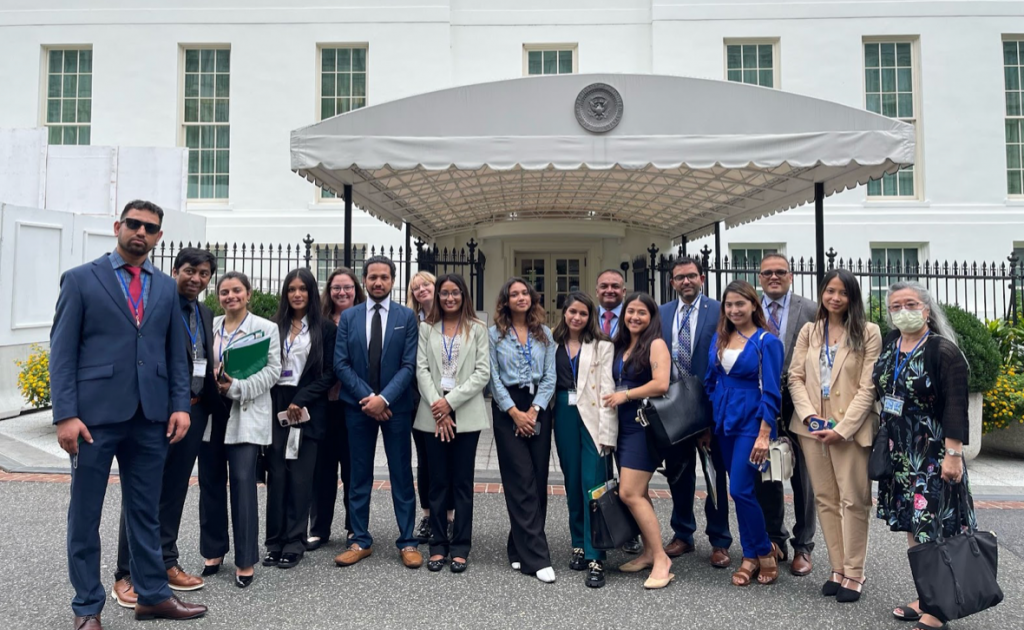
Members of the Peace Initiative Bhutan on the trip to D.C.

The first step for PIB was to draft their own peace plan and send it directly to the king of Bhutan. When they didn’t receive a response, they posted their plan online and alerted the press. Next, to draw further attention, they got the U.S. government involved. Suraj traveled to Washington D.C. and lobbied to get both the U.S. House of Representatives and the U.S. Senate to introduce resolutions calling for reconciliation.  

Bhutan began to listen. 

“We did a couple of rounds of informal dialogue with people inside Bhutan, also some parliamentarians,” Suraj says. “This has never happened before with other approaches. Our method is based on mutual respect, based on love to the other side.” 

The People’s House 

Suraj’s success with the Bernie Sanders campaign, his empathy for the struggles of working people in New Hampshire, and his progress with PIB all inspired him to make his own run for the State House of Representatives. His victory was a huge source of inspiration for fellow Bhutanese refugees. New Americans Magazine reported, “Suraj’s win quickly became a sensation on social media, sparking pride and celebration across the Bhutanese diaspora, which includes former refugees resettled across eight Western countries. Bhutanese-American social media platforms lit up with messages of pride, congratulatory posts, and reflections on the significance of this victory.” 

While ever hopeful, Suraj is learning about the challenges of belonging to a minority party in a state legislature. 

“We don’t have much say in any bills or regulations. We don’t have that power. We do share what we think, what we believe would bring positive change, but supporting the middle class or poor community is not what always gets attention. It feels painful when we see bills cutting support to the elderly, to the university system, to special education, and many others in New Hampshire.” 

Suraj is committed to speaking up for vulnerable constituents, but sometimes he worries about others’ misconceptions of his background and journey.  

“I testified in one of the committees against a bill, and I told them my success story. I came here as a refugee. 100 people work in my company. I’m going to college. I paid this much in taxes, etc…People may feel I’m taking their space. They see themselves working day and night, but I came here a few years ago, and now here I am running a company and a state representative. They may not understand the human side, the hard work, of what we as immigrants do here.”   

He wishes more people understood about his time working two jobs for minimum wage to build a foundation, missing many nights of sleep and the family he left behind at the refugee camp. 

But like his Peace Initiative, he sees his political work as an experiment and says that his political career is “just getting started.” In the arc of his career, it’s one more way to heed the calling he first heard back in the refugee camp in Nepal. 

“The international community, the United States and many other countries, they helped us a lot. We were not able to go to work outside of the camp, and we were fed and supported by many Western countries…We always feel we should give back for those many years we were given—and that’s the call—I always want to give back to the community. Whatever I’m doing now, being a State Representative or running this home health care business, it’s always supporting community, providing employment and uplift.”  

•••

Refugees and immigrants make long, difficult journeys to escape violence and rebuild their lives in the U.S. You can give them the help they need. 

Atefa's Story

Atefa’s Story: With Ongoing Support, a Young Refugee Builds a Brighter Future

Atefa’s story is featured in our Spotlight Report: Who We Can Serve and How in a Rapidly Shifting Landscape. Click here to read the full Spotlight.

When the Taliban retook control of Afghanistan, Atefa, her mother, and three brothers escaped their home, resettling as refugees in Lowell in 2022. As the eldest sibling, Atefa quickly took on adult responsibilities. She became her family’s interpreter and spokesperson at doctor’s visits and school appointments – all while balancing learning an entirely new culture and language.  

At first, school was frustrating for Atefa. In Afghanistan, she had already begun college, but her high school transcripts were among the many possessions she had to leave behind, and without them, she had to begin her American education as a freshman at Lowell High School. Still, she stayed focused and determined. For support, she went to nearly every tutoring session provided by IINE’s Refugee Youth Mentoring program, bringing her brothers along to make sure they progressed as well. That year, Atefa earned honors recognition for her grades. 

During her junior year, Atefa began exploring the college application process. When IINE’s Youth team advised her to join extracurricular activities to stand out, she became a student ambassador, helping fellow newcomers adjust to life in Lowell. Her leadership and service led to her acceptance into the National Honor Society in her senior year.  

That summer, Atefa went back to her IINE mentors for guidance, and they suggested volunteer work. In addition to working at a grocery store, participating in school groups, and helping her family, she began giving back to support other IINE clients. She delivered fresh produce and packaged goods to families, provided interpretation, and peer-tutored fellow refugee youth.  

Atefa’s relentless dedication was rewarded when she was accepted to four colleges! She chose the University of Massachusetts Amherst, where she will study civil engineering starting in the fall of 2025. As she prepares for this next chapter, she continues to reach out to the IINE Youth Team for guidance on class selection, financial aid, and housing. 

•••

Refugees and immigrants come to the U.S. after enduring unimaginable hardships. You can give them the help they need to rebuild their lives here. 

In New Hampshire, Investing in English Language Classes Makes Everyone’s Healthcare Better

A Healthcare Success Story

As in much of the country, if you live in New Hampshire and you need medical care, you’re likely to get help from some people who began their lives in other countries. Immigrants and refugees make up about 18% of the U.S. healthcare workforce. In New Hampshire, they make about 7% and are particularly prevalent in patient-facing roles, such as home healthcare aides, drivers, cleaners, and food preparers. They’re the people who help you feel comfortable, safe, and cared for when you’re at your most vulnerable.  

These are roles for which there are dangerous shortages in New Hampshire, a state with a rapidly aging population. It’s an urgent need that creates an opportunity for newcomers seeking entry-level jobs that may not require a local work history and more than basic English skills.  

“Matching newcomers with New Hampshire healthcare employers has been a real success story in general,” says Kayla Rossmeissl, IINE’s Director of Program Design and Evaluation. “Employers are getting fast-learning, resilient, highly motivated workers, who have the benefit of IINE to help support their orientation and development. Our clients often say they’re excited to be helping people in their times of need and giving back to the community that’s welcomed them.” 

A Desire for Investment

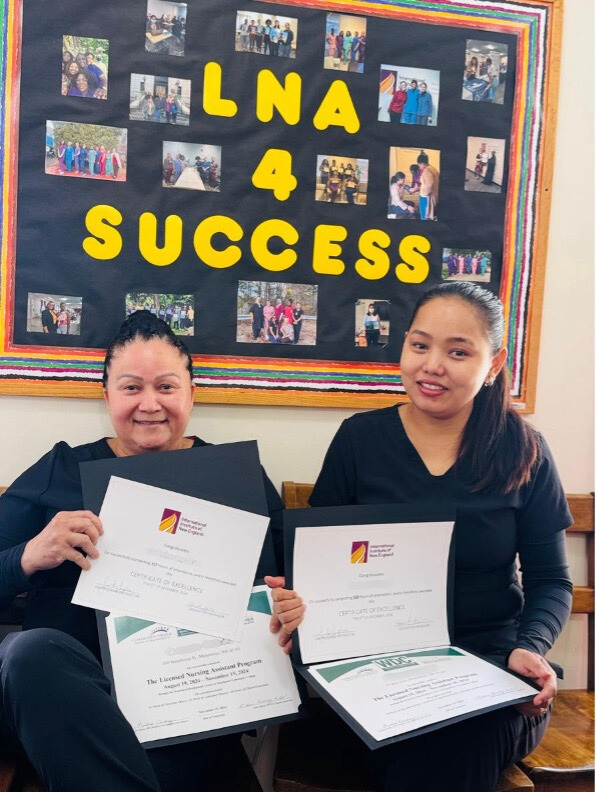
In 2019, Kayla helped develop LNA for Success—an IINE skills training program that combines English language instruction, vocational training, higher education partnerships, and apprenticeship, to help prepare immigrants and refugees for the job of Licensed Nursing Assistant. She says that in promoting this program over the next few years, IINE discovered a real desire for greater investment.  

“We had been doing a lot of community presentations and working closely with [LNA for Success partner] Manchester Community College. We started to discover a lot more partners who are looking for ways to help get refugees and immigrants more economically stable—career laddering, higher paying jobs, things like that.” 

She also found healthcare providers looking to invest in their immigrant employees. At one networking event, representatives from two local hospitals sought her out. 

“They were just like, ‘Kayla, I heard you set up these ESOL programs. Can we chat?’ From there, we were all brainstorming to come up with a program to help their workers.” 

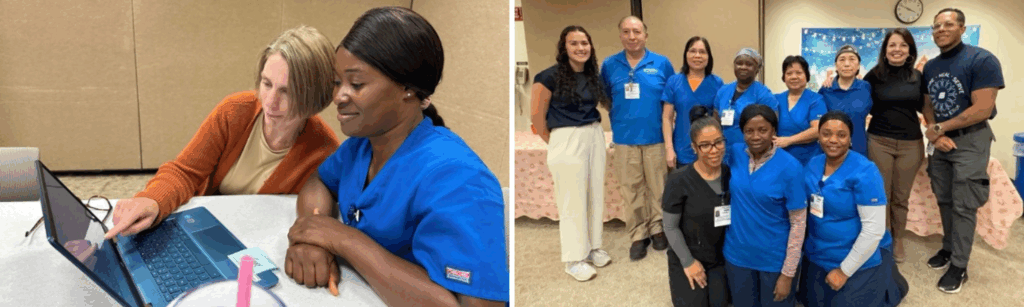
Both hospitals were interested in paying their employees to deepen their English language skills during the workday, through on-site, workplace-focused English for Speakers of Other Languages (ESOL) classes. 

“Which is amazing,” Kayla says, “because a lot of families are juggling multiple part-time jobs and childcare, and wouldn’t otherwise have time to take classes.” 

Kayla wasted no time in developing a curriculum for a pilot “ESOL 4 Healthcare” program, conducting interviews with partners to learn about their goals and challenges.  

“They wanted to see people become more confident in speaking English, because even though they are in environmental services [maintenance], they do greet the patients in their rooms, and they interact with other staff in the hospital, like their supervisors. So, having more confidence in communication, being able to read and write emails, improving digital literacy skills, and navigating internal systems like clocking in and out—these were all things we could help with that could improve everyone’s experience.” 

Gaining Confidence

“I would say for me personally, what I see in the students, cohort after cohort, is confidence,” says Becky Marden, Director of Workforce Development at Elliot Hospital in Manchester.  
 
“In their evaluations, they’ll say things like, ‘I’ve gained the confidence to say hello to my manager in the morning, whereas before I might just have avoided eye contact,’ and things like that. And that’s what inspires me to keep pushing for this class and making it better every cohort.” 

Having helped develop the concept, Elliot Hospital is now in its third year of ESOL 4 Healthcare. Becky says that she’s frequently blown away by the improvement that Elliot’s English language learners make in listening, reading, and writing skills over the course of a cohort—which spans two hours/day, six days/week for sixteen weeks, an impressive investment of staff time. In addition to the improvement in workplace communication and staff-patient relationships, she says that Elliot is gratified to be able to provide some meaningful support to some truly impressive people, which, in the most recent cohort, were six students from six different countries. 

“For me it’s also about the social contacts outside of work—they can use email or finally set up a bank account for the first time. These are some of the most resilient and hardworking employees we have. I could never go to another country and work someplace and not speak the language. I would just be so frustrated. And yet they’ve done it and they’re working in our community.” 

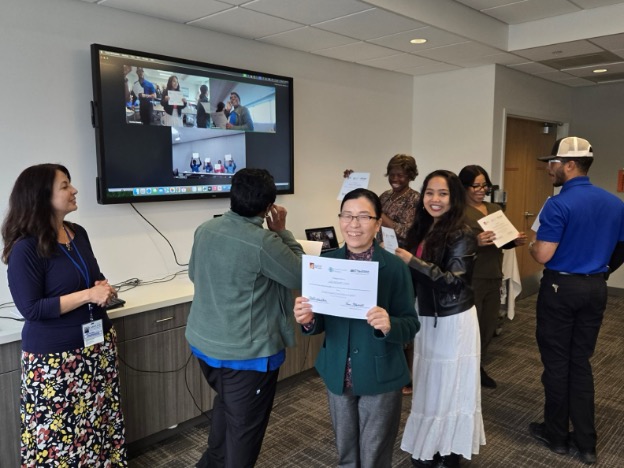
Becky says her CEO shares this feeling. After attending an ESOL 4 Healthcare graduation, he invited several of the recent graduates to a Board Meeting so that the hospital’s leadership could meet them, and they could showcase their new English skills. For Becky, the next step is developing apprenticeship programs within the hospital to help English language learners on staff to advance in their careers there.  

“Some of them have healthcare experience from their previous country. We had a nurse practitioner in one program. We had a labor and delivery nurse in another, and they just want to work in the healthcare field. Their credentials don’t come over, their education doesn’t come over, but here they are, sometimes cleaning toilets just so they can be in healthcare. How do we get them back to the bedside? ‘Cause that’s where we need them.” 

This is the Future

Elliot Hospital is currently one of nine IINE ESOL 4 Healthcare partners, and the number is growing quickly. They include providers offering mental health care, senior assisted living, and more. One new partner, Dartmouth Hitchcock Hospital, offers English classes remotely to reach student in more rural areas, and has developed apprenticeships in Phlebotomy and Lab Tech.  

“I’ve got five more in the queue!” says Kayla. “I really think this is the future. There’s a lot of interest in bridging the gap. There’s tremendous need here, from people who can really benefit from these kinds of jobs, and from employers who are always interested in a stable source of new staff members who come to them recommended and supported.” 

Investing in job training opportunities for refugees and immigrants creates a stronger workforce for us all. Help newcomers grow their careers and our economy by donating to IINE today.

Soccer blog

Shared Goals: How Refugees and Immigrants Bond Through Soccer

It’s the most popular sport in the world. You can play it in a schoolyard, a gym, a park, or even a refugee camp. You don’t need expensive equipment or to even agree if it’s called “soccer,”futbol,” or something else entirely. You just need a ball, a goal, and a group of fellow players. Once you start playing together, you tend to become friends. For these reasons, “the beautiful game” is providing some beautiful opportunities for IINE clients to connect with one another across backgrounds. 

A Clinic for Lowell Youth 

IINE Youth Program Manager Isabel Goes says she’s noticed a clear pattern: “Anytime we talk about sports when we first meet with clients, it’s like, ‘OK, well, does that mean like, soccer?!‘” Her clients are definitely fans. She remembers one showing up to a workshop in head-to-toe Cristiano Ronaldo gear, and the delight of clients unwrapping soccer gear at a holiday gift swap.  

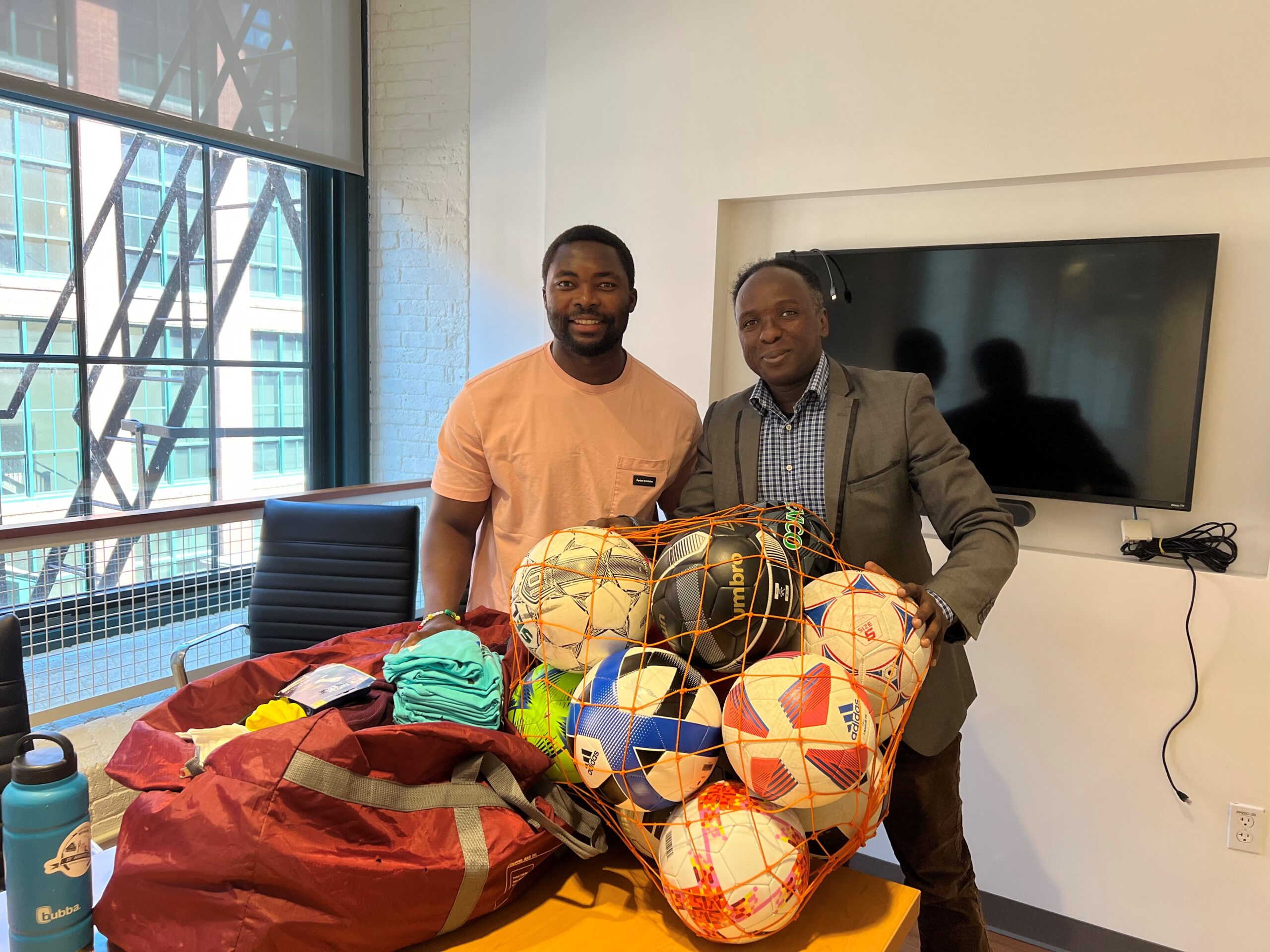
Olf (L) stopping by IINE’s offices to donate soccer equipment to refugee youth

When she decided to organize a youth soccer clinic last June, she knew she’d have plenty of support. Her first call was to Olf Mouyaka, a former refugee from the Democratic Republic of the Congo who grew up in Lowell after being resettled by IINE, and recently founded a soccer-based youth development program called the Football Leadership Organization. Olf had donated soccer equipment to IINE in the past and had experience running clinics.  

Next, to recruit participants, she turned to her colleague Yusuf Abdi. Yusuf’s official job is as IINE’s Career Services Manager, but after hours, he puts tremendous effort and passion into organizing community pick-up soccer games for IINE clients and other members of Lowell’s immigrant community.

“He was like, ‘I already have all these clients coming out for soccer,’ so I said, ‘OK, well, send them our way, have them join us for an official youth program!’” 

Yusuf did just that, and he showed up in his favorite jersey with his son in tow so they could both join in the fun. The clinic was a success, and for Yusuf, it was just the tip of the iceberg. 

“Everyone Show Up at the Park!”

“In the summer, I try to do it six days a week,” Yusuf says, “and I wash all the pinnies after each game!” That’s no small commitment, but he plans to keep it up “as long as I’m helping youth, doing something good, and making them feel a sense of social connection.” 

A former refugee from Somalia, Yusuf has been a passionate soccer fan all his life. As an adult living in Lowell, he joined an indoor recreational league organized by members of the local Cambodian community. He saw some familiar faces in the stands, and again at a regular game organized by member of the West African community: “The youth just came to watch, and I said, hey, they want to run around and play too…so I told them, ‘OK, I will bring the pinnies, soccer balls, and goal posts. Everyone show up at the park!'” 

Yusuf ordered the equipment and continued to recruit participants, including clients who he knew were between jobs and needed an outlet and some social connection.  

Yusuf (center) arranges regular soccer games for clients to have fun, grow their English skills, and build community

To organize meetups, he checked the availability of public parks and then created a Facebook group and a WhatsApp chat moderated by a refugee from the Democratic Republic of the Congo, who is able to translate messages into French and Portuguese.  

His meetups bring out people of all ages and backgrounds, “Each day the language changes some. You may hear a lot of Swahili, a lot of Portuguese, or a lot of Haitian Creole.”  

Together they play informal, tournament-style games. On Fridays, two local coaches, Coach Kwezi from Ghana and Coach Hugo from Guatemala, show up to offer instruction, run drills, and lead more structured games. Yusuf shares video clips of games in the WhatsApp channel, so players can celebrate their successes and learn from their mistakes. 

Though the language barrier can be challenging at first, everyone understands the basics.  

“Everyone can kick and everyone can try to score. Everyone is quiet when they arrive, but their faces are different when the game ends—happy smiles.” 

In fact, the games give players a great chance to practice their English skills without thinking about it too much, and players form bonds quickly.  

They chat, and some of them, they’re not able to communicate, but they try. You know, ‘Why’d you miss the ball?’ ‘You should pass to me.’ And some build confidence. You can see players become happier over time, come out of isolation. Their lives begin to change. That drives me.” 

Specifically, Yusuf says clients became inspired by friends they’ve met on the soccer field to follow their lead in steps like pursuing GEDs or higher education.  

Yusuf loves the mentorship, community, and social connection the sport offers – no matter a player’s age.   

“I’m in my 40s. I’m not like a youth of 18 or 20, but I’m still engaged. Soccer is a language that doesn’t require much talking, it’s more of action, and it builds trust. When I’m playing with a group from Ivory Coast, Cameroon, and Liberia who don’t know me, they get to know me, I become a friend of theirs. That’s how you get connected.” 

Balling in Boston

According to IINE Volunteer & Donations Specialist Emily Dionne, in Boston, the idea of convening some regular pick-up soccer in the park came from super-volunteer, Suraj Chaudhry of Newton South High School.  

“Suraj has been involved with a ton of different things. He suggested just doing a one-off game and then it just kind of grew from there with the Employment and Skills Training teams really taking it into their own hands to keep it going, which was really great.” 

Emily got Suraj together with some other volunteers to plan the first game. They circulated a flyer, Suraj borrowed pinnies and balls from his school, and Emily brought some pizzas for a post-game social. 

“A good 30-40 people came out, including staff, volunteers, and clients,” says Emily. “We were so surprised. It was a really fun gathering.” 

The one-off game quickly evolved into a weekly Saturday morning meetup. Games are kept informal with teams chosen by counting off, and consistent winners are often broken up to make contests more even.  

“It’s a really great way to build community and have people meet each other, especially in Boston, since everybody’s kind of separated across the city,” says Emily.  

“I think it’s a good way to have a bonding activity that isn’t necessarily based around things we do at IINE like having people work on resumes or attend workshops—it’s purely fun. It’s also a team mentality—everybody coming together for one goal.” 

Emily says the game has led to connections off the field, too. In the WhatsApp chat, between posting video clips of their game highlights, people have started organizing social outings throughout the city.  

When Suraj had to step away, Lead Career Navigator Gordon Parris gladly took over the organizing with the help of Career Navigator Luqman Alkhaneqeeni.  

Gordon (far right), Emily (second from right), and Luqman (kneeling) gather fellow IINE staff and clients weekly for a pick-up soccer game

A former refugee who has lived in Jordan, Iraq, and Turkey, Luqman has been playing soccer since he was four years old. It’s been a throughline for him as his life has continued to change. He couldn’t have been more excited to learn that his new workplace was hosting a regular game. “It’s one of my talents, let’s say,” he says with a smile. “When I learned about the game my first week on the job, I said, ‘Let’s go! I’m in!’”  

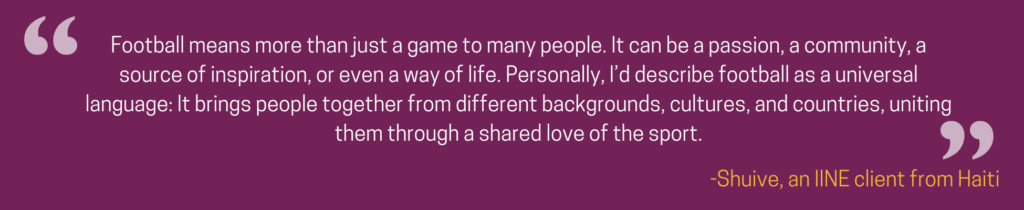
Luqman says he sees soccer as “a global phenomenon which unites millions of people. Also, back home it’s used as a cultural expression. Every time I’m playing, I see emotions, joy, that transcends all borders.” 

We have some kids who are 9, 10, 13 years-old that run circles around us,” Gordon adds,  “so when he says it transcends all borders, including ages, he’s being literal.” 

Gordon is originally from South Africa where he also grew up playing soccer. “We’re all there because there’s something that we kind of miss from home. It’s something that we all grew up doing in completely different ways. Everyone gets the goofy jokes of like, you know, looking one way, kicking the other way, that kind of thing. It’s a common language, and therefore, unifying.” 

Now in its second year, the pick-up game continues to go strong. So what’s next for the franchise?  

“We’re going to keep it simple,” says Emily. “We’re just going to keep playing soccer.” 

“The Most Lovely People”: A Volunteer Group’s Experience Supporting a Refugee Family from Nigeria

Boston Bound volunteer group members with Tani and her family

Tani and her six children were among the last refugees to arrive safely in Boston just before the indefinite suspension of the U.S. Refugee Admissions Program. In the weeks leading up to their arrival at Logan Airport, a group of friends from Boston and Brookline had been eagerly preparing to support them through IINE’s Resettle Together program

The volunteer group, who call themselves “Boston Bound,” is led by Jenny Miller. Jenny first learned about IINE when her daughter was looking for a community service project in the lead-up to her Bat Mitzvah. Through IINE, she was able to deliver food to local immigrant families and to donate books to refugee children after running a donation drive at her school.

Jenny remained on IINE’s volunteer email list, and when she learned about other opportunities to get involved, she was inspired. “These were things I could actually do. I work full-time [and am] crazy busy, but I had a few hours at night to go grocery shopping and bring food to a new family. Or I had a few hours on the weekend to help someone learn how to navigate the T,” she says.  

“IINE provided great support, and it was deeply satisfying, like disproportionately satisfying even when I never met the family. Dropping off groceries felt so tangible. At a time when it felt hard to find other ways [to help], it just felt really good to be able to do that.” 

She talked about the experience with her friends, a group of fellow parents of tweens. After the 2024 election, when they began sharing their fears over anti-immigrant policies taking hold in January, she proposed sponsoring a refugee family through Resettle Together as a concrete way to honor their values. 

Soon they all found themselves gathered around a dining room table in front of a large piece of paper, divvying up tasks from finding donated furniture, to apartment cleaning, to scheduling shopping trips for food and clothing.  
 
“When we started letting people know that we were doing this, it was amazing how many people wanted to help,” says Jenny, “Our kids did a drive for toiletries, soap, and detergent, and all that kind of kitchen stuff before Tani and her children arrived, and we got six months’ worth of stuff!” 

Eager to befriend Tani’s teenage children, the kids of Boston Bound also collected gifts, prepared a bracelet-making kit, and made a photobook with pictures of all the group members to show the new arrivals how many new friends they now had.  

When the family arrived, Boston Bound group members took turns hosting them for home-cooked West African-style meals, playing board games with their children, taking them to local parks and playgrounds and kicking around a soccer ball, going on shopping trips, helping them learn how to navigate public transportation, and more. They became close quickly. “They are the most lovely people,” Jenny says of Tani and her family. “They are a very close family, very warm, incredibly supportive of each other. I think what struck me was they came here with so much curiosity and eagerness to learn—also a love of their new home, and they really extended that to all of us. They have been so welcoming to all of us. Even with the language barrier, which, when they arrived was almost total. There was still so much warmth.” 

While IINE case workers helped the family enroll in ESOL classes, secure work authorizations, and become oriented to the U.S. workplace, Boston Bound helped make sure the family had access to food and healthcare, enrolled in school, got library cards, and practiced reading and speaking English. Meanwhile, a beautiful friendship formed. 

IINE Case Specialist Nijimbere Lahayiloyi shares more about what it means to welcome refugees, and how critical volunteer support is

“They’ve invited us to celebrate their birthdays at their home, and that’s been just wonderful—so joyful,” Jenny says. “They’ve taught us the songs that they sing for birthdays, and dances, and the music they listen to. They’ve also come to some of our houses for birthday celebrations or just for dinner, and that’s been really lovely too. Every time I visit, they try to send me home with food.”   

When IINE’s Employment team was able to get them job interviews, Boston Bound helped them practice and prepare. Now, all eligible family members have started jobs in food service. 

“Having this support has meant so much,” says Mariamu, one of Tani’s daughters. “We have been able to have people to practice English with and to help us with things we don’t yet understand. We are very grateful for their willingness to assist us.They have been with us since our first day in Boston. They help us understand the community we live in; they often visit us and make sure we are okay. They have done so much to help us in many ways. We appreciate them and pray that God blesses them in everything.” 

Jenny shares how Boston Bound came together and the “privilege and joy” of becoming close with Tani and her children

•••

Refugees and immigrants make long, difficult journeys to escape violence and rebuild their lives in the U.S. You can give them the help they need. 

Prudence’s Story: How a Refugee and Humanitarian Found Life-Saving Support in the U.S. 

A father of four, Prudence has dedicated his life to working for human rights and against government corruption. After fleeing his native Burundi for Sudan, he started a foundation to advocate for children and worked with several international development agencies to support refugees.  

When a regime change led him to believe it was safe, Prudence returned to Burundi determined to help make life better there. He launched initiatives to empower people living in the country’s difficult-to-reach rural communities by giving them access to digital payment systems and digital media. Unfortunately, these advances caught the attention of those who wished to misuse them. When the president of Burundi decided to run for a third term—which was not allowed under the nation’s constitution—he asked Prudence to spread the false message that he had widespread support. Prudence refused. This led him to become the target of political persecution. New threats against his life kept his family on the move, first to the U.K. and then to Rwanda.  

To make matters worse, Prudence’s son Joshua had been born with a dangerous heart condition, and he urgently needed a complicated surgery. Getting this care as a refugee would not be easy, but Prudence found hope when he learned it could be achieved at Boston Children’s Hospital.  

It became clear to Prudence that his son’s health and his family’s safety hinged on finding welcome and support in Massachusetts. A remarkable relationship with sponsor Steve Gross of the Life is Good Foundation, and with the International Institute of New England, made this dream a reality.  

Watch their story below: 

•••

Refugees and immigrants make long, difficult journeys to escape violence and rebuild their lives in the U.S. You can give them the help they need. 

Refugee Act of 1980

5 Things to Know About the Refugee Act of 1980

Understanding the purpose and impact of the Refugee Act on its 45th anniversary 

Forty-five years ago, the Refugee Act created a more just, efficient, secure, and strategic refugee admissions and resettlement process. It has since saved the lives of more than 3 million people from around the world. Helping refugees integrate into our communities has immeasurably strengthened our country’s culture and economy, as well as our standing throughout the world.  

Today, as displacement soars to record levels worldwide, and is made worse by the escalating threat of climate change, the current presidential administration has attempted to unilaterally slam the “golden door” this program opened.  

It is our responsibility to revive the hope that this Act created and resume our leadership as a haven of freedom and opportunity. As we celebrate its forty-fifth anniversary, here are 5 things to know about the Refugee Act of 1980. 

1) The Refugee Act of 1980 officially defined who a refugee is. 

The first page of the Refugee Act of 1980. Source: National Archives.

For people forced to flee their homes, the definition of a “refugee” has life or death implications. Being included can mean a safe new place to live and the support needed to thrive there. 

The 1980 Refugee Act aligned U.S. law with language used by the United Nations, defining a refugee as anyone who is unable or unwilling to return to their home country because of “persecution or a well-founded fear of persecution” due to race, membership in a particular social group, political opinion, religion, or national origin. 

Importantly, this has been our most inclusive definition to date, removing conditions based on people’s nationalities, the timing of their displacement, or the countries from which they were forced to seek refuge.  

2) It established one uniform process for vetting, welcome, and resettlement of refugees. 

The Refugee Act created the U.S. Refugee Admissions Program (USRAP) to rigorously vet refugees abroad using consistent criteria, and the Office of Refugee Resettlement (ORR) to ensure that new arrivals are provided with the services needed to become self-sufficient as quickly as possible. Funding was provided to contract with a network of vetted and monitored community-based agencies like IINE to provide welcome, housing assistance, connection to federal benefits and local services, English language training, cultural orientation, career support, and legal services. 

Before these offices were established, refugee admissions and resettlement could be ad hoc and inconsistent, subject to debate during an active crisis and resulting in different arrangements for different populations. USRAP and ORR were an investment in fairness, better planning, and smoother integration. 

3) It defined a partnership between the President and Congress in setting admissions numbers. 

President Carter signing the Refugee Act of 1980 into law

Applying checks and balances to the process, the Act empowered the President to set an annual maximum number of refugee admissions, but only after consultation with Congress. The President was given the authority to increase this number during times of emergency with the requirement that a justification for this must also be sent to Congress, which ultimately controls the budgeting process that would fund the effort.  

4) It guaranteed the right to apply for asylum. 

Not only did the Refugee Act standardize a process for seeking refuge from outside the U.S., it also standardized a process through which to apply for protected status from within the U.S. or at its border. Asylum-seekers would need to prove that they meet the same criteria established for refugees—persecution, or a well-founded fear of persecution, that prevents them from returning home. Those who succeed would be given the same rights and support as refugees applying from abroad.  

This process has saved the lives of millions of people under threat, forced to quickly flee their homes with few resources, who could more easily reach the border than access the refugee admissions process.  

5) It was truly bipartisan.

The Refugee Act of 1980 passed the Senate unanimously on a vote of 85-0. Introduced by “liberal lion,” Senator Edward Kennedy of Massachusetts, the Act had three Republican co-sponsors, and was notably helped along by staunch conservative Strom Thurmond, then the ranking Republican member of the House Judiciary Committee. The country was reckoning with the Vietnam War, its evolving role in the world, and its responsibility to those displaced. The Refugee Act was seen by both parties as creating a fairer, more orderly, and more secure process for immigration on humanitarian grounds that affirmed our commitment to the cause of freedom and improved our international standing.  

Refugees and immigrants make long, difficult journeys to escape violence and rebuild their lives in the U.S. You can give them the help they need. 

Tracing Our Roots: IINE Leadership on Their Families' Journeys to the U.S.

Tracing Our Roots: IINE Leadership on Their Families’ Journeys to the U.S.

As we celebrate our Boston Centennial—100 years of welcoming and supporting refugees and immigrants—we are reminded that nearly all of us have an immigration story to share, whether we were the first in our family to build a life in the United States, or it was our parents, grandparents, or generations further back who first made the brave journey to this country. 

For our blog, members of our Board of Directors and our Leadership Council share how their families came to call the U.S. home. 

Carolina San Martin

Managing Director, Global Head of Sustainable Investing Research, State Street Global Advisors; Member, IINE Board of Directors

Rio de Janeiro, 1976: My mom, a young Argentine with a gift for languages, finds herself a single mother in a foreign country. As a child, she had dreamed of leaving Argentina someday, but where she dreamed of going was not Brazil, it was the United States. As unexpected and difficult as it is to be in her situation, she is now free to pursue that dream. A few years later, she gets her chance. Her strong track record in a globalizing American firm gets her a transfer to the company’s headquarters in the U.S.  

Smyrna, Georgia, 1979: I find myself settling into kindergarten. I don’t speak English, no one around me speaks Spanish or Portuguese. I don’t understand what the teacher is saying or how things work, but little by little, I figure it out. At the time, I see my predicament as a handicap. I am the different one, the outsider. I experience all the reactions and insecurities one would expect of a child in that situation: when kids laugh and I don’t understand them, l wonder, Are they laughing at me? When we are learning grammar rules and writing in class, I think, How far behind am I going to be since I’m still learning English? 

Boston, Massachusetts, 2025: Looking back, what I thought was an obstacle – being the immigrant who was different – was an immense gift. I understood at a young age how much I could grow by having the determination to figure things out. It was more than just adapting – I was understanding my capacity to learn and accomplish more than I seemed capable of, all thanks to being the different one in that kindergarten classroom. 

Fereshtah Thornberg

Executive Vice President, Head of Sales & Client Management, North America, State Street; Member, IINE Board of Directors

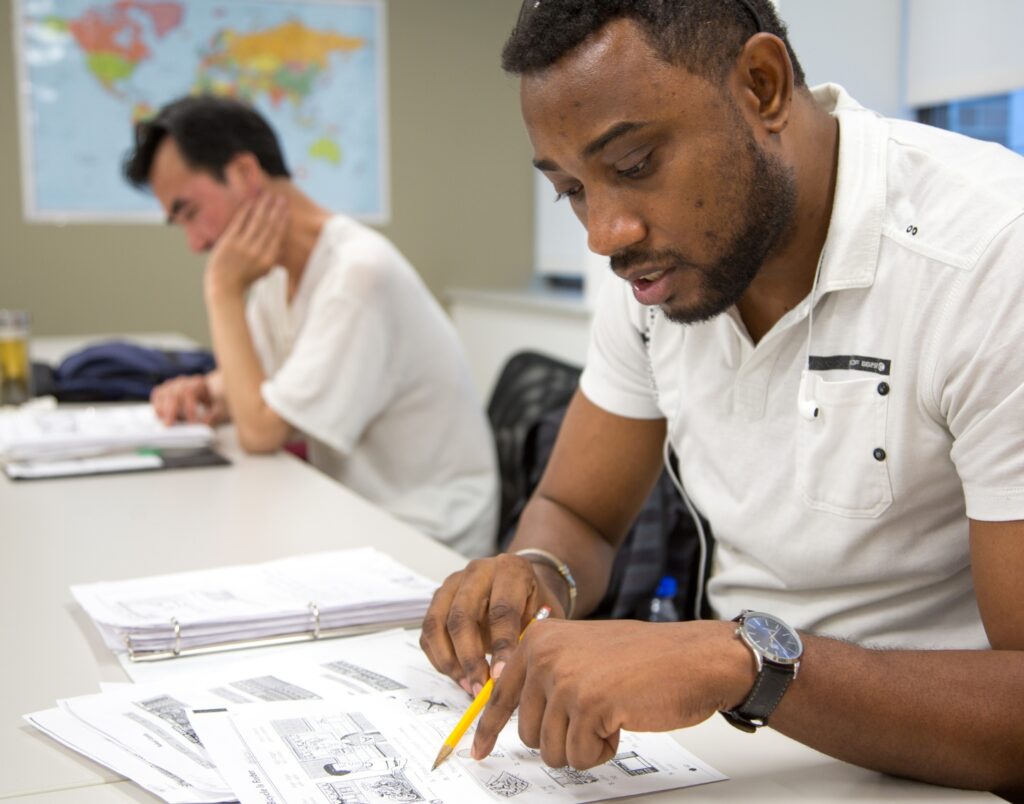
My mom, three of my siblings, and I left Kabul, Afghanistan, in 1989, heading for New Delhi. This was towards the end of the Russian invasion with growing worries around the Taliban’s influence. We migrated to New Delhi as refugees while my dad worked on finding his way out of Kabul. We lived in a single room rental in New Delhi as we settled in and worked on our next goal of settling in Europe or America. My mom started to volunteer in the refugee center and later on was hired as a full time employee. I worked on building skills that could land me a job, while remotely working on my college degree. I started with typing lessons and later on joined a program to study computer science.

Four years later, we received our green cards and flew to New York where we had family and a support system. Settling in New York was many times more challenging than New Delhi, and I often comment that I wish we had had access to an organization like the International Institute of New England. 30 years later, we live very successful fulfilling lives, and there isn’t a week when we don’t reminisce about our journey here. 
Tuan Ha-Ngoc

Retired President and CEO, AVEO Oncology; Member, IINE Board of Directors

I was born and grew up in Vietnam during the Vietnam War. In 1969, I had the opportunity to leave the country to pursue higher education with the condition that after graduation, I would return to Vietnam to help build the country despite the war. I landed at Paris University, where I obtained a pharmacy degree. I had been planning to return home in the summer of 1975, when the country fell to Communist rule that April. I had two options: return and live under a Communist government or stay in Paris and seek asylum, which is what I did. I still have the document issued by UNHCR, which deemed me “stateless.” It’s a word that has stayed with me to this day. It felt like I belonged nowhere, that I was on a boat in a vast ocean by myself—not literally, of course, though many of my compatriots experienced exactly that.  

Thankfully, my parents and siblings were able to leave Vietnam and join me in France. I stayed there for two years during which I obtained a Master’s Degree in Business Administration from INSEAD. In 1976, I joined a U.S. company called Baxter Healthcare, at their European HQ in Brussels. Then in 1978 two things happened—I got married to my beautiful wife, and my company decided to transfer me to its U.S. headquarters in Chicago.  

We arrived there in November with very little money, no family or friends to rely upon, and with my wife speaking very little English. That’s how we started our lives in the U.S. In 1984, I was recruited by one of the first biotech companies, which brought us to Boston, where we have been ever since.  

Deborah Dunsire 

Chair, Neurvati Neurosciences; Former CEO, H. Lundbeck A/S; Senior Advisor, Blackstone Life Sciences; Member, IINE Leadership Council

I was born in Zimbabwe to Scottish immigrant parents, and my husband was born as the oldest in the third generation of mixed English and Netherlands families. After medical school and working as a GP and my husband as an orthopedic resident, I joined the pharmaceutical industry and was transferred to Switzerland, where my husband joined the same company. We were independently both offered jobs in the U.S. headquarters in New Jersey in 1994 and set off on our 30+ year adventure in the U.S. We quickly learned to love the open-hearted hospitality and admired the philanthropic culture that abounds here. We also learned that English is not the same all over the world!  

My husband and I became naturalized U.S. citizens in 2004, and raised our two sons here. 

Wade Rubinstein 

Founder and President, The Bike Connector, Inc.; Member, IINE Board of Directors

I am the son of immigrants. My mother’s family came to Boston in the 1920s after fleeing pogroms in Russia. My father, who grew up in a town that’s now part of Ukraine, was a Holocaust survivor. During the war, he was in hiding for three years. The Soviets liberated him in the spring of 1944. An orphan after the war, my dad lived in Displaced Persons camps in Czechoslovakia and Germany. He was smuggled into Palestine in 1946 and came to the U.S. as a refugee in the early 1950s to join family members who were already here. 

My parents’ journeys have shaped me in a foundational way. Because of their resilience and hard work, I had the chance to become a first-generation college graduate.

I studied computer science at Boston College. After college, I worked at a Digital Equipment Corporation for 10 years, before going on to work at several telecommunications start-ups. In 2003, I left the field and pursued a degree in elementary education. I taught in West Newton for a couple of years. Then, I decided to open up an ice cream shop, Reasons to Be Cheerful, which I ran for eight years. I sold the shop in 2018 and founded The Bike Academy, which was an after-school bike riding program in Lowell and morphed into the nonprofit I run today—The Bike Connector.   

I’ve always felt life is too short to not pursue your interests; it keeps things interesting! And for me, it’s felt like my opportunity to live the American Dream—which I can only do because of the choices and sacrifices my parents made.  

Örn Almarsson

CEO and Co-Founder, Axelyf; Member, IINE Leadership Council

In 1989, I left my native Iceland to pursue graduate studies in the United States, marking the beginning of a remarkable scientific and personal journey. With a deep passion for chemistry and molecular science, combined with a desire to contribute positively to human health, I embarked on a Ph.D. program in bio-organic chemistry at the University of California, immersing myself in advanced research at the intersection of organic chemistry and biological sciences. My academic success and intellectual drive led me to a post-doctoral research position at the Massachusetts Institute of Technology (MIT), one of the world’s leading centers for innovation in science and technology. 

At MIT, I refined my expertise under the guidance of world-class scientists and engineers, and moved toward translational applications of chemistry in pharmaceuticals. It was here that I forged important scientific and professional relationships that helped launch my industry career. My first role in the pharmaceutical industry came at Merck, where I contributed to drug discovery and development in a dynamic and deep R&D environment known for scientific rigor and excellence. This position marked the start of my enduring commitment to advancing therapeutics for human health. 

Over the years, my contributions have extended across multiple therapeutic areas, with one of the most notable being my work on the formulation and delivery system of Spikevax, Moderna’s mRNA-based COVID-19 vaccine. My expertise in drug delivery, particularly involving lipid-based systems, played a significant role in the successful evaluation and ultimate deployment of the vaccine during a time of global crisis. In addition to this very visible achievement, I have worked on numerous other pharmaceutical products and delivery technologies that have improved patient care and therapeutic outcomes in psychiatry and treatment of infections, for example. 

My journey is also one of family, partnership, and shared purpose. My wife, Brynja, also from Iceland, has been a constant presence throughout this journey, offering support and building a warm, bicultural home in the U.S. Together, we have raised three children who have each found their own path in healthcare and pharmaceuticals—continuing the legacy of scientific inquiry and public health impact that defines our family. Whether in biological research, biotechnology, or healthcare delivery and education, each member of our family contributes uniquely to the field, embodying the values of education, service, and global citizenship. 

From a young Icelandic student to a scientific leader who helped shape one of the world’s most important medical interventions, my immigration story is one of dedication, resilience, and enduring impact. 

Jeffrey Thielman

President and CEO, International Institute of New England

My great-grandmother, Antoinette, came from Italy to the U.S. in the early 1900s. She came over from Naples on a boat. It was an arranged marriage that brought her here. She went on to have seven children, one of whom was my mother’s father—my grandfather—who I adored and who rose to become a state senator in Connecticut.  

My great-grandmother had very little money, and she never quite learned English well. She struggled a great deal to adapt and learn a new culture, but she worked very, very hard to make sure her sons and daughters were contributing citizens of our country. I am proud to honor her through my work today.

During our centennial year, we celebrate 100 years of life-changing support for refugees and immigrants in Greater Boston and prepare for our second century of service. Learn more here: IINE Boston Centennial.

Bashir blog thumbnail

 A Somali Refugee, Bashir Is Following His Dreams in Boston

Bashir speaks warmly of the culture he grew up in. 

BashirSomali culture is based on hospitality. They are a joined community—a community connecting each other. They live as a family. Somali culture is based on loving each other, on welcoming people.” 

Tragically, at sixteen, he had to leave his beloved community in Somalia behind. “I left my country because of the fighting going on,” he explains. “Because of the extremist groups like Al-Shabaab who killed two of my family members in front of me. My family decided to send me to a different country because I might be the next target for these militias.” 

In Ethiopia, Bashir would spend years in a refugee camp. While he never lost hope of a chance at a brighter future, day-to-day life was hard.  

“You can’t imagine it if you haven’t been there,” says Bashir. “You see people don’t have clean water, don’t have shelter that’s enough for the family—sometimes you see an extended family of ten or more and they’re living in one single room.” 

After two years, it looked like Bashir’s chance had arrived when he was officially granted refugee status and the promise of resettlement in the U.S. The year was 2016. Then, a new presidential administration entered the White House and within a week, passed a sweeping ban on immigration by nationals from predominately Muslim countries. The door that had finally opened for Bashir was now shut. 

Despite this, Bashir was determined to stay positive. He dedicated himself to working with aid agencies to improve life at the camp. Bashir learned English and became a social worker for the Rehabilitation and Development Organization, which helps people with disabilities, and for the International Rescue Committee, through which he helped to educate community members about the problem of sexual violence. He also worked as a teacher at what he describes as “my own mini school,” helping people of all ages learn how to read and write.  

After seven years, the U.S. had again become more welcoming to refugees, and another door opened for Bashir.

“In 2023 I got my dream destination. As a young man, I saw that coming to America would be a door to enter my life dreams of becoming what I want—working in a peaceful environment, rebuilding my life, helping myself and my family.”  

Bashir traveled to the U.S. by himself. When he arrived, a team from IINE was there to meet him and to drive him to a hotel room where a warm meal had been prepared for him. After a week, IINE helped Bashir move into a fully furnished apartment.  

He was overjoyed to be in his new home, but adjusting took time.  

“When you come to an environment that’s different than where you lived your whole life, it’s a shock. I remember when I first came, it was March and Boston was so cold. I came from 70 degrees Fahrenheit, and I came here—it was like 17 or 20— [it was] really hard!” 

“Without your family and friends, without the people that you know who have the same culture, it’s not easy,” he says. 

With time, Bashir began to find a community. His roommates—three fellow refugees—all came from different countries, but the initial language barriers soon faded away to a blossoming friendship. Bashir recalls hours spent hanging out in their shared living room and kitchen, helping one another adjust. Meanwhile, Bashir was working with IINE on everything from figuring out how to get around Boston, to completing U.S. workforce orientation and applying for jobs. 

The American people—they’re really nice people...Everybody says, Where are you from? and when you tell them, they say, Wow, welcome! and they try to help you.

“Everyone was so nice to me,” he recalls, “my case manager, the site manager, my legal support, everyone was welcoming when I needed to meet with them.” 

Today, Bashir enjoys working as a concierge at a residential building, and as an interpreter for an agency that works with schools and hospitals. At IINE, he discovered a passion for coding and set a long-term goal to become a Software Developer. IINE has connected him with a skills training program in which he’s learning front-end development.  

Bashir soccer tournament
Bashir (left) celebrates after his soccer team won a tournament, with the tournament organizer (middle) and his team’s coach (right)

Once he became independent enough to make his own living arrangements, Bashir found an apartment in a neighborhood with a sizable community of fellow Somali refugees. He lives near a mosque, plays pick-up soccer, and relishes being part of a Somali community again. It’s a beautiful reunion of sorts, but Bashir says the feeling of acceptance and support he has received in Boston extends far behind his neighborhood. 

“The American people—they’re really nice people. I think everybody has a feeling of the meaning of immigrants. These people are really kind and welcoming. Everybody says, Where are you from? and when you tell them, they say, Wow, welcome! and they try to help you.” 

Meanwhile, as he works, studies, and enjoys his new life, Bashir is pursuing a few more of his American dreams. He says that over the next two years he’s eager to get his first car, to vote in his first U.S. election, and “to give something back to the American community that has really helped me a lot.” 

•••

Refugees and immigrants make long, difficult journeys to escape violence and rebuild their lives in the U.S. You can give them the help they need. 

Bikes Blog Thumbnail

Virtuous Cycles: Donated Bikes Help Refugees Move Forward 

Among the many challenges refugees face in the U.S., transportation access can be particularly daunting. It takes a long time to afford a car, and as many New England commuters know all too well, public transportation has its limitations. If refugees live too far away from potential jobs and community resources, they can feel stuck.  

The solution comes on two wheels. Here’s how philanthropic bicycle enthusiasts in three communities are turning their passion into crucial support for their newest neighbors. 

Queen City Bikes, Manchester, NH 

“Transportation’s tough,” says Henry Harris, Managing Director of IINE’s Manchester, New Hampshire office. “It’s hard to get a car when you you’re starting over. You don’t have any credit, and before you have a job, if you do have any resources, they have to go into food and basic necessities. In a lot of the neighborhoods where our clients live, there are no jobs nearby and it can be hard to even get to the grocery store. We have a bus system, but it essentially goes around in a big circle without reaching anywhere you want it to go.” 

To help mitigate this challenge, IINE encourages carpooling and offers volunteer-led driver’s education classes. Eligible clients are enrolled in the Individual Development Account (IDA) program, which teaches financial literacy, helps clients set up savings accounts, and provides matching funds for major purchases (like cars). But all of these opportunities are limited, and frustratingly, several new state laws have recently been proposed that would make it more challenging or even prohibitive for refugees and immigrants to get licenses. 

Henry sees these laws as incredibly self-defeating for New Hampshire, as employers want new arrivals to be able to reach them for work, retailers want new consumers, and the DMV wants to make sure that anyone on the road has been properly trained.

“We do work hard to try and make sure legislators understand the harm of these proposed changes,” says Henry. “Right now I think New Hampshire is just sort of caught up in the whirlwind.” 

In the meantime, Queen City Bicycle Collective has been a lifeline for many of IINE’s Manchester clients, and many other locals who would not otherwise be able to afford and maintain quality bicycles. 

“About one hundred of our clients have gotten bikes from there,” says Henry, “and a lot more will. Every bike you see in our community, if someone’s riding it, it probably came from there.” 

To engage the city in helping more residents to get pedaling, they collect donations of high-quality bicycles from residents; refurbish them; offer open garage time, tools, and guidance to help others get tuned up; and sell packages of affordable bicycles, helmets, locks, and ongoing maintenance services for extremely affordable rates.  

Henry says that the benefits have been huge for IINE clients and have even offered some unexpected positive results. “We had one client with persistent health challenges who at first, was just grateful to be able to get around and then told us that his diabetes symptoms had dramatically improved because he was biking everywhere. That one was cool.” 

Abby Easterly of Queen City Bicycle Collective

Abby Easterly, a retired Business Management Consultant who is QCB’s founder and board treasurer, explains that the idea for the collective actually came from her previous work as a volunteer at IINE, where she first supported a wave of Somali refugees, and then years later, a large group of Afghans who were suddenly evacuated from their country after the resurgence of the Taliban in 2021. Abby had since learned about bicycle collectives in other cities and saw the model as ideal for refugees. 

Refugees often arrive without the ability to drive, and do need to get to work, and New Hampshire’s painfully bad at public transportation,” she explains. “Bikes provide not just that for work. They also allow you to get to the grocery store, to get to friends’ houses, to meet up after work, or go wherever you need.” 

Abby says that one of her proudest moments with QCB has been hiring one of IINE’s Afghan clients. “We hired Isatullah as a young mechanic and trained him. He was great mechanic for us. It was actually very helpful also because he could help with interpreting.” 

Creating a space for community engagement between newcomers and their neighbors is a crucial part of the mission.  

“I wish there were more ways people got to know immigrants,” Abby says. “Really that’s the point of the collective even more than putting people on bikes. Bikes are a common thread, and if you can find more common threads that get people to naturally work and be together, I think you don’t have to teach people about refugees, you can just create great situations.” 

Rozzie Bikes, Roslindale, MA 

In Greater Boston, everything seems to come back to affordable housing challenges—including access to reliable transportation. 

We tend to resettle refugees within a pretty wide radius around Boston because obviously rents are cheaper further out,” explains IINE Community Services Manager Leslie Schick, “but then that comes with the downside that public transportation is not as good or as available. I have one client who works in the public school system in Sharon. The school system is closed in the summer, so she needs another job, but that requires transportation, and Sharon just does not have good public transportation. I have another client who takes the bus to work, but the bus does not go all the way to her house. It’s times like these when I send out a distress call to Ron and Alan.” 

Who is this dynamic duo? It’s Ron Beland and Alan Wright of Rozzie Bikes (short for Roslindale Bicycle Collective). 

Leslie connected with Alan back in 2021 through their mutual involvement with local non-profit, Bikes Not Bombs. At the time, Leslie was posting on social media about IINE’s need for donated bicycles, particularly for newly arriving Afghan refugees, and she was collecting them without a great place to store them. Many of the donated bikes also arrived badly in need of a tune-up. Leslie was introduced to Alan as a crack mechanic who was willing to donate his services. What she didn’t know was that his connection to IINE’s mission runs deep. Earlier in his life, Alan had spent a significant amount of time at a refugee camp in Thailand. There he had worked with Hmung refugees who had fled Laos after being targeted for aiding the U.S. military during the Vietnam War. Helping refugees access quality bicycles combines two of his passions.  

In my life I’ve always been fixing up bikes for people and giving bikes away when I’ve had the opportunity,” he says. “But once the introduction to Leslie started, then it really took off. Those first two years we were giving away at least a bicycle a month, maybe two or three.” 

Rozzie Bikes is a collective of about thirty (mostly retired) bicycle enthusiasts dedicated to promoting cycling as an environmentally and economically friendly solution for urbanites, which, they note, is underutilized in our culture compared to many others around the world. They collect used bikes, repair and tune them, deliver them to IINE’s refugee clients—and others in need—and help them learn to ride safely.  

Boston clients on bike
Thanks to the generosity of Alan and Rozzie Bikes, IINE clients Maryam, Jesus, and their nephew Roger each received their own bikes! They recently enjoyed an afternoon exploring their new home of Quincy and the nearby beach.

For Leslie, personal delivery to clients is particularly important: “I think it means the world to them that here comes someone delivering everything, the bike and the helmet and the lock and the light, showing them how to use it etc., and they form a connection as well.” 

These connections also mean a lot to Alan. He remembers one in particular.

There was this one group—three guys living in Mattapan who had arrived only a few weeks earlier, and were eager to get out into the city, so I brought all three of them bicycles. They didn’t have any sense of where in Boston they were. So I said, well, let’s go for a bike ride. They were just blocks away from the Neponset River bike trail that runs from Mattapan Square all the way to South Dorchester. So off we go, and they were just so happy to be out and to see the ocean and harbor, to see a park, to see the trolley line that runs along the river, to see that they could go out into the city on bicycles. It was just the unlocking key, if you will. That was a very special moment.” 

The Bike Connector, Lowell, MA 

Wade Rubenstein had run an innovative afterschool bike program in Lowell that included an “Earn-A-Bike” system; if students learned how to refurbish used bicycles, they could keep a bike they fixed for free. The program was so successful and satisfying that he decided to upscale it into a bicycle shop, repair studio, and riding collective that could serve the whole city: The Bike Connector. 

Around the same time, Wade was volunteering in IINE’s ESOL classrooms when something struck him. 

Bike Connector staff regularly host IINE youth clients for bike safety and riding lessons

I noticed that many of IINE’s clients rode bikes. There was a clear need: bikes are an inexpensive means of transportation, don’t require a license, and are faster than walking. But often, the bikes the immigrants were riding were unsafe; they were broken, mis-sized, and at times, literally pulled out of the city’s canals.” 

In one such case, he learned of Ungaye, a remarkably driven student from the Democratic Republic of the Congo in IINE’s Refugee Youth Mentoring program who was working to qualify as a medical interpreter and enroll in college. Ungaye had been getting around on a bicycle he had recovered from a canal only to lose it to a bike thief because he hadn’t had a lock.  

Wade decided to donate a bike to Ungaye. It would mark the beginning of something special.  

“I began donating bikes to the ESOL students, and over time, the relationship between our organization and IINE grew. We’ve given bikes to Haitian and Central and South American immigrants, Ukrainian refugees, and Afghan refugees. IINE’s Case Managers bring their clients to us, and we get to be some of the first folks they meet in this country. In addition to providing bikes, we provide maintenance support so people can stay on their bikes. We also work closely with IINE’s refugee youth clients to teach them bike safety and the rules of the road.” 

As Wade’s bond with Ungaye deepened, he hired him to work part-time at Bicycle Connector. Last year, Wade was introduced by Ungaye when he was honored by IINE at a celebration of World Refugee Day. In Wade’s remarks, he reflected, “Ungaye was the first bike I awarded to someone here in Lowell. Last week we just gave away our 5,000th bike.” 

Later last year, Wade joined IINE’s Board of Directors. His connection to IINE’s mission runs deep. He is himself the son of refugees and has said that his parents’ journeys have “shaped me in a foundational way.” 

As his support for IINE’s clients has expanded, Wade is still connecting refugees, immigrants, and other Lowellians in need to bicycles—and through them, to independence, community access and freedom. 

IINE’s work is only possible with the support of dedicated, compassionate volunteers. View opportunities to get involved. 

It Runs in the Family: Refugee Mother and Daughters Discover Career and Purpose in Nursing

Hearing the pop of nearby gunshots was once a part of daily life for Nininahazwe and her daughters in their home country of Burundi. After escaping to Kenya, they spent ten long years in a refugee camp, waiting for a chance at a better life. It finally came in 2021 when Nininahazwe and two of her three children, Teta and Umyhoza, were admitted to the U.S. through the refugee program and resettled in Nashua, New Hampshire by the International Institute of New England.  
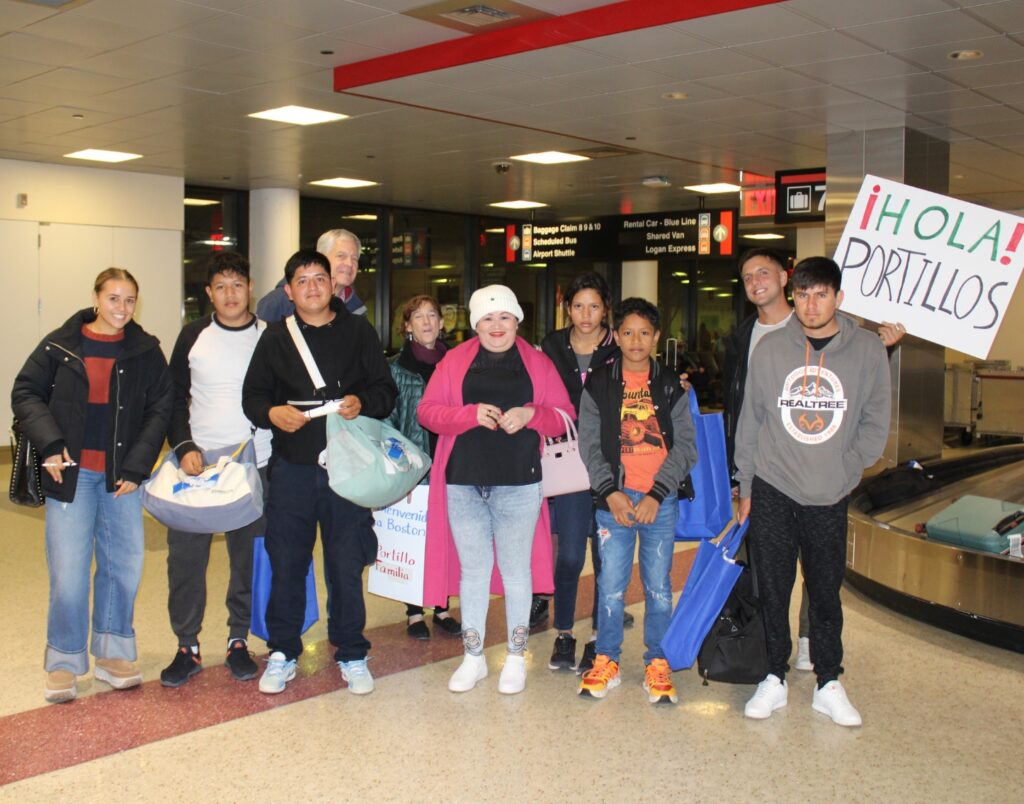
“It’s something like you never dreamt of,” Teta told a reporter when she first arrived, “it was way too high.” 

As they began to put down roots in New Hampshire, Teta and Umyhoza were eager to get to work, so they were thrilled to learn about a new opportunity available through IINE—a free job skills training program called LNA for Success, which prepares clients for the much-in-demand position of Licensed Nursing Assistant. 

“The LNA program provides a pathway into healthcare for English language learners who were either in healthcare in their home country and want to return to the field or who want to be in the healthcare field now that they’ve come to the U.S.,” explains IINE Education Manager Hannah Granock.  

“The program is designed to both help students find gainful employment in a meaningful and growing field and also to help ease the healthcare workforce shortage caused by New Hampshire’s aging workforce. We do this by providing English language classes tailored to their LNA training, partnering with Manchester Community College to provide hands-on training, and offering wrap-around support services, which helps to remove barriers to student participation.” 

Both sisters enrolled less than a month after their arrival and were exemplary students. 

“Being an LNA for me is not only a dream or passion, it is a commitment,” Teta wrote in an essay on why she was seeking a career in healthcare. “They say everyone has their life calling and I am sure this is mine. At a young age I used to see my grandma struggling to get to her feet when my parents were busy. The young me used to help her the little I could. I found joy in seeing a smile on her face after helping her. I made it my life commitment to continue pursuing a course that would help me see more of the same smiles.” 

In Umyhoza’s essay, she wrote of a desire to help the elderly and disabled, and of drawing on her memories of overcoming a bad burn she suffered as a child to empathize with her clients. “Sincerely speaking I can’t think of anything else more important than being an LNA. I really feel I will do it with all my heart. I would love to challenge myself by being and giving the best to the world.”

After completing the course, Teta and Umyhoza quickly passed their licensure exams. With the help of IINE’s Employment team, both secured entry-level healthcare jobs, and Teta enrolled in nursing school to further her career and pursue a role as a Licensed Practical Nurse. 

Nininahazwe was deeply inspired by her daughters’ drive and success. Even though she had less formal education, she decided to work her way up to entering the LNA program to follow in their footsteps. She enrolled in English and workforce preparation classes, studied chapters from the LNA textbook, and started a job as a home health aide. Meanwhile, Nininahazwe’s third daughter, Mushimiyamana, was admitted to the U.S. through the refugee program, and, with her own daughter in tow, joyously reunited with her family in New Hampshire. An IINE Career Navigator helped Mushimiyamana find childcare so that she and her mother could enroll in LNA together. 

The family of LNA for Success graduates: Teta (top L), U (top r), N (bottom L), (bottom R)
The family of LNA for Success graduates: Teta (top L), Umyhoza (top r), Nininahazwe (bottom L), and Mushimiyamana (bottom R)

“I want to be an LNA, because I like to help people!” Nininahazwe wrote in her application essay. She had dreamed of being a doctor as a child—a wish that grew each time she saw a family member fall sick and struggle to get the care they needed. By the time she would have been old enough to begin her studies, she had lost her whole family to the war and become a single parent. Still, her dream never died.   

“I was not able to become a doctor at that time,” she wrote. “Now [I’ve] got the chance. I’m planning to finish high school [and] go to college. I did not give up my dreams. I need proper training and experience to help others in the right way, because I feel happy helping another person who needs it.” 

In their LNA cohort, Nininahazwe and Mushimiyamana were known to help their fellow students with coursework. Both are now LNA for Success grads employed as Licensed Nursing Assistants in New Hampshire.  

“I think Nininahazwe and her daughters’ successes have shown what hope, hard work, dedication, and family can accomplish,” says Hannah. “They were forced to flee from their home in Burundi through no fault of their own, but they chose not to let that define them and to do their best to keep living. Now they’re in the U.S. having rebuilt their lives and working in a career path they love. Their family is a great example of how circumstances do not have to define you.” 

While it’s unique to have four women from two generations of one family enter the nursing field thanks to LNA For Success, Hannah says that much of this story is familiar. 

“I love working on this program because I’ve seen how it’s not only made a huge difference to our students, but it has opened up so many doors for their families as well! It helps them overcome barriers, from financial costs of training to navigating an admissions process, to transportation, and many of these students are mothers, so the program empowers not only the student but also their children. Having a stable job in a field where they have room to grow sets their kids up for a better life. The program also teaches our clients how to navigate the U.S. education system, which is so important as they are trying to help their own children.” 

With need in its healthcare field only growing, New Hampshire is lucky to have Nininahazwe and her driven and compassionate daughters building their careers there.

IINE is committed to improving the resettlement experience for refugee women and girls by removing barriers that impede their access to health education, safety, and employment. Learn more about this work and our WILLOW Fund.