metapixel
Skip to main content

Author: Danielle Gauthier

How History Has Prepared Us for This Next Chapter

From the Desk of the CEO: How History Has Prepared Us for This Next Chapter

By Jeff Thielman, President and CEO at the International Institute of New England

Coinciding with the return of the Trump administration, IINE’s Boston Centennial has prompted me to reflect on our organization’s long service history. A deep dive into our archives, which is represented in our commemorative blog series, reminds my colleagues and me that xenophobic federal policies and negativity toward immigrants are why the International Institute of New England exists.  

International Institute of Boston YWCAOur Boston doors opened on February 1, 1924 when a group of women at the YWCA bravely took a stand against intense anti-immigrant federal policies and growing public sentiment. At that time, many in the Boston immigrant community were deeply impoverished, feared, and dehumanized. The founders of the International Institute of Boston rejected the notion that those who are born outside of the U.S. are inferior to those born here, pushed past prejudice with moral clarity, and built an institution to take action in the face of threats to human dignity.  

The International Institute of New England would come to welcome and care for new families for over a century, and as the recent presidential election demonstrates, our work remains essential. Immigration was a focus of intense debate during the election. Unfortunately, neither candidate spoke much about how critical immigrants are to our economy. Indeed, they contribute roughly $103 billion to the nation’s Gross Domestic Product annually. There was little mention of the need to create a fair and well-managed immigration system, which polling tells us is overwhelming supported by the majority of Americans. Instead, rhetoric sensationalized “securing” the already highly secure U.S.-Mexico border, ignored the reality that global mass displacement will only grow due to conflicts and the effects of climate change, and portrayed our neighbors, colleagues, and friends as dangerous criminals capable of killing and eating house pets. 

We are deeply concerned about the policy plans and anticipated executive orders of the incoming President, and in the coming months we will do our part to advocate for sound, bipartisan solutions to improve our immigration system. The President-elect has pledged to end the refugee program, close borders, and implement mass deportations. If Mr. Trump’s proposals survive court challenges, they will not only devastate many families and communities, but they will also wreak havoc throughout the U.S. economy.

Our country and our agency will endure through this next period of American history. We have seen dark times before, and we always pull through. Together with strong community partners and coalitions, we will continue to advocate fiercely for our clients and provide them with critical, lifechanging services, focusing on whatever is possible in the moment we are in. 

In the short term, we have two goals:  

  1. Resettle as many refugees and immigrants as possible while our nation’s doors are open to them. Our teams are working on weekends and during vacations to bring in over 300 refugees by January 20, 2025. 
  2. Keep caring for those in need. We are currently serving more than 10,000 people in various stages of rebuilding their lives in our communities, and many are fearful about what lies ahead. Our priority is making sure our clients understand their rights and have access to reliable legal services. 

Our team of professional staff and volunteers at the International Institute of New England—bolstered by ever-increasing support from around the region and the country—is inspired every day by the thousands of New Americans we are privileged to know and serve. As the new administration prepares to take office, we are more energized and committed than at any time in our history to fulfill our mission of welcoming, valuing, and helping individuals and families from around the world to launch new lives, live in peace, and contribute to a better and stronger country. 

Scott FitzGerald Blog Interview

Q&A With Board Member Scott FitzGerald

Scott FitzGerald spent his career practicing corporate immigration and nationality law, recently retiring as the Managing Partner of the Boston office of Fragomen, Del Rey, Bernsen & Lowey LLP. Scott is a current Board Member of the American Immigration Council and the Fordham Law School Alumni Association. He is also an Honorary Member of the Dean’s Advisory Board of the Johns Hopkins School of Arts and Sciences and was a Founding Member of both the Council for Emerging National Security Affairs and the Massachusetts Business Immigration Coalition. Scott is a graduate of the Johns Hopkins University and Fordham University School of Law. 

We spoke with Scott to learn more about his path to the International Institute of New England, his career-long commitment to the immigrant community, and how he’s helping IINE prepare for its next chapter. 

Can you share a bit about yourself?

I began my career at Fragomen as a law clerk in 1991 and worked there until last year, when I retired after 32 years at the firm. During that period, I “wore many hats.” I worked in the NY office as an associate, ran the firm’s DC office, opened an office in Northern Virginia, and helped to set up the firm’s Global immigration practice. I spent my last 17 years with the firm running Fragomen’s office here in Boston. 
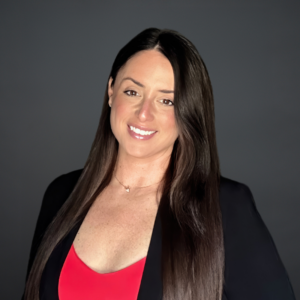
I live in Lexington with my wonderful wife Janice, who is a professional songwriter, and our incredible daughter, Ana, who is a freshman at Merrimack College, where she is studying nursing.

What drew you to become involved with IINE?  

My brother Kevin, who is a Jesuit priest, introduced me to IINE’s President and CEO Jeff Thielman many years ago. From the start, I was interested in the opportunity to align my professional expertise in immigration law with the “boots-on-the-ground” work of IINE. During the first Trump Administration, I provided Jeff with some strategic input around the immigration legal services that IINE was offering during that very challenging time. I eventually joined IINE’s Leadership Council, on which I served until earlier this year, when I joined the Board of Directors.  

As an immigration attorney, I helped companies fulfill the immigration requirements necessary to employ foreign nationals in high skill positions. In many ways, the work that IINE does to help individuals who have escaped persecution and danger in their home countries to secure employment and the ability to provide for their families is similar. We’re focused on connecting people who are here legally and eager to work with employers that desperately need them.  

To achieve this goal, we help them to obtain work authorization, develop English language proficiency, learn employment skills, secure housing, and access transportation. Delivering these services is extremely challenging for IINE’s amazing staff and volunteers, as housing in the Boston area is expensive, facilitating transportation to/from work is complicated, and the demand for ESOL classes greatly outpaces the number of available instructors. However, each day IINE proves that these challenges are not insurmountable, and the benefits to IINE’s clients are truly life-changing. 

What do you consider a board member’s most important responsibilities?

It differs depending on the type of organization and board. For many nonprofits, a primary expectation is to contribute financially, either personally, through fundraising, or both. At IINE, there are also abundant opportunities to volunteer directly in the delivery of services. Also, for me personally, given how my professional experience aligns directly with some of the services delivered, I am also able to share my perspective and advice, which I find very rewarding.  

That being said, in many ways this work is much more challenging, and I have been learning a lot from IINE’s staff, who are incredibly talented and dedicated people. My goal, as I continue to learn, is to help IINE deliver its services to as many people as possible. Thinking about ways in which to tweak programs and processes to make them more efficient, which in turn will allow us to deliver more services to more clients, is one way in which I hope to contribute.  

What motivates you when it comes to IINE’s future? 

We are at a critical inflection point, as immigration has become one of the most controversial political issues of our time. In electing President Trump, the nation has stated, essentially, that they want less immigration and less immigrants. What will that look like? Most likely, refugee admission numbers will be substantially reduced moving forward. Will Temporary Protected Status and Humanitarian Parole for citizens of countries like Haiti not be renewed, or even be cancelled? Who will be targeted under the new Administration’s “mass deportation” efforts? What can be done to push back against some of these measures, and what does all of this mean for the people we serve?  

At this point we don’t know the answers to these questions. One thing we do know is that our mission won’t change. We will continue to serve our clients, and to push back against the anti-immigrant vitriol. There remains a major disconnect between the fact that the U.S. needs immigrants to fill jobs and support our communities, and the widespread belief that immigration is bad for our country. In response, IINE will dig in and continue to champion and provide needed support to these invaluable newcomers to our communities. It’s what we did eight years ago, have done throughout IINE’s 100+-year history, and will continue to do during these very challenging times. I feel lucky to be part of such important work.  

IINE’s Board of Directors includes corporate and community leaders from across New England. View our members and leadership team here.

The International Institute of New England Hires Leah Jacobs Varo as its Unaccompanied Children’s Program Director  

BOSTON November 1, 2024 – The International Institute of New England (IINE), one of the region’s longest-established nonprofits serving refugees and immigrants, has announced the hiring of Leah Jacobs Varo as the new director of its Unaccompanied Children’s Program.  

Leah Jacobs VaroWith a master’s degree in social work and a deep passion for healthcare and immigration policy, Leah has spent her career advocating for child welfare. As the Unaccompanied Children’s Program Director, Leah will oversee a team focused on helping to reunify hundreds of children each year seeking refuge from violence, poverty, and political instability in Central America with their U.S.-based families. Working throughout Massachusetts, New Hampshire, and the New York Metro area, IINE connects children, some as young as two years old, with mental and physical health services and school and youth programs, helps them find an attorney to secure legal protections, and provides critical support and trauma-informed care as they begin to recover from past experiences and family separation. 

From 2018-2021, Leah worked at IINE as a family support specialist before being promoted to regional supervisor. She most recently worked at the U.S. Committee for Refugees and Immigrants (USCRI) in Washington, D.C. as a regional supervisor of the Unaccompanied Minors Home Study and Post-Release Services Program, overseeing a team of caseworkers.  

“In recent years, our Unaccompanied Children’s Program has grown substantially, now serving more than 900 children every year,” said IINE President and CEO Jeff Thielman. “We are thrilled to have Leah rejoin our organization during such a pivotal period. Her expertise and dedication will be critical as we create safety for more children in need than ever before.”  

“Coming back to IINE is like coming home,” said Leah. “I am humbled by the incredible passion and drive of the caseworkers, and I look forward to sharing my own experiences to continue to grow our team and the number of children and families we are able to help.” 

ABOUT THE INTERNATIONAL INSTITUTE OF NEW ENGLAND

The International Institute of New England (IINE) creates opportunities for refugees and immigrants to succeed through resettlement, education, career advancement and pathways to citizenship. With locations in Boston and Lowell, Massachusetts and Manchester, New Hampshire, IINE serves more than 20,000 individuals annually, including people displaced by political instability, violence, and climate crises, child and adult survivors of human trafficking, and unaccompanied children joining family members in New England. IINE offers a comprehensive range of programs and services to help newcomers feel welcome; achieve stability and security; access resources in their new communities; advance their education and employment goals; and integrate into their communities. IINE’s expertise builds on more than a century of service and accomplishes its mission in partnership with community groups, stakeholders, and supporters throughout New England.

1995–2004: Dreams of Freedom

Welcome to the ninth installment of our series “100 Years of Welcome: Commemorating IINE’s Boston Centennial.” The previous installment, “1985–1994: Protecting New Bostonians,” described the International Institute of Boston’s continuing efforts to resettle refugees of displacement crises in Southeast Asia, Northern Africa, and the former Soviet Union; the organization’s growing legal and advocacy work; and how it assisted thousands of immigrants granted amnesty by the 1986 Immigration Reform and Control Act. 

Facilitating Mutual Aid

In the mid-1990s, the International Institute of Boston (IIB) remained an important source of support for the communities it had helped to build through refugee resettlement over the past two decades by working with their mutual aid organizations. It hosted the formation of a Vietnamese Mutual Support Group, began working with Boston’s Ethiopian Community Mutual Assistance Association, and hosted meetings for several similar groups from growing immigrant populations.  

Hosting “Dreams of Freedom”

Children explore an interactive exhibit at the Dreams of Freedom Museum

In 1998, IIB moved its offices from Commonwealth Ave, where it had been since the mid-1960s, to a larger space at One Milk Street in Boston’s Financial District, with room for more classrooms, a new computer lab, and more.  

This new space would be uniquely open to the public. In its basement, IIB created Dreams of Freedom: Boston’s Immigration Museum.  

Building on the legacy of the New England Folk Festival, which IIB helped organize to share the rich cultural traditions of new immigrants, Dreams of Freedom offered interactive exhibits showcasing photographs, artifacts, and personal stories that offered glimpses into the lives of the immigrants and refugees who resettled in Boston over the decades. The museum also hosted lectures, workshops, and community discussions on issues such as immigration laws, community integration, and the challenge of cultural and racial discrimination. In the early 2000s, the museum sponsored and hosted screenings by the Human Rights Watch Film Festival.

Pursuing Dreams

One Milk Street quickly became the home of several new integration programs that helped IIB clients pursue goals from getting a first job in the U.S., to buying a car and a home, to achieving citizenshiptheir own “dreams of freedom.” A one million dollar grant from the Boston Foundation and a partnership with Hilton Hotels helped launch a skills training program to place more than 260 newcomers into jobs at Boston hotels. A federally funded Saving for Success program not only offered newcomers financial literacy, banking, and money management skills, but also helped them set up a savings accounts and set savings goals for a major purchase, and then provided matching funds once the goals had been achieved. A new class in “Homebuying 101” was offered first in Vietnamese and Haitian Creole, and then later in Chinese and Cape Verdean CreoleA new Citizenship Center provided refugees and immigrants with citizenship examination preparation and other naturalization services.

Defending the Most Vulnerable

Other new and important IIB programs served immigrant populations who needed special care in order to recover from past persecution and begin to thrive. IIB launched the International Survivors Center to provide case management and counseling services to survivors of torture and other war-related traumas, and also secured its first contract from the U.S. Department of Justice to serve victims of human trafficking, providing mental health services, housing, and legal assistance. IIB also became a regional resource in combating human trafficking, convening and training a network of law enforcement officers to better identify and serve trafficking survivors. 

Kosovo Kids and Lost Boys

IIB continued to welcome new groups of refugees to Boston and to help them recover and integrate. At the end of the 1990s, a crisis erupted in Eastern Europe’s Balkan Peninsula. Ethnic conflict had been violently tearing apart the country formerly known as Yugoslavia for several years, and in 1999, NATO intervened, bombing government forces and temporarily seizing control of the flashpoint region of Kosovo to try and end the large-scale ethnic slaughter. In the mass displacement that followed, refugees from regions on multiple sides of the conflict were resettled in Boston. Many were ethnic Albanians from Kosovo eager to join an already sizable community of Albanian Bostonians whom IIB had served over the years. As they welcomed these new refugees, IIB was particularly mindful of the many children arriving and organized a “Kosovo Kids” summer program in the Boston suburb of Lynn to help them prepare for attending local public schools in the fall. 

 IIB resettled several dozen of the Lost Boys of Sudan, including John Garang (left) and Ezekiel Mayen (center) shown at their house in Lynn in 2001. Photograph by Bill Greene, courtesy of the Boston Globe

In the same period, IIB also welcomed to Boston 75 of the so-called “Lost Boys of Sudan,” a group of teenage refugees from the Dinka tribe of South Sudan who had been captured as young children and forced to serve as soldiers in the Northern Sudanese army. Many had fled first to Ethiopia, and then to Kenya, where they endured brutal treatment and extended confinement in the Kakuma refugee camp. In the early 2000s, escalation of violence in the Sudan Civil War had brought renewed attention to the plight of the “Lost Boys” and thousands were welcomed into the U.S. In Boston, IIB provided arrivals with English language classes and case management services. Some used the new computer lab in IIB’s Milk Street office to search for their lost family members. 

With Us or Against Us

Public sentiment towards refugees shifted dramatically in the wake of the events of September 11, 2001. Soon after members of the international terrorist group Al-Qaeda hijacked four airplanes and flew them into the Twin Towers of New York’s World Trade Center, and the Pentagon in Washington, D.C., killing nearly 3,000 civilians, President George W. Bush announced a U.S.-led “War on Terror.” For this new kind of war only one rule was made clear: all the nations of the world were “either with us, or you are with the terrorists.” 

As the U.S. military mobilized for “Operation Enduring Freedom,” an attack on the repressive Taliban regime who ruled Afghanistan and had harbored Al Qaeda’s terrorists, a mood of fear, division and prejudice reverberated across the U.S., including in Boston, from which two of the hijacked flights had originated. Many Muslim and Arab Americans became the targets of violence, threats, and prejudice. IIB sprang into action to mobilize a local response, organizing a meeting of leaders from Boston’s Afghan community to issue a press release about the crisis, arranging a meeting between Boston’s Arab American leaders and the Hate Crime unit of the Boston Police Department, and developing a community resource guide for Boston’s Muslim community. IIB also partnered with the organization Muslim Community Support Services of Massachusetts to provide counseling to immigrants confronting trauma and feeling unsafe in their communities. 

As the war in Afghanistan continued, in 2003, the War on Terror expanded with the advent of “Operation Iraqi Freedom.” Both conflicts created massive displacement, but in response to the 9/11 attacks the U.S. curtailed the refugee admissions program from 70,000 in 2001 to about 27,000 in 2002 and vetting of refugees from Arab and Muslim countries became increasingly restrictive. But as the first admitted Afghan and Iraqi refugees from these wars began to arrive in Boston, IIB was there to welcome them into services and proudly help them to become Bostonians.  

· · · 

Many of the programs first established at the International Institute of Boston in the 1990s and early 2000s continue to thrive and evolve at the International Institute of New England today. Our “Ready, Set, Service!” program helps new arrivals to Boston train and find work in today’s local hospitality industry. A savings program is still offered today and continues to help refugees and immigrants to purchase their first cars and homes here. IINE continues to provide programs specifically for victims of torture and our Trafficking Victims Assistance Program (TVAP) helps hundreds each year to recover and rebuild their lives.  

IINE continues to stand with all victims of discrimination and to connect them to the community resources they need to feel welcome, safe, and supported.  

During our centennial year, we celebrate 100 years of life-changing support to refugees and immigrants in Greater Boston and prepare for our second century of service. Learn more here: IINE Boston Centennial.

From the Desk of the CEO: The American Character is at Stake 

By Jeff Thielman, President and CEO at the International Institute of New England

Many Americans have celebrated the character and composition of our country with the phrase “We are a nation of immigrants.” We recognize that the United States is an ideal and that being an American does not mean having an ethnic or national origin. People from any background, born in any country, and from any ethnic or racial origin can, and have, become American.   

Today, over 12% of native-born Americans have a parent or grandparent who was not born here, and immigrants comprise over 14% of the U.S. population. The United States continues to benefit economically, culturally, and politically from our welcoming of immigrants as it has since the founding of this nation. Our standing in the world, our ability to maintain the world’s leading economy, and the richness of American culture would not be possible without the significant contributions of immigrants.   

Every day at the International Institute of New England, we have the privilege of welcoming and supporting newcomers to our region, and the honor of helping them find success and opportunity in their new nation. We are horrified by the racist, xenophobic remarks made by the Republican nominee for president, his campaign, and many in his party who are making a very cynical and immoral attempt to demonize immigrants and ethnic groups that have been essential to the success of the United States from its very founding.   

It’s important to focus on the facts, and what’s at stake when we ignore them. Immigrants today make up 19% of the workforce; each year, immigrants pay around $500 billion in federal, state, and local taxes; immigrants start businesses at twice the rate of the general population; and, based on extensive research going back over 140 years, immigrants today are 60% less likely to be incarcerated than the domestic population.   

Most Americans understand the importance of managed immigration and celebrate the unique ability of our nation to embrace and integrate new arrivals from across the globe. We enjoy the ideas, the art, the food, the music, and the richness that each new immigrant and ethnic group brings to our culture. We stand tall as a nation that acts upon the moral imperative of rescuing refugees and asylum seekers who have fled war and violence, persecuted by their own governments or lawless criminals in their home countries.  

“Those who ignore racism are doomed to repeat it.”   

Despite the myriad successes and contributions of immigrants and their descendants, U.S. history is littered with damaging actions to restrict certain immigrants and discourage their recognition as new Americans. Examples go back over 150 years. The Chinese Exclusion Act of 1882 sought to prevent Chinese immigrants from staying here after welcoming their labor to build the transcontinental railroad. Country quotas were instituted under the Immigration Act of 1924 to severely limit, among others, the number of Southern and Eastern European immigrants and completely exclude Asian immigrants. Following waves of Irish and Italian immigrants to Boston, businesses stating “Irish need not apply” or “Italians not welcome,” were not uncommon and the nation has only recently acknowledged the harm of the internment of American citizens of Japanese descent on the West Coast during World War II. There are more examples of misguided, frequently racist, attempts to prevent certain groups of immigrants from coming to America.  

Fortunately, for our economy, our society, and our American identity, most of these efforts have been overcome. However, in the presidential campaign today, we see a resurgence, if not a horrific increase, in the demonization of immigrants, their descendants, and even “American” ethnic groups through appeals to racism, through blatant lies, and through a sweeping disregard for the long history of economic, social, and moral benefits of immigration to our nation. 

The vast majority of immigrants coming to the U.S. are here to pursue a better life. They recognize the great opportunity that a thriving economy offers them and cherish the freedoms that come with living in the U.S. They are incredibly grateful to this nation for providing them and their families, and especially their children and grandchildren, with the chance to enjoy peaceful, productive lives. This is true of all immigrants, whether arriving here through a work visa, a family connection, through the refugee program, through temporary visas issued due to war and strife in their home countries, and even for those unauthorized to enter.  

Our newest neighbors are not mostly “criminals and murders.” They are not draining resources or taking jobs from Americans. And they are not eating our pets.  

On the economic front, restricting new arrivals and implementing mass deportation would reduce activity and growth. Fewer immigrants would mean significant price increases for U.S. products, particularly in agricultural, meat, and dairy industries, as well as in construction and healthcare fields, that rely heavily on immigrant labor.  

On a global level, closing our borders would significantly reduce our moral authority and ability to find better solutions to displacement and migration issues worldwide. 

Immigrants are not just an integral part of our history; they are the driving force of our future. What’s at stake in the presidential election on November 5th is the American character. Will we remain a welcoming nation built on the principles of freedom, justice, and equality for all? Will we continue to understand that being an American means embracing those values and not just being born here to the “right” parents? Or will we close our doors, denying the reflection of a community of immigrants when we look into our collective mirror? The choice is ours.  

Meet Bill Gillett

Employee Profile: Meet Bill Gillett, Director of Public Policy & Advocacy

Having previously served on the Board of Directors, Bill rejoined IINE in 2024 as the Director of Public Policy & Advocacy. On our blog, he reflects on this new role, his history with IINE, and the key advocacy issues on which we’ve been focused in New Hampshire and Massachusetts.  

What’s your role as Director of Public Policy & Advocacy?

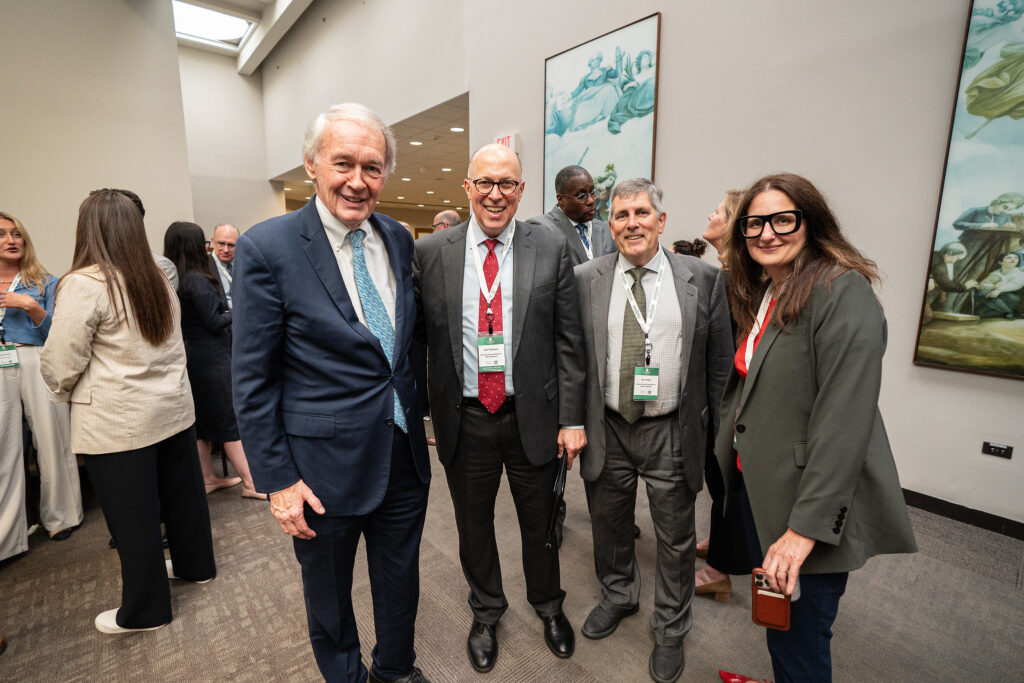
Bill (second from right) with, from left to right, MA Senator Ed Markey, IINE President & CEO Jeff Thielman, and IINE SVP & Chief Advancement Officer Xan Weber

This is a new role for IINE, created based on our significant growth and influence over the last several years as we have continued to meet the needs of immigrants arriving here displaced by war and political turmoil.  

I track state and federal legislation that affects refugees and immigrants in Massachusetts and New Hampshire, and across New England and New York City, and provide input to decision-makers—making sure that when they’re considering policy, they know the facts about our clients’ needs, strengths, and the benefits they bring to their communities and the workforce.  

The role also includes building public support for IINE, and for the overall cause of resettlement and immigration, including through coordinating with other agencies to make sure that our messaging to the public is consistent, and our dealings with legislators are efficient. 

What’s your history with IINE and how did you come to this role?

I was on the Board of Directors as first a member and then chair way back in 2008 (when IINE was much smaller) bringing New Hampshire perspective and connections to the table. At the time, Manchester Mayor Ted Gatsas decided it would be politically advantageous to prey on people’s suspicions about newcomers and fears that welcoming people meant having things taken away from them, by proposing a two-year moratorium on settling refugees in the city. I worked with other IINE Board members, federal representatives, and other agencies to convince the members of the Executive Council, who approve the state’s budget, as well as the New Hampshire Senate, that this was a baseless and harmful plan. They agreed. 

After my service on IINE’s Board, while my work in business and higher education took me in and out of the country, I remained on IINE’s Leadership Council and stayed very interested in immigration issues. IINE’s growth and the increasing public focus on immigration, including the misinformation now permeating the national and state debates, reiterated to me how important the work of IINE is to New Hampshire and Massachusetts. This year felt like the right time to come back and do what I can to help. 

On what key issues and legislation is IINE currently focused?

Well, this may change quickly—but one of the first things I did in this role was to address a bill being proposed in the New Hampshire Senate to make immigrants, even those authorized to live and work in the state, acquire permanent residence or citizenship before they can get driver’s licenses.  

The rationale given by the bill’s sponsors was that letting non-citizens have driver’s licenses would give them an avenue to vote. This was a response to a non-problem. Refugees and asylees are here legally and are authorized to work, we need them in the workforce, and they can’t get to work without driving. The police, DMV, and employers all want to make sure these residents learn the rules of the road and can contribute to the state’s economy.  

Working with partners, I explained this to some key senators and then testified before the senate committee considering the bill. The amendment was relegated for “further study,” meaning it is on hold at least for now. 

How about in Massachusetts?

Right now, there’s a lot of focus on many immigrant families living in emergency shelters and overflow sites. The shelters are at capacity, and we all want these families to get into permanent housing and move towards self-sufficiency quickly and sustainably. The eight Massachusetts-based resettlement agencies have been given some funding by the state to help with this, but it’s a very challenging and complicated task involving a tangle of intermediaries, a very sparse affordable housing market, and rapidly changing rules around how long people can stay in various short-term shelters.  

This is a problem that can only be solved with cooperation and communication. IINE is taking the lead in coordinating the resettlement agencies involved and is the “spokesperson” in representing the needs of our clients to the press and lawmakers. We’re conveying what families communicate to us, trying to make sure everyone understands their needs and experiences, and trying to give them the necessary support so they can move into a phase of basic safety and security, supporting themselves and helping to strengthen our communities. 

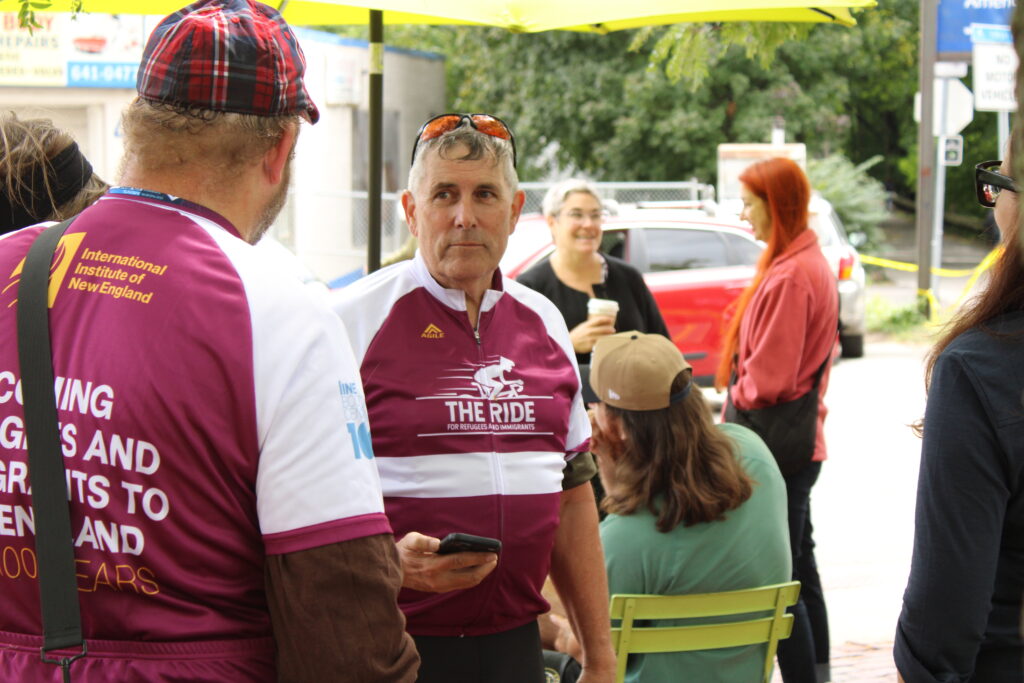
Bill at IINE’s annual Ride for Refugees and Immigrants

What are you most passionate about professionally?

I’m passionate about having the ability to work in a position and in an organization where you can make a real difference in people’s lives. I found this in education and decidedly here at IINE. I believe in the essential part that immigration and immigrants themselves have contributed, and must continue to contribute, in creating and maintaining our successful and vibrant national society and economy.  

What do you enjoy doing in your free time?

Spending time with family is always top of the list followed by cycling, spending time outdoors with our dogs, sailing, kayaking, and skiing. 

Learn more about IINE’s advocacy efforts, from when we first opened our doors over 100 years ago to today, in our Spotlight Report: On Advocacy

Why Haitians Are Fleeing Their Home and the Challenges They Face in the U.S.

5 Things to Know About the Crisis in Haiti

Why Haitians Are Fleeing Their Home and the Challenges They Face in the U.S. 

Declaring independence in 1804, Haiti became the first free Black republic in the world. Two centuries later, it is a country of resilient people and exceptional island beauty. Sadly, after centuries of foreign intervention, occupation, and coerced debt, political instability, and natural disasters, this nation of 11.5 million people is also the poorest country in the Western Hemisphere. Over the past three years, the number of Haitians forced to flee their country has grown rapidly.  

The International Institute of New England has become New England’s leading resettlement provider for Haitians, having served more than 16,000 Haitian individuals and families in recent years. But how did we get here? And what is life like for Haitians once they arrive in the U.S.? Here are 5 things to know about the crisis of Haitian displacement.  

1. Haiti has suffered a long and complex history of foreign oppression, exploitation, and intervention.  

As a result of this history, Haiti edges toward collapse. The Caribbean nation suffers from political instability and corruption; gang violence; drug trafficking; human trafficking, and high incidents of kidnapping, sexual and gender-based violence, police brutality and homicide. Acute hunger affects 1.6 million Haitians. The justice system has disintegrated. Nearly 900 schools have shuttered their doors, leaving 200,000 children without access to further education. As hospitals overcrowd and close, the maternal and neonatal mortality rate has risen to the highest in the Western Hemisphere. Humanitarian agencies now estimate those requiring aid number 5.5 million. This has forced people to leave Haiti by the hundreds of thousands. 

2. Haiti has been plagued by devastating natural disasters, which have killed hundreds of thousands and displaced millions.  

In January of 2010, Haiti experienced its most devastating natural disaster to date. A large-scale earthquake killed more than 220,000, injured 300,000, and displaced 1.5 million people. Then, in 2021, another earthquake rocked the southern part of the country, killing 2,000 people and displacing tens of thousands more. Days later, a tropical storm wreaked more havoc in that part of the nation. An earthquake struck in 2023, again causing massive social upheaval and killing more than 2,000 lives. The mass destruction of these natural disasters has caused enormous humanitarian need. While many countries have stepped up to provide foreign aid, it has been significantly mismanaged by nongovernmental agencies. 

3. Water scarcity and famine is worsening by the day and now impacts millions of Haitians nationwide. 

Haiti is a small island with a massive population for its size. More than 50% of Haitians are currently experiencing food insecurity, and nearly a quarter (22%) of the nation’s children are considered malnourished. In addition, two-thirds of the population lack proper sanitation services, and a third does not have access to clean water. Widespread famine, water scarcity, and weak infrastructure are the result of a history of underdevelopment. Natural disasters have worsened conditions, as they have disrupted agriculture country-wide. 

A lack of clean water, sanitation, infrastructure and social services has left Haiti vulnerable to widespread disease. In October 2022 a cholera epidemic swept across the island, infecting more than 13,000 people. The most vulnerable population are those internally displaced people who have fled their homes. 

4. For Haitians who make the difficult decision to leave their home country, the journey to enter the U.S. is perilous – and not always successful.  

The journey to the U.S. border is long and difficult. Many Haitians fly first to South America and then travel through Central America, enduring long stretches by bus and on foot. Others attempt the journey by boat, leaving directly from Haiti. There have been numerous instances of these boats carrying hundreds of immigrants capsizing, leading to injuries and drownings.   

5. Once in the U.S., Haitians receive limited support.  

Most Haitians who entered the U.S. in recent years were granted a “parole” status, which allows them to remain legally for a period of up to two years, access limited financial assistance, and apply for public benefits through resettlement agencies like IINE. Many Haitian families spend their life savings on their journey to the U.S. and arrive with no resources, homeless and forced to stay with acquaintances or other community members in crowded living spaces, or to stay in shelters. They commonly have little fluency in English and limited access to language classes. While eager to secure jobs, many Haitian entrants do not have the means to hire an attorney to support their employment authorization applications. Many are denied and many others experience delays of up to one year for approval. 

• • •

More than one million people of Haitian descent live in the U.S., and the third largest Haitian diaspora outside Haiti resides in Massachusetts. Haitians are integral to the United States: enriching our culture, strengthening bonds across communities, and bolstering our economy.

The recent decisions to end Temporary Protected Status for Haiti and the CHNV (Cuban, Haitian, Nicaraugan, Venezuelan) program are unjustly targeting immigrants who came to our country through legal pathways. To strip these families and individuals of work authorizations and legal protections, and to force them back to the unlivable, dangerous counditions from which they fled is inhumane. 

The International Institute of New England remians committted to continuing to support the Haitian immigrant community in every way we can.

Sources: Al Jazeera, BINUH,Center for Disaster Philanthropy, Council on Foreign Relations, Human Rights Watch, Médecins Sans Frontières, Reuters,UN Human Rights Office of the High Commissioner, UNICEF, United States Census Bureau, USAID, World Health Organization, and World Vision.

What if the U.S. Said No to Immigrants?

10 ways extreme immigration restrictions and crackdowns would negatively affect us all

Immigration policy has been a flashpoint issue of the 2024 election. Negative myths about immigrants have dominated campaign attack ads, U.S. leaders are divided on immigration policies, and the the platform of a major political party seeks to ban immigration from several countries, militarize immigration enforcement, enact mass deportations, end family reunification, and use “extreme vetting” to reduce legal immigration.

Here are 10 ways these policies would affect your daily life and our country as a whole:

1. Food would get EVEN more expensive.

Immigrants represent about 21% of all workers in the U.S. food supply industry, playing large roles in everything from farming and food production, to distribution, to grocery wholesale and retail. Labor shortages and supply chain interruptions would lead to higher prices for food.

2. Medical care would be harder to get.

About 26% of doctors and surgeons and 40% of home health care aids are immigrants. As the U.S. population ages, the need for care is increasing. Meanwhile, practitioners are retiring. A labor shortage would lead to dangerous gaps in care, longer wait times, and strain on providers which could lower the quality of care.

3. Our country would become far less diverse. 

We would lose the variety of cultures and the blending and remixing of ideas, language, artistic expression, and traditions that make U.S. life so rich—elements of life we now take for granted, from eating pizza, tacos, and sushi; to practicing yoga and meditation; to dancing salsa and bopping to reggae, to cheering on Rafael Devers and Al Horford.

4. Your neighborhood would likely get more fearful and less safe. 

The constant threat of profiling and deportation would put many Americans on edge, leading to community tension and more fear of law enforcement and other government officials. Studies show that immigrants are less likely to commit crimes than non-immigrants. Less trust and unity is more dangerous for everyone.

5. Businesses would suffer.

Major U.S. industries like construction, manufacturing, hospitality, and technology are highly dependent on a mix of specialized immigrant and U.S.-born workers. In Massachusetts, immigrants staff our hospitals and universities, engineering and manufacturing firms like G.E. and Raytheon, and biotech companies like Moderna and Biogen. Removing one group of workers from the equation would wreak economic havoc. Immigrants also tend to be more entrepreneurial—on a per capita basis they are 80% more likely to start new businesses.

6. We would no longer have the world’s best universities.

We’d lose the ability to draw and train the best professors, researchers, and students from throughout the world and benefit from their contributions to our country. This would particularly affect Boston, a city whose character is shaped in no small part by its ability to draw talented and driven people from throughout the world to Harvard, M.I.T., and more than 60 other area colleges and universities.

7. Our economy would lose $900 billion over 10 years in tax revenue and consumer spending.

Because the U.S. population is rapidly aging and dwindling, and newcomers tend be younger and have larger families, we would be, on average, a far less youthful and populous country. Immigrants account for 13% of the U.S. population and 77% are of working age. Whether citizens or awaiting status, they are consumers, workers, and taxpayers.  

8. The innovation that has defined our country would halt.

From inventing the telephone to the polio vaccine, Hollywood movies to Levi’s jeans, microprocessors to Internet search engines, U.S. immigrants have driven innovation globally. Immigrants are directly responsible for a quarter of all patents in the U.S. We would lose the edge of attracting the best and brightest to experiment, develop, and invent here.

9. We would forfeit our leadership as protectors of freedom, democracy, and the oppressed.

Slamming our doors on people fleeing persecution, tyranny, violence and environmental catastrophes would violate our humanitarian values, and in many cases, international law. We would lose the trust of allies and much of our influence over international conflicts and policy.

10. Millions of American families would be permanently torn apart.

In the U.S. 1,400 children who were intentionally separated from their families by the immigration policies of the previous administration have yet to be reunited. 5.5 million American children currently live with at least one undocumented family member. Many millions more adults are waiting to be reunited with family members abroad whose visas are delayed by backlogs. All of these American children and families would be rejected and abandoned by our government.

• • •

The good news is, we still have a choice. We can advocate to remain a land of opportunity, diversity, and refuge.

1985–1994: Protecting New Bostonians

Welcome to the eighth installment of our series “100 Years of Welcome: Commemorating IINE’s Boston Centennial.” The previous installment, “1975–1984: Refining Refugee Resettlement,” described the International Institute of Boston (IIB)’s resettlement of refugees of the Vietnam War and the increased government partnership and scaled up services made possible by the Refugee Act of 1980, including stronger legal services and new programs addressing mental health challenges. 

The passage of the Refugee Act in 1980 increased refugee admissions and created the federal Office of Refugee Resettlement. This led to new growth, collaboration, and support for the International Institute of Boston, which shifted its chief focus in the early 1980s to refugee resettlement to meet the displacement crises created by the Vietnam War.  

Refugee Training program 1988
A refugee client participates in a training program in 1988

IIB continued to support South Asian refugees throughout the 1980s, particularly in 1988, when the federal Amerasian Homecoming Act admitted to the U.S. thousands of refugee children of mixed American and Vietnamese parentage whose heritage was a source of discrimination in Vietnam. IIB resettled hundreds of these children and their families, welcoming them into the growing Vietnamese communities in and around Boston, and launched the Alternative Education Project to help them learn literacy, English, and math. Throughout the 1970s and 80s, new attorneys and paralegals joined the Legal Services team to help refugees through the complicated process of applying for citizenship, and to reunite their families in the U.S. 

Welcome for Post-Cold War Refugees

Soon after, when the Berlin Wall fell in 1989, bringing the Cold War to an end, IINE welcomed thousands of Jews fleeing persecution under Soviet regimes. Also welcomed were many refugees from the former Yugoslavia, where a civil war had led to ethnic cleansing and other mass atrocities. As brutal conflicts erupted throughout Northern Africa, IIB welcomed refugees from Ethiopia, Eritrea, Somalia, and Sudan.  

At the same time refugee arrivals were surging, however, federal funding for refugee resettlement was decreasing dramatically and by the mid-1980s IIB’s staff and operations were forced to contract. By 1985, IIB had reduced to a small but mighty crew of staff members who spoke a collective 17 languages, including attorneys and paralegals who had been added to bolster the Legal Services team. For a time, IIB’s principal program focus became legal services and advocacy. 

Legal Clinics and Emergency Assistance

1986 was a particularly momentous year for the Legal Services team as IIB launched the first immigration legal clinic of its kind in the area. In weekly workshops, the clinic provided Boston’s immigrant community with assistance in completing immigration forms and preparing their applications for permanent residency and citizenship.  

That same year, IIB formed the Immigration Detainees Emergency Assistance (IDEA) program, bringing together 50 local attorneys to free people being held at an immigration detention center in Boston’s North End. Headed by an IIB paralegal and funded by The Boston Foundation and Lawyers Committee for International Human Rights, the IDEA program provided training to volunteer lawyers, assisted with interpretation and document preparation, monitored hearing dates, and raised bond money to help safely extricate those detained.  

A Partner in Reform

It was also in 1986 that a blockbuster Immigration Reform and Control Act was signed by President Ronald Regan, dramatically altering the landscape in which IIB operated. The bill balanced stricter border controls and penalties for hiring undocumented workers with large-scale amnesty for the nation’s population of undocumented immigrants—a tremendous opportunity for foreign-born individuals living in the U.S. without secure legal status to obtain permanent residency and pathways to citizenships. All immigrants who had entered the U.S. before 1982, and all immigrant farm workers who could prove that they had been employed for at least 90 days, were eligible. There was a one-year window to apply, and doing so required a fee, fingerprinting, and a whole host of paperwork. IIB was one of several agencies throughout the country designated to help immigrants complete applications, through which about three million Americans gained legal status. 

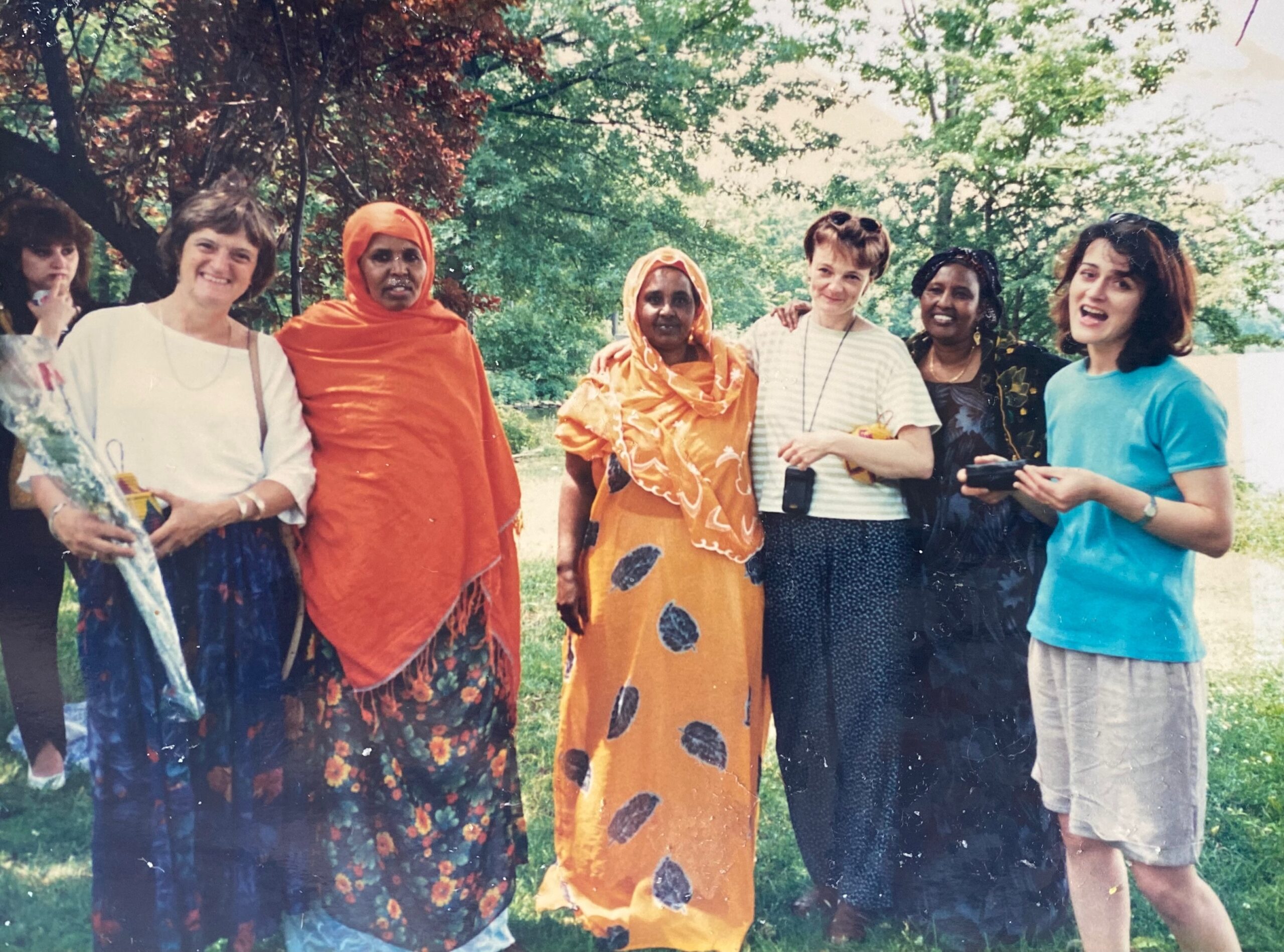
IIB staff and clients in the 1990s

Many of IIB’s legal services today are shaped by the other major reform of the era: the Immigration Act of 1990. This act created Temporary Protective Status (TPS) to admit people from countries plagued by armed conflict, environmental disasters, or other extreme threats, and permitted them to work while in the U.S. It raised the caps on both immigrant and refugee admission, created a new preference category for family immigration, and allowed employers to apply for temporary visas to hire skilled workers. 

Also, in another counterweight to the “quota system,” which, from the 1920s through the 1950s had restricted immigration by country largely based on ethnic discrimination (against which IIB had fought passionately), the Immigration Act of 1990 also created the “Diversity Lottery” to grant visas to people from nationality groups currently underrepresented in the U.S. This Act was not only another step forward in increasing the nation’s diversity, but also another victory for family reunification. In the mid-1990s IIB began working with families to help their eligible family members living abroad apply for this lottery in the hopes of being reunited.  

Victim Assistance and Advocacy

While working to secure legal rights for Boston’s immigrants and refugees, IIB was also helping to ensure they were welcomed by neighbors and community members and working to protect their physical and mental health and safety. IIB’s Social Services department connected newcomers to counseling and crisis intervention support services, including a Victim Assistance program for those who had faced assault, racial harassment, or domestic violence. IIB partnered closely with the Asian Task Force Against Domestic Violence and became the first agency of its kind to offer resources for responding to domestic violence in a beginning-level English-language class.  
 
To help protect rights and promote support for newcomers throughout Massachusetts, in 1987, IIB joined with other local resettlement agencies, immigrant-led community organizations, faith-based organizations, civil and human rights advocates, and providers of social, legal and health services to found the Massachusetts Immigrant and Refugee Advocacy Coalition (MIRA). The Coalitions first Executive Director was former IIB Program Director Muriel Heiberger. Highly active today, MIRA is now 100-organizations strong. 

New Partners and Frontiers

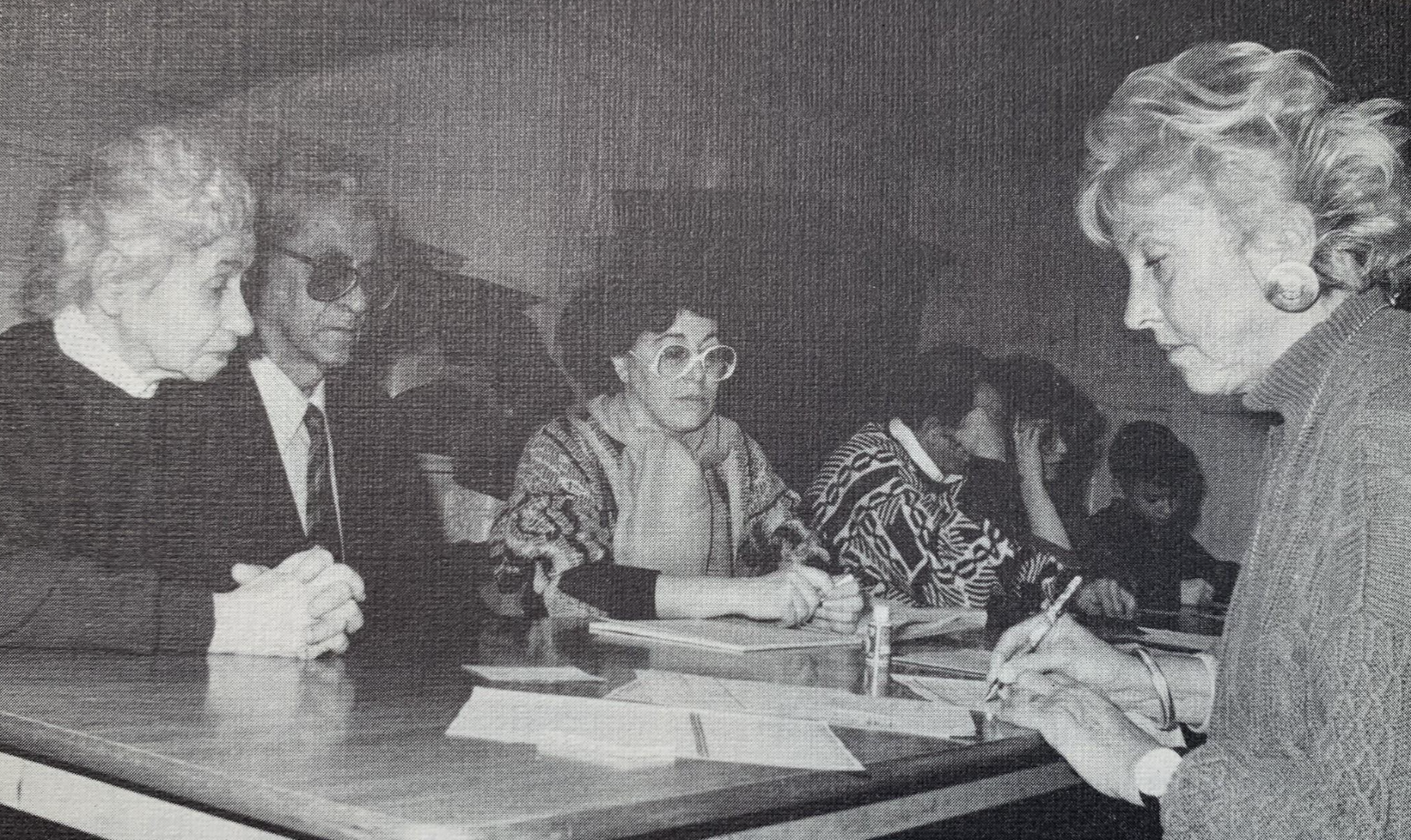
An IIB volunteer helps two Russian refugees as they apply for permanent residence in 1992

During the 1990s, IIB’s service ambitions continued to exceed its size, inspiring more new partnerships. One way the agency was able to expand capacity was to invest in volunteer training programs, bringing community members directly into the work of welcoming newcomers. Once trained, a crucial new corps of volunteers was integrated into both direct service and education programs.  

In 1994, IIB connected with a community group that was serving refugees in the nearby gateway city of Manchester, New Hampshire, and opened its first field office outside of Boston, paving the way for what would later become the multi-site International Institute of New England.  

· · · 

Today, IINE’s Immigration Legal Services team continues to help persecuted immigrants, including thousands with Temporary Protective Status, to apply for permanent residency and citizenship and to reunite their families. It also helps businesses to apply for temporary visas to employ skilled immigrant workers. IINE leadership sits on the Advisory Council of today’s Massachusetts Immigrant and Refugee Advocacy Coalition. Hundreds of community volunteers are integrated into across our organization in all departments. Our Manchester site serves more than 1,000 refugees and immigrants from countries throughout the world with housing and basic needs support, education, career services, legal services, and advocacy.  

During our centennial year, we celebrate 100 years of life-changing support to refugees and immigrants in Greater Boston and prepare for our second century of service. Learn more here: IINE Boston Centennial.

Vlada Khalizieva

“I know how to be a refugee. Now I want to help people”: Vlada’s Journey from War-Torn Ukraine to New Hampshire

“In One Moment”

Vlada has found safety in New Hampshire after fleeing her war-torn home country of Ukraine

In 2022, in her native country of Ukraine, Vlada had started her “dream job,” working as a Social Media Manager, after recently completing a master’s degree in linguistics the previous year. 

“It was a job that I was so loving,” Vlada says, “but everything finished in one moment. In the days that the war started, I lost my job.”

Vlada and her family had been living a quiet and peaceful life in what turned out to be the wrong place at the wrong time.

“I lived in Kharkiv, which is on the border of Belarus and Russia,” she explains, “and it was the most attacked city from the first day the war started. We were the first people who heard, like, this sharp noise outside, and at first thought it was just something like fireworks—but it was starting at four in the morning, so yeah, it was something else, and it was really scary.” 

“After Three Days…We Were Alone” 

Kharkiv was the first major target of Russia’s sudden and unprovoked invasion of Ukraine. It was bombed relentlessly, forcing its residents to make terrible calculations.

“Maybe three days after the war started, we were alone,” Vlada says, “like without any public transportation, without any groceries, supermarkets—everything was closed. Maybe 30% of people left, and moved to other cities, or they started to cross the border. Some just stayed there. We were among those who stayed—who didn’t believe the war could happen. Everyone thought that the war would finish in three days, that everyone just could communicate together and find a way to solve the problem.” 

Vlada lived on the eighth floor of a nine-story building whose residents included many children. As destruction surrounded them, they scrambled to figure out how to remain safe, often huddling in the basement. The closer the bombing got to them, the more isolated they became.

“We didn’t have our car or any transportation to move or to leave. We lost Internet connections. We lost any connection with the world around us. We didn’t know what was happening and we couldn’t call anyone to say that we were still alive” 

Still, Vlada and her family clung to hope that the bombing would soon pass and recovery would begin. 

“Each day you were thinking like, OK, that building was crushed, but you will survive, and your building will survive even after everything, and maybe someone will come in to help you. Someone will provide transportation to evacuate you, or whatever else. But our part of the city was blocked, and all that we saw were a lot of tanks crossing around our apartment and the like.” 

“I Don’t Really Understand How We Survived” 

After the second attack, Vlada and her family had no choice but to leave. 

“We just took our two cats and, like two bags, and started to run out from the building.” 

Vlada’s grandfather lived about twenty minutes away. They couldn’t contact him and had no idea what they’d find when they reached his home. Fortunately, it proved to be a safe place. The next day, a friend of Vlada’s father was able to pick them up there and drive them out of Kharkiv and into the countryside where they stayed for about three months, recovering and planning their next moves.  

Vlada’s father found a new job in Kharkiv and he and her mother decided to rent a new apartment there. Vlada’s godmother found a sponsoring family in the U.S. through the Uniting for Ukraine program, and she and Vlada set out together for Nashua, New Hampshire.

“When I just crossed the border to Poland, I started to breathe, because I was in a safe place, even though not yet in the United States, I felt, OK now I’m safe. I don’t need to be afraid all the time that something will happen. And when I reached the United States, I felt that way even more.” 

In the first few days, Vlada remembers taking great comfort in eating simple foods that had stopped being available in Ukraine—fresh fruits and vegetables—and ice cream.  

Her sponsors helped her begin to navigate living in the U.S. They introduced her to the city, U.S. culture, and other Ukrainians in the area.

“I really appreciated their help. They opened the door to the safe life without bomb attacks every day.”

To help her secure benefits and work authorization, and learn how to find a job in the U.S., the family connected Vlada to the International Institute of New England which has offices in nearby Manchester. There, she met her Case Manager, Sarah Niazai, now a close friend.

But within two weeks of getting adjusted, the unthinkable happened. Vlada called her mother in Kharkiv, who explained that there had been a break between bomb attacks, but they had started up again.  

“She started to cry and she was so scared. She said, ‘I can’t find Dad. I think he’s been killed.’” 

“I Want to Help People” 

Still reeling from this news, Vlada threw herself into her job search. She found part-time work at a T.J. Maxx clothing store, as a Teaching Aid for English for Speakers of other Languages classes at an adult learning center, and as Front Desk Manager at a dental office. She accepted them all at once and worked 56 hours/week. Vlada was emotionally and physically exhausted, but this was what she needed to do to get by. 

Once she found her footing, she shifted to more work that would allow her to help fellow immigrants, spending a year coordinating and providing language interpretation. She still kept her eye on job postings, and something was sparked in her when she saw an opening at the International Institute of New England. She remembered the help she had received there when she needed it most.

“It was like, OK, I really need this position! I want to help people. I know how to be a refugee, which is great experience! This is a job to provide a lot of support for people whose experience I can understand. 

“I Know Something About That” 

Now an IINE Case Manager with clients of her own, Vlada says that, while it has its own challenges, it feels rewarding to use her incredibly difficult experience to help fellow refugees and immigrants.  

“There are a lot of clients coming in with trauma and I can be like, yeah, I know something about that.” It may be different— I have many clients who are Afghan women who dealt with the Taliban, and yeah, I haven’t had that experience—but I can try to help them. I can try to support them, just by telling them that right now they’re in a safe place and they can get back everything they lost in their country.” 

Vlada herself feels like she’s in a good place now.

“I’m taking things day-by-day. In my past I was the kind of person that planned a lot for the future. Then everything crashed in a moment. I still love Ukraine. I want to return one day and to get another life there. But right now, I so appreciate the United States, who helped us a lot. I appreciate the people I work with, who are really nice. I love them all, and they’re good friends. And yeah, they support you when you need it.” 

•••

Refugees and immigrants make long, difficult journeys to escape violence and rebuild their lives in the U.S. You can give them the help they need to start fresh today. 

“Like a Dream Come True”: Farishta’s Journey from Afghan Refugee to U.S. Citizen

“It is like a dream come true. It is the biggest day of my life. After all the problems and long journey, finally I achieved what I wished for. I am also so glad that I am working in such wonderful environments and supporting refugees to achieve the goals of their life.” 

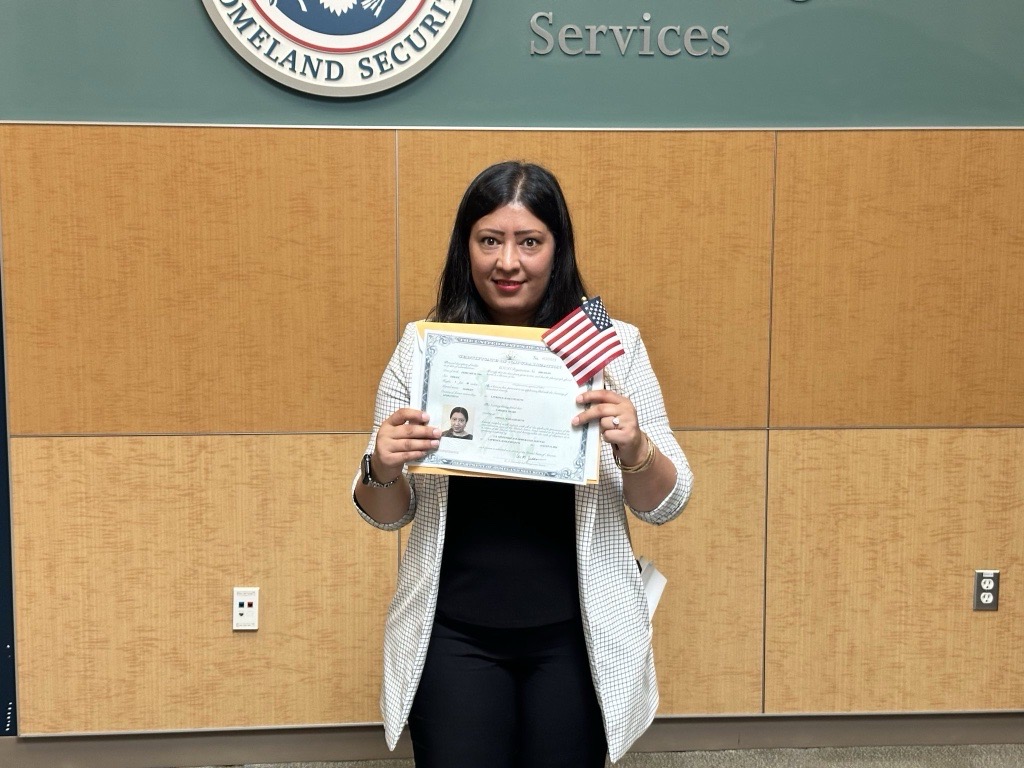
On August 14, 2024, Farishta Shams, a former Afghan refugee and current IINE Resettlement Services Manager, was sworn in as a U.S. citizen along with her husband. Farishta was an IINE client when she first arrived in the U.S. in 2019. She became an IINE client once again this past February when she began working with the Immigration Legal Services team to apply for her citizenship. 

Helping Women Meant Life as a Target 

When asked about the “problems and long journey” she was thinking about on her day of celebration, Farishta smiles and says, “Oh, this will be a story.”   

Back in Kandahar, Afghanistan, Farishta worked for the United States Agency for International Development (USAID).  

Farishta in Afghanistan
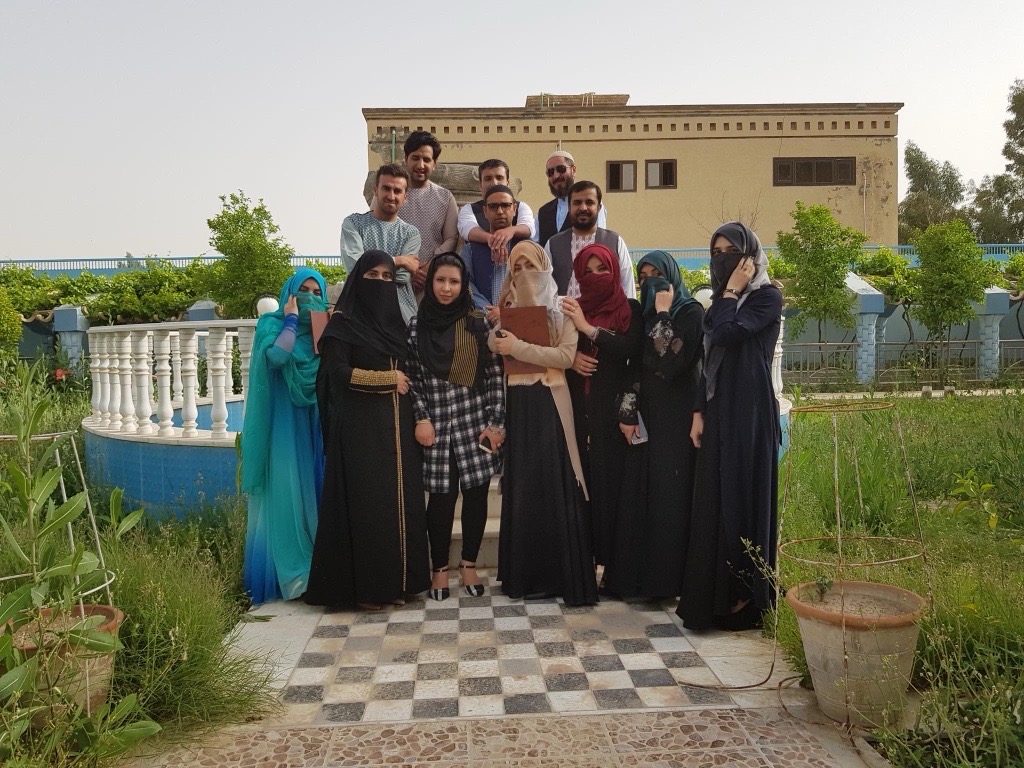
Farishta and her USAID colleagues in Afghanistan

“It was a bit of problem working with the U.S,” she says. “You had to hide your identity and home address and everything. While I was working for the USAID project, I had been attacked by the Taliban twice in the car while going to or from work.” 

The Taliban was not the only threat.  

“We were providing trainings for woman to know how to start up small businesses, and there were some husbands who didn’t like women to work, and so there were times when these husbands or their relations were also trying to create a problems for us.” 

In order to help fellow Afghan women, Farishta frequently felt like a fugitive and essentially had to live a double life. 

“During the whole journey, my nine-year experience, I changed my home multiple times. I even had to hide myself for months because they found everything. I spread the word to everyone that I had resigned my job, that I was just a teacher. I was leaving my house at 6:00 a.m. and coming home at 5:00 p.m., acting as a teacher, but really I was working for the government. It was not only my problem, it was entire family’s problem—the Taliban could target my entire family.” 

After Farishta was attacked in her car for the second time, she told the head of her project at USAID. He began the process of helping her apply for a Special Immigrant Visa so she could flee to safety. Farishta says it typically takes three to five years to get a Special Immigrant Visa approved to come the U.S., but because she had been attacked while working for them, USAID helped her get her visa within two.  

“A New Life” 

“The day I reached Kabul airport, and then arrived at Dubai, I felt like I found a new life,” Farishta remembers. “I never had felt that happy—that nobody is following me, nobody’s calling. I felt that I had caused problems but that now my family would no longer be at risk because I had left.”  

When she arrived in the U.S., IINE helped Farishta and her husband resettle in Lowell, Massachusetts. “They really helped me with housing, with applying for benefits, finding me a job and showing me how to complete my bachelor’s degree. I also took classes to improve my English.” 

Farishta was deeply impressed with IINE’s staff and the support she received, and recognized the work as similar to what she had been able to do with USAID. She felt that working at IINE would now be her dream job. She was thrilled when, in 2021, she was able to join the organization as an IINE Case Specialist. 

“The experience of helping people, it’s really another dream come true working here,” she says. After a year, she was promoted to her current role as a Resettlement Services Manager. 

“Now It’s My Own Country” 

Farishta at her naturalization ceremony

Last February, Farishta reached out to IINE’s Immigration Legal Services team about she and her husband applying for citizenship. Staff Attorney Pooja Salve was assigned to their case.  

“Pooja did a really good job!” Farishta says.” It was very smooth and easy process. She helped fill and check the paperwork. She had a mock interview with us that really helped us get an idea of what is expected of you. She updated us on every application status.” 

Farishta went into her citizenship interview prepared. “I was practicing for the questions every ten minutes, every night!” she remembers.  

“Every exam has some anxiety. I thought a huge officer with a big heavy voice would come in and take my interview—you know officers can be scary—but then when a lady came in and called me, she was so sweet! I was shocked! When she asked the questions, my anxiety went away, and the process ran smoothly.” 

As soon as she learned she had passed, Farishta pulled out her phone. “First of all I reached out to the team at IINE to tell them that I had passed!” Then she went on to her swearing-in ceremony.

“That was really exciting for me! I feel like now it’s like I’m originally from this country! We just registered to vote. It’s like our own country!”  

Farishta is also excited to finally have the freedom to travel. Because her father worked with the Canadian government, much of her family resettled there. She also has a sister in Germany whom she’s been longing to visit. Her new Green Card and passport will make many joyous reunions possible in her future.

“It really is a dream come true,” she says.  

•••

Refugees and immigrants make long, difficult journeys to escape violence and rebuild their lives in the U.S. You can give them the help they need to start fresh today. 

Suitcase Stories®: Ishtar, a Haitian Immigrant, Shares Why She Came and Why She Stays

Ishtar, a recent immigrant from Haiti, works as a Case Specialist in IINE’s Lowell, Massachusetts office. Ishtar has shared her Suitcase Stories® performance with many audiences, chronicling her and her father’s journey to the U.S. in pursuit of medical care, and the evolution of her relationships both with him and with the country in which she now resides. This is the story in her own words.  

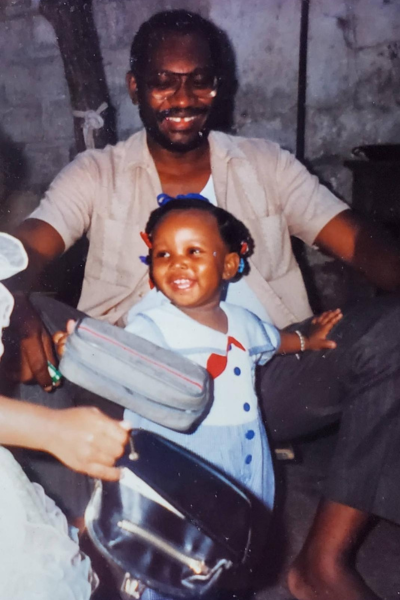
About two years ago, it occurred to me that I had to become the parent of my parent. I was in Haiti and my father was very sick. 

Ishtar with her father in Haiti

As a family (because one voice was not enough), we had to convince him to go to the hospital. He did not want to, and he was not seeing any doctor at the time. His “Primary Care Physician,” as you call it here, had been his younger brother, who had also been my doctor, but he had been killed the year before during a gruesome kidnapping attempt. Since then, my dad did not have a PCP, and he did not trust that many doctors. He was really stubborn; I hear it’s a family trait, but no worries, it skipped my generation (you can’t prove me wrong)! 

Anyway, after a couple of days, we convinced my father, and he agreed to go to the hospital. When we got there, they told me that before he could see a doctor, I must see the admissions office. The clerk asked me about my father’s insurance. Though my dad had worked for the government for about 50 years, he didn’t have great insurance, so he was on my mother’s plan – or so we thought. When I submitted her card, they checked with the insurance provider and then told me my father was no longer eligible for coverage because he was over seventy. That is when I realized that apparently, in Haiti, when you are over seventy and typically need it the most, well, I guess you are no longer qualified for care protection. So, I had to give my credit card on the spot just to secure basic medical care.  

Back then, I had been working for about six years, so not a lot of savings; you know what young people do with money! Not partying…shopping. I gave my card anyway as I had no choice. My dad needed urgent medical care. He spent about a week at the hospital and got a little better, but it became clear that we had to do more because nothing was solved.  

Ishtar's Uncle Ernest, sister Christina, father, and sister Arianne
Ishtar’s Uncle Ernest, sister Christina, father, and sister Arianne

The last time my dad had seen a doctor was about 6 months earlier. That doctor had diagnosed him with stage 4 cancer and had firmly stated that there was no treatment available in Haiti. His recommendation had been to travel to the Dominican Republic, Cuba, or the United States of America for a chance to survive. We investigated all the options. At that point, my father had a USA visa, but instead of seeking care elsewhere, he let it expire. Stubborn.  

Now, however, we could no longer resort to inaction and hope for the best as my father was suffering without recourse even for his extreme pain. So, I prompted my uncles and aunts to speak to him, and we were finally able to persuade my dad to move. He and I traveled to the U.S. and when we arrived, we went straight from the airport to Boston Medical Center. It was a long trip, and my father was tired and in a lot of pain.  

Here I was again in a hospital lobby, really stressed because I did not have a valid credit card in this new country and my father still did not have insurance. But surprise! They didn’t ask for that. He was admitted shortly after and spent about a week there. After that, we went home to my uncle’s house who had graciously welcomed us. I have many uncles and aunts in this state, which is the main reason we chose to come to Massachusetts, aside from the fact that I heard it is one of the best states when it comes to healthcare. I can attest to that; my dad did have a great team at BMC.  

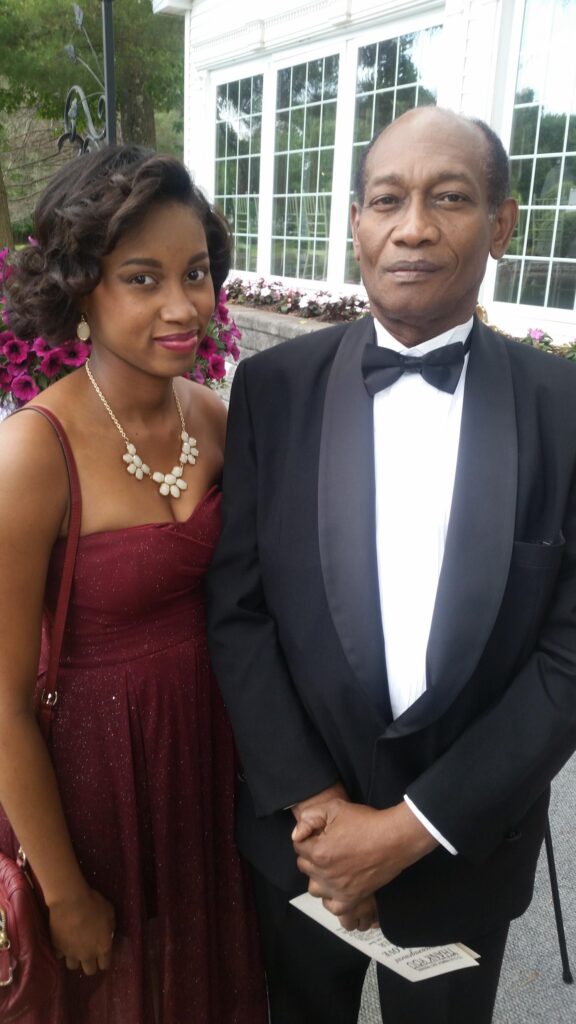
Ishtar and her father at her sister's wedding
Ishtar and her father at her sister’s wedding

While I was my father’s main caretaker at home, I was still working for my employer in Haiti. They were really understanding and allowed me to work remotely. I was a Sponsorship Program Coordinator, supporting schools in remote communities and helping vulnerable children get access to quality education. I was working hard, and hardly working because I loved it! I was always traveling to new places, never too far from the beach, meeting new people, starting empowerment initiatives, and being empowered. I loved it, but shortly after I was laid off. The organization I worked with, a U.S.-based NGO, was cutting all operations in Haiti. They simply could no longer maintain their activities in the country because the worsening situation made it too dangerous.  

Fortunately, I had the opportunity to apply for a work permit, so I started the process. When I mentioned it to my father (because we talked about almost everything), he asked me to apply for him too. Well, I could not refuse based on the fact that he was terminally ill, so I said, “Dad, I think the retirement age here is 65 so you don’t need a work permit.” He replied, “Do you know how old Trump and Biden are?” I must admit he got me there and I had no argument, so I let him be. My dad was actually still hopeful he would fully recover and be able to work. He even kept arguing that he wanted to go back to Haiti. But my family and I knew that was unrealistic.  

Shortly after, he did pass, only two months after being here. We came too late for treatment; he was only provided palliative care. However, I was still happy because in Haiti, navigating my father’s care was complicated. It was a hassle between the three of us, a younger sister and a cousin. But here, my dad had nine siblings, and he spent his final months surrounded by family. My father’s relatives and his older children all came to spend time with him. They brought food daily at the hospital (because, of course, my father did not like the hospital food). I was also happy to be in a place where I was relieved of the burden and the daily stress that I would not be able to take care of my father because he received the needed support. I was grateful he could die as humanely as possible.  

From L to R: Ishtar’s sisters Christina and Arianne, Ishtar, her sister Noami, and her father, Price 

That was one of my main reasons for choosing to stay in the US and wanting to contribute to this society. I felt it was right that my taxes should be allocated to things that mattered like my father’s health. His 50 years of proudly working and taxpaying in Haiti served him very little in the end. I was frustrated and despite my love for my country, I did not want my fate to be like my uncle’s – murdered and left in the streets, or like my father’s – slowly dying because of lack of treatment. So even though I was grieving, I began focusing on employment. 

I was delighted when I soon got a position at the International Institute of New England. I feel satisfied that I get to support immigrants like my father and me. I am glad that I get to connect them to available resources. This job allows me to contribute with my labor power and my taxes.  

However, when I received my first paycheck, and I saw what those taxes translated to…I was so surprised! I complained to everyone. I remember discussing the issue with an older sister who had lived in the US all her life and she said, looking at me with pity in her eyes but a smile on her lips, “Oh girl, you didn’t know? They call it TAXACHUSSETTS!”  

It hurts to this day (less shopping), but I am thankful that I am here in this community, contributing, growing, and helping others grow as well. Leaving Haiti was about loving me and my family first, after having been put through the constant stress due to violence, threats, life-threatening sickness and so on. For me, coming to the United States was choosing to not only live with dignity, but also, for my father, choosing to die with dignity. That is something I desperately wish for the people in Haiti every day. 

Suitcase Stories® invites storytellers to develop and share meaningful personal experiences of migration and cross-cultural exchange with others—from large audiences to small groups—of all ages.  Learn more about Suitcase Stories®.